

Acanthus Journal of
Memory, Form, & Meaning
An ongoing editorial archive exploring restored antiques, personal histories, and the afterlife of objects. Each entry reflects on memory, material, and the quiet ways interiors carry human presence across time.
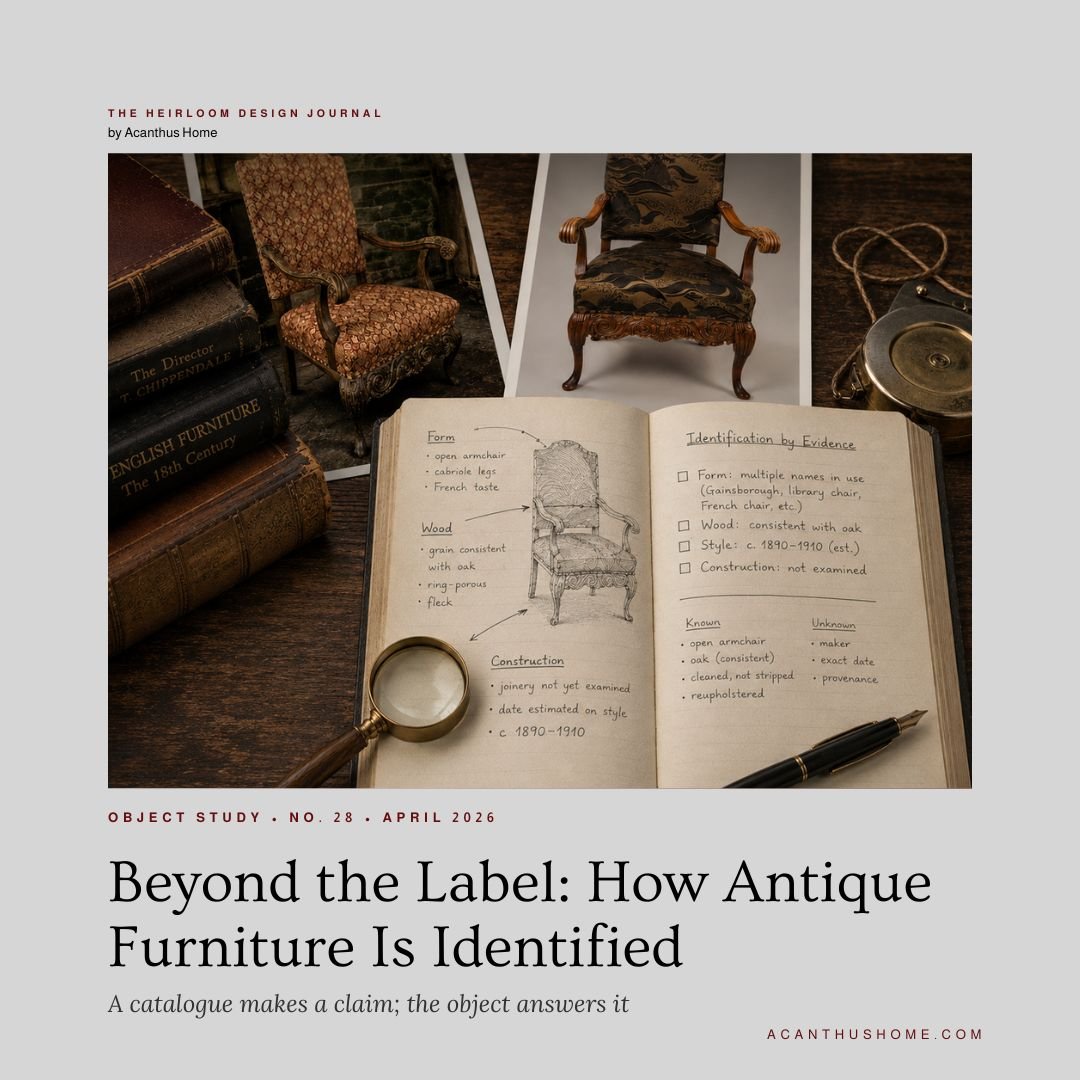
Beyond the Label: How Antique Furniture Is Identified
An antique chair almost always arrives already named. Setting the label aside and reading the object itself, its form, its wood, its construction, is most of what a curator does.
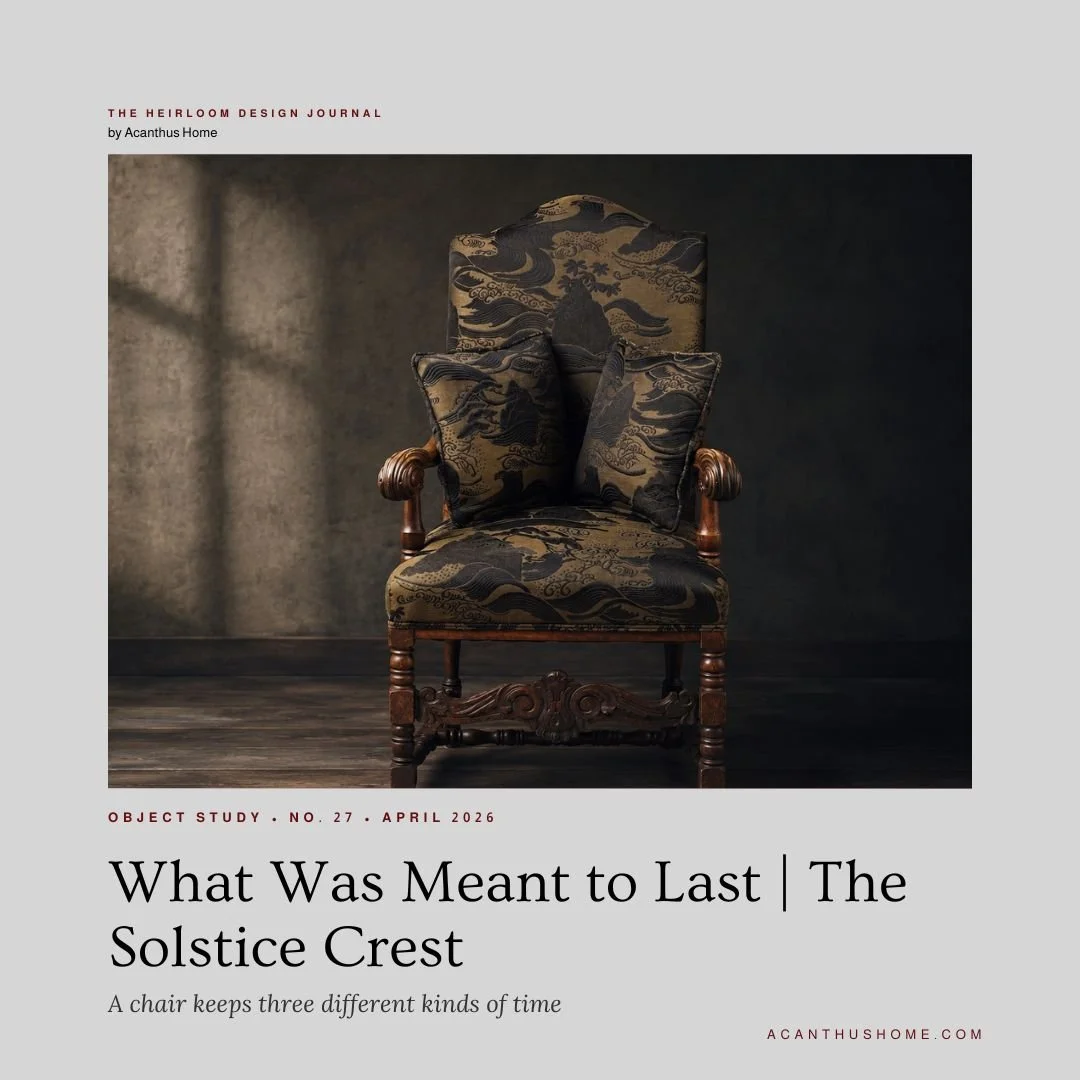
What Was Meant to Last | The Solstice Crest
Some parts of an antique were made to outlast everything around them. Others were always meant to be replaced. Restoration begins by knowing which is which.
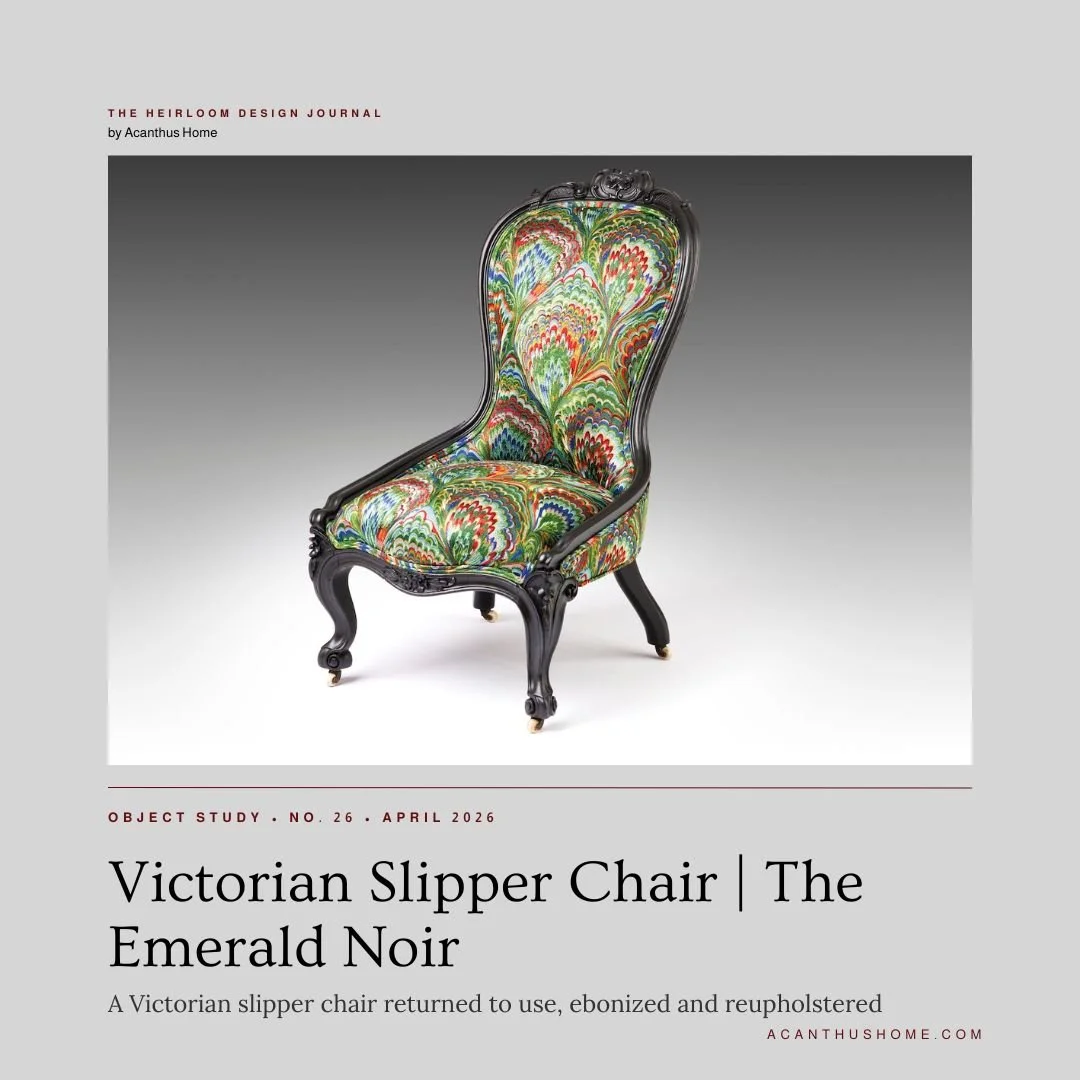
Victorian Slipper Chair | The Emerald Noir
A Victorian slipper chair retained in full structure and reintroduced through Pierre Frey's Bastian Sfumato embroidery, where material and use are brought back into alignment.
Käthe Kollwitz and the Afterlife of Compassion
Some images do not seek attention. Käthe Kollwitz's Hamburg Tavern shows how compassion, once pressed into a plate, endures by being carried and kept.
Frances Josephine Hadley and the Shape of a Life
A 1916 commencement program becomes a lens for reading one woman's life as structure rather than biography. Frances Josephine Hadley's story unfolds through education, civic institutions, and quiet service, the steady continuities that shape a community more surely than spectacle.
Tom S. Fricano: The Afterlife of Process
Tom S. Fricano spent nearly fifty years exploring the quiet discipline of printmaking. His work, shaped by patience and devotion, echoes the restoration ethos of Acanthus Home. This journal reflects on his legacy, his influence on my own family, and the enduring beauty of craft passed through generations.
The Last Commencement: Dr. Jesse F. Millspaugh
A folded letterpress program from June 22, 1916 names Jesse F. Millspaugh as president of the Los Angeles State Normal School. Three years later the school passed into the University of California, and the paper outlasted the hall that carried his name.
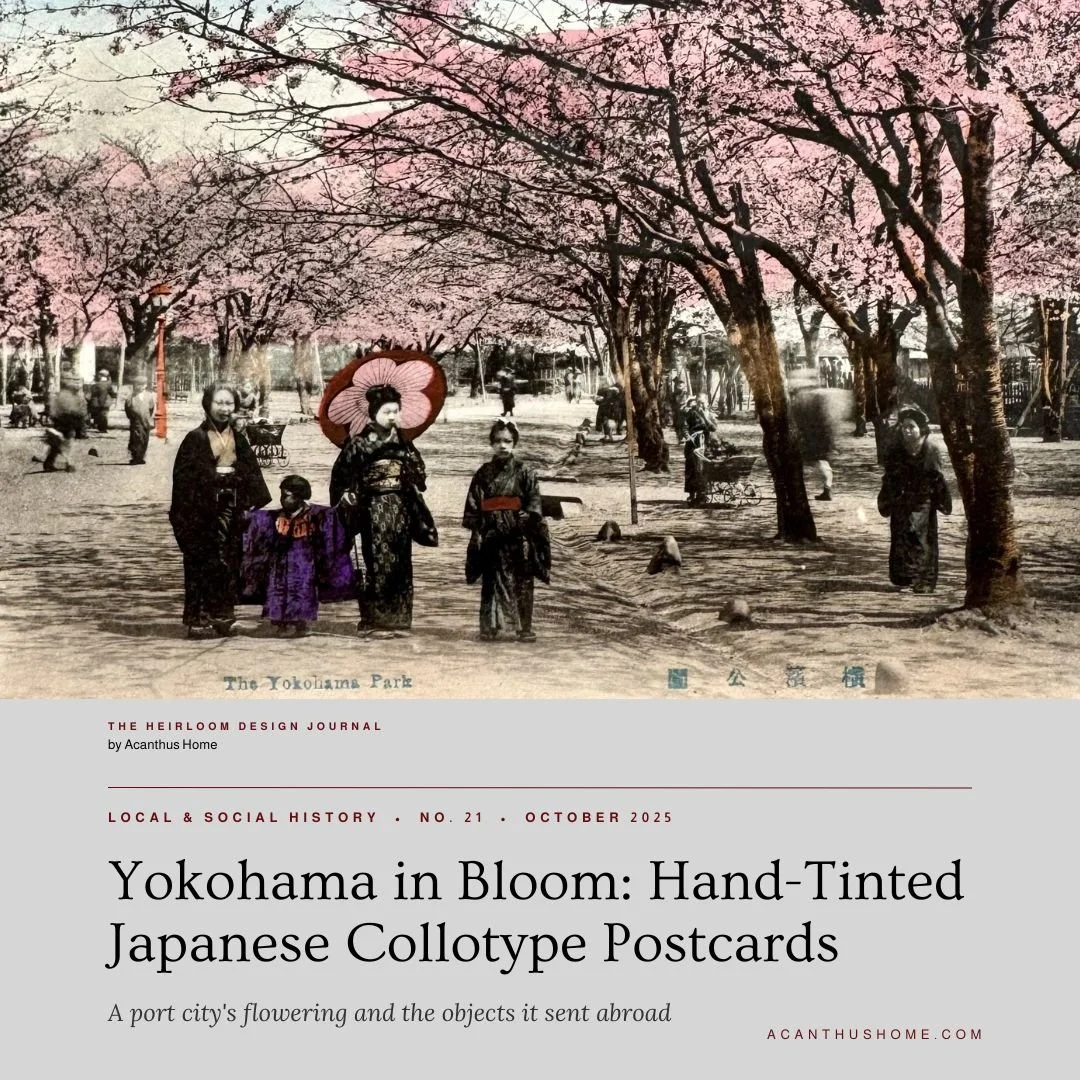
Yokohama in Bloom: Hand-Tinted Japanese Collotype Postcards
Collotype photographs of Yokohama streets, printed in soft sepia and colored one card at a time by hand, inscribed in English between 1917 and 1918. On the back of each is a penciled note that does not always agree with the color on the front.

The Art and Afterlife of Gabrielle Wasow Brill
Gabrielle Wasow Brill trained at the academies of Berlin and Vienna, settled in Los Angeles by 1949, and lost her home and studio to the 1959 Laurel Canyon fire. She rebuilt without copying what was lost, and a 1965 sepia etching from that later work remains in the Acanthus Archive.
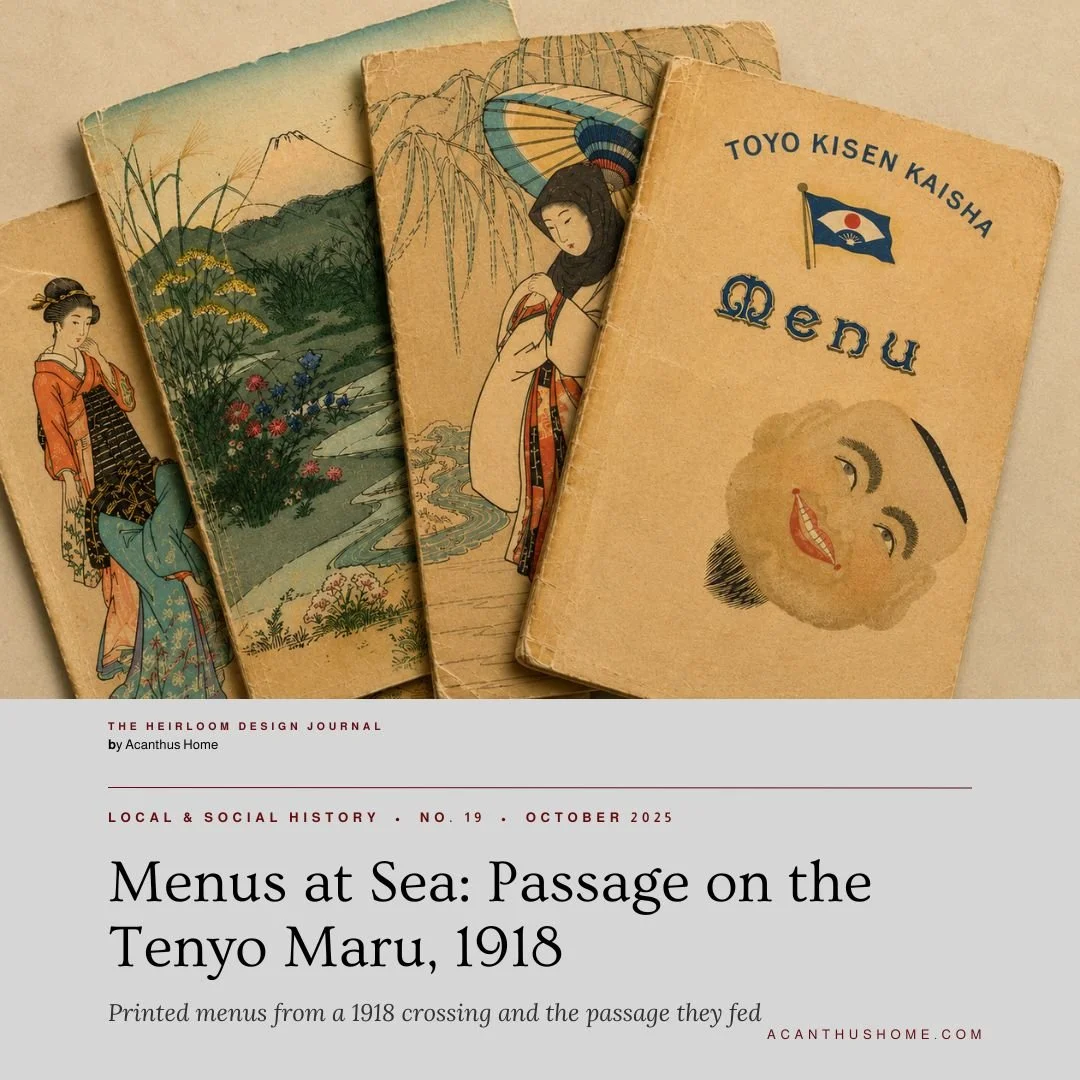
Menus at Sea: Passage on the Tenyo Maru, 1918
In 1918, dinner menus printed aboard the S.S. Tenyo Maru were slipped into illustrated covers printed in Yokohama. Preserved by one passenger, then one family, for more than a century, they record a society afloat.
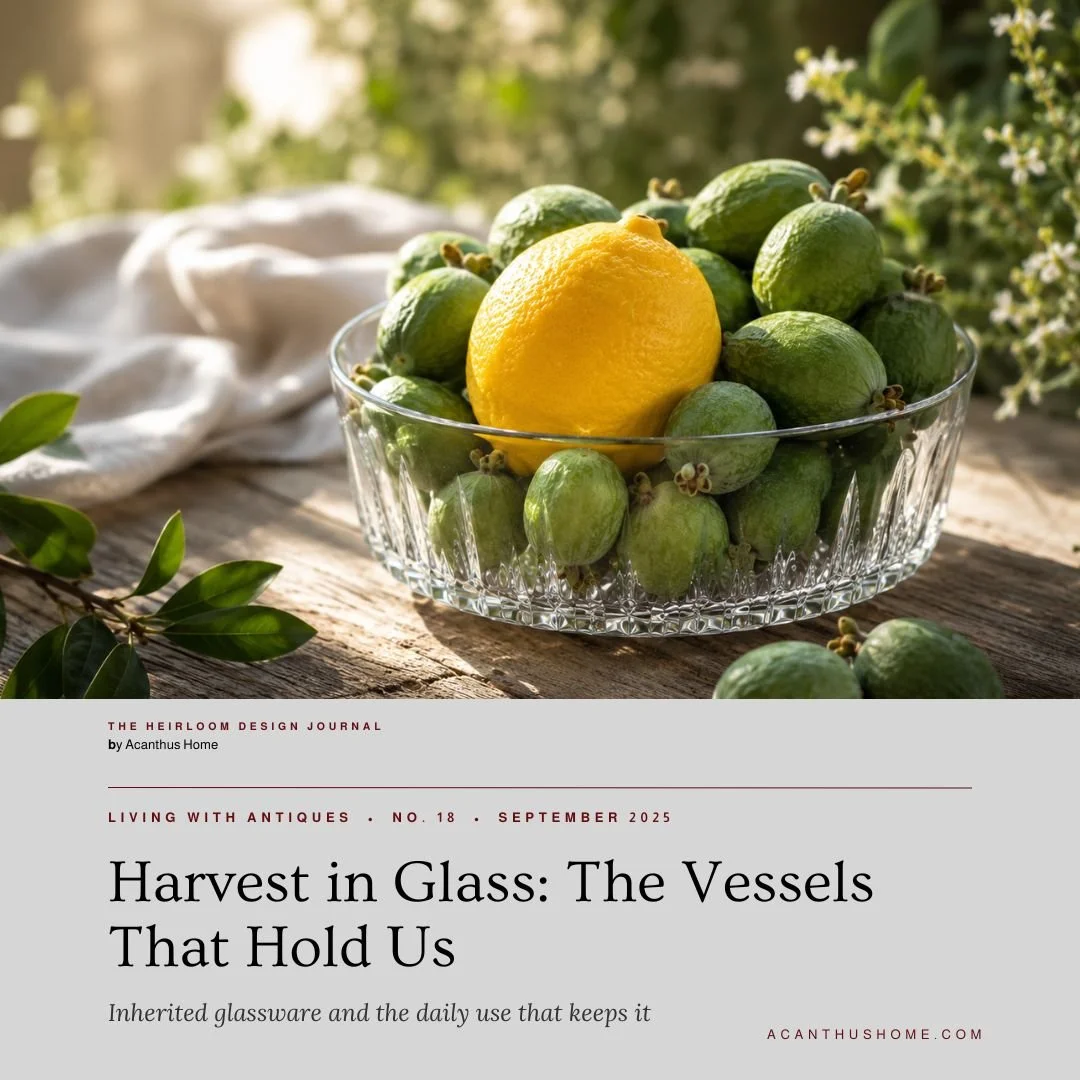
Harvest in Glass: The Vessels That Hold Us
For years the family called it crystal. The molded mark on the base says otherwise: Arcoroc pressed glass, made in France for daily use, and better filled than kept safe.
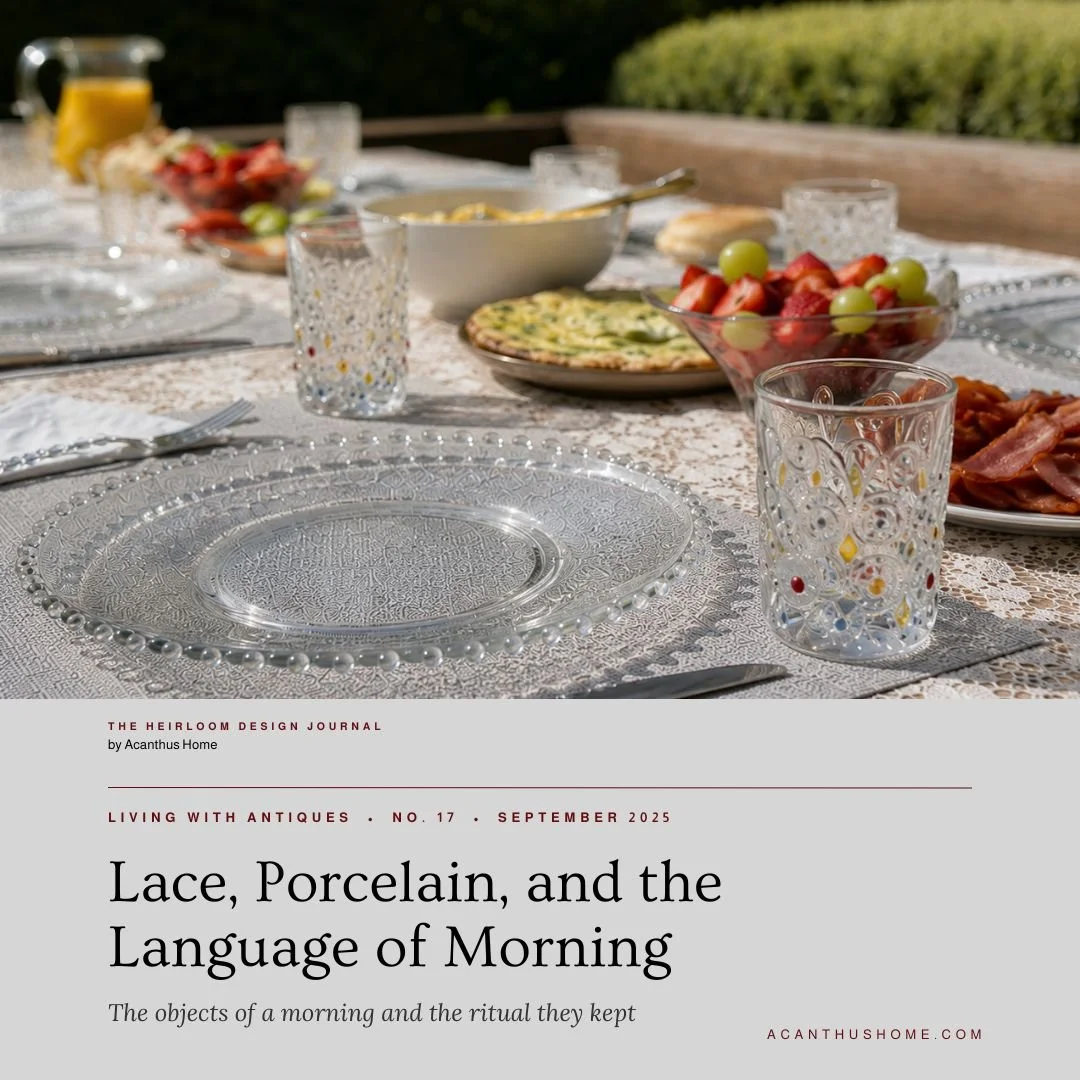
Lace, Porcelain, and the Language of Morning
Candlewick, the beaded pressed glass Imperial introduced in 1936, was sold as a gift and kept for company. A look at a pattern built to be used, and what daily use reveals that a cabinet keeps hidden.
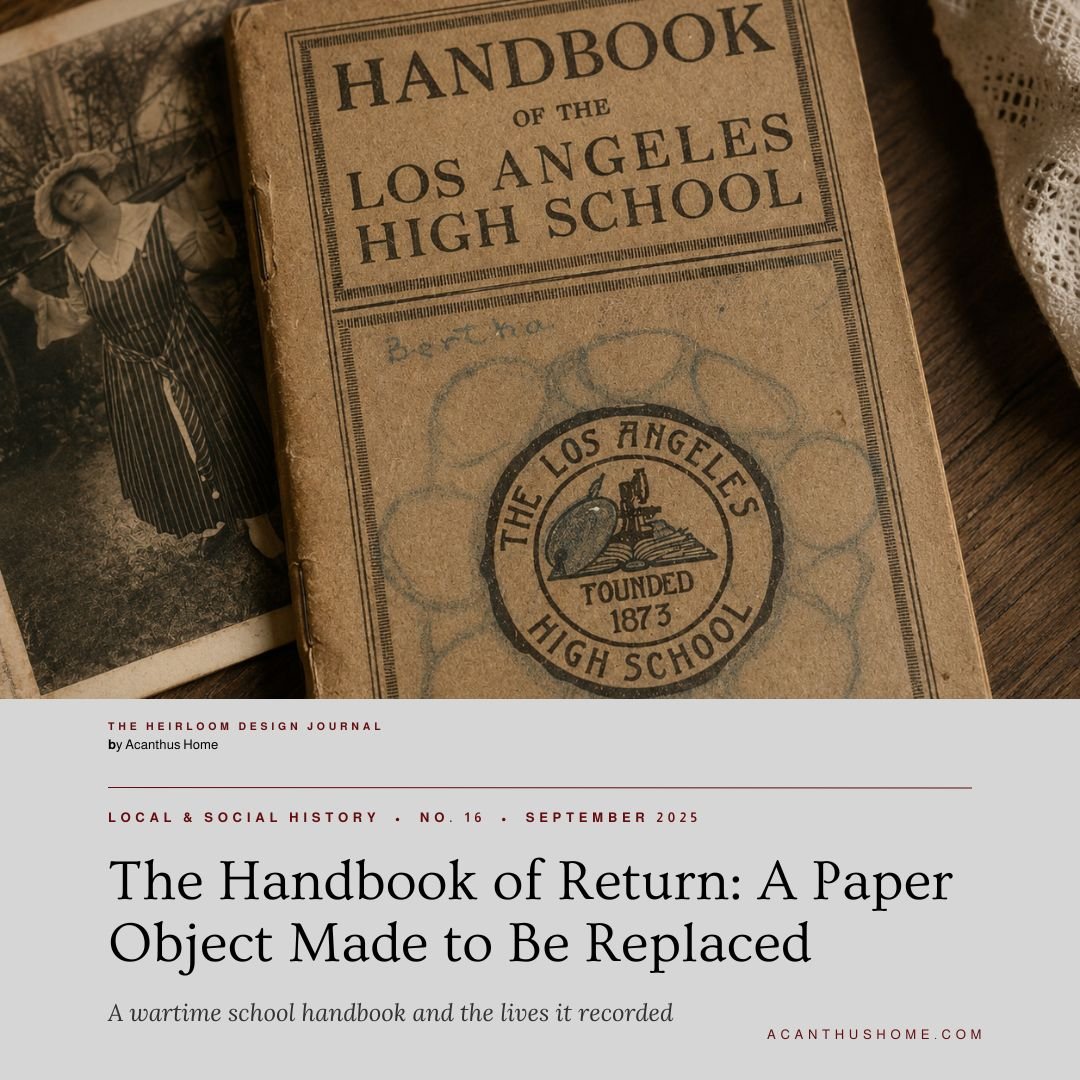
The Handbook of Return: A Paper Object Made to Be Replaced
In 1918, as Los Angeles reshaped itself in the shadow of war and influenza, a student named Bertha received a modest high school handbook, printed to be used for a single year and then replaced. More than a hundred years on, it endures: an object once made to be discarded, now an heirloom.
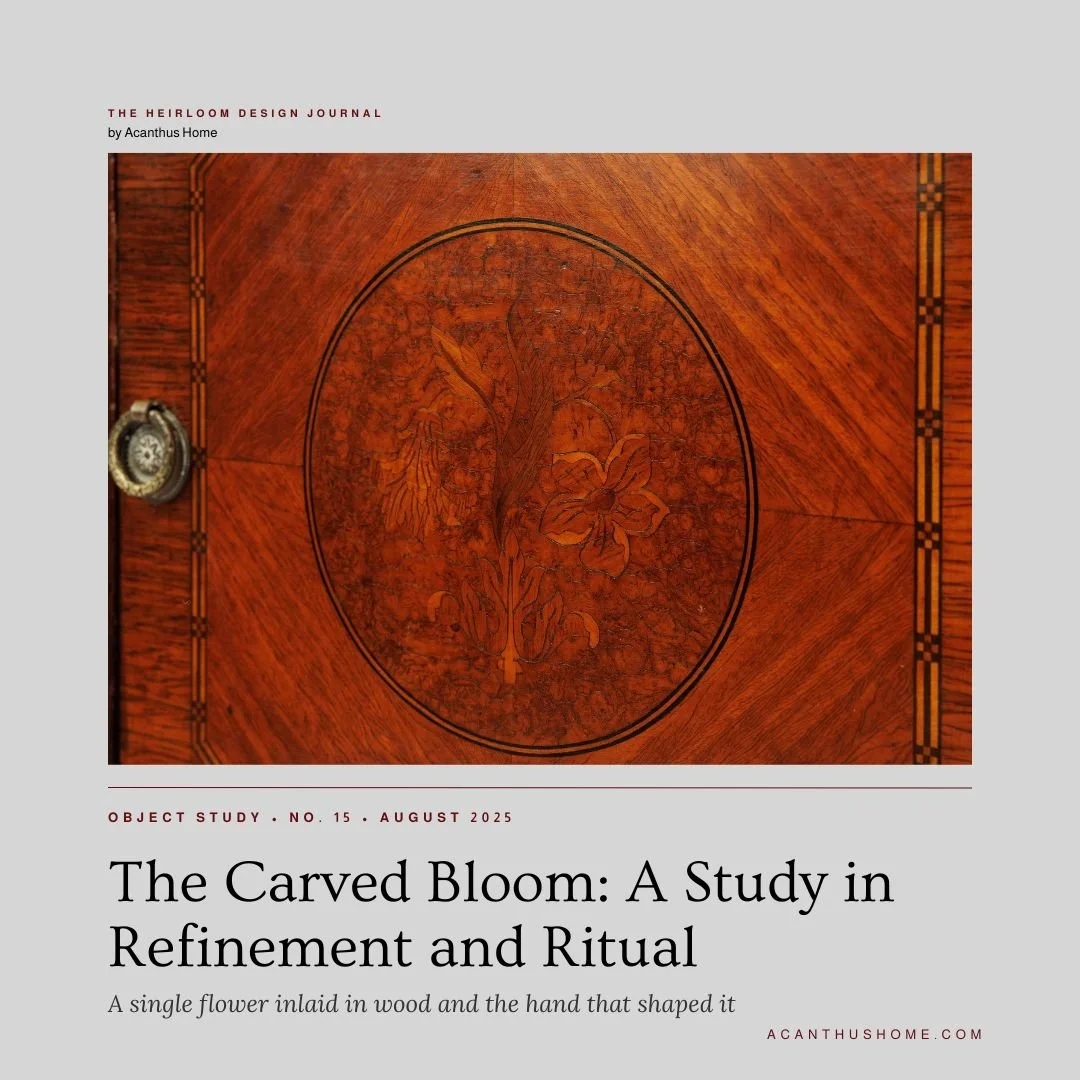
The Carved Bloom: A Study in Refinement and Ritual
A late nineteenth-century French side table in walnut, with a marble top, floral marquetry, and gilt mounts. Restored by Acanthus Home and returned to use, it was found in Jackson, New Hampshire, and now stands on the Palos Verdes Peninsula.
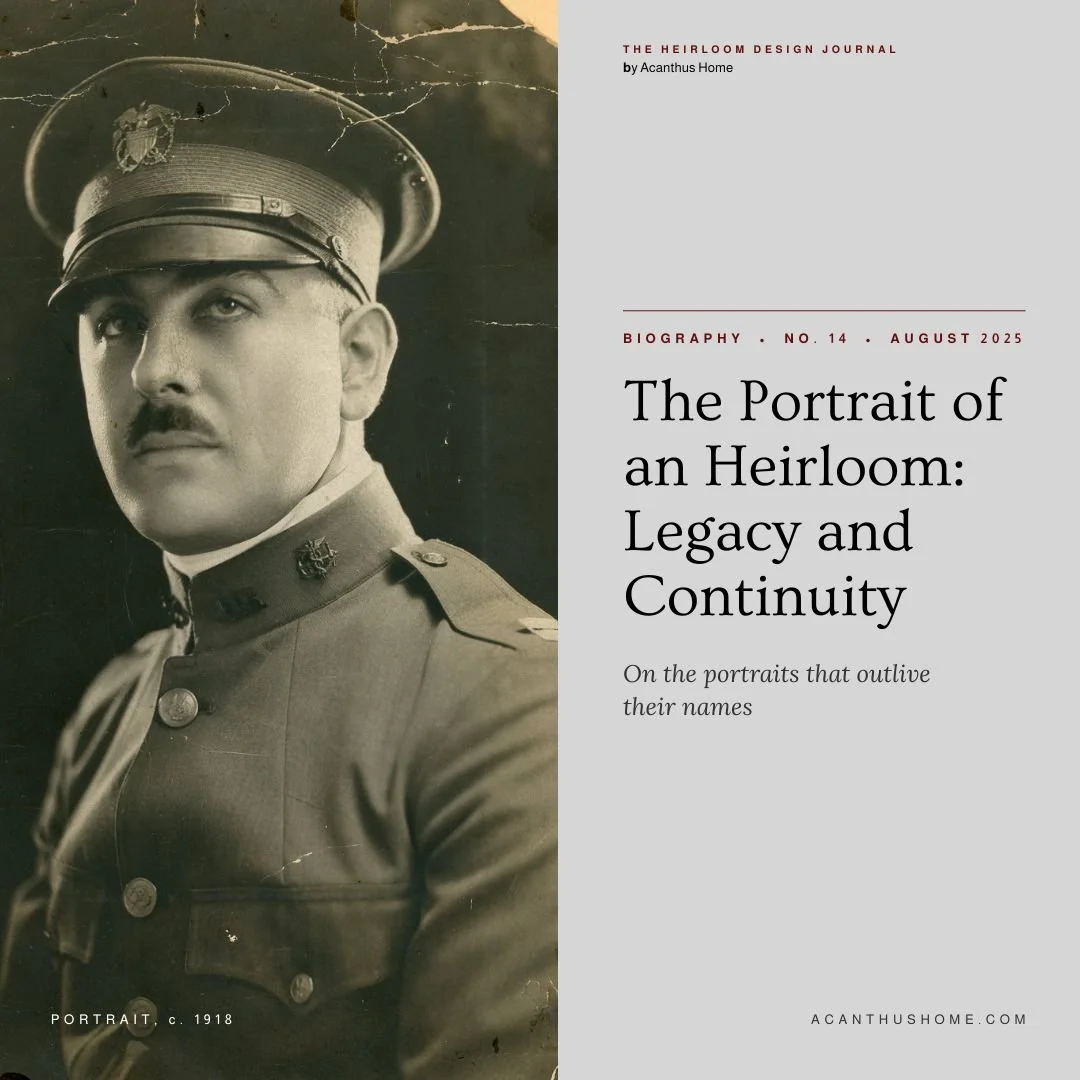
The Portrait of an Heirloom: Legacy and Continuity
A Chicago physician sat for a sepia portrait in the 1920s, and his son sat for one in uniform in 1942 before leaving for Europe, where he was lost in the Hurtgen Forest. Kept beside the letters and clippings that surround them, the photographs record how a document becomes an heirloom.
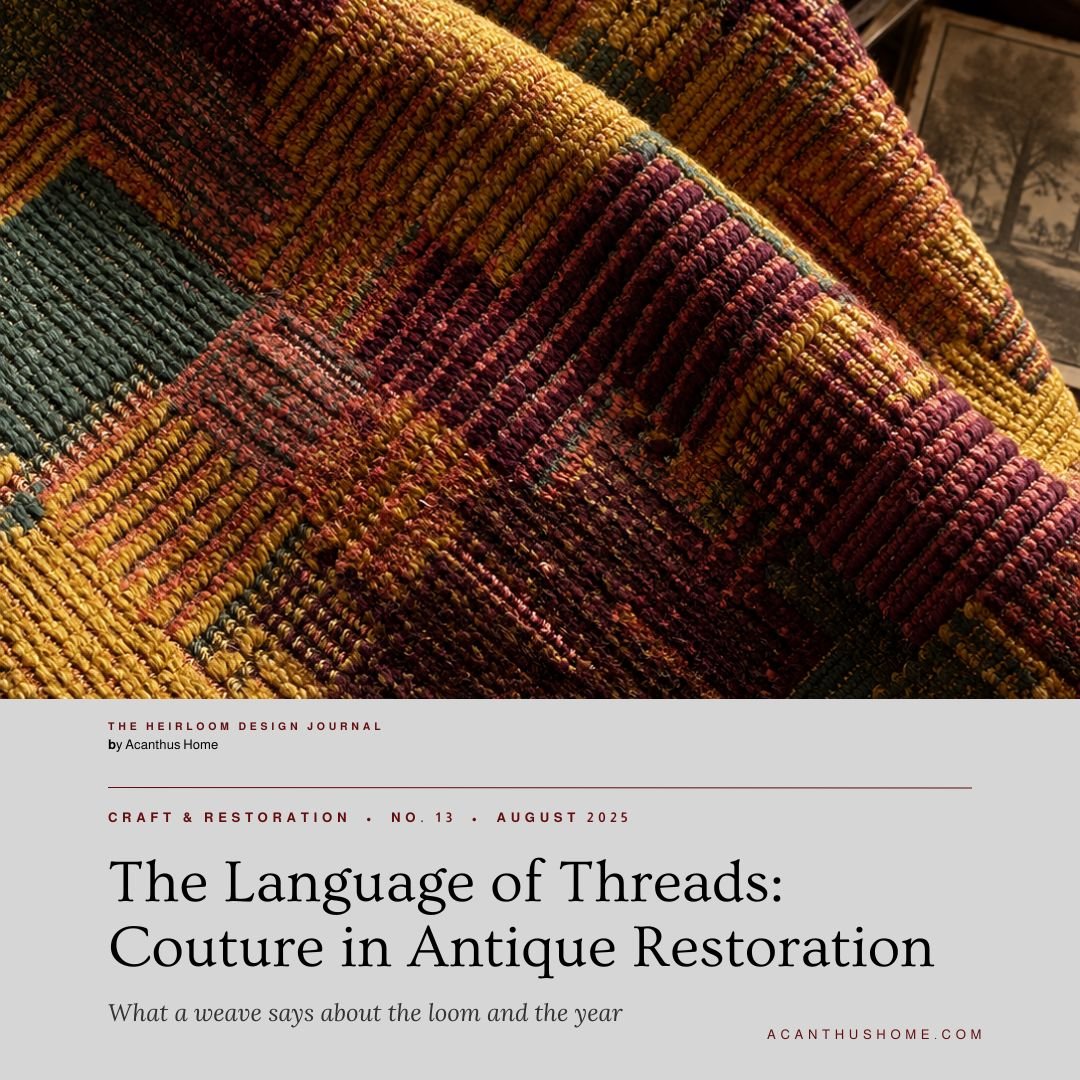
The Language of Threads: Couture in Antique Restoration
There is no single correct fabric for an antique chair, but there is a standard: a weave, weight, and motif that can carry daily use and still sit honestly with the frame. Two restorations show what that standard looks like in practice, the Crimson Canopy and the Velvet Courtship, both in Pierre Frey cloth.
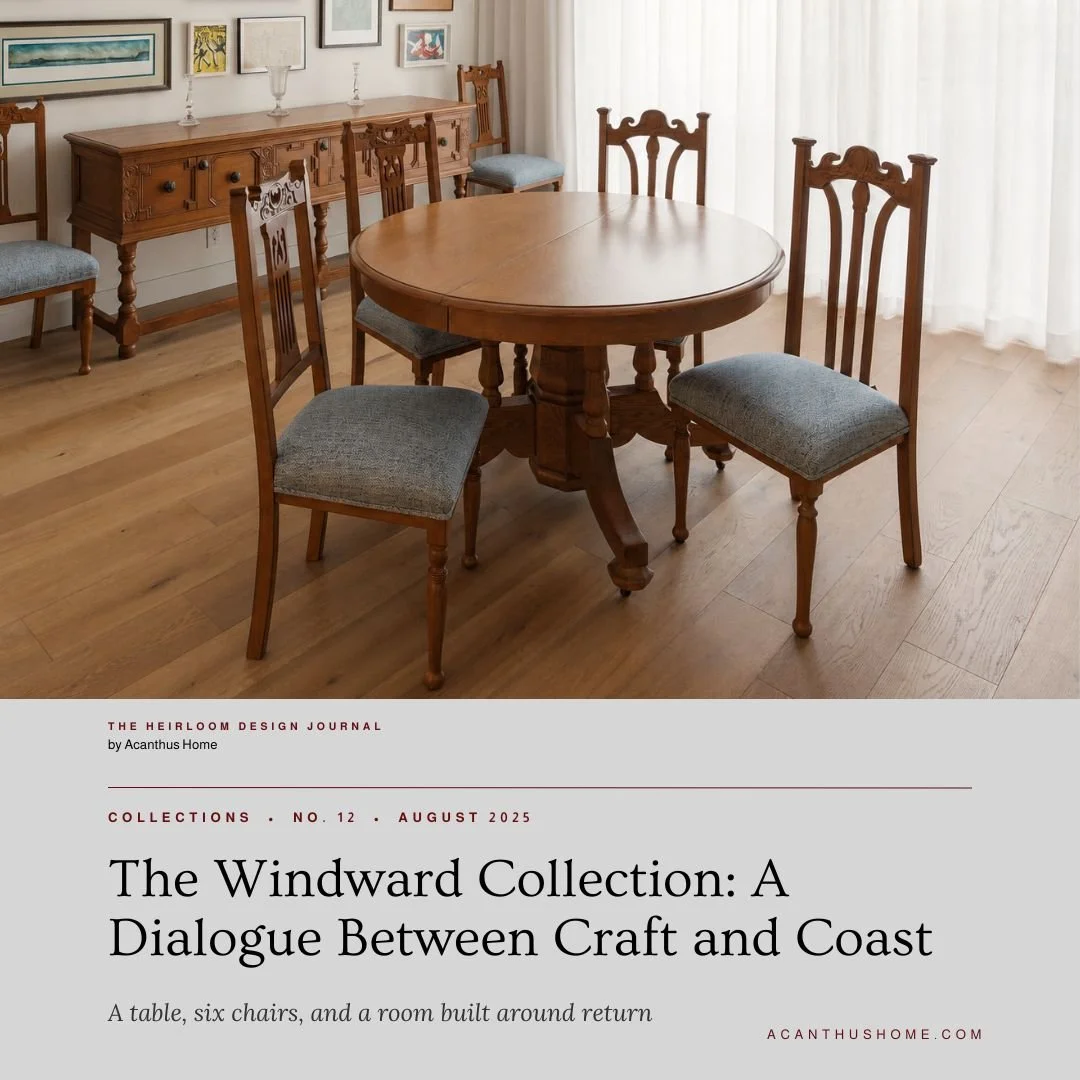
The Windward Collection: A Dialogue Between Craft and Coast
Antique dining chairs do not have to match to read as a set. The Windward Collection brings together six Edwardian chairs, four lyre-backs and two splat-backs, and a quarter-sawn oak extension table, held together by proportion rather than identical ornament.
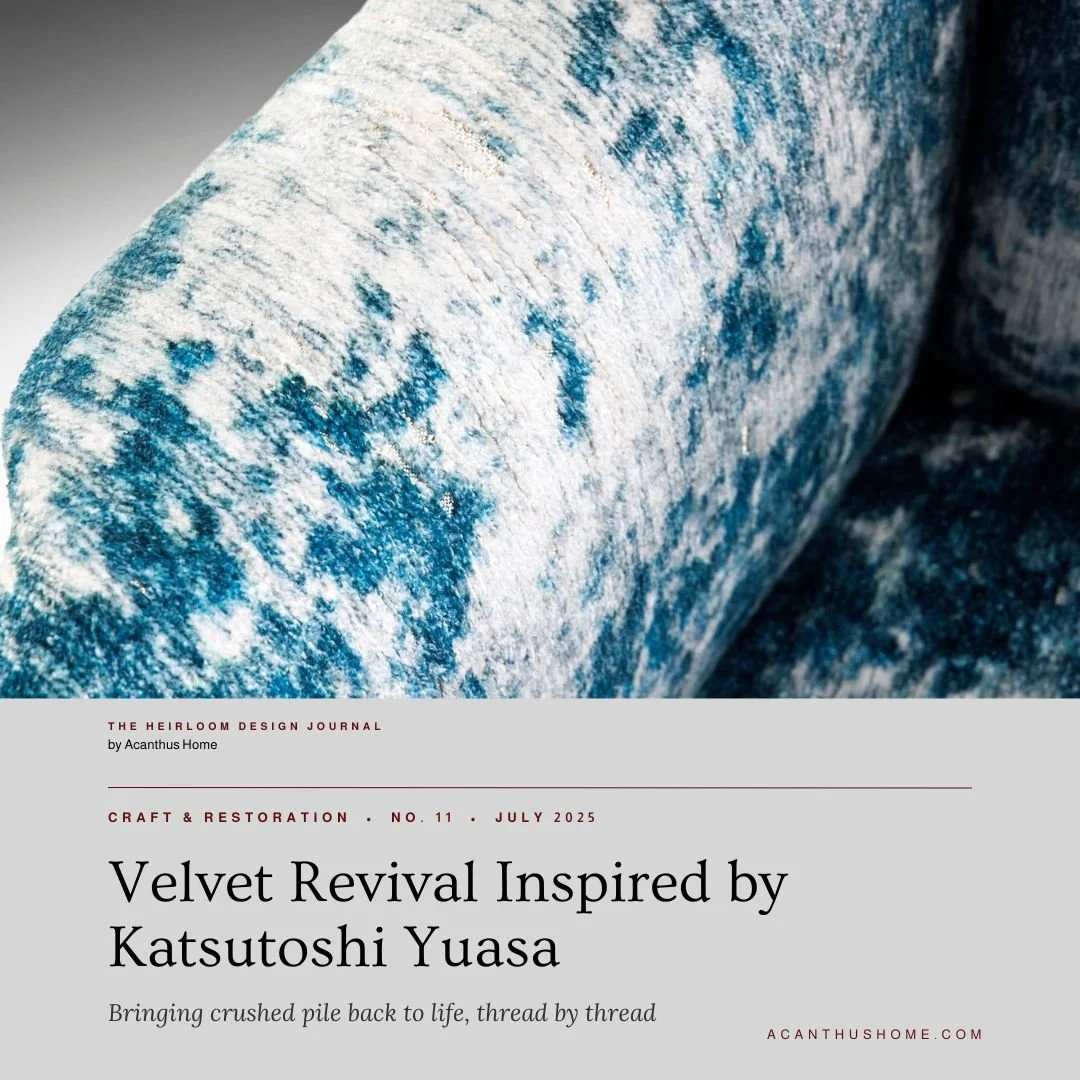
Velvet Revival Inspired by Katsutoshi Yuasa
A George III style wingback chair, found at the back of a Los Angeles thrift shop, had lost its covering and its finish but kept its proportion. Refinished and reupholstered in a Black Edition printed velvet drawn from the woodblock work of Katsutoshi Yuasa, it was carried forward rather than made new.
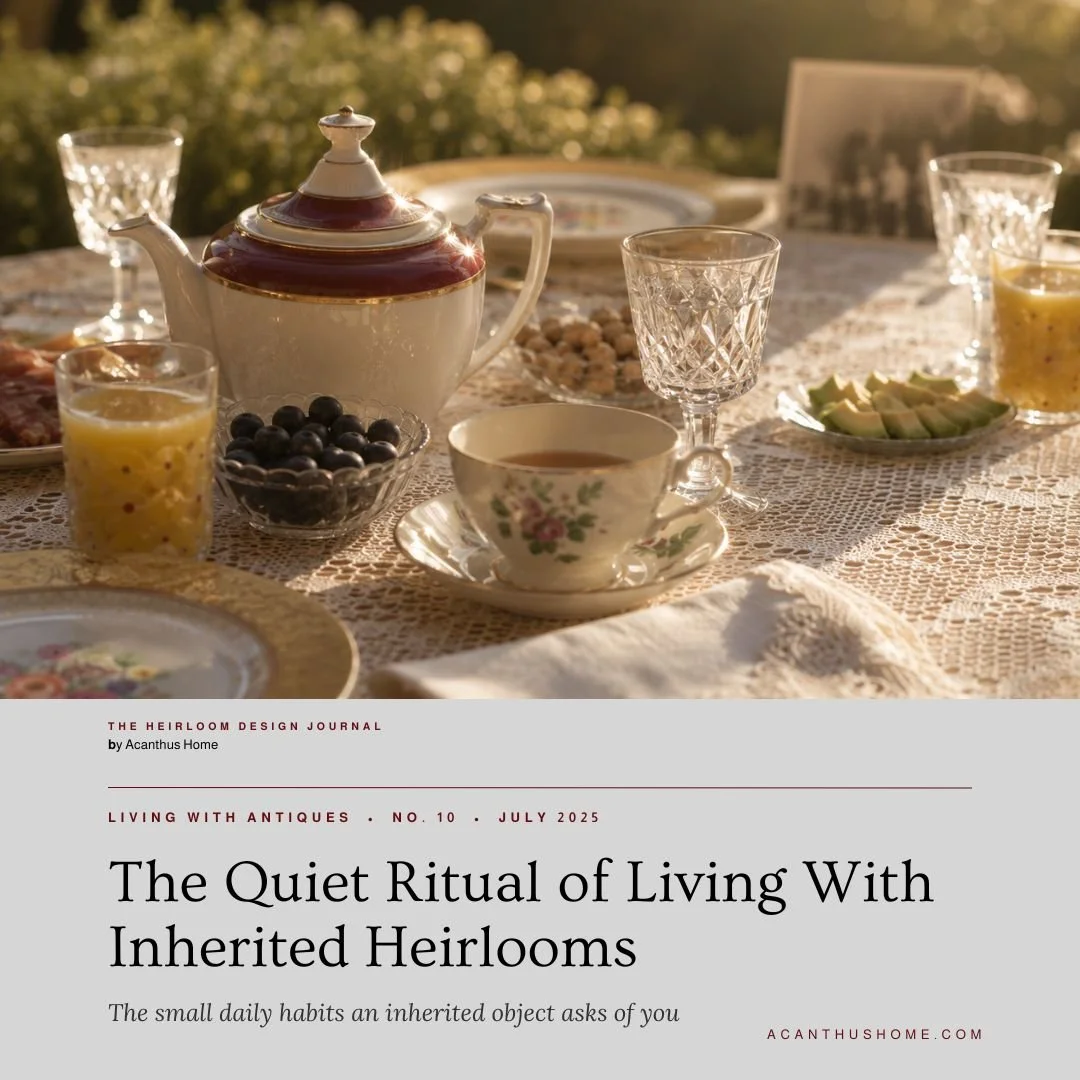
The Quiet Ritual of Living With Inherited Heirlooms
Inherited china is better used than kept behind glass, when its condition allows. A morning table of mismatched plates, thinned gilding, and hairline-cracked cups, set outdoors on a lace cloth that once did this work every day.
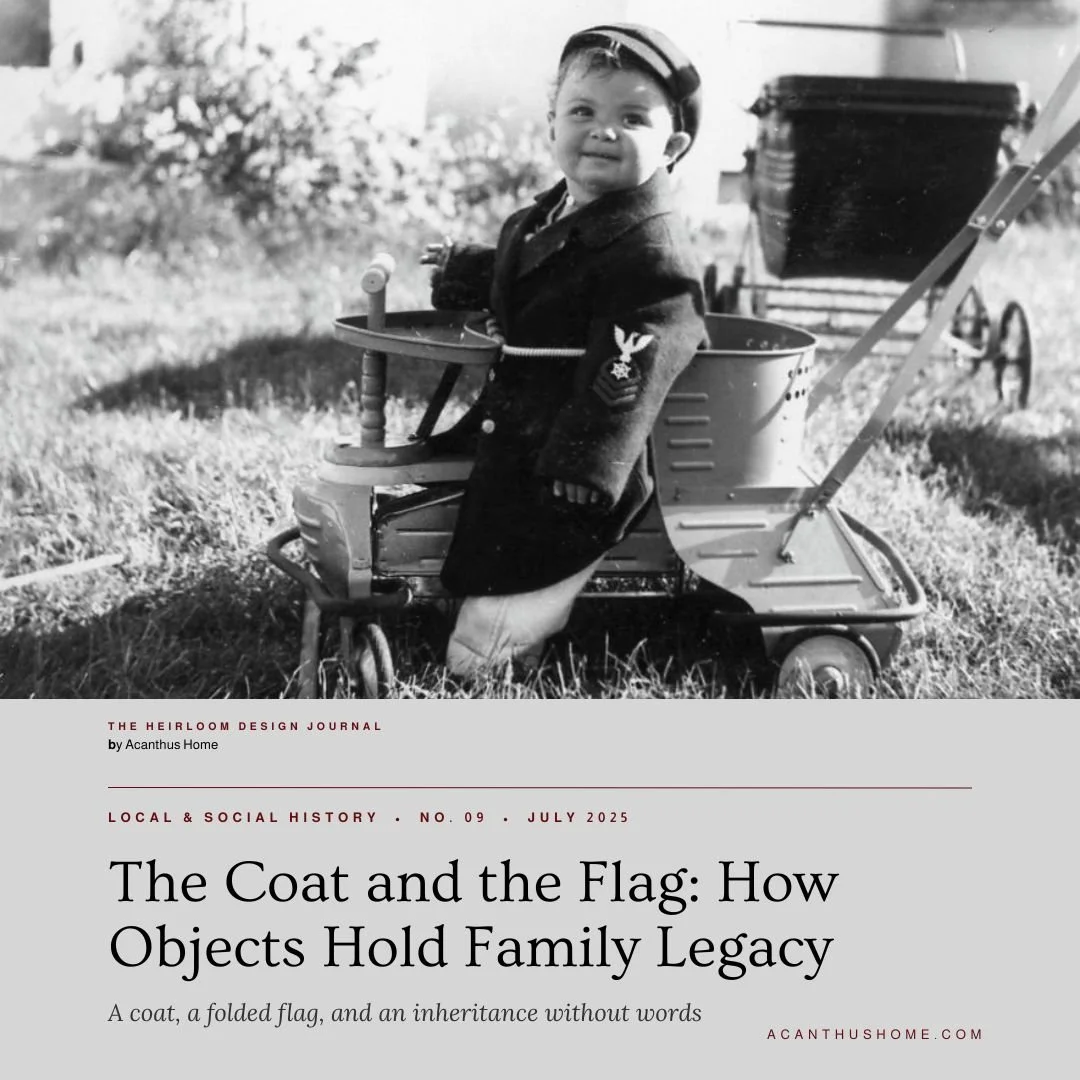
The Coat and the Flag: How Objects Hold Family Legacy
In 1945 Los Angeles, a boy wears his uncle's oversized U.S. Navy coat, months after his father, a U.S. Army soldier, was reported missing in the Hürtgen Forest. Five years later, the boy receives his father's folded flag.