Harvest in Glass: The Vessels That Hold Us
Old glassware is meant to be used, and the plainest piece can become the one you would keep above all the others. This bowl, my grandmother's, is a French pressed-glass bowl made by Arcoroc, the sort once sold for ordinary tables in some quantity. It holds a morning's harvest of garden lemons and feijoas today, the way it has held Thanksgiving side dishes and weekday salads for decades. Nothing about that long record shows on the glass. The walls are still clear, the diamond points still sharp, the rim unchipped.
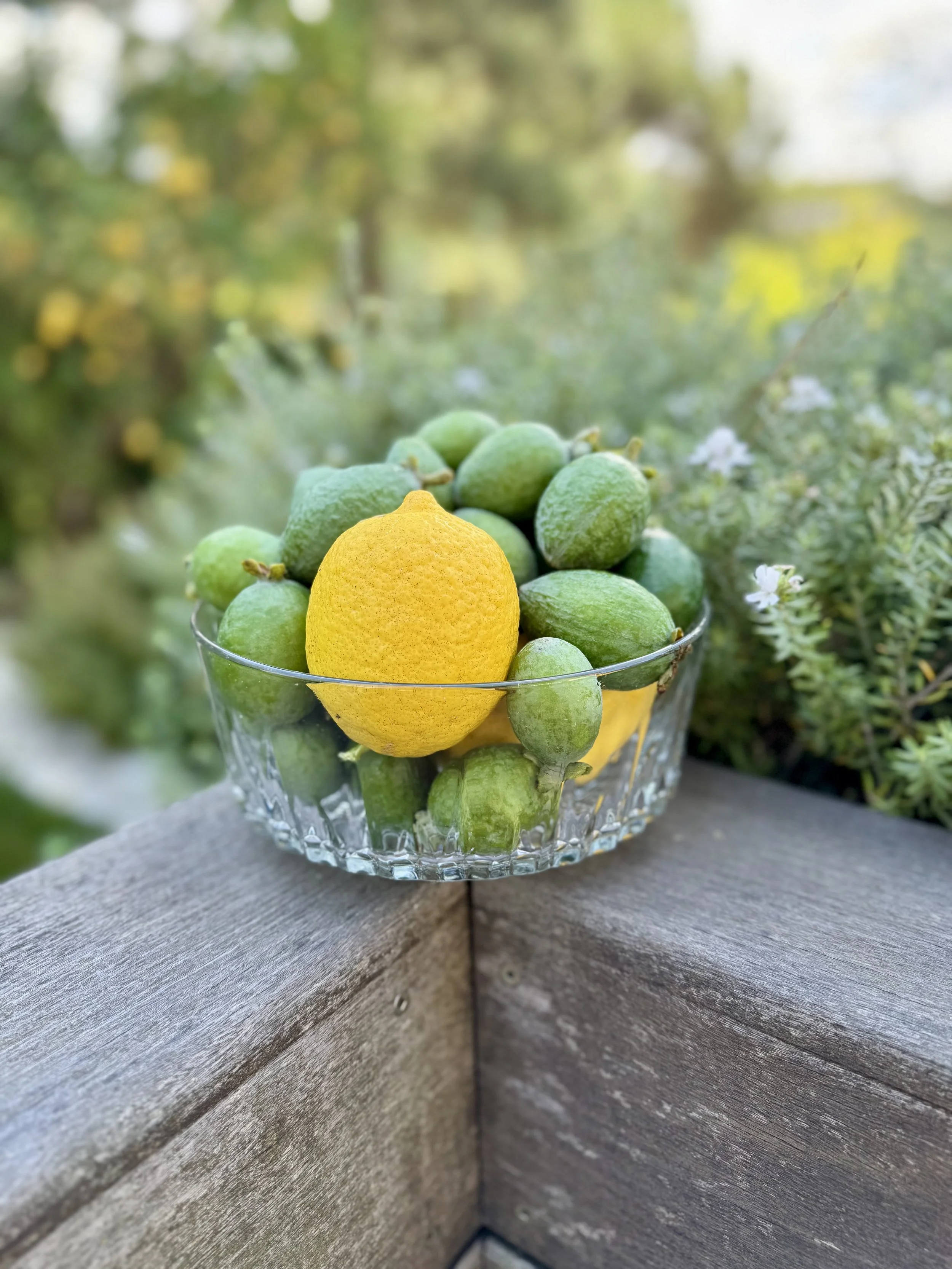
Arcoroc pressed-glass bowl, France, holding a morning's harvest of garden lemons and feijoas. Kept in daily use. Acanthus Archive.
Should you use old glassware every day?
Yes, and this bowl is a fair argument for it. Begin with the object. It is a small straight-sided bowl of clear pressed glass, its lower body worked in an all-over diamond point that gives way to a plain band at the rim, with a molded starburst on the underside. The base carries the maker's mark: Arcoroc France. Arcoroc is a tableware brand of Arc International, the glassworks at Arques in northern France, and this diamond-point pattern is the one it sold as Diamant. Arc International's customer care confirms that Diamant became available around 1986 and is no longer produced, and that no further records survive. The glass is tempered soda-lime, not lead crystal. That settles two questions at once: the bowl was built to take daily handling, and it carries none of the lead that comes with older cut crystal.
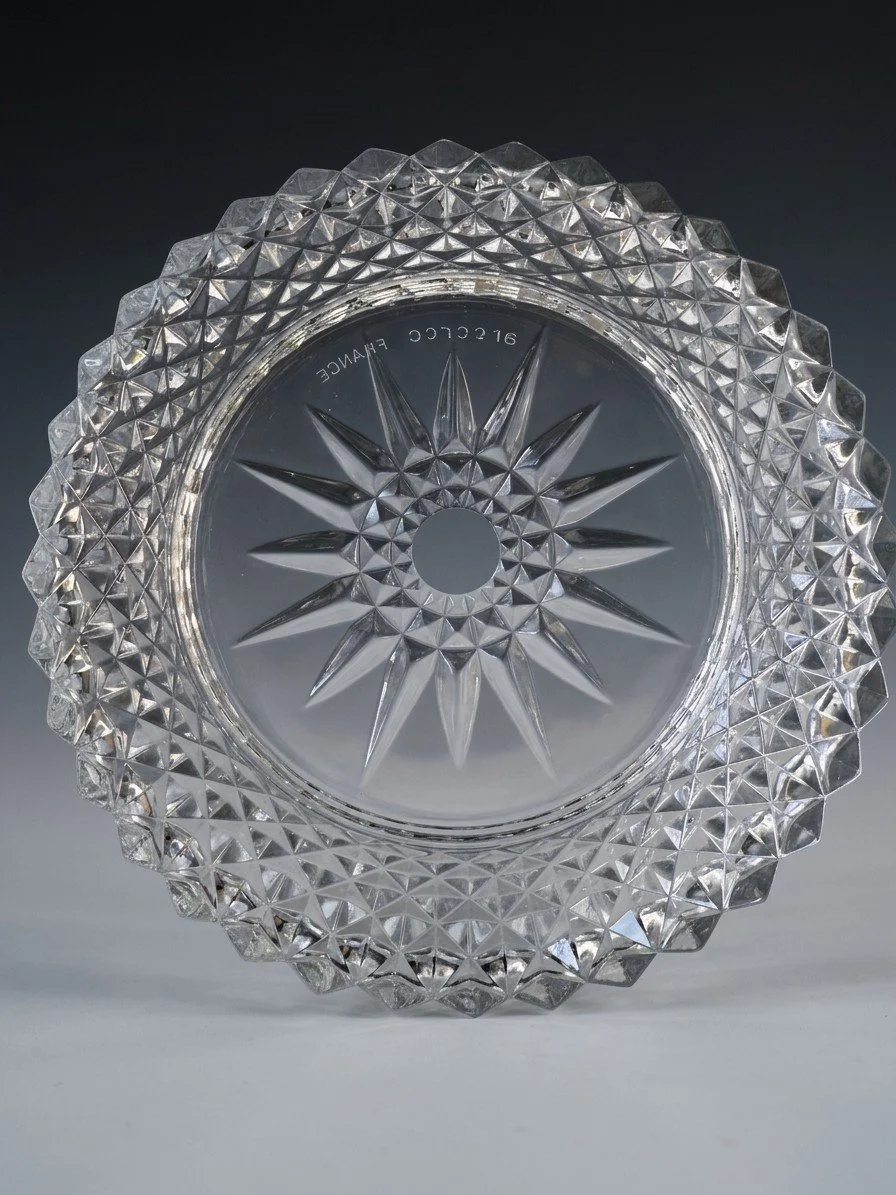
The base, molded arcoroc France around a pressed star: the mark that identifies the bowl as Arcoroc pressed glass rather than cut crystal. Acanthus Archive.
Pressed glass like this was made to bring the look of cut crystal to everyday tables. A mold gave an ordinary household the faceted sparkle that hand cutting once kept for the wealthy, at a price that let a bowl be used without a second thought. The diamond points still catch the light and throw it back, so a heap of lemons sits in a small brightness. The bowl was made to be filled and seen, not shelved.
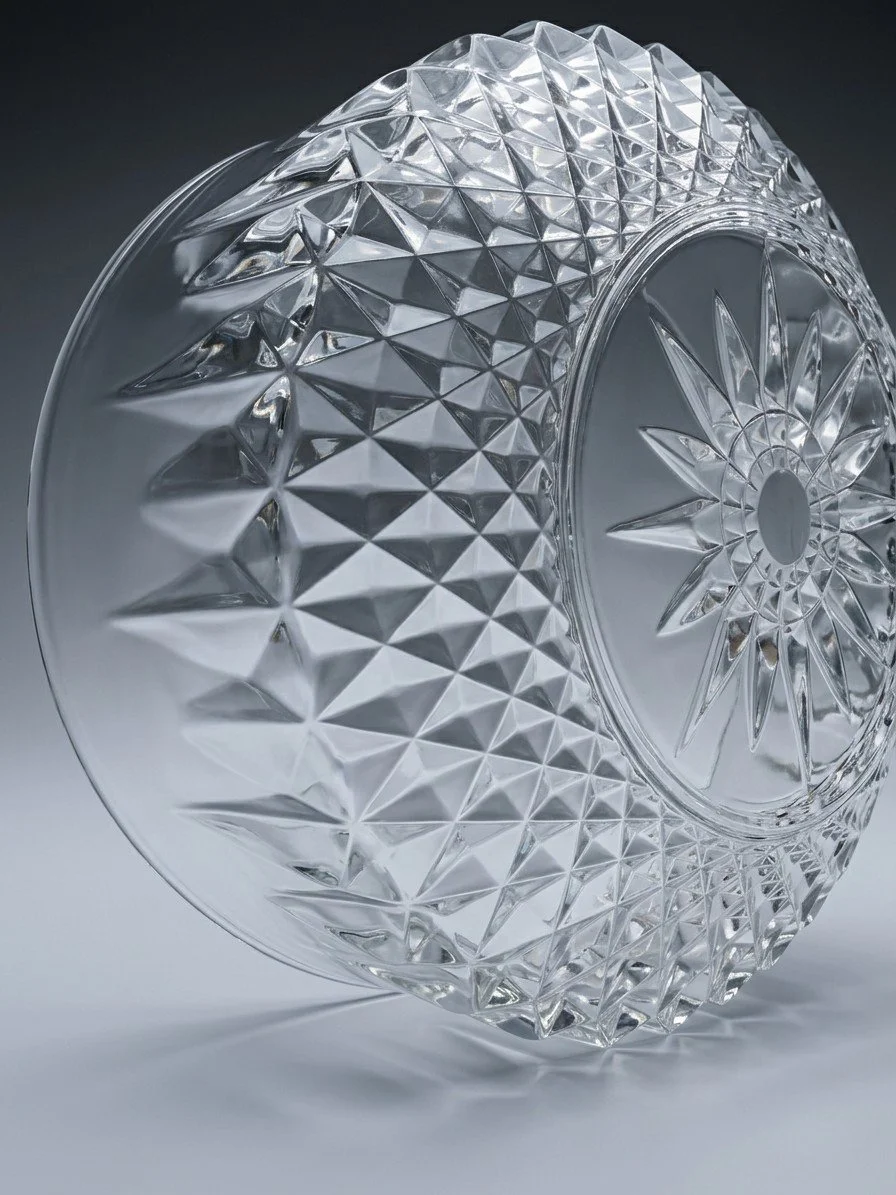
The bowl on its side, showing the all-over diamond-point body and the molded star at the base. The pressed pattern gives an everyday form the facets that cutting once gave by hand.
The life of a serving bowl
This bowl has done ordinary work in an ordinary house. It has held fruit and cut flowers, side dishes carried to a Thanksgiving table, and salads for meals no one thought to remember. Each use passed through it and left it much as it was. That is worth saying plainly, because the instinct with an inherited thing is often the opposite: to lift it out of reach and keep it for a someday that rarely comes. An earlier journal followed the same question through inherited china. This bowl was never spared that way. It was lifted, filled, washed, and returned, and the returning is what kept it present.
Its importance never depended on what it was made from. A piece like this was inexpensive when new and remains modestly valued today. What it holds is the evidence of a life, which is much of why we keep and record such things at all. A bowl that is only stored records nothing after the day it was put away.
Washing it, keeping it
Daily use asks only a little care. Tempered soda-lime glass is made to survive handling and sudden changes in temperature, and a piece like this can go in the dishwasher, though hard water and strong detergent will slowly dull the surface over many cycles. Hand washing in warm water keeps the diamond facets bright. There is no lead here, so acidic fruit and longer storage pose none of the risk they would in older cut crystal. Store the bowl upright rather than pressed inside another, which chips rims over time. If tempered glass ever does fail, it tends to break into blunt pieces rather than long shards, one more sign it was built for a working kitchen.
This is why a bowl in daily use is not being worn out. It is being kept. The bowl was not spared into permanence. It was used into it.
That matters most where use has been interrupted. For anyone who has lost a home and its contents to fire, flood, or sudden disaster, the objects that carried the pattern of daily life are gone, and the pattern has to begin again on something new. A plain bowl bought this week can take up the same work this one once did: filled, emptied, washed, returned. The glass alone was never the point. It mattered for what daily life asked of it. The bowl remains in ordinary use.
Object in This Journal
My Grandmother's Arcoroc Bowl: a French pressed-glass bowl by Arcoroc in the Diamant pattern, available from about 1986. Tempered soda-lime glass, not lead crystal. Not for sale. This object remains in the Acanthus Archive, and in daily use.
See more of the collection's antique tables.
Related Reading
Thoughtfully Collected.
