The Quiet Ritual of Living With Inherited Heirlooms
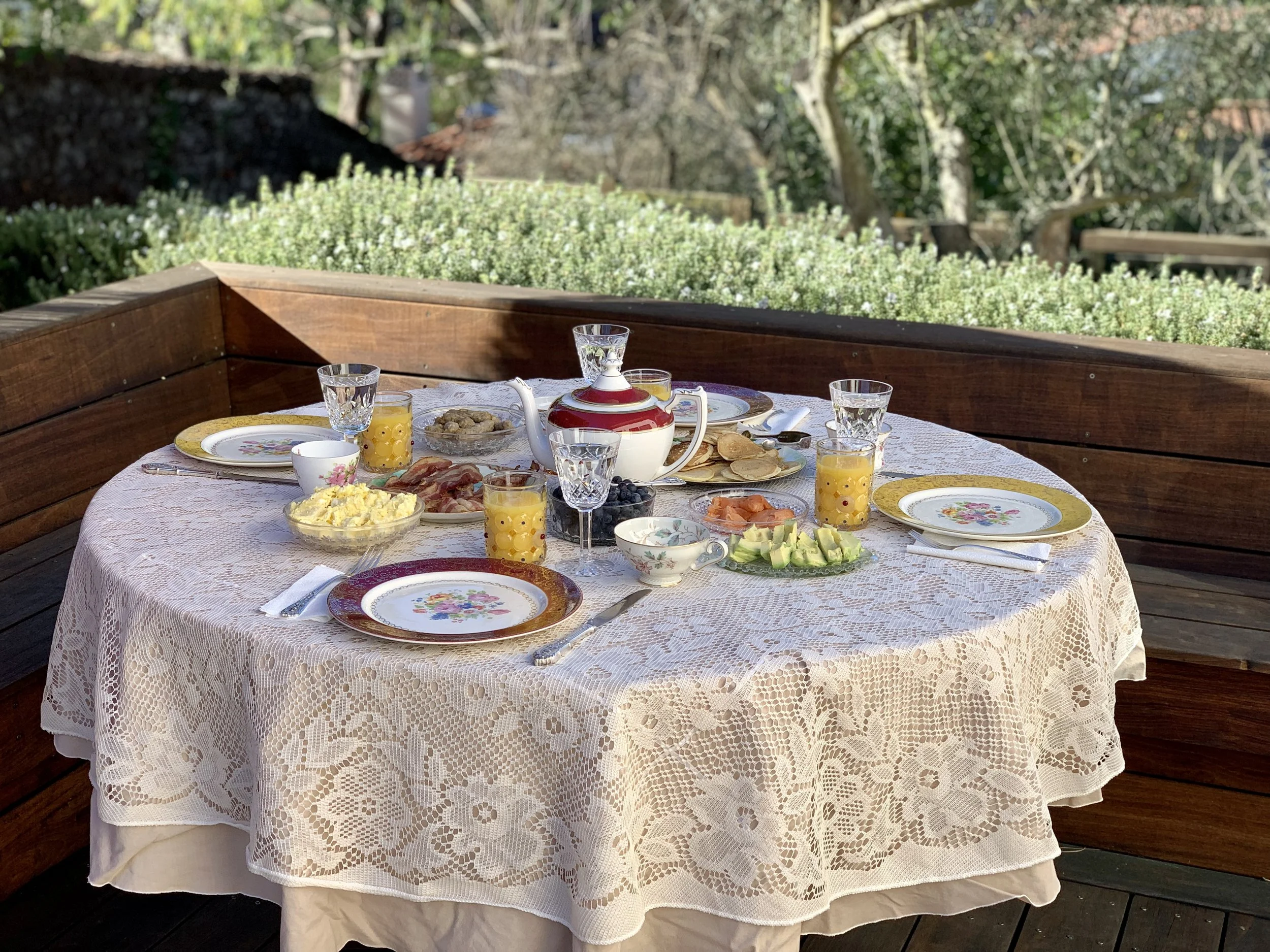
A morning table of inherited china, glass, and lace, set outdoors at first light. Three households, one cloth. Acanthus archive.
Inherited china is better used than automatically kept for display, when its condition allows. The plates on this table had spent decades inside my maternal great-grandmother's china cabinet, brought forward only for holidays and ceremony; the lace tablecloth beneath them had once been in daily use by my grandmother, and that morning it did what it had always done, holding the table without distinction between an ordinary day and a special one.
Should inherited china be used daily or saved for display?
The table answers the question by comparison before any argument is made. It sat outdoors, positioned where the light arrived first. Porcelain held the night's coolness. The table stood on a wooden deck, with a low planter of white flowers behind it. The morning was still enough that nothing moved until someone reached for it. The table did not decorate the space. It organized it.
The plates did not match, and their histories were separate. They came from my maternal great-grandmother's cabinet. The flatware came from my paternal grandmother. The glassware came from my maternal grandmother. Three households, three registers, set together on one cloth. Nothing on the table had been chosen to match anything else on it.
The evidence of use was on every surface. One plate was ringed with gold florals. Another carried a soft, worn rose, its luster thinned by time. Teacups with scalloped rims bore faint hairline cracks. A red-and-gold teapot, cracked but steady, still poured. A cup four generations old waited for the morning's first pour. The glass caught the light without insisting on it. The bread never made it into the photograph, but it was there, warm and torn by hand.
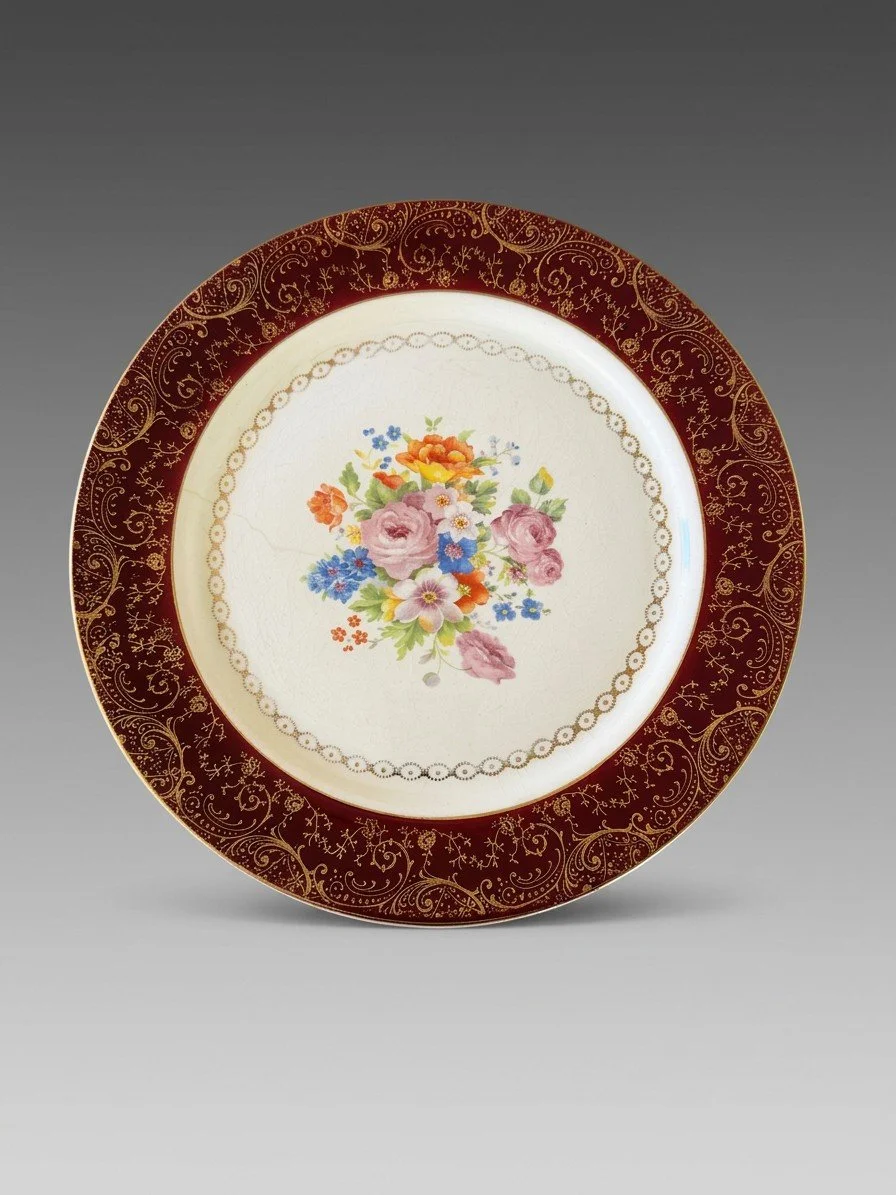
The plate ringed with gold florals, a maroon-and-gilt border around a floral center, its cream glaze finely crazed with age. Acanthus archive.
The Cabinet Plates and the Daily Cloth
The plates, protected for decades, arrived at the morning nearly as they had entered the cabinet, their histories intact but paused. The lace cloth carried the softness and creases of the tables it had dressed. One carried the relative stillness of the cabinet. The other carried the evidence of repeated use. That morning, both returned to the work they had been made to do.
These are condition issues, but they are also evidence. The worn gilding, the hairline cracks, and the crack at the handle record a plate lifted, a cup returned to its saucer, and a pot carried to the table and back. The marks left by use are among the marks that allow an heirloom to be read. A plate kept behind glass is protected from harm, but also from the continued record of use. It stays whole, and its story pauses.
The cabinet itself was built for this holding back. The glazed china cabinet appeared in England and the Netherlands in the late seventeenth century, made to display imported porcelain then too costly and too fragile for daily use; royal collectors kept theirs on view rather than in the hand. When industrial potteries put porcelain within ordinary reach two centuries later, the cabinet came with it into the dining room, and so did the habit it was designed around. To keep the good service for best is to follow an instruction three hundred years old.
There was no company to impress that morning, only lineage to honor. The linens were creased. The silver was unevenly placed. The serving utensils were still missing. Nothing had been corrected, and nothing had been concealed.
The Record in Glaze and in Wood
Furniture holds a life the same way. The top of a well-used table carries a faint dishing where hands and dishes returned to the same places for years, a record you notice with your hands before your eyes. China keeps that record as thinned glaze and hairline cracks; wood keeps it as patina and the soft wear of handling. The material differs, the principle does not: an object in use keeps the evidence of its use, and that evidence is what lets it be read as an heirloom rather than as merchandise.
We may not know every history attached to the antiques we restore. Names disappear. Rooms change. Records thin. What a well-made object keeps instead is the ability to receive use again, taking hands, weight, and repetition into itself and carrying their marks forward. That ability does not expire while the object is in use. It only pauses behind glass.
The teapot shows this in a single object: the stress crack where its handle meets the body is not damage to apologize for but the clearest record it keeps of being carried, filled, and poured across years of mornings rather than kept behind glass.
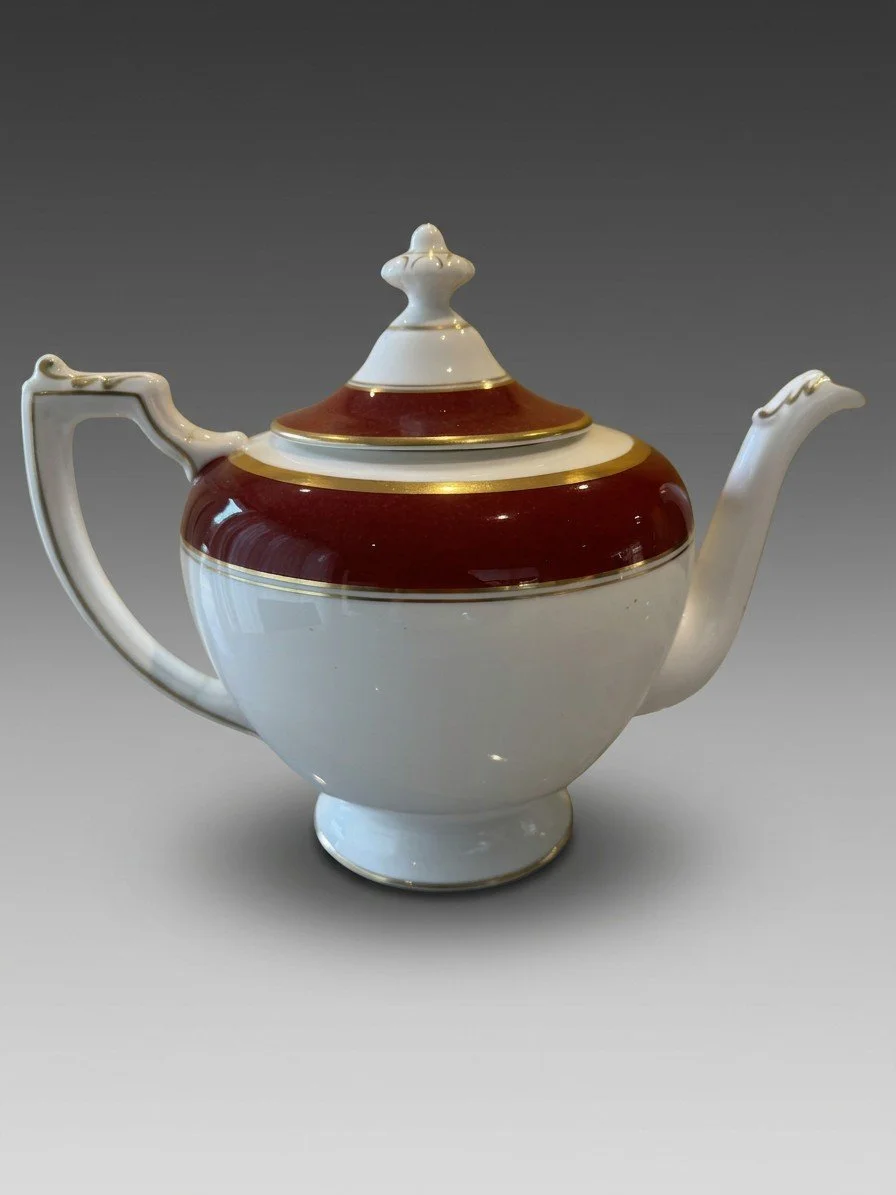
The red-and-gold teapot, cracked but steady, still in use. Acanthus archive.
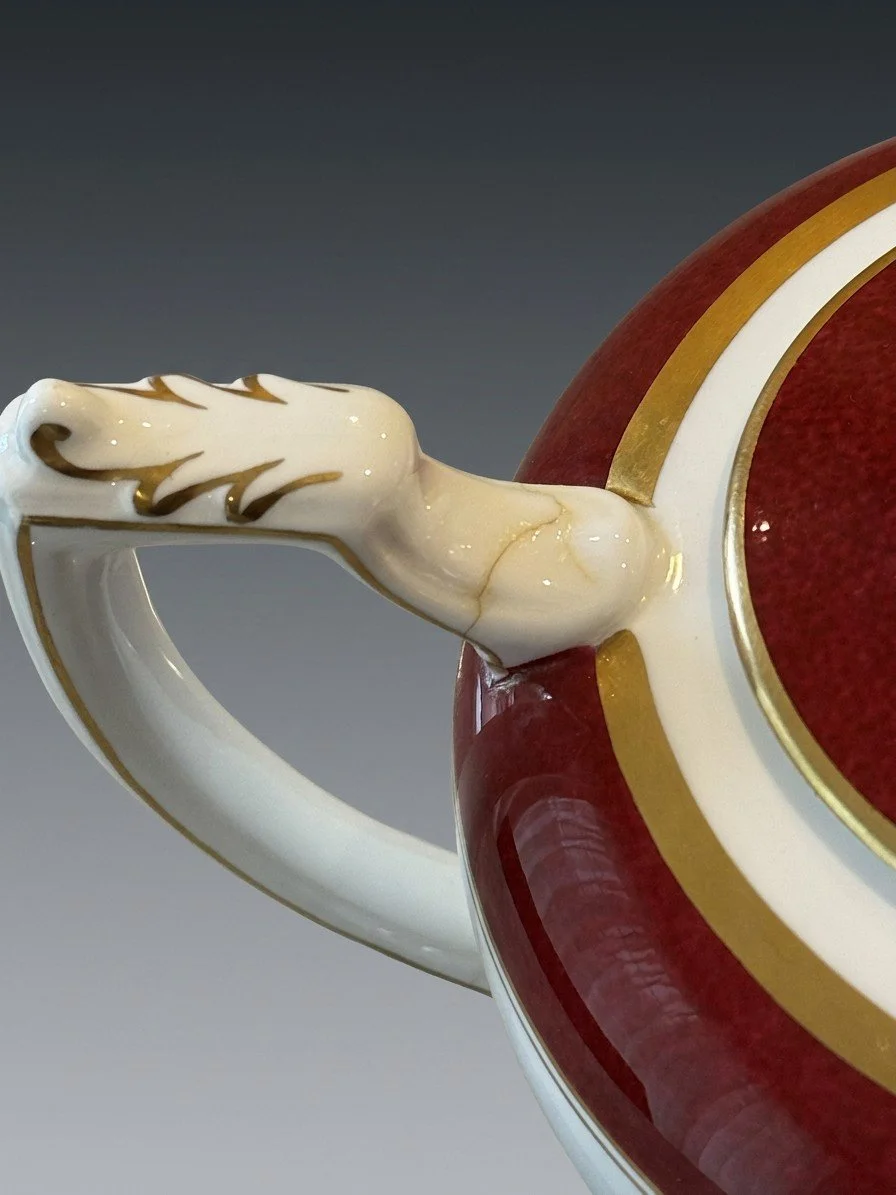
A stress crack where the handle meets the body, darkened by years of use after it formed. Acanthus archive.
So the plates came out of the cabinet, the cloth was laid, and another ordinary morning joined all the others that had come before it. Used this way, an heirloom is not preserved from life. It is preserved by it.
Object in this Journal
The inherited table setting, the mismatched china, glass, silver, and lace passed down through three households. This object remains in the Acanthus archive.
In the collection
The Corvane, a restored Jacobean Revival china cabinet, the kind of glazed case where inherited china waits between the mornings it is used; and The Obsidian Atelier, a Chippendale Revival secretary whose glazed hutch is a smaller stage of the same kind.
See more of the collection's antique tables.
Related reading
Harvest in Glass, on using an inherited glass bowl every day.
Thoughtfully Collected. Quietly Shared.
