

Acanthus Journal of
Memory, Form, & Meaning
An ongoing editorial archive exploring restored antiques, personal histories, and the afterlife of objects. Each entry reflects on memory, material, and the quiet ways interiors carry human presence across time.
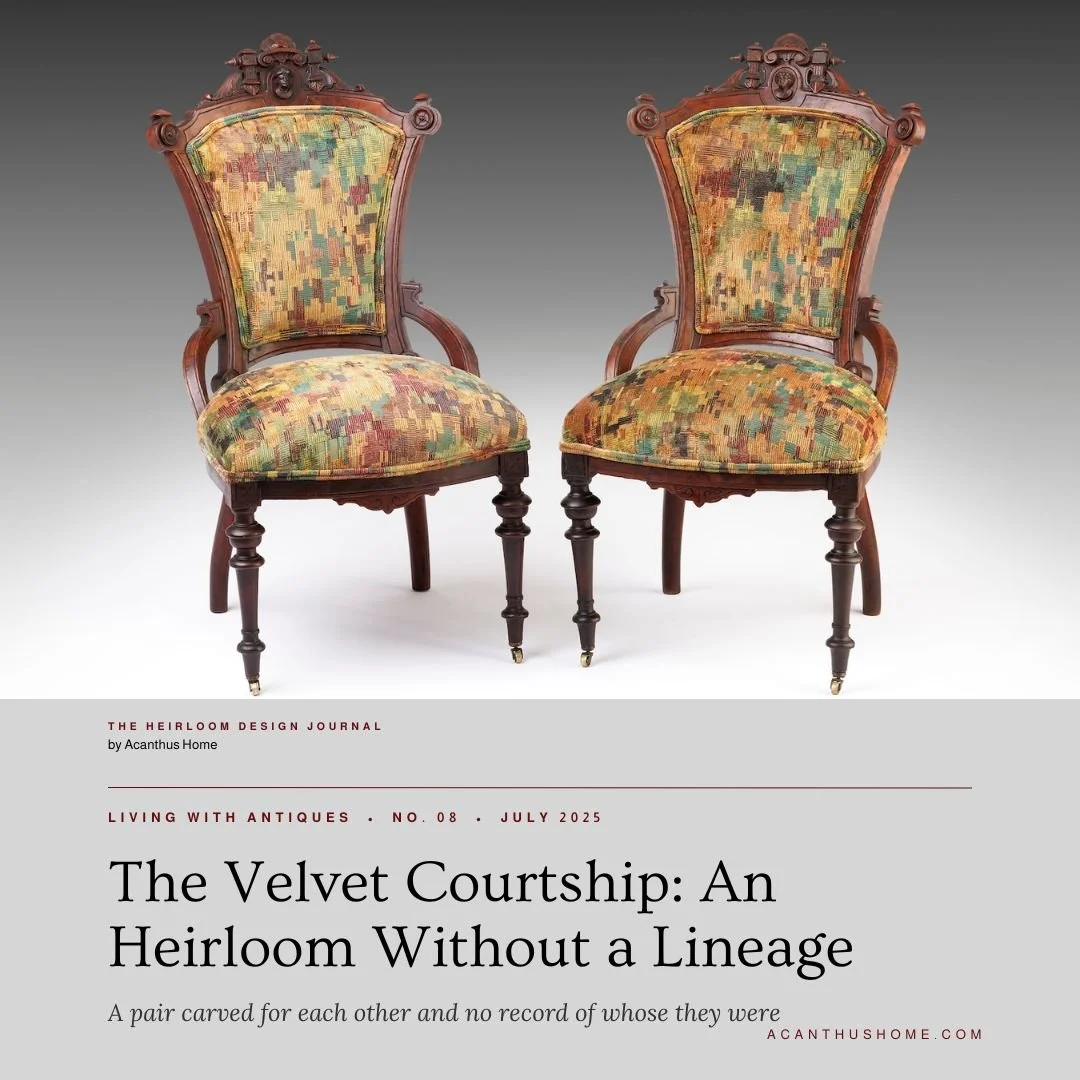
The Velvet Courtship: An Heirloom Without a Lineage
Victorian portrait medallion chairs carry a carved bust at the center of the crest, a man on one chair and a woman on its companion, and they were made in pairs because the pairing was the point. The Velvet Courtship is one such pair, walnut, without provenance, reupholstered in Pierre Frey velvet.
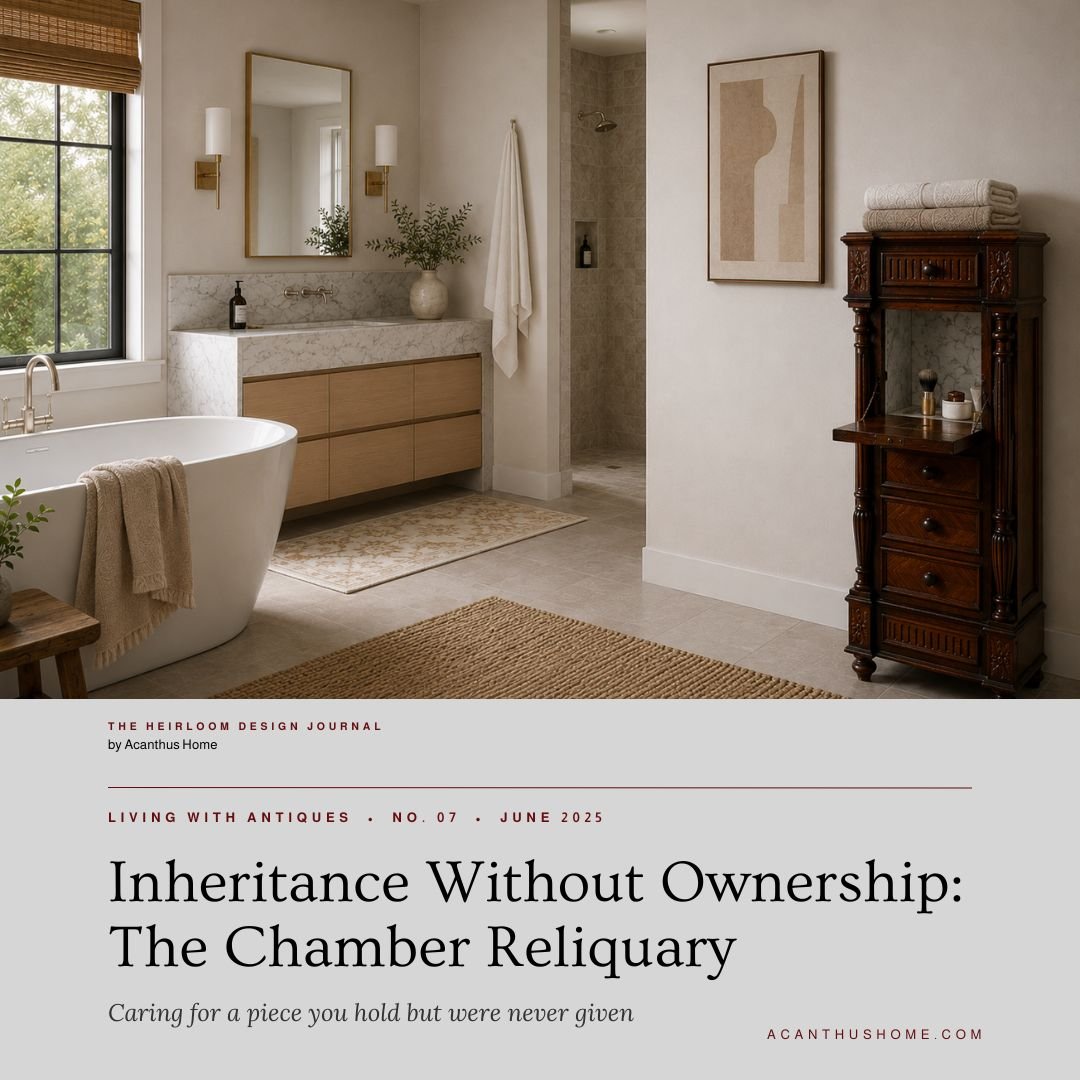
Inheritance Without Ownership: The Chamber Reliquary
Some heirlooms are not inherited, they are remembered. The Chamber Reliquary is a 19th-century bedside cabinet with a marble-lined chamber, revived by hand and kept in use rather than set apart.
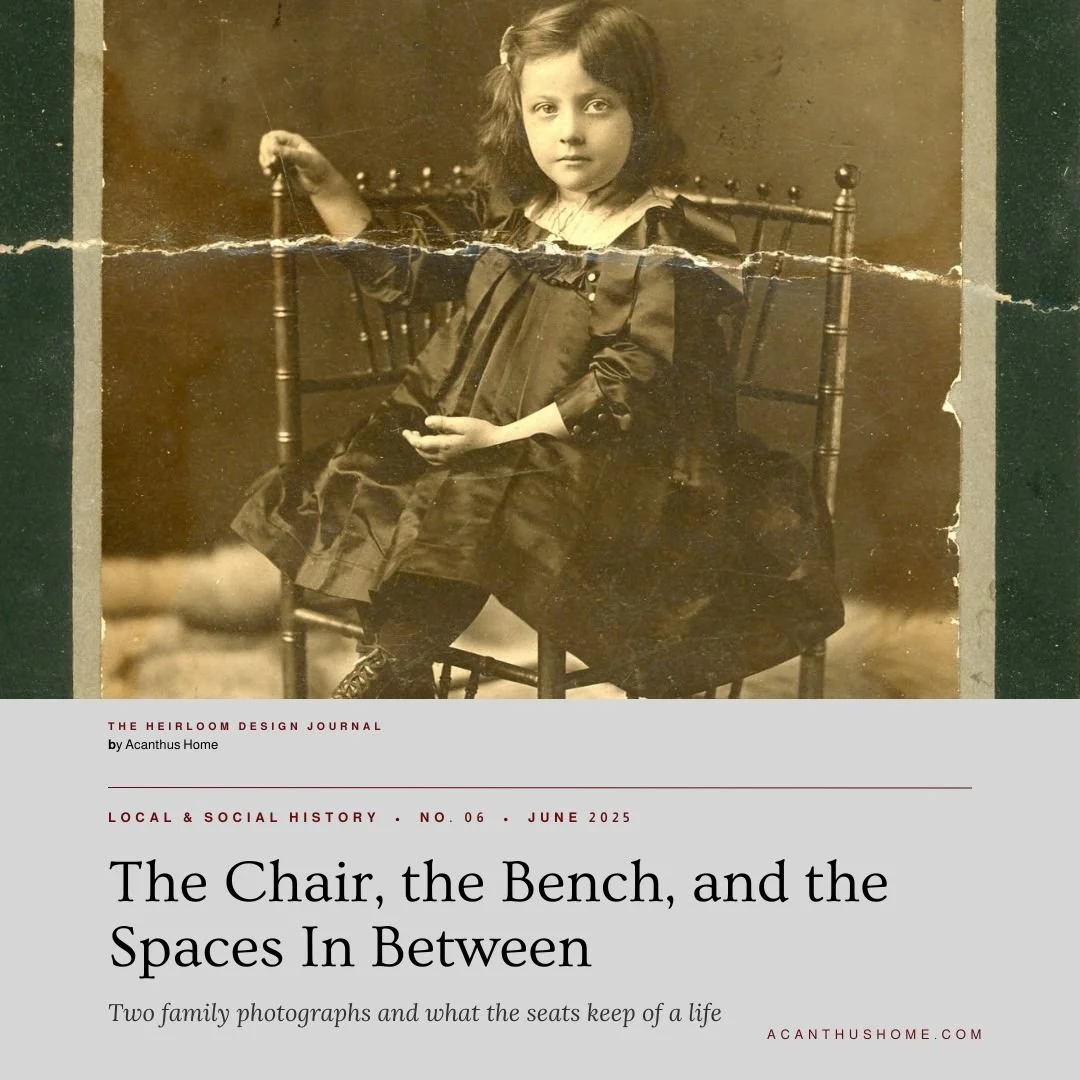
The Chair, the Bench, and the Spaces In Between
Two family portraits, 1902 and 1935, follow one woman from a turned-wood spindle-back chair to a carved scroll-arm velvet chair. What chairs in old family photographs record of a life is posture, proximity, and the years between the two seats.
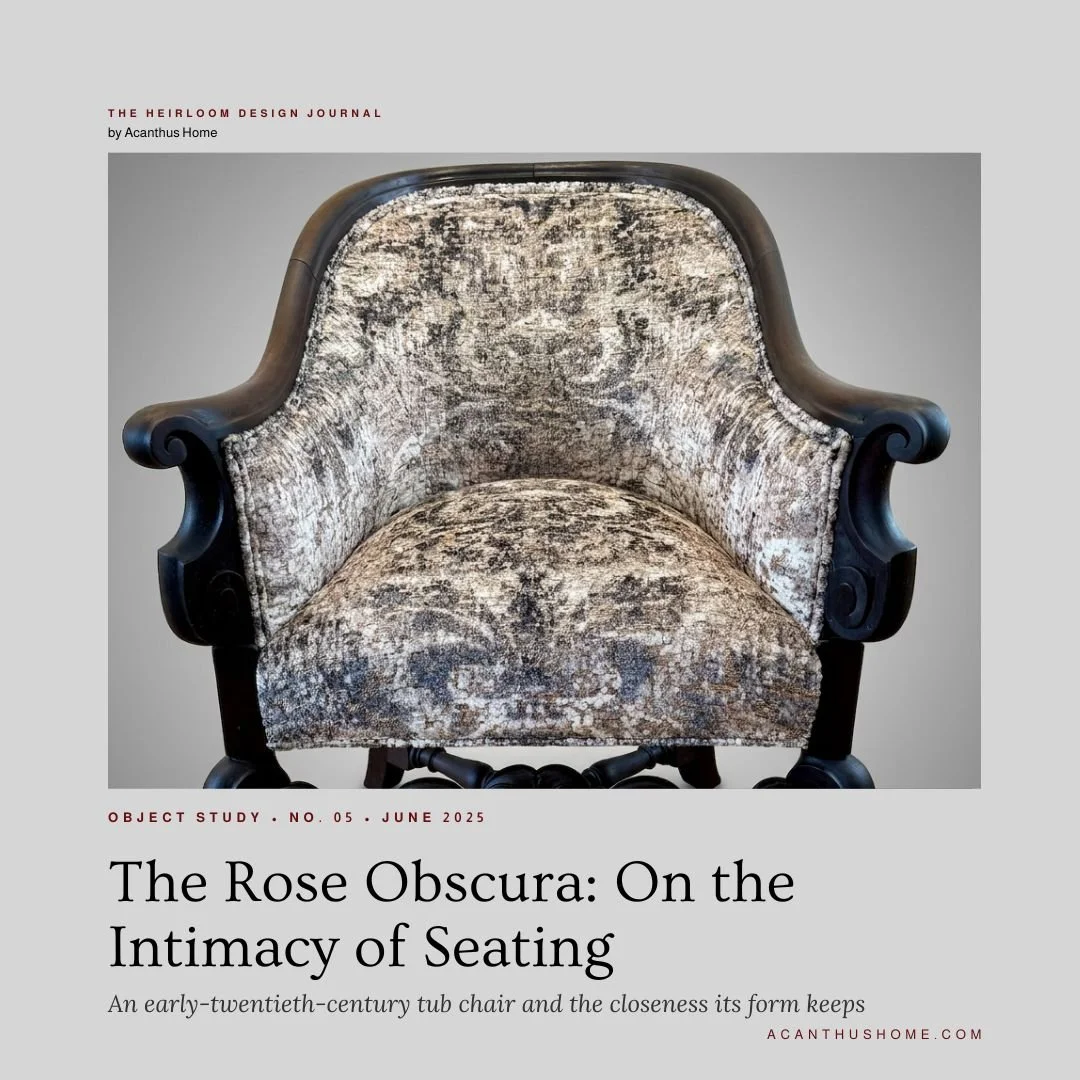
The Rose Obscura: On the Intimacy of Seating
A tub chair is a seat whose back curves in one continuous line from arm to arm, low and close, so the sitter is held rather than presented. The Rose Obscura is an early twentieth-century parlor tub chair, its frame refinished and its seat reupholstered in rose, mauve, and charcoal velvet.
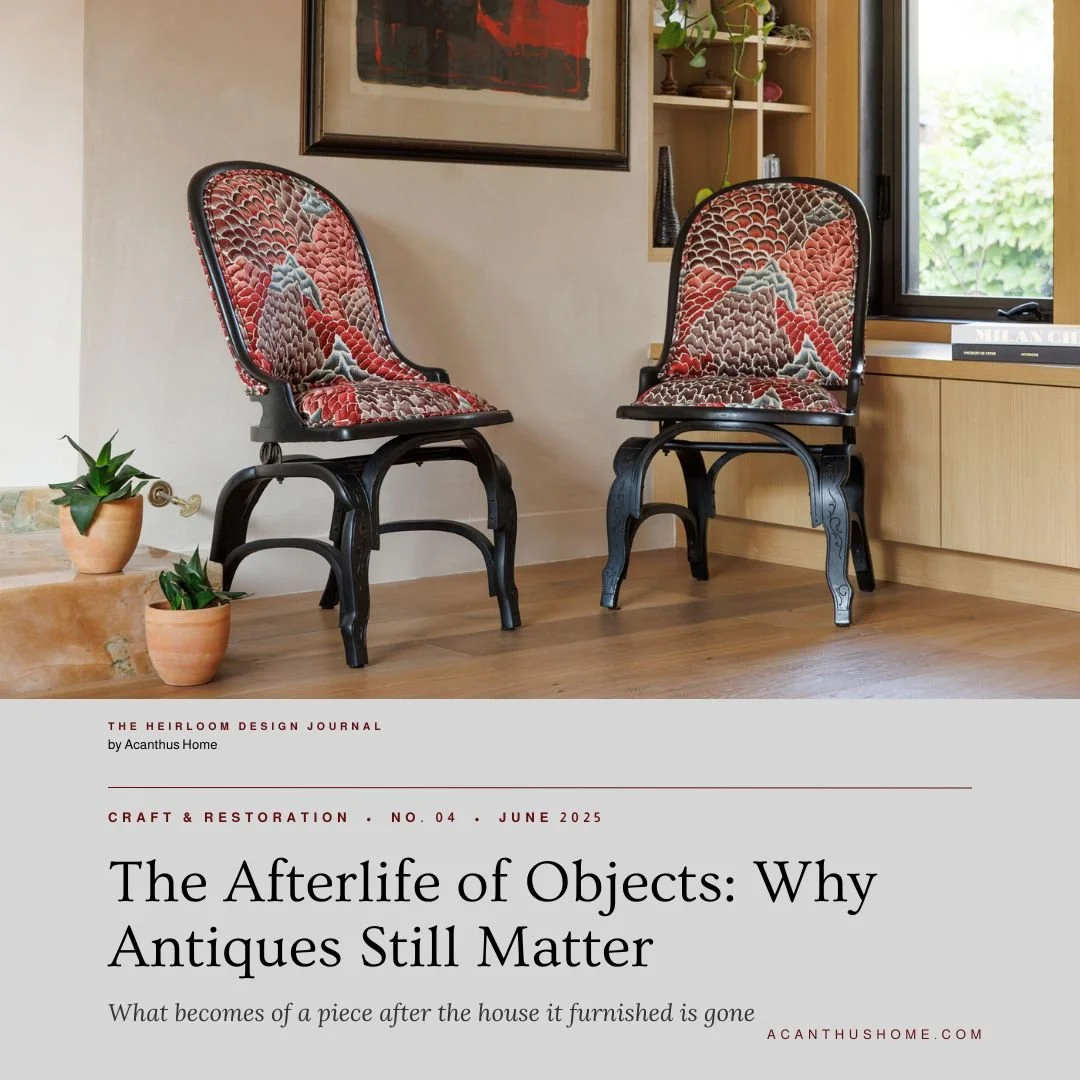
The Afterlife of Objects: Why Antiques Still Matter
Antique furniture still matters because it carries something a new object cannot: evidence that a form was worth keeping. A matched pair of Victorian reclining parlor chairs, found in a thrift shop window and restored, shows how an object survives by remaining useful.
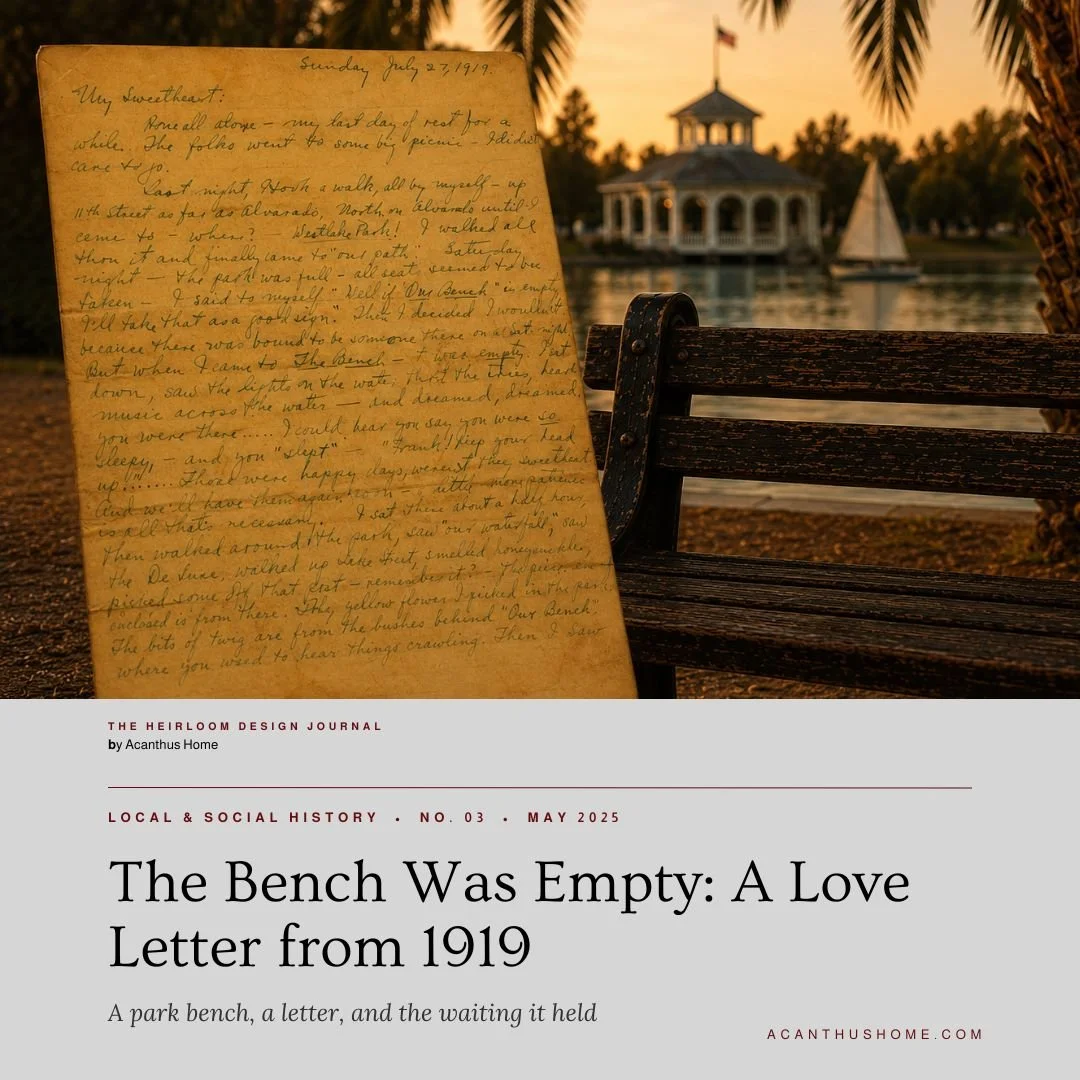
The Bench Was Empty: A Love Letter from 1919
In 1919, Frank returned to their bench in Westlake Park with hope. This love letter inspires our view that restored antique furniture is not just décor, but memory made visible.
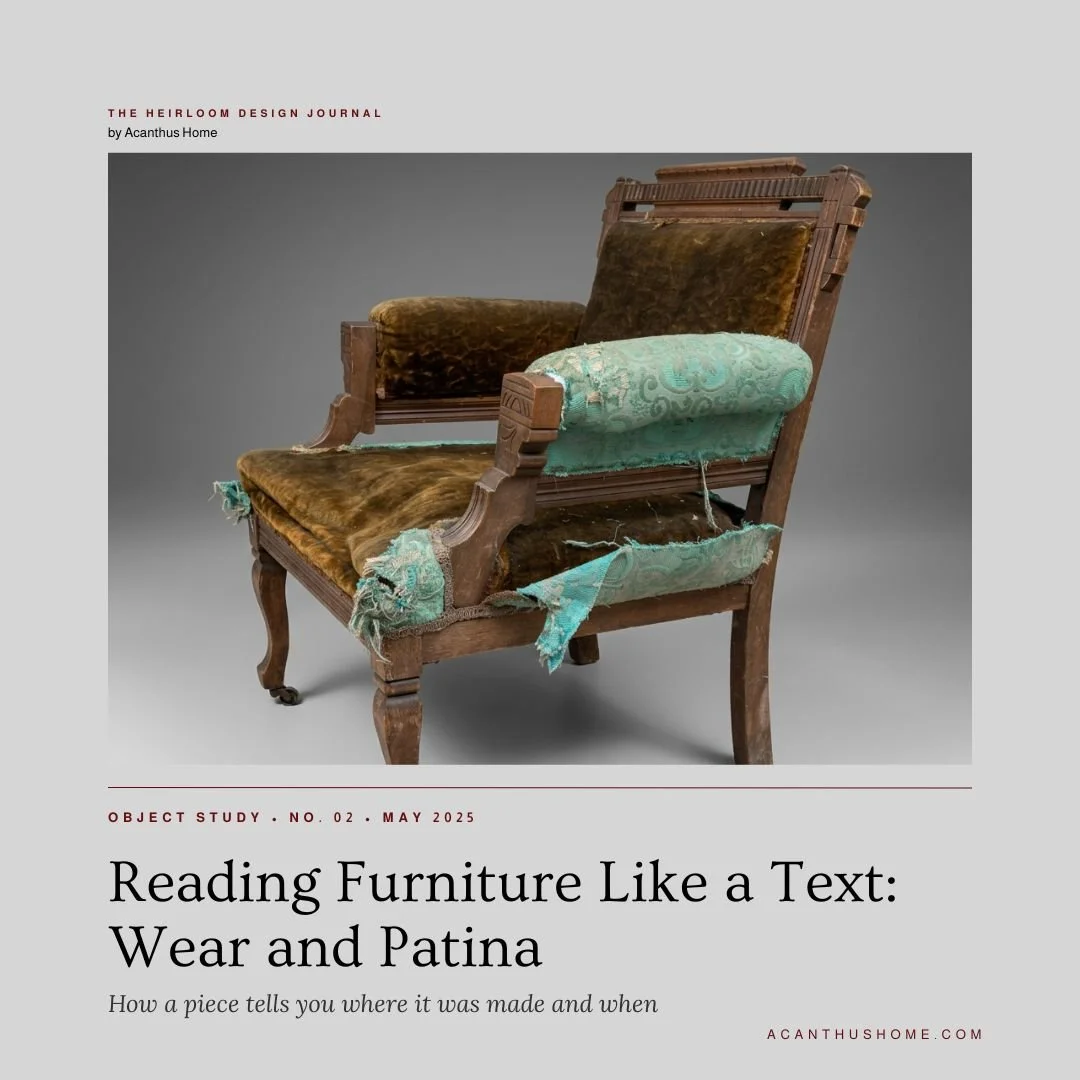
Reading Furniture Like a Text: Wear and Patina
Wear and patina are not decoration but evidence; read closely, they record how an antique was used. Through a restored Eastlake armchair, the Juniper Crest, this journal sets out how to read old furniture: the mark first, the meaning second.
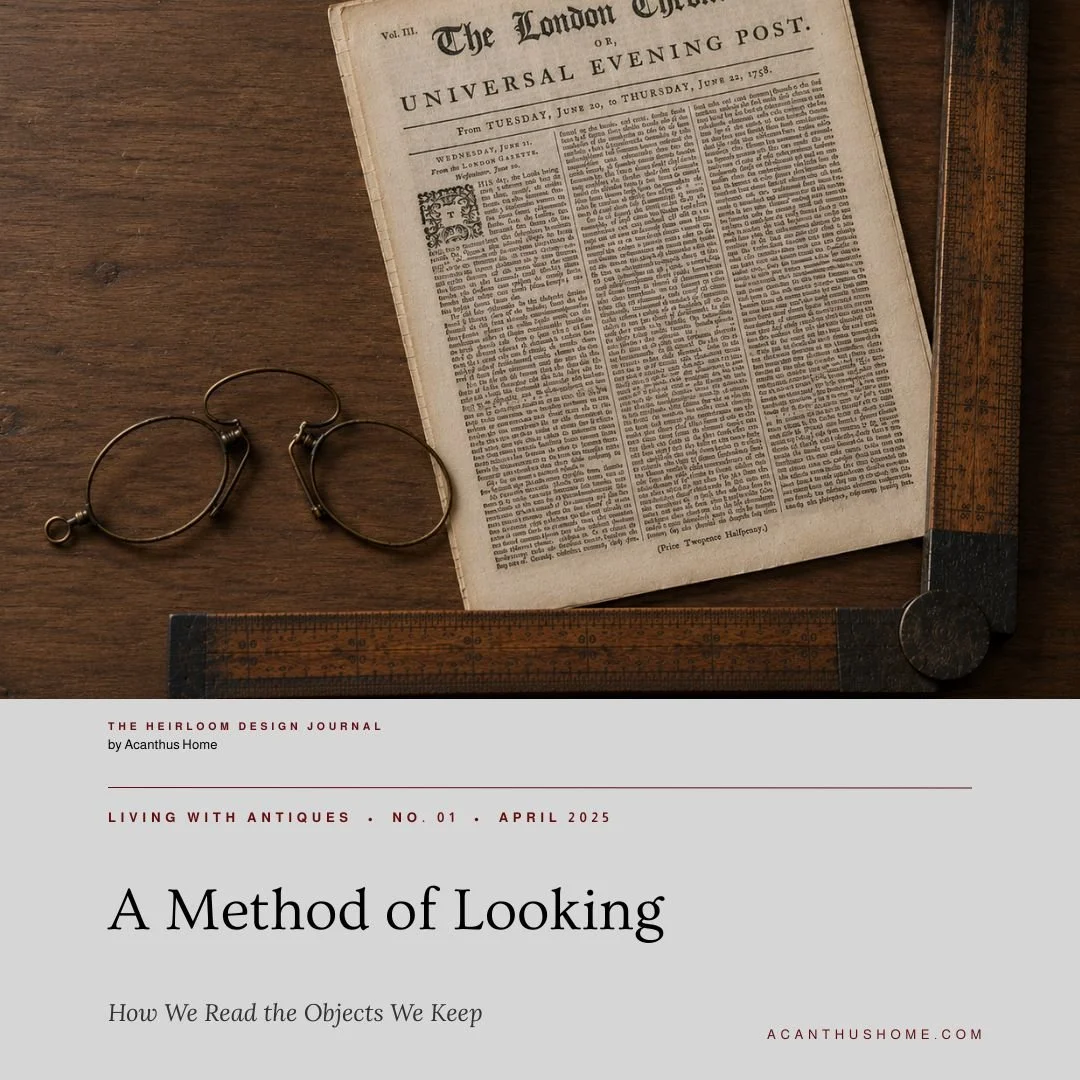
A Method of Looking: How We Read the Objects We Keep
Every entry in this journal begins with an object and the same questions, asked in the same order. This introduction sets out the method: describe before interpreting and say plainly what is not known.