 Image 1 of 6
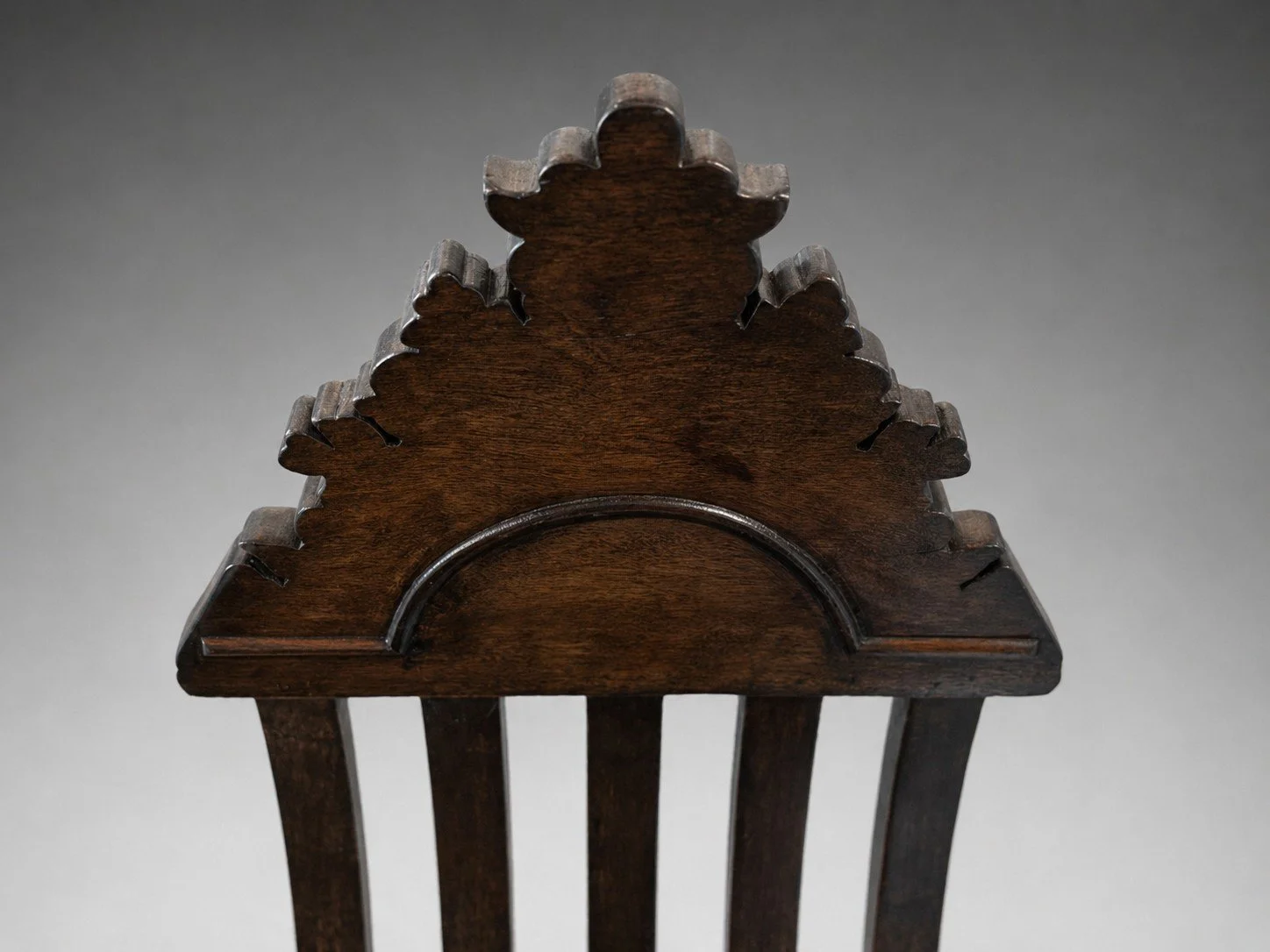 Image 2 of 6
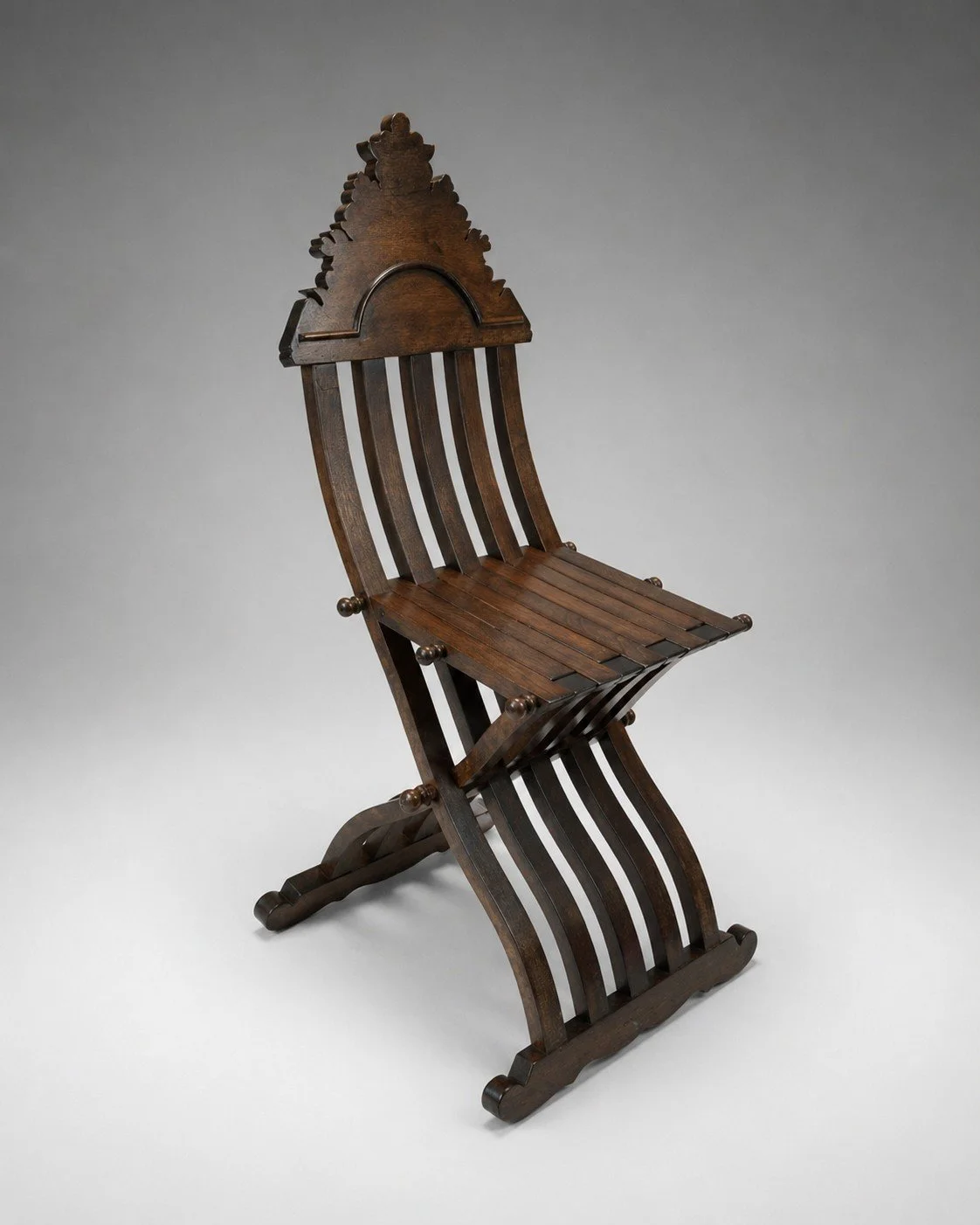 Image 3 of 6
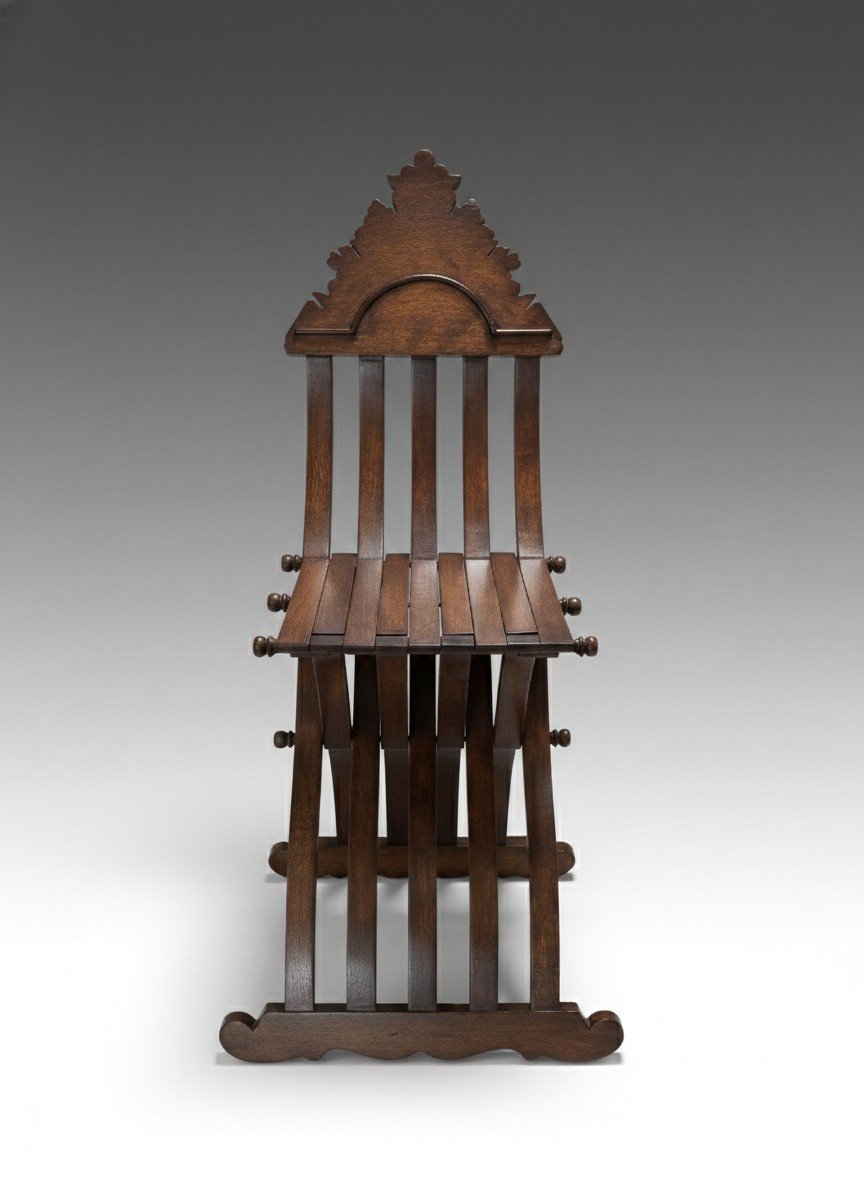 Image 4 of 6
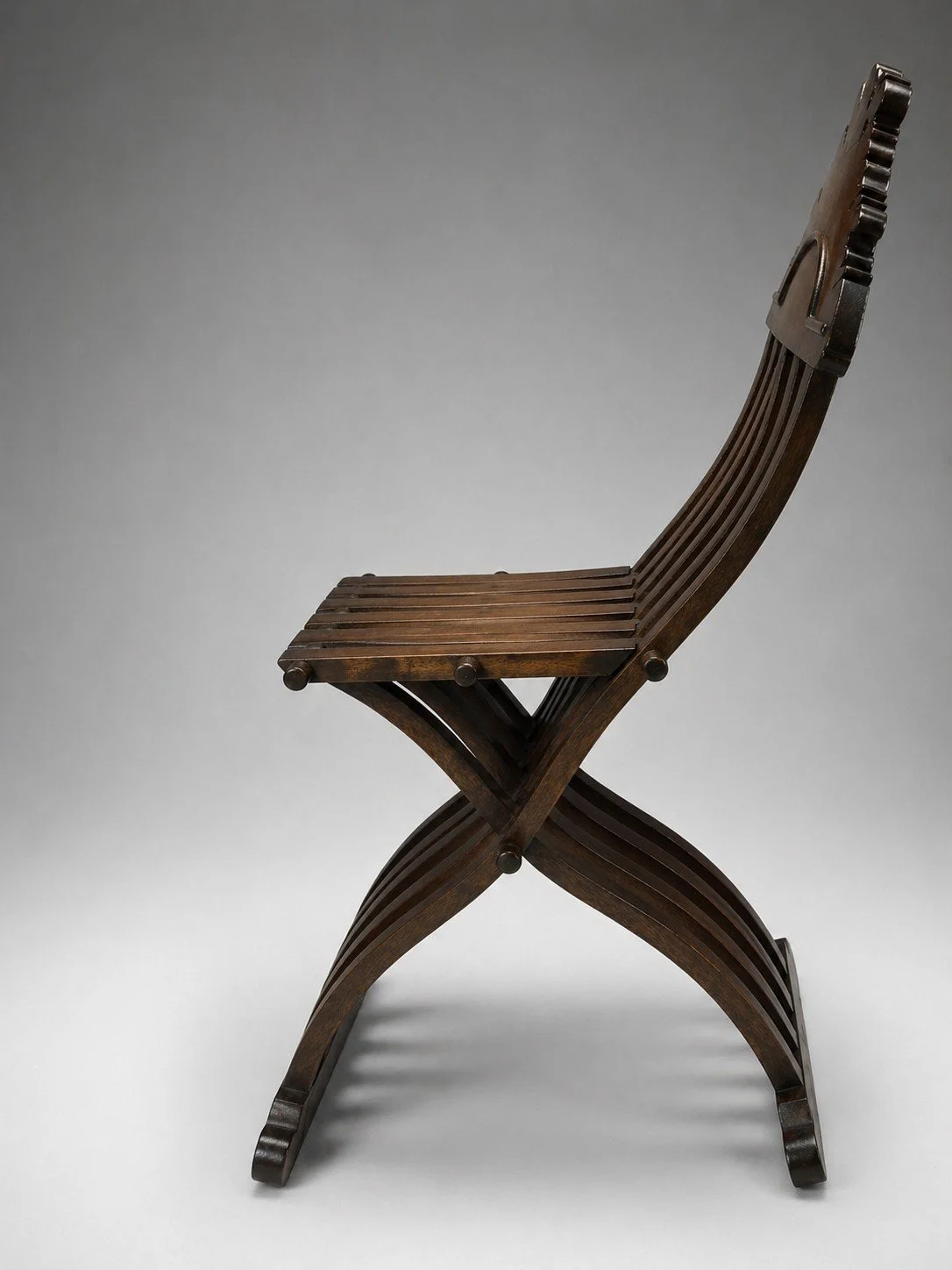 Image 5 of 6
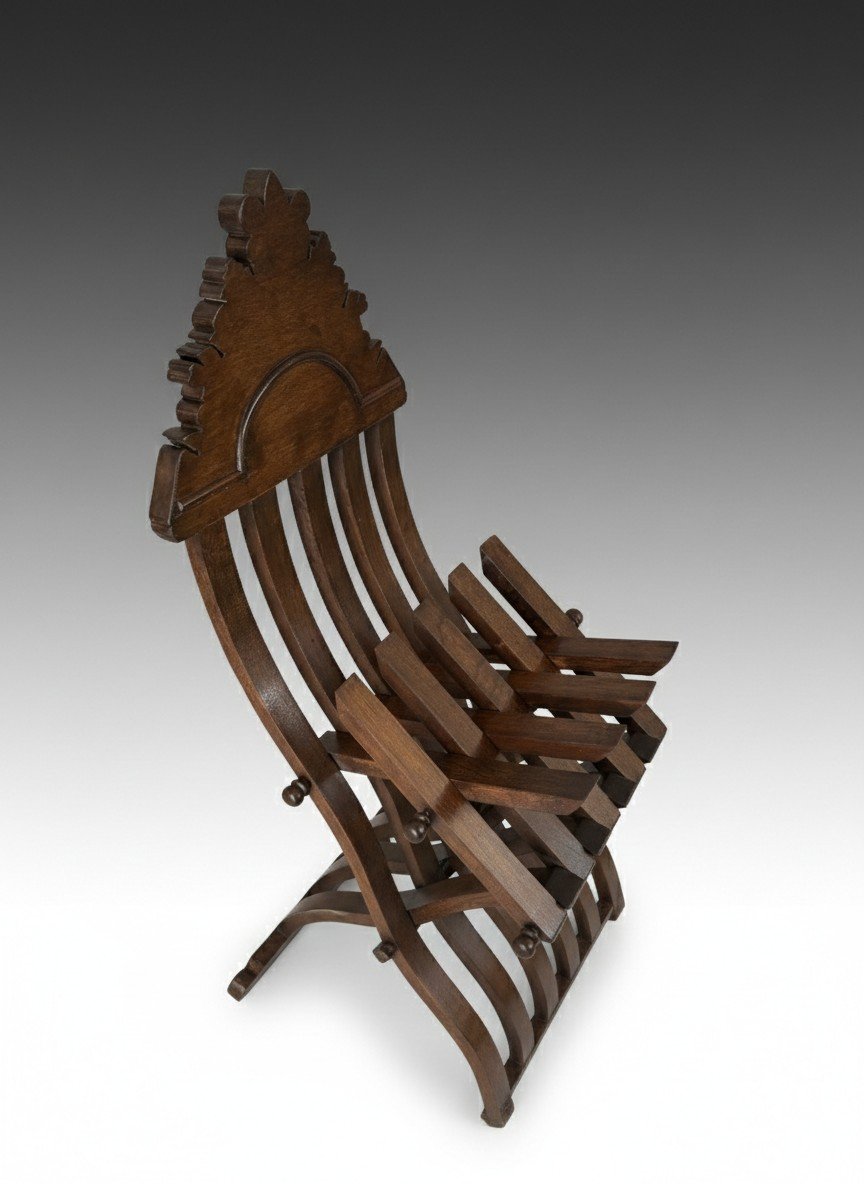 Image 6 of 6
Living With This Object
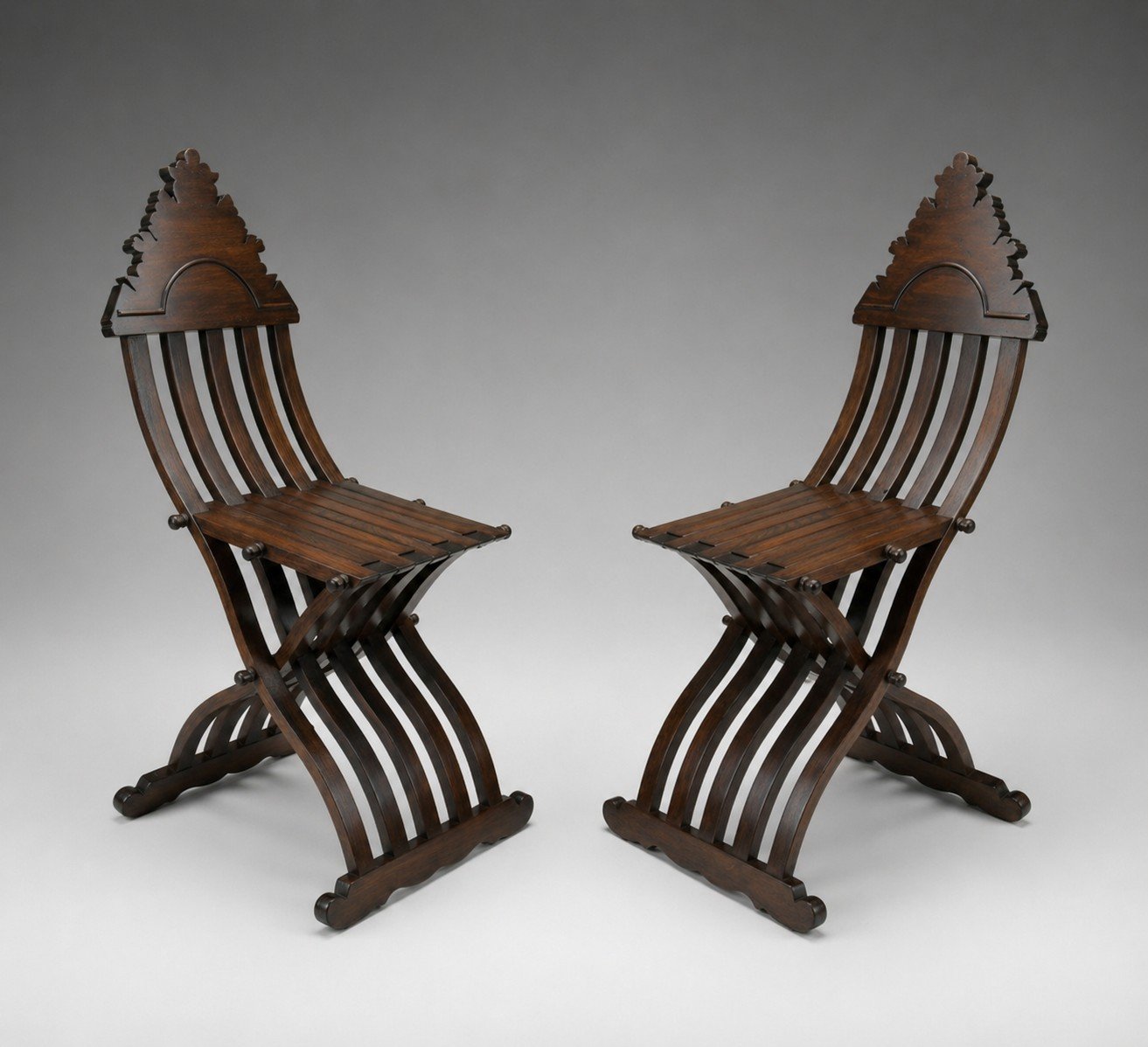
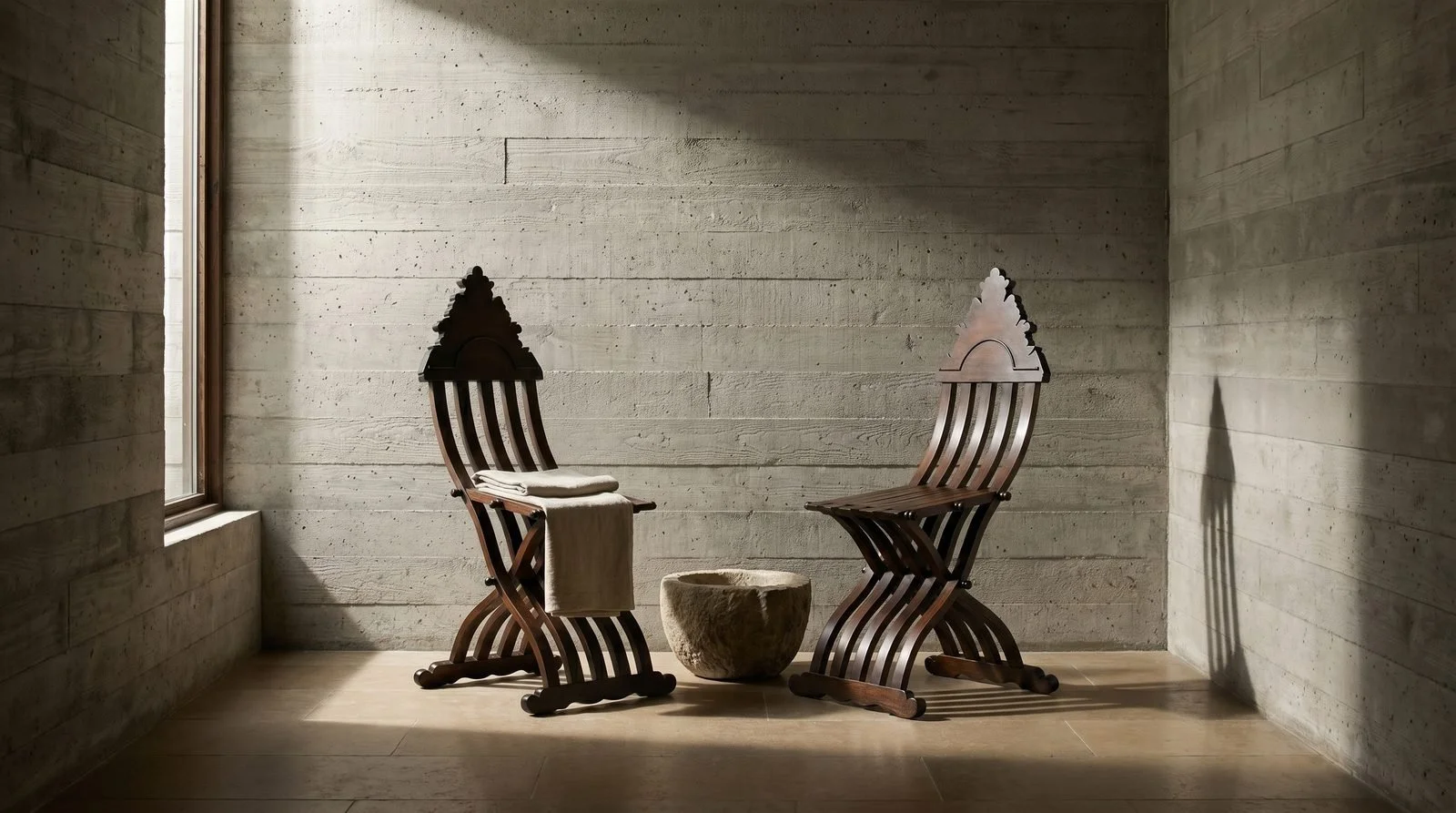
Seen in a room, the pair reads as line and shadow: the curved slats of each X-frame draw together at the pivot bosses and open again toward the stepped, crenellated crest, and the openwork lets light fall through the frame onto the wall behind. Matched and upright, the two hold one silhouette side by side.
The room view below is an AI visualization, offered to suggest scale and placement. It is a rendered image, not a photograph of the chairs in this room.
-
Whether set in an entry, drawn up in a study, or placed to flank a console, the pair holds a corner without crowding it, two matching seats keeping company. Each chair folds down for storage or for carrying between rooms, so the set can be put away as easily as it is brought out.
-
Type: Folding chair (X-frame); sold as a pair (I and II)
Style: Near Eastern taste (Moorish decorative vocabulary); X-frame folding form, Savonarola type
Date: Circa 1890–1920
Origin: Not established
Provenance: Acquired at a Los Angeles auction
Material: Hardwood frame
Finish: Walnut-toned stain applied during restoration
Construction: Slatted X-frame, folding, on turned pivot bosses
Maker & Origin: Unattributed; no mark located
Condition: Sound; refinished
Dimensions: 16⅝ W × 16 D × 37¼ H in.; seat height 17¾ in. (each chair)
-
Original: The frame members, the splayed back and seat slats, and the turned pivot bosses are consistent with the original construction on both chairs.
Replaced: Nothing was replaced in the documented work.
Reconstructed: No elements were reconstructed.
Repaired: No structural repairs are documented.
Finish Work: As acquired, the frames carried an earlier painted decorative surface. That surface was not retained: the frames were stripped and finished in a walnut-toned stain. The structure and joinery were left intact through the work.
-
The crest rail rises to a stepped, crenellated profile above a recessed horseshoe arch, both carved from solid wood, and the same shaped line carries down into the scrolled foot rails at the base. No maker's mark accompanies the carving, so the work stands as the feature itself rather than a record of who made it.
-
No maker's mark or label is present, so the chairs remain unattributed. Their carved crest and the painted decorative surface present before restoration are stylistically consistent with Near Eastern traditions, including examples produced in Egypt and the Levant during the late nineteenth and early twentieth centuries. Because the X-frame folding form was produced across much of the Mediterranean and Near Eastern world, and these chairs carry no identifying marks, the country of manufacture cannot be established. The estimated date of circa 1890 to 1920 likewise rests on stylistic evidence rather than documentary proof. The collection holds a second reading of the form in the Sevilla Arc Pair, curule chairs whose interlaced frames rise to carved shell crests.
-
The frames are a close-grained hardwood, though the species is not confirmed. Each chair is built as a folding X-frame: the curved back and seat slats cross at turned wooden pivot bosses before continuing downward into the base, while the upper portions splay toward the crest. The chairs fold on these pivot bosses, the slats drawing together as the frame closes.
-
The X-frame folding chair belongs to one of the oldest portable seating traditions, designed to be carried where needed and folded away when the gathering had ended. In the Near Eastern tradition that this pair's decoration follows, such chairs furnished reception rooms, valued as much for their portability as for their presence. Unlike most domestic chairs of the period, the Savonarola form could be folded and carried between rooms while preserving the sculptural character that distinguishes the form. This pair later surfaced at a Los Angeles auction, the earliest documented point in its known provenance. The painted decorative surface present when the chairs were acquired was removed during restoration, and the frames were stripped and finished in a walnut-toned stain while their structure and joinery were left intact. What seats keep of the people who used them is the question the journal turns over in The Chair, the Bench, and the Spaces In Between. Who made the chairs, when and where exactly they were first built, and the rooms they occupied before appearing at auction are not recorded. The record ends where the evidence ends.
-
Are these antique or vintage Savonarola folding chairs? We list the pair as vintage. The circa 1890–1920 date rests on decorative style rather than a mark or document, so it is an informed estimate, not a record. Acanthus does not round an estimated date up across the hundred-year antique line, so without firmer evidence, the honest call is vintage.
Where were they made? The country of manufacture is not established. The chairs carry no maker's mark, and this folding form was made in more than one place. The decorative treatment points to a Near Eastern origin, but without a mark that remains a reading from style, not a documented record of where these were built.
Have they been restored? Yes. As acquired, the frames carried a painted decorative surface; it was not kept. The frames were stripped and finished in a walnut-toned stain, with the structure and joinery left intact. No components are documented as replaced, rebuilt, or repaired, so the refinishing is the one intervention on record.
What wood are they? The frames are a close-grained hardwood; we have not confirmed the species. The present tone comes from a walnut-toned stain and should not be taken as evidence that the underlying wood is walnut.