 Image 1 of 6
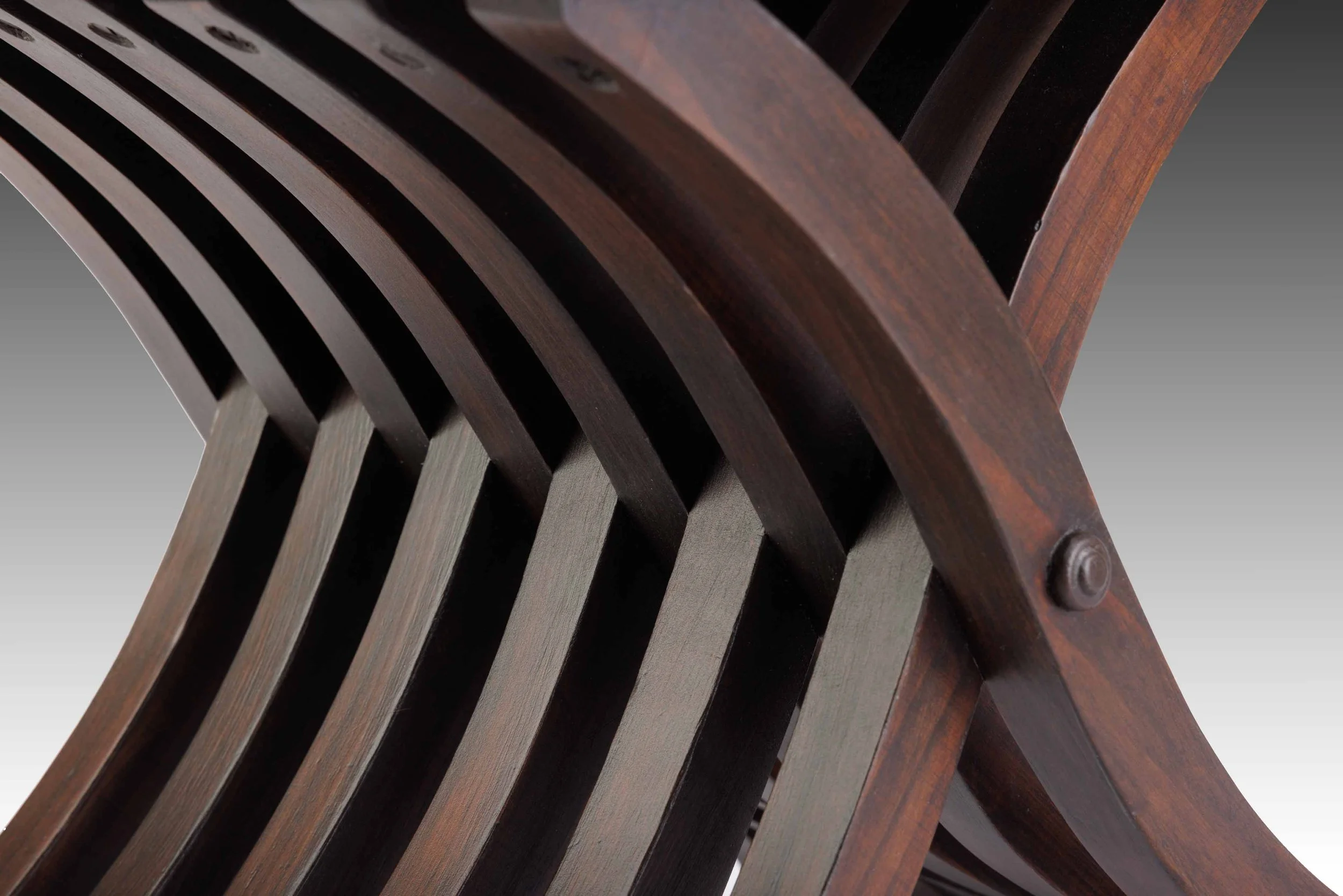 Image 2 of 6
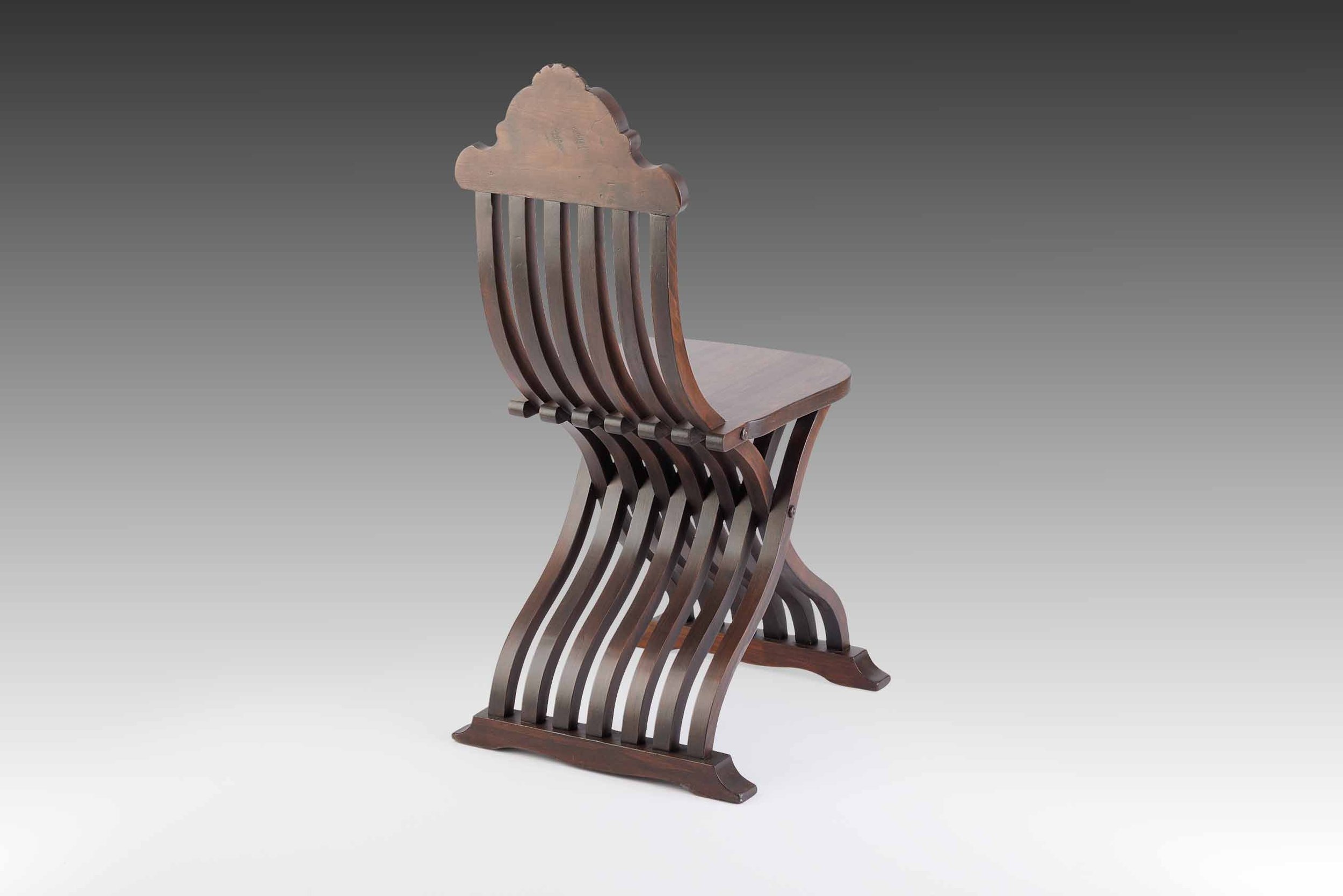 Image 3 of 6
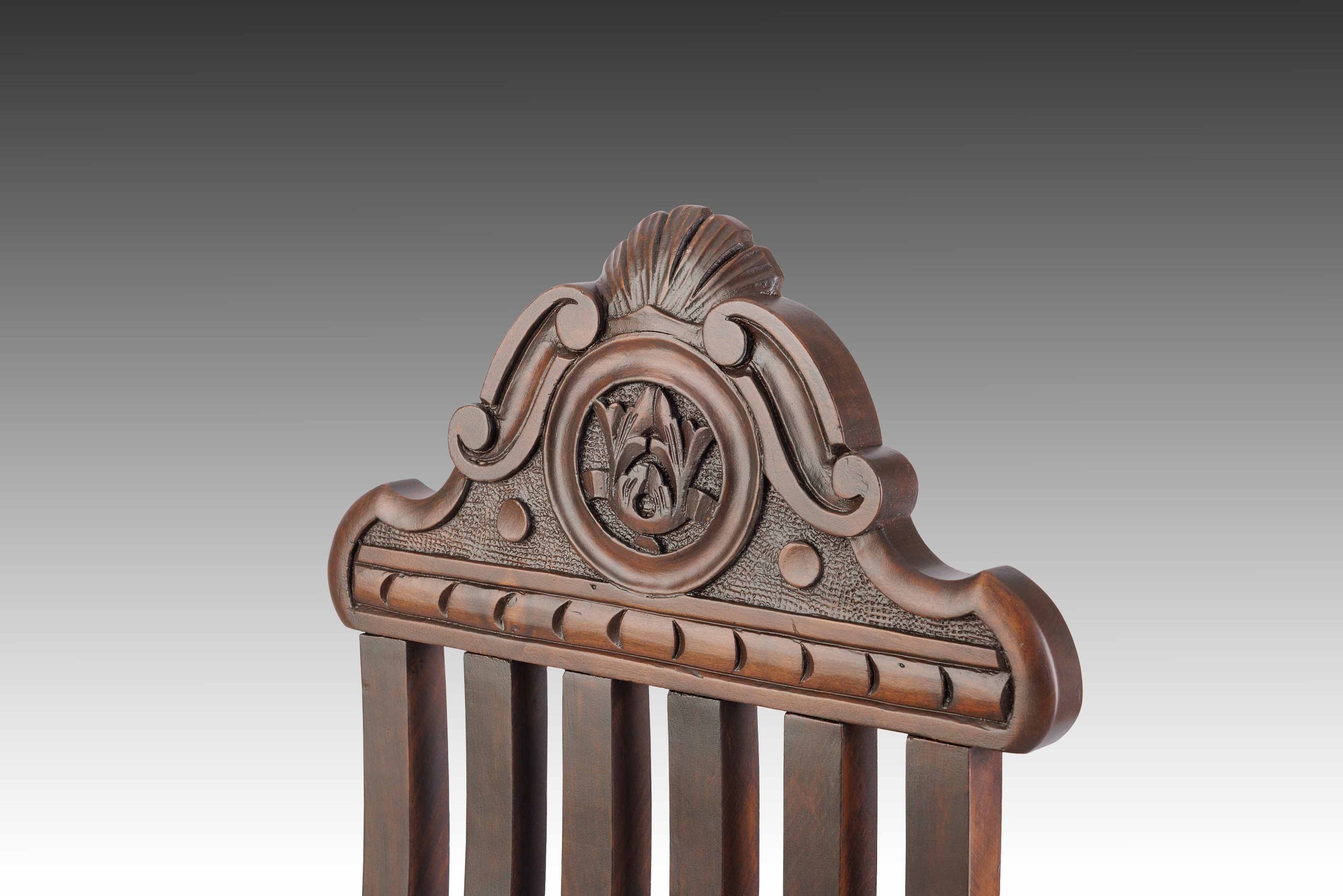 Image 4 of 6
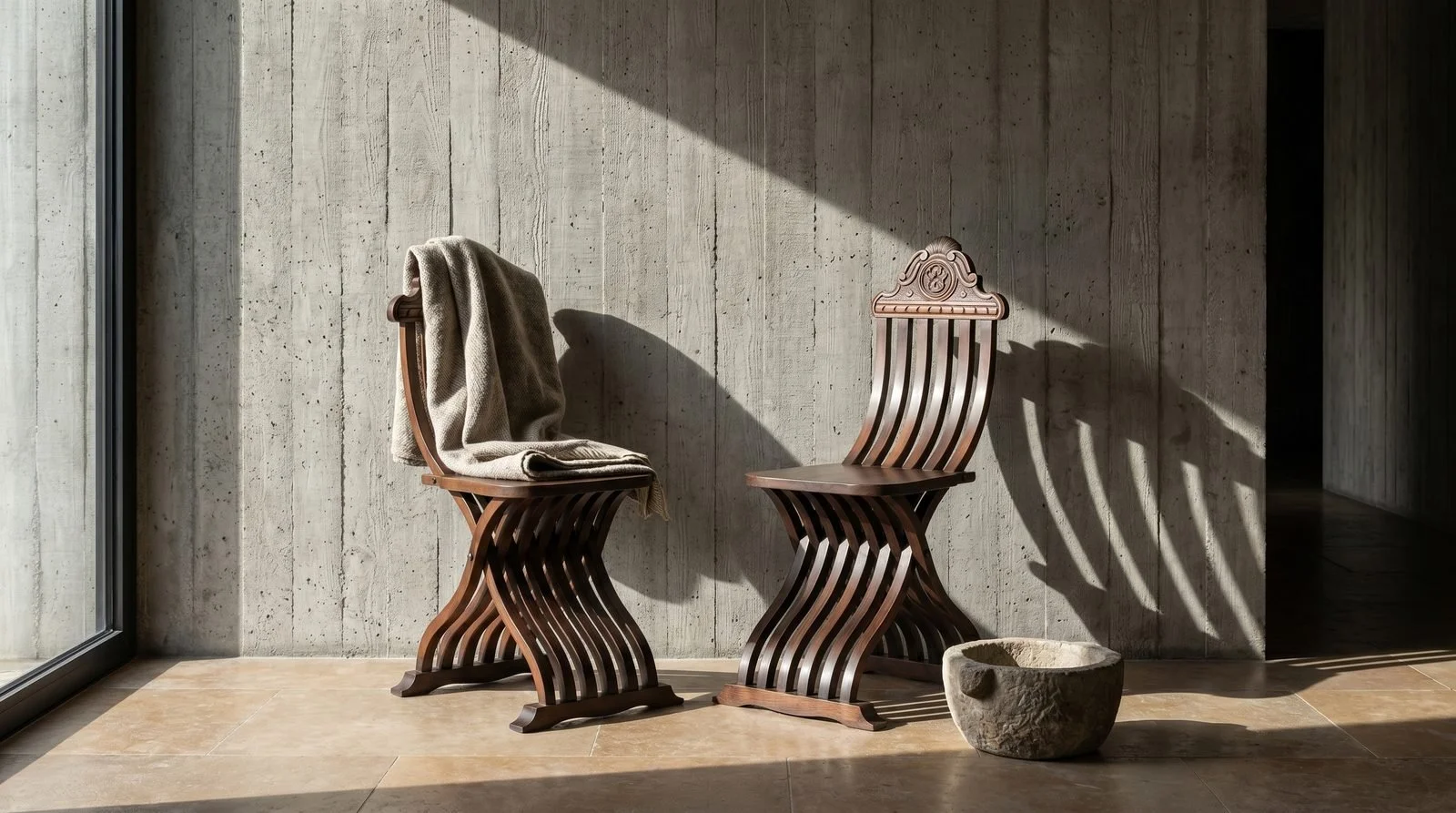 Image 5 of 6
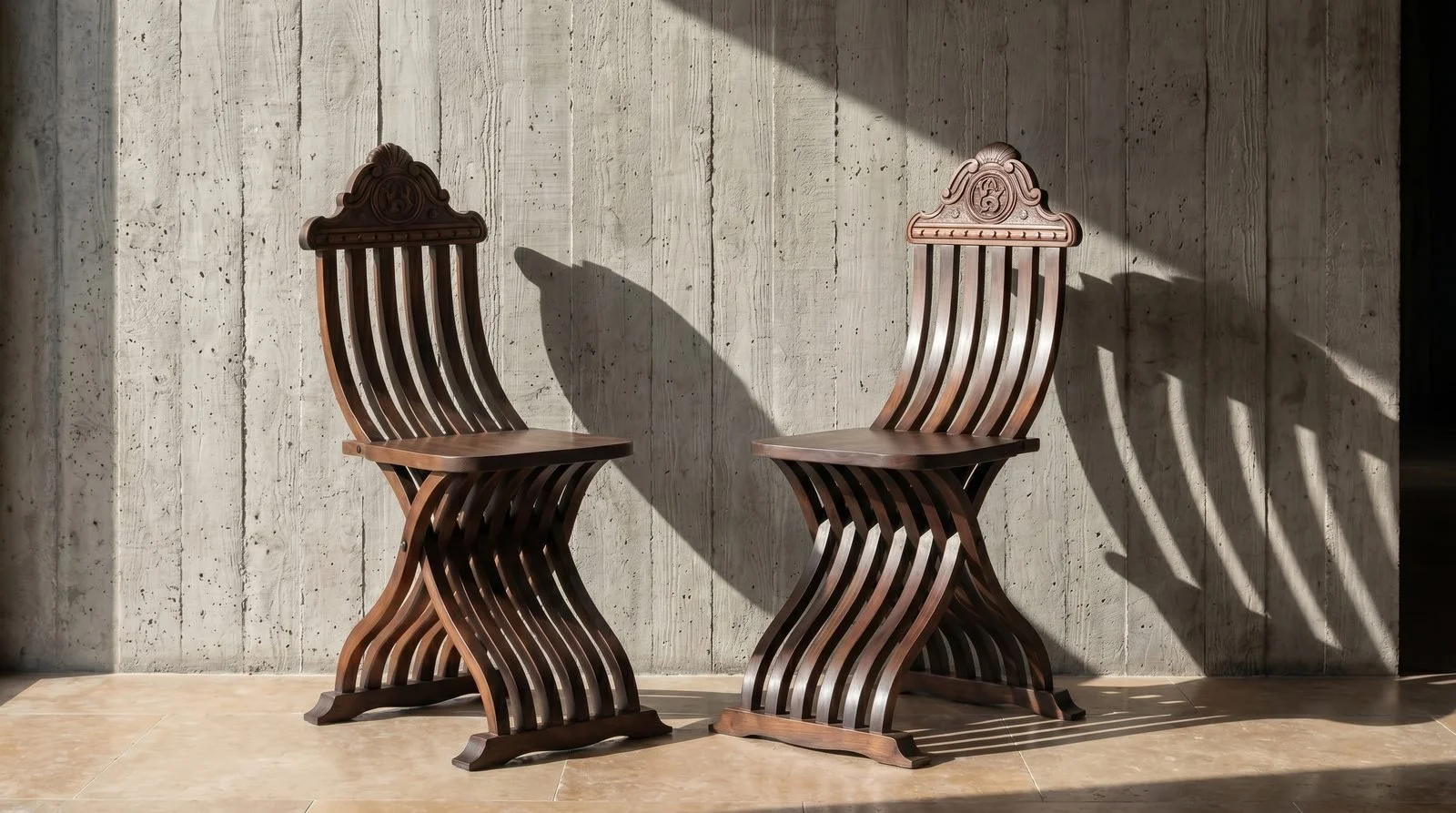 Image 6 of 6
Living With This Object
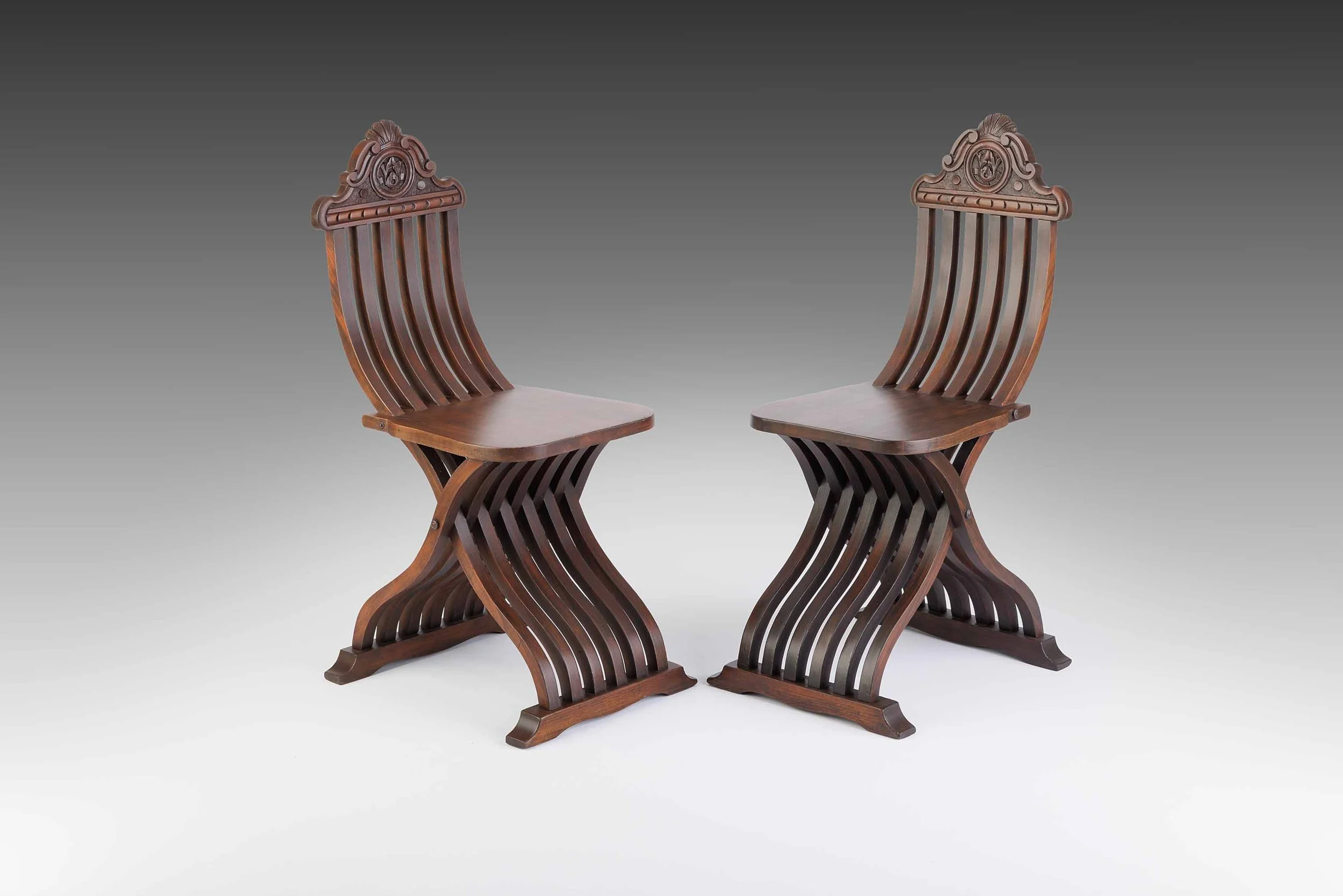
Because the frame is all openwork, the pair reads by its lines: the curved slats of each interlaced X repeat from the sledge feet up into the tall slatted backs, and light passes through the frame to throw the slats' shadows across the wall and floor. Set side by side, the two hold one matched profile, the carved shell crest marking the top of each.
The room view below is an AI visualization, offered to suggest scale and placement. It is a rendered image, not a photograph of the chairs in this room.
-
Because the openwork frame reads from every angle, the pair is most at home where it can be seen in the round: whether flanking a formal entry, drawn up to a library console, or set at the ends of a long room as accent seating, the two let the architecture, rather than the upholstery, carry the space. Upright and matched, with a narrow footprint, they hold a clear line against panelling, stone, or a plain wall.
-
Type: Side chairs, sold as a pair (designated I and II)
Style: Renaissance Revival (curule / Savonarola form)
Date: Circa 1890–1920
Origin: Not established (unmarked)
Material: Close-grained hardwood frame
Finish: Walnut-toned stain, applied in restoration
Construction: Interlaced curule X-frame; pivoted slat crossings; solid plank seat
Maker & Origin: Unattributed; no maker's mark located
Condition: Refinished; form, proportions, and carving retained; sound
Dimensions: 14½ W × 15½ D × 37 H in each; 19 in seat height
-
Original: The complete frames, carved crests, and plank seats. The form and proportions are retained; no alteration was made to the structure.
Replaced: Nothing was replaced in the documented work.
Reconstructed: No elements were reconstructed.
Repaired: No structural repairs are documented.
Finish Work: The frames were stripped to bare wood and re-stained to an even walnut tone. The present finish was applied during restoration; the form and carving were left untouched throughout the work.
-
The crest rail gathers the chair's ornament into a single carved field. A fan-form shell crowns the peak, flanked by paired C-scrolls that turn back on themselves at the ends, the scrolled vocabulary the Renaissance Revival drew from classical and Baroque sources. At its center a raised roundel holds a stylized acanthus palmette, the leaf the carver's tradition has long used as a sign of cultivation; two disc bosses sit to either side, and a finely stippled ground throws the relief forward. A band of carved lunettes runs beneath, above the springing of the back slats. The relief is worked from the solid rather than applied, and it still reads with clarity beneath the restored surface, the cutting unsoftened by the new finish.
-
No maker's mark, label, or stamp is located on either chair. The stamped slat numbers noted under Materials & Construction, and a faint inscription on the verso of one crest, are provenance texture, not maker's marks; neither attributes a maker.
The curule X-frame is a form of Italian Renaissance origin, revived widely from the later nineteenth century onward. Because the revival form was produced in more than one country and this example is unmarked, the manufacture origin is not established. The circa 1890–1920 dating is inferred from the form and construction detailed under Materials & Construction rather than from a surviving mark or document.
-
The frame is built as an interlaced curule X: slender curved slats cross at the sides and pivot at the crossings, the lower set descending to sledge feet and the upper set carrying the seat and continuing into the back. Each crossing is fixed with a dowel pivot capped by a turned wooden button. The seat is a solid plank with a rounded front edge, seated on the frame. The components are bent to a uniform profile, consistent with steam bending or another production bending method of the period.
The slats carry stamped assembly numbers that keep the sequence in order, the kind of fitter's marking used where many like members are assembled.
The wood is a close-grained hardwood. Its bent members are consistent with a bending species such as beech, though the species remains unconfirmed.
-
The curule chair descends from the Roman sella curulis, the folding X-frame seat reserved for magistrates who held the right to command; the form outlived the empire because its authority was built into its structure. The Italian Renaissance revived it as the Savonarola chair, and Renaissance Revival makers carried it into the nineteenth- and twentieth-century home, where such seating still marked the entrance hall and the study, the rooms in which a household received. It was furniture that signaled status as much as it provided seating.
This pair speaks in quieter terms: its life is read through use, through a single documented restoration detailed under Condition & Restoration, and through the fact that they survive today as a matched pair. The pair entered the Acanthus Home collection through an auction in San Bernardino County, California, before undergoing the documented restoration described above.
Who made them, the year they were cut, the households they served, and the road that carried them to that auction go unrecorded, left unfilled rather than invented. The record ends where the evidence ends.
-
Are these chairs antique or vintage? These Renaissance Revival curule chairs are dated circa 1890–1920 from their form and construction rather than a mark or document. Every year in that range now lies more than a century past, so the pair qualifies as antique under the 100-year rule; because the date is inferred, we state it as circa rather than a fixed year.
Do the chairs fold? The frame is an interlaced curule X with pivoted crossings, the structure from which folding chairs of this lineage descend. On this pair the seat is a fixed plank and the crossings are not a working folding action, so we describe the structure as built and do not claim a folding function.
What wood is it? The frames are a close-grained hardwood finished with an applied walnut-toned stain; the color comes from the stain, not from walnut timber. The bent members are consistent with a bending species such as beech, but the species is left unconfirmed.
Have they been restored? Yes, once, and with restraint. The frames were stripped to bare wood and re-stained to an even walnut tone, and the carving was retained through the process. The form and proportions were not altered and no structural repairs are documented; the present finish was applied during restoration rather than surviving from the original manufacture.