 Image 1 of 4
 Image 2 of 4
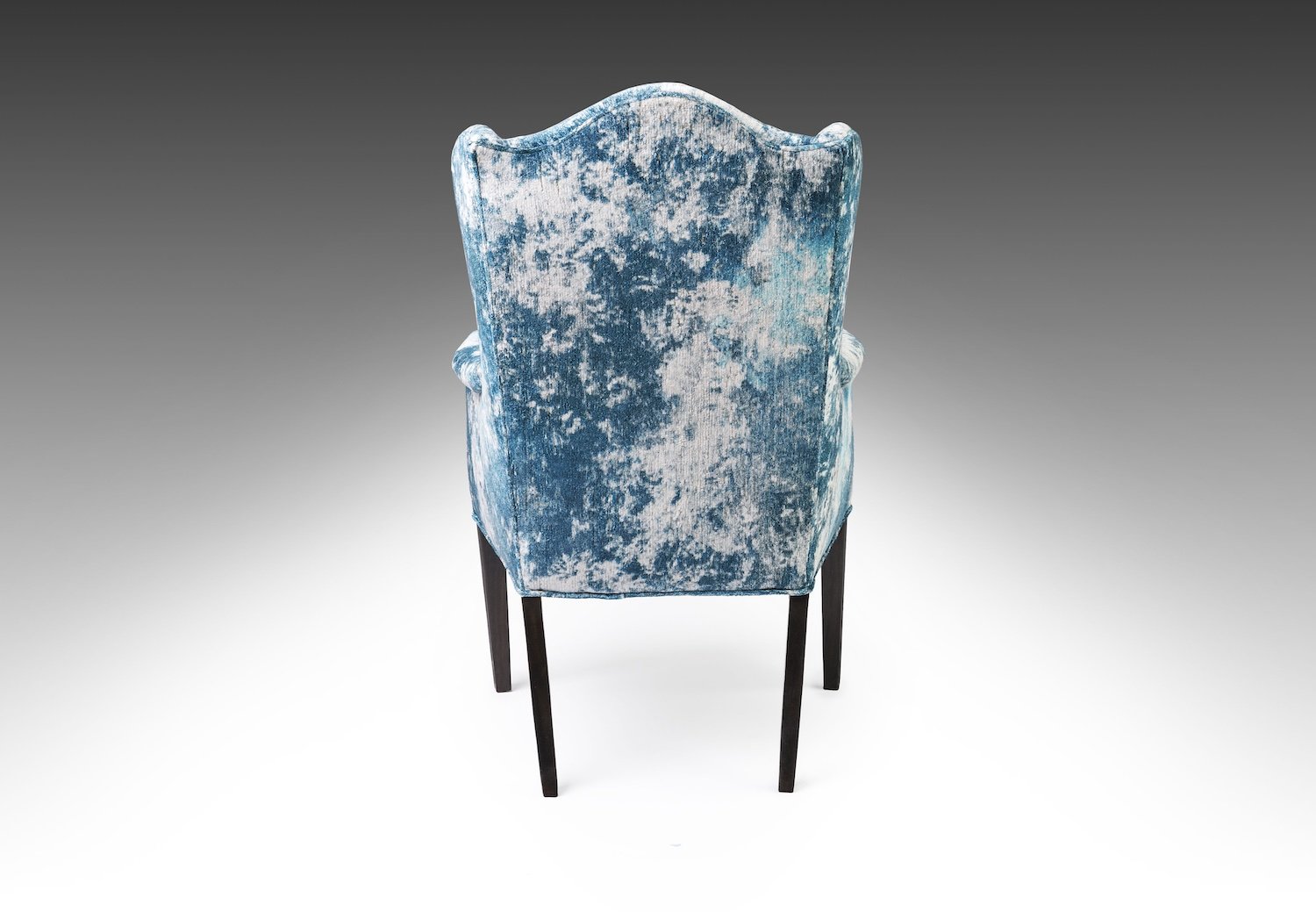 Image 3 of 4
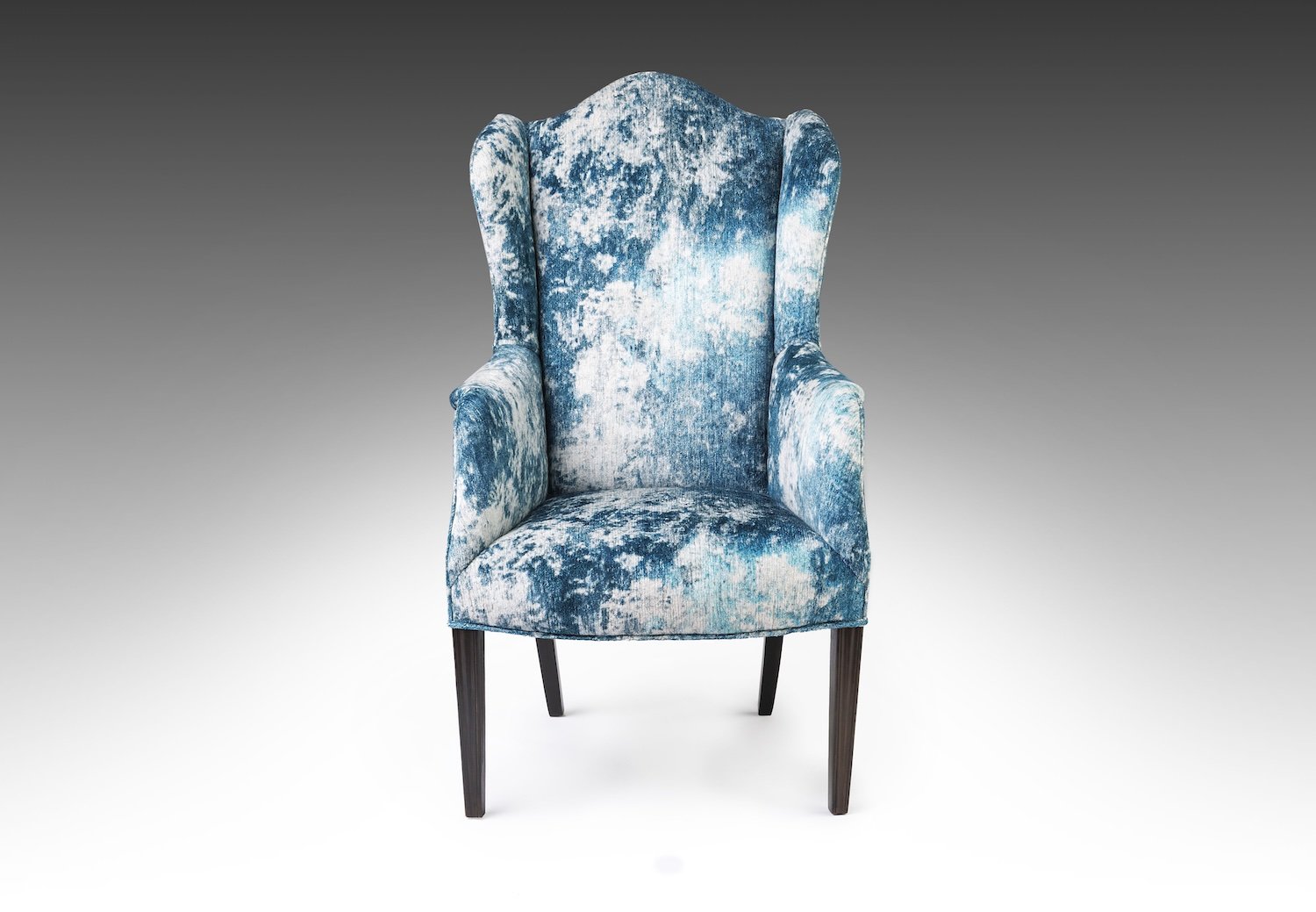 Image 4 of 4
Living With This Object
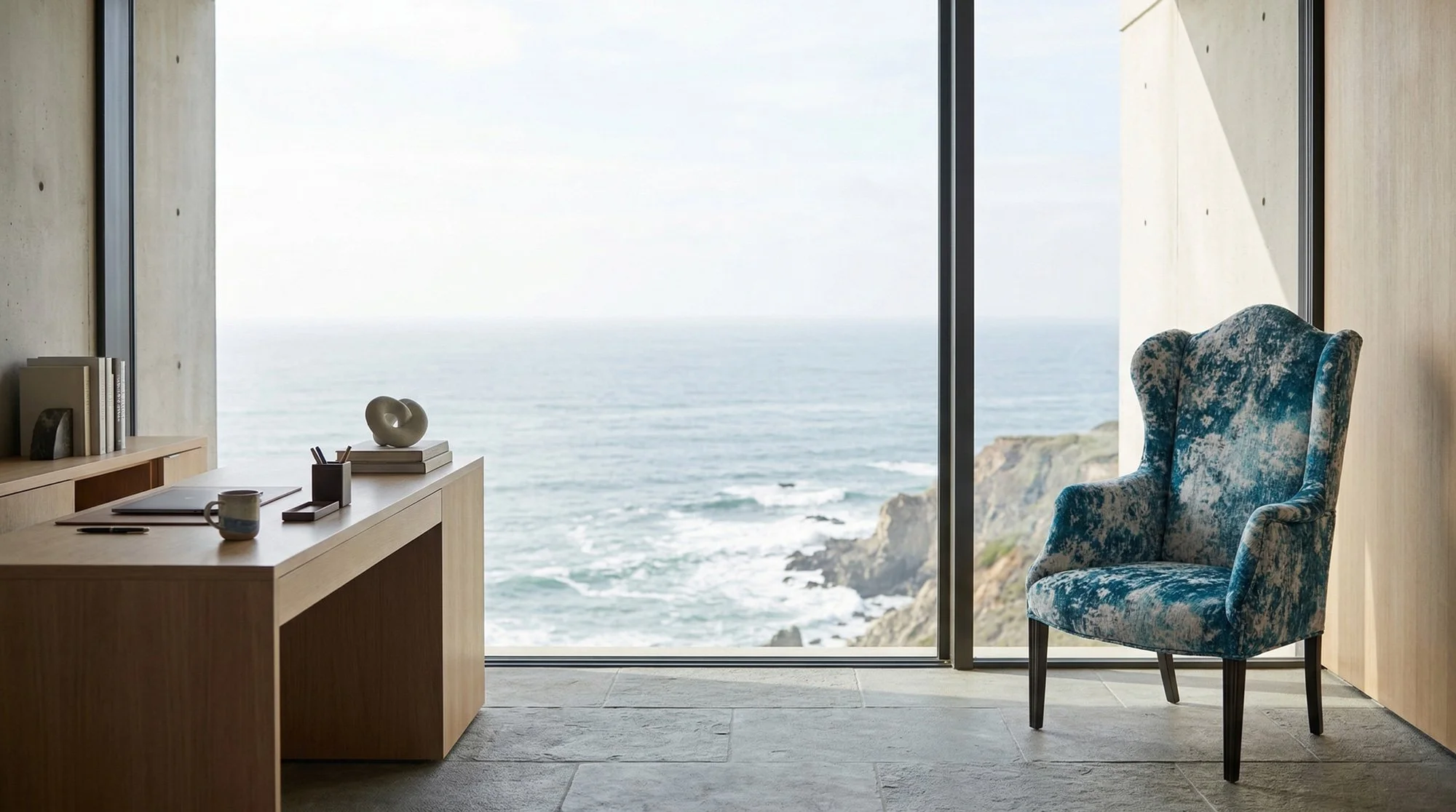
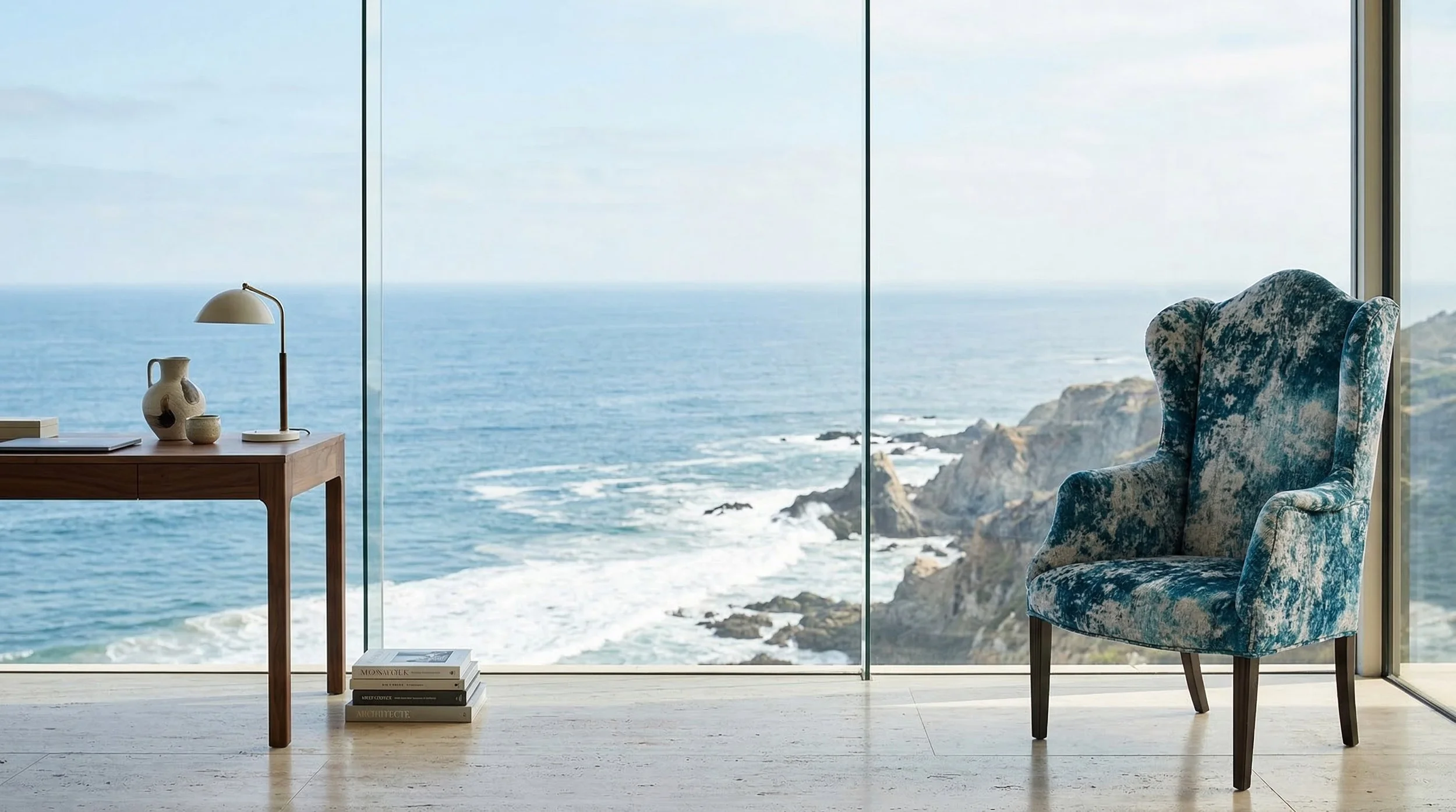
In a room, the chair retains the upright, presiding stance of a wing chair: the serpentine crest and forward wings frame a single sitter, and the tall back on its dark tapered legs holds a corner without filling it. The mottled teal-blue and ivory velvet carries the eye across the frame, its atmospheric field shifting with the light.
The room view below is an AI visualization, offered to suggest scale and placement. It is a rendered image, not a photograph of the chair in this room.
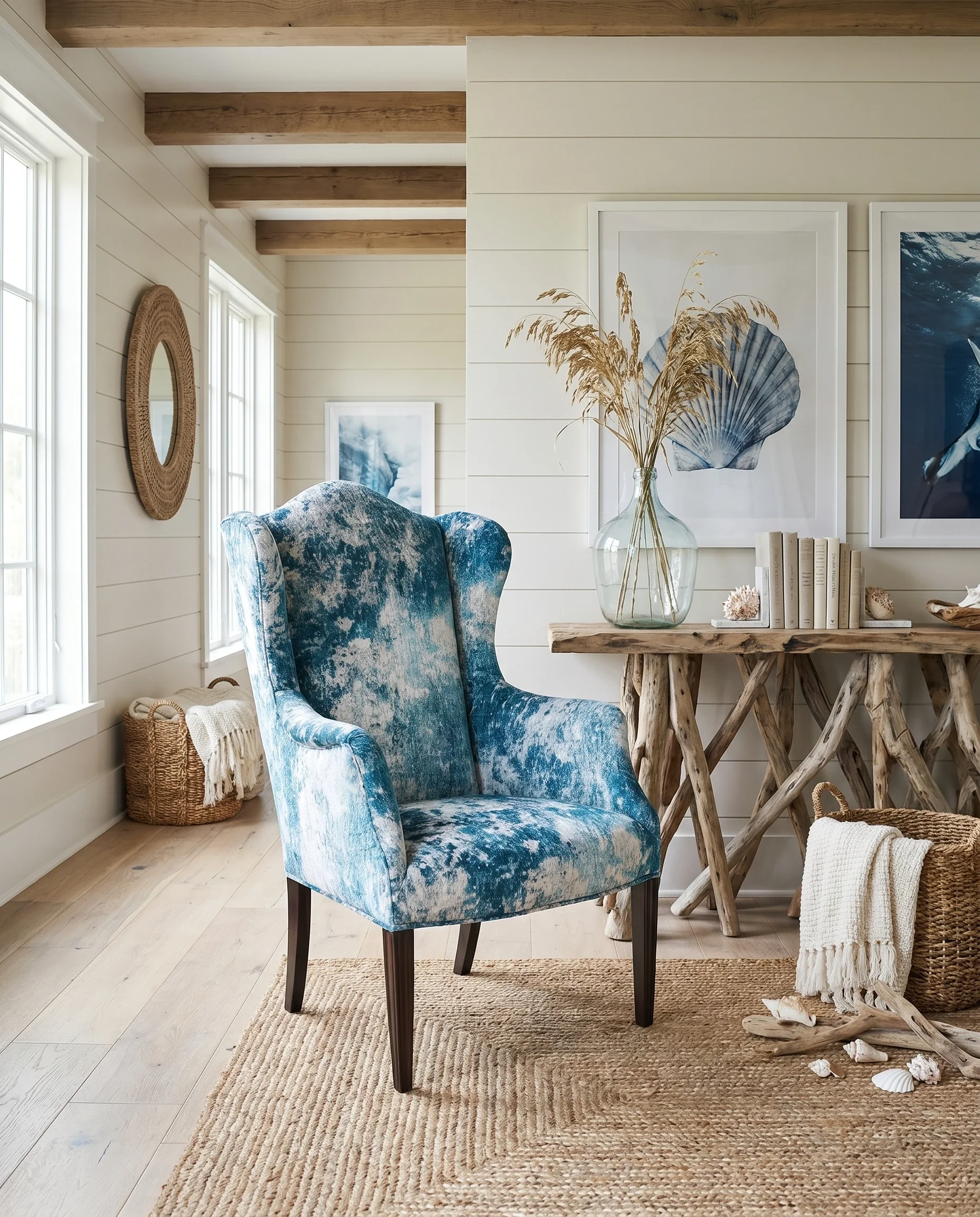
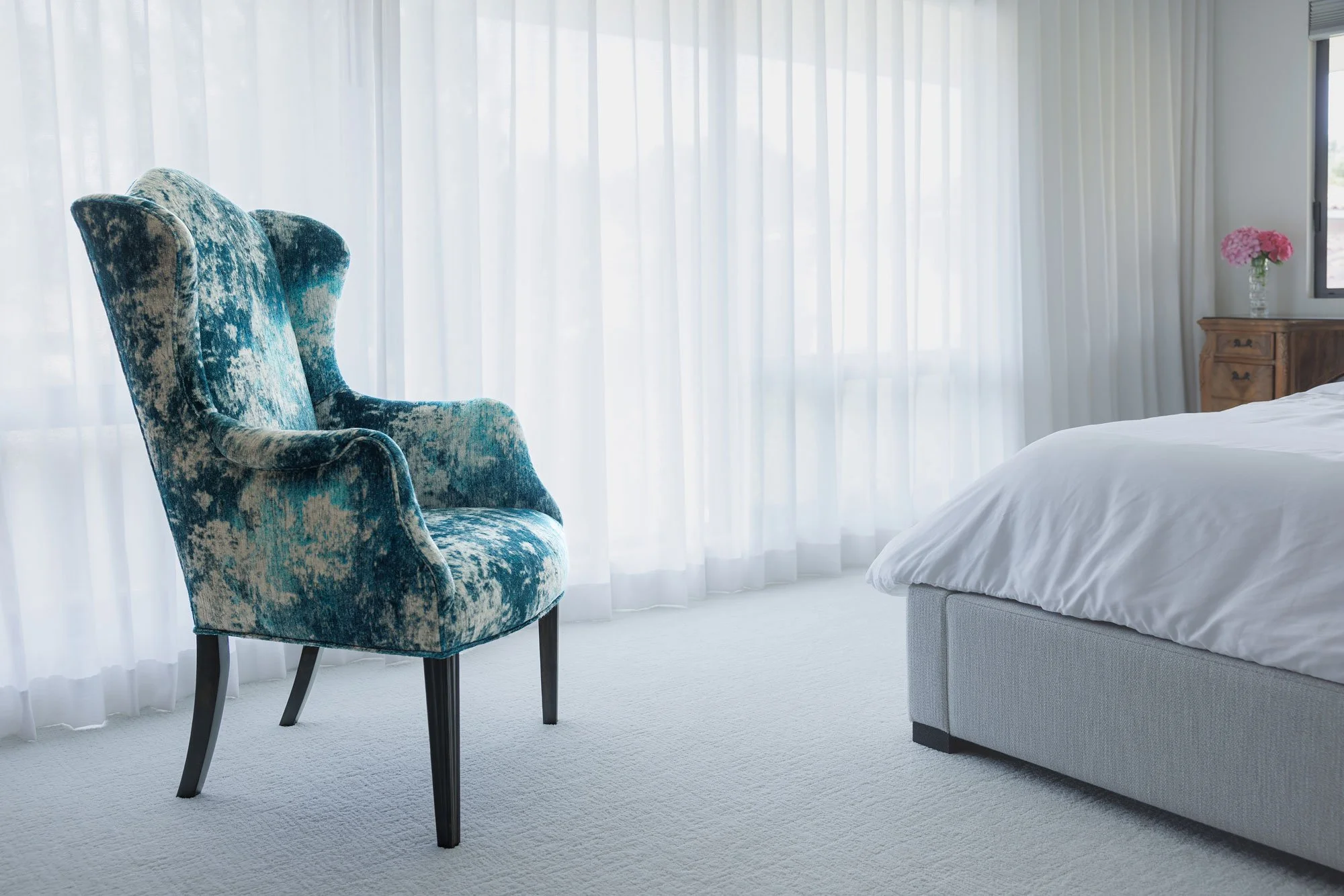
-
A wing chair is a settled, presiding seat. Whether it anchors a reading room, turns the corner of a library, or eases into a private interior, it gives you a place to sit at length, beside a lamp or a fire. The enclosing wings make it a chair for one rather than a chair for conversation, and its upright, compact footprint lets it hold a corner without crowding it.
-
Type: Wingback chair; high-back easy chair with enclosing wings
Style: George III style
Date: Not established
Origin: Not established (unmarked)
Material: Hardwood frame; printed jacquard velvet upholstery
Finish: Show-wood refinished to a dark tone in restoration; an applied finish
Construction: Fully upholstered frame; fluted square-tapered front legs, raked rear legs
Maker & Origin: Unattributed; no mark located
Provenance: Most recent documented acquisition from a charitable thrift shop in Southern California
Condition: Restored; fully reupholstered; show-wood refinished; frame prepared for continued use
Dimensions: 26 W × 20½ D × 43¾ H in.; seat height 18½ in.
Upholstery: Black Edition 'Kensu', Viridian, fully reupholstered (see The Black Edition 'Kensu' Velvet)
-
Reupholstered. The chair was fully reupholstered; the present covering is tailored with welted seams.
Finish Work. The show-wood was refinished during the restoration to a dark tone; the present surface is an applied finish.
Repaired. The frame was prepared for continued use ahead of reupholstery.
-
The chair is reupholstered in Black Edition Kensu, Viridian, a printed jacquard velvet. The covering reads as a mottled field of teal-blue and ivory with scattered metallic highlights catching the light. The design is a collaboration with the Japanese artist Katsutoshi Yuasa, an abstracted woodland scene drawn from Japanese woodblock-print practice.
-
No maker's mark, label, or stamp has been located, and the seat underside is now sealed beneath the new dust cover from the reupholstery, so no stamp is reachable without opening it; the chair is offered unattributed. The wing chair is an English form that was also made in America and elsewhere, so the origin of this unmarked example is not established, and the United Kingdom connection belongs to the covering, not the chair. The date is likewise not established: the styling is consistent with George III work, but that vocabulary was reproduced long after the period and the upholstered frame offers no surface to date, so the piece is offered as George III style rather than a firm period.
-
The show-wood legs are a close, straight-grained hardwood under a dark applied finish, and the species is not identified. The front legs are square and tapered with a fluted show face, while the rear legs are square and raked. Above them the frame stands fully upholstered, the back rising tall and narrow on relatively long legs, and the transitions between back, wings, seat, and base are kept clear and legible.
-
A printed jacquard velvet reading as mottled teal-blue and ivory with metallic highlights worked into the pile.
Manufacturer: Black Edition
Collection: Mizumi
Pattern: Kensu
Colour: Viridian
Type: Printed jacquard velvet
Composition: 45% polyester, 28% cotton, 27% viscose; Pile: 100% viscose
Performance: Martindale 60,000 (general domestic); Wyzenbeek 90,000 double rubs
Flammability: Certified for upholstery to California TB117 and NFPA 260
Textile origin: United Kingdom
Design source: An abstracted woodland scene by Japanese artist Katsutoshi Yuasa, from Japanese woodblock-print practice
Reupholstered: Yes
-
The wing chair began in late seventeenth-century England as a fireside easy chair: the high back and forward wings sheltered the sitter from draughts and held the warmth of the hearth. Through the eighteenth century the form moved from the hearthside into parlours and libraries, and the George III interpretation followed, trading bulk for tapered legs and a lighter, more upright line, the wings now framing a reader rather than walling off a draught. This example carries the wear of long use and has been brought back into service, reupholstered and its show-wood refinished, the restoration that readies it for another room. Its documented modern history begins with its recovery from a charitable thrift shop in Southern California, where it had been set aside before entering the present collection. Its earlier chapters are not recorded: who made it, exactly when, and where it was built are not established, and no document supplied with the chair settles them. The record ends where the evidence ends.
-
Is this a George III style wingback chair, and is it antique or vintage? It follows George III design, but that styling was reproduced for well over a century and the upholstered, unmarked frame gives nothing to date. The listing therefore calls it George III style rather than fixing a period.
Has the chair been reupholstered and refinished? Yes. It was fully reupholstered and the show-wood refinished to a dark tone. The frame was prepared for continued use beforehand.
What is the fabric, and why this one? The covering is Black Edition Kensu in Viridian, a printed jacquard velvet whose abstracted woodland design is by the Japanese artist Katsutoshi Yuasa, with metallic highlights in the pile. It is certified for upholstery and holds up to regular use, chosen as a durable covering for a chair meant to be sat in.
What wood is the frame? The show-wood is a close, straight-grained hardwood under a dark finish. The species is not named without a closer look at an unfinished edge, so it is recorded simply as hardwood.