 Image 1 of 2
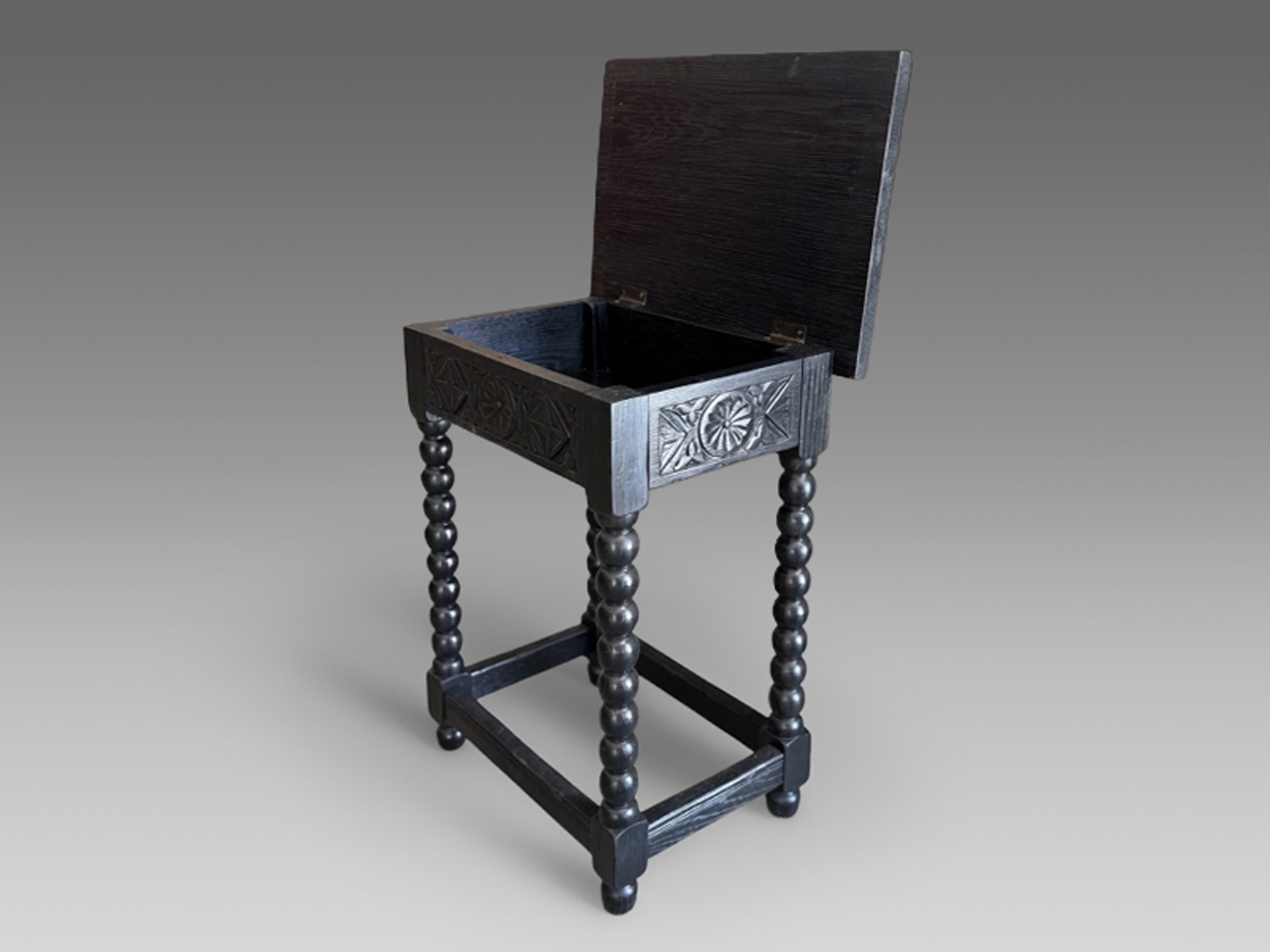 Image 2 of 2
Living With This Object
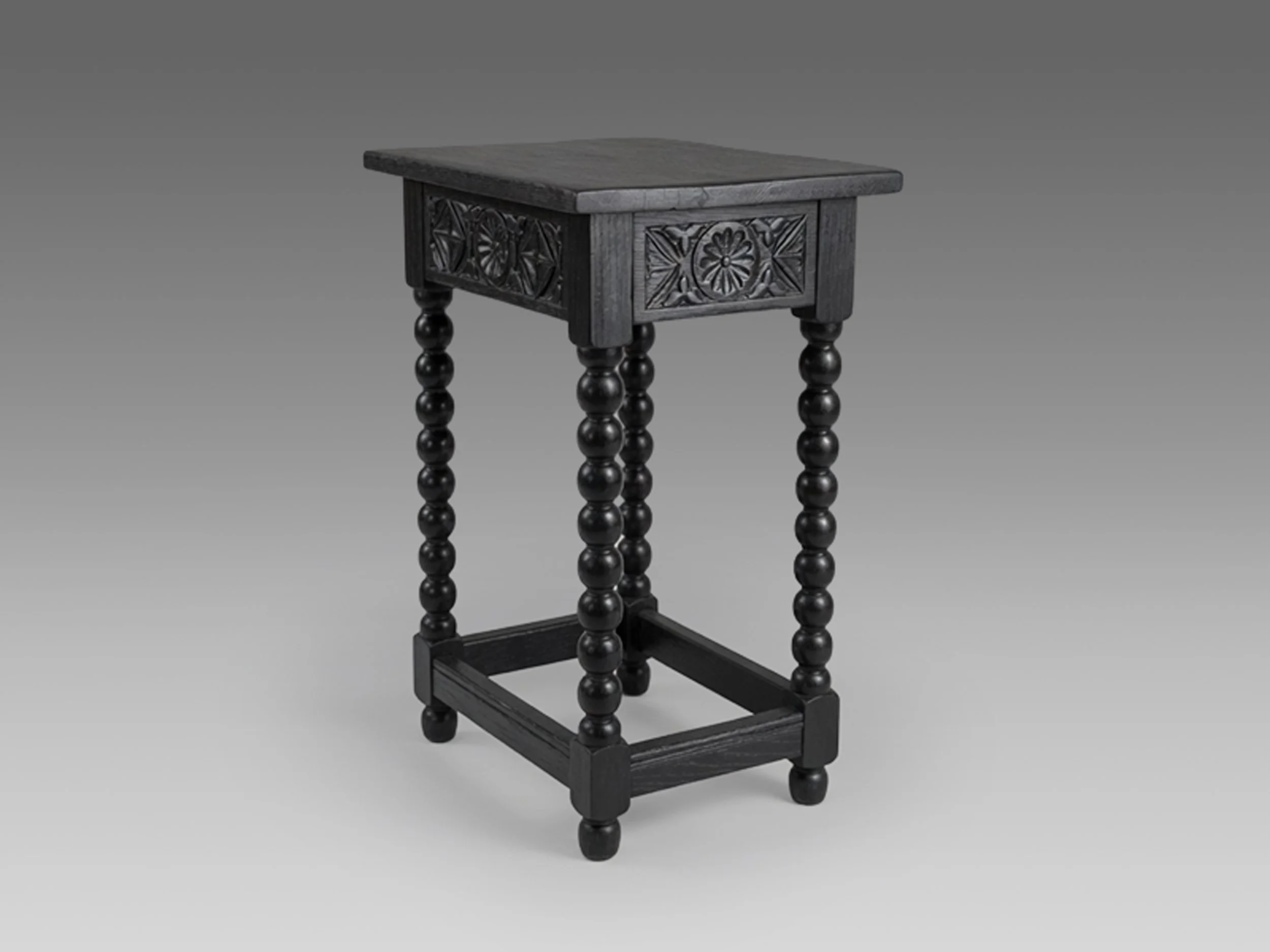
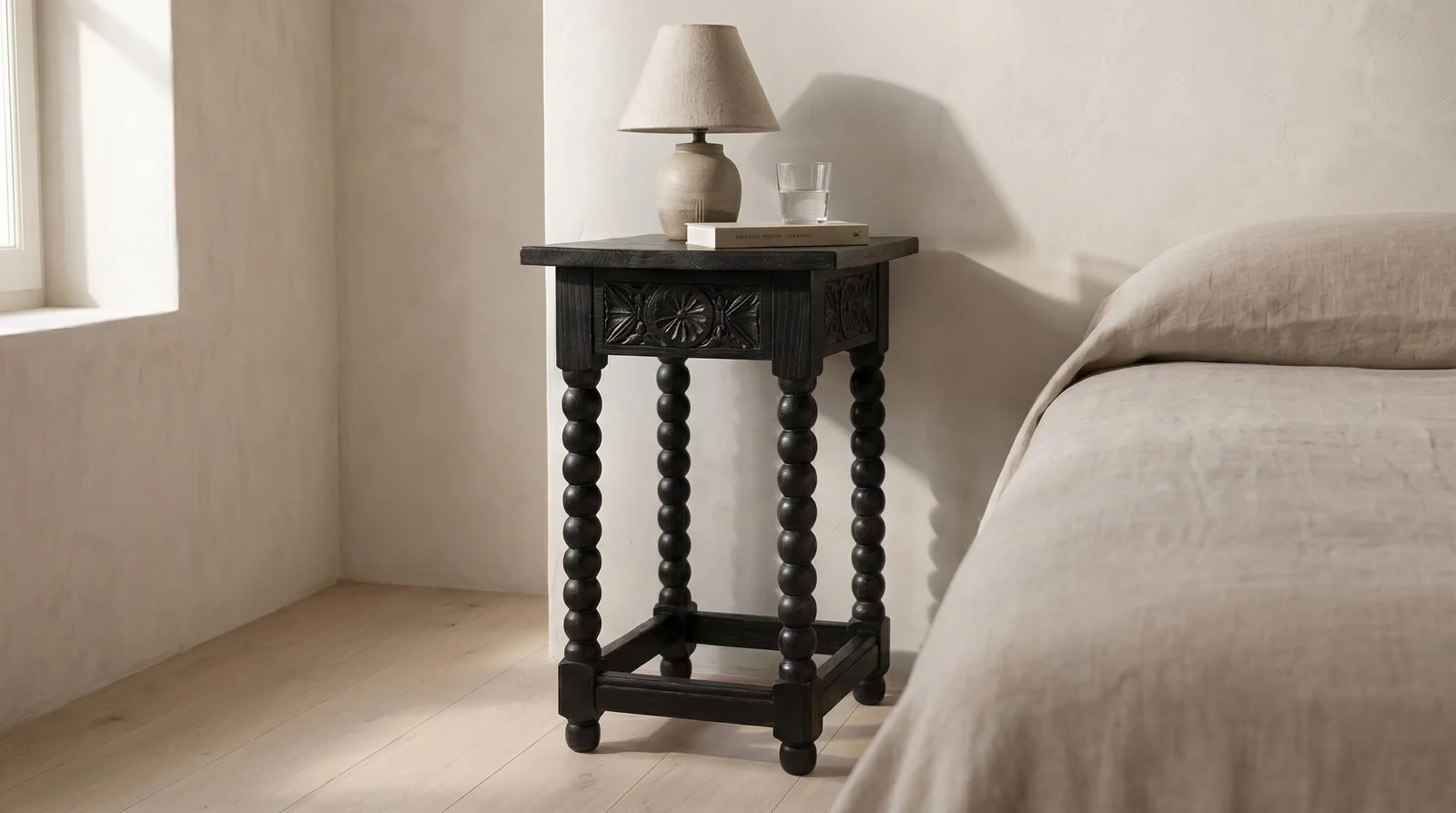
In a room the table reads as a compact, upright form: the black-stained oak stands dark against a pale wall, the carved rosette apron catching the light above the bobbin-turned legs that drop to a box stretcher and turned bun feet. At nightstand height, it settles beside a bed or a chair without crowding the space.
The room view below is an AI visualization, offered to suggest scale and placement. It is a rendered image, not a photograph of the table in this room.
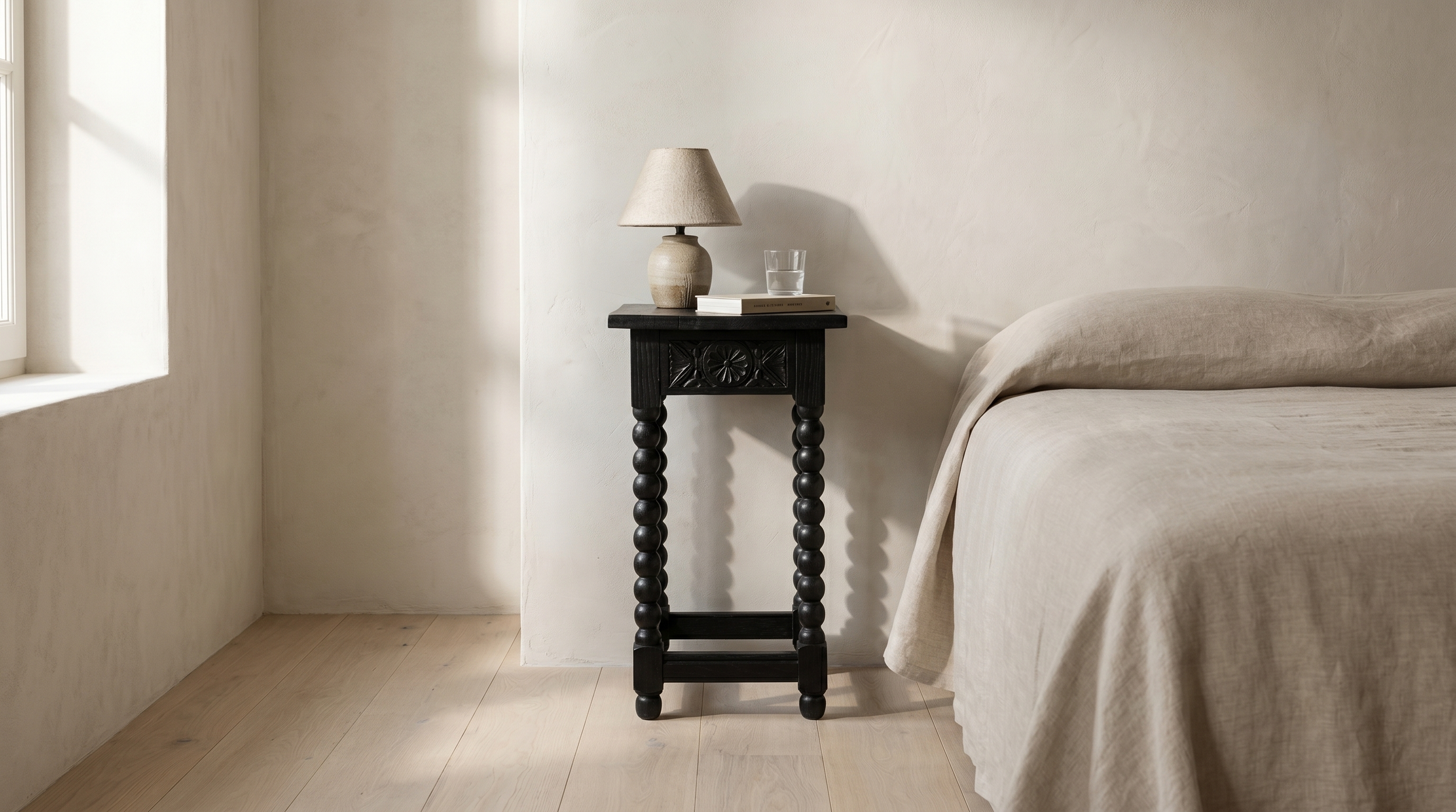
-
Nightstand-sized, the table settles in beside a bed or a chair, or anywhere a modest surface for a lamp, book, or drink is welcome; at 19 inches wide and 27 inches high, it moves easily within a room. Its dark finish is at home in both traditional and spare interiors, reading equally well against plaster, panelling, or bare walls.
-
Type: Side table with a hinged flip-top compartment
Style: Spanish Revival
Date: Circa 1920–1940
Origin: Not established
Maker: Unattributed (no mark located)
Provenance: Acquired through a San Bernardino County, California auction
Material: Oak
Finish: Black stain, applied in restoration
Construction: Pegged frame; bobbin-turned legs; box stretcher; hinged single-plank top
Condition: Refinished; sound; light handling wear
Dimensions: 19 W × 14 D × 27 H in.
-
Original: The oak frame, legs, box stretcher, top, and carved apron are the original structure.
Replaced: Nothing was replaced in the documented work. Whether the rear hinges are original or a later fitting was not determined, and it is not asserted either way.
Reconstructed: No elements were reconstructed.
Repaired: No structural repairs are documented beyond the finish work below.
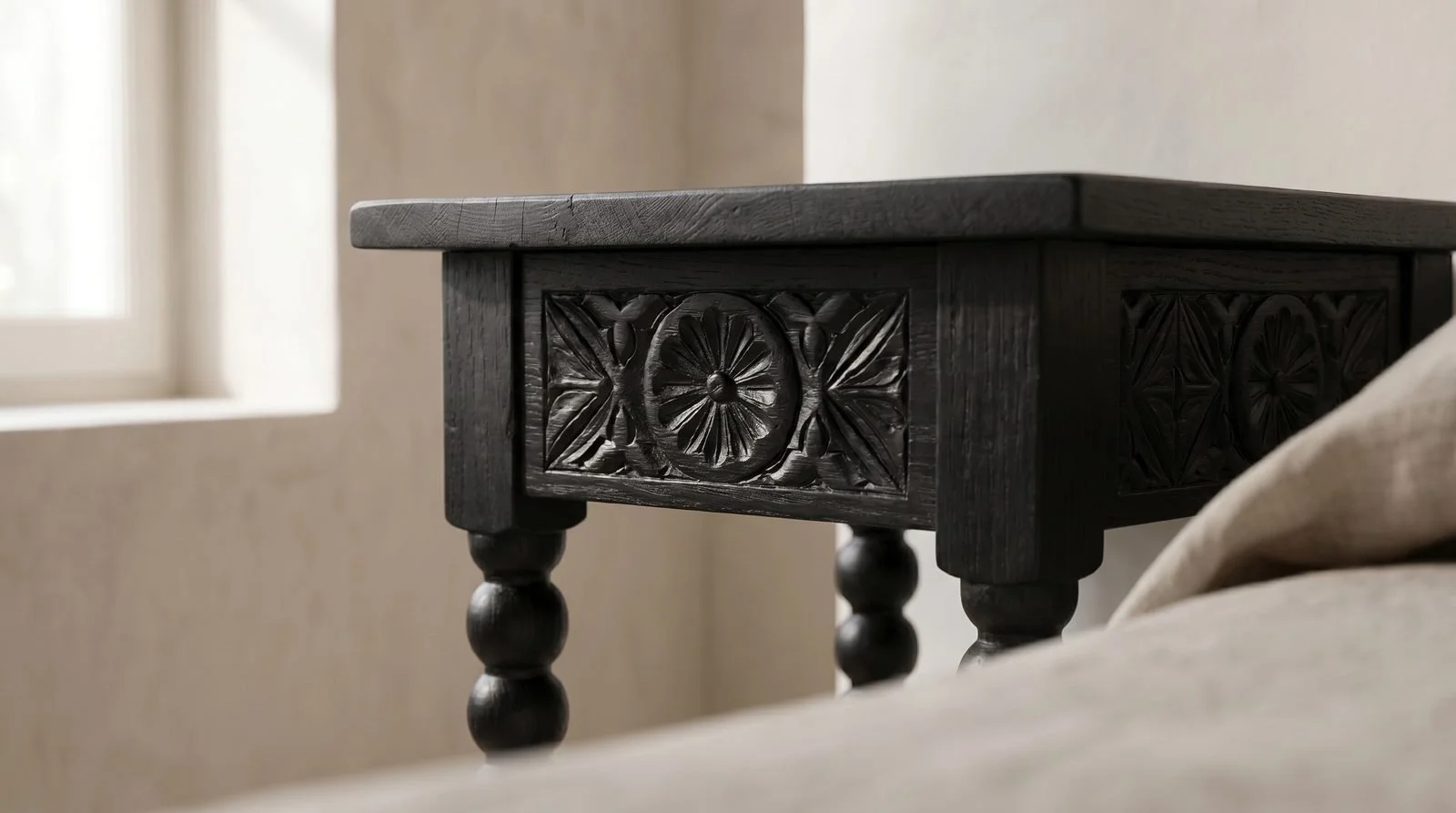
Finish Work: The earlier brown surface was removed and a black stain applied in this restoration. Because it is a stain and not a paint, the oak grain reads through it, and the shallow carving keeps its relief under the darker tone.
-
A deep apron runs on all four sides, carved with a repeating chip-cut pattern: a central rosette roundel flanked by lozenges worked with compass-cut star points. That same apron forms the walls of a shallow box. The top is hinged at the rear and lifts to a plain interior well, then returns to a flush surface when closed. No lock or catch is fitted; the lid rests open or sits closed.
-
No maker's mark, label, or stamp was located, so the piece is left unattributed rather than assigned. Its form, bobbin-turned legs beneath an Iberian chip-carved frieze, belongs to the Spanish Revival tradition that drew on Spanish and Moorish ornament and was widely produced in the United States in the 1920s and 1930s. Furniture with bobbin turning and chip-carved ornament of this kind was produced in more than one country, so the place of manufacture is not established; "Spanish Revival" names the form, not the country. The circa 1920–1940 date rests on the style and construction rather than a mark.
-
The primary wood is oak, identified from the coarse, open grain visible when the top was stripped to bare wood during refinishing and still evident beneath the stain. The frame is pegged, and four bobbin-turned legs are joined near the floor by a rectangular box stretcher, standing on small turned bun feet. The top is a single plank, hinged at the rear on steel butt hinges, with the compartment lined in plain oak.
-
Tables of this kind belong to a long line of furniture that doubles as storage, offering a surface for a lamp or a cup while keeping small things close at hand and out of view. This example entered the Acanthus Home collection through a San Bernardino County, California auction before undergoing its documented refinishing, recorded under Condition & Restoration. Its maker, original owner, and ownership history before the documented auction are not recorded, and they are left unimagined. The record ends where the evidence ends.
-
Is this piece antique or vintage? We list it as vintage. With no maker's mark or document, the circa 1920–1940 range rests on the bobbin turning, the chip-carved frieze, and the construction. Because that evidence cannot place its manufacture before 1926, the age is not rounded up to antique; vintage is the honest call.
Has the table been refinished? Yes. This vintage Spanish Revival flip-top side table was refinished in a black stain after the earlier brown surface was removed. The work was to the surface, not the structure: nothing was rebuilt or replaced, and the piece shows only light handling wear from ordinary use over the years.
What wood is it? Oak. The species reads from the strong, open grain across the top and apron, a coarse figure characteristic of the wood, and it was confirmed when the top was stripped to bare wood during this refinishing. Because the finish is a stain rather than a paint, that grain stays visible.
How does the top open? The top is hinged at the rear and lifts to a shallow compartment inside, then closes flush with the surrounding top. There is no lock or catch: the lid simply rests open while you reach in, or sits closed under its own weight over the plain oak well.