 Image 1 of 10
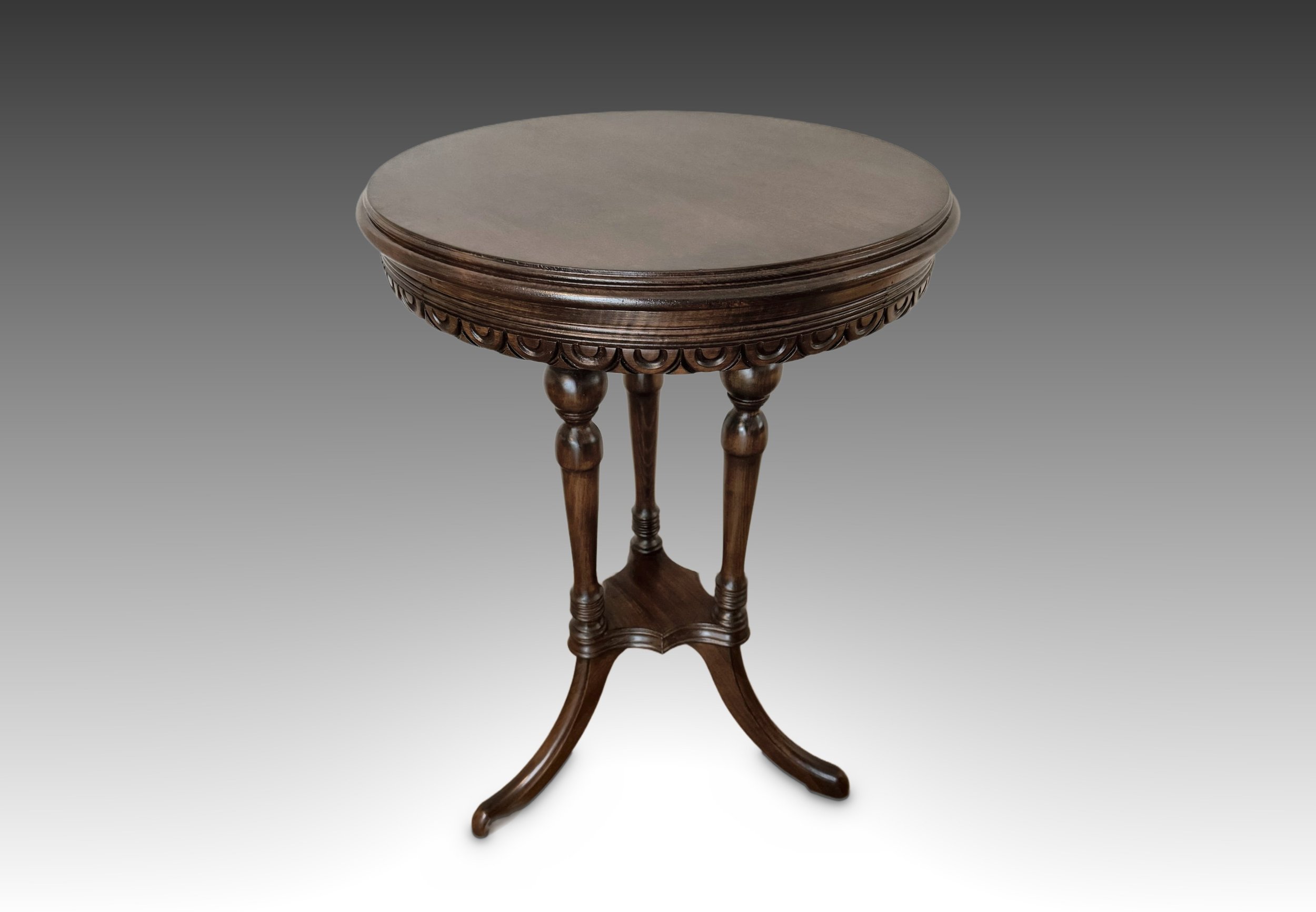 Image 2 of 10
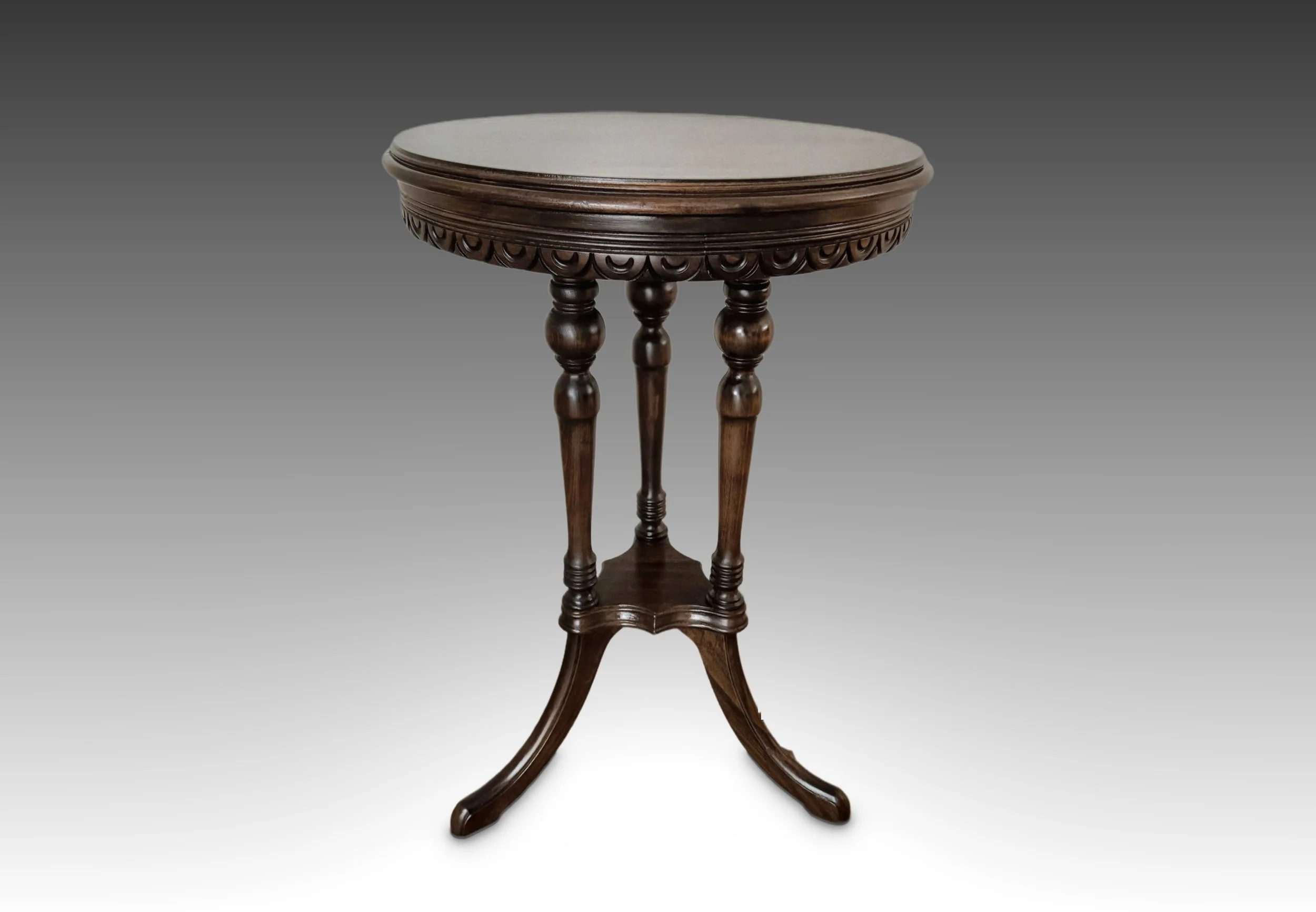 Image 3 of 10
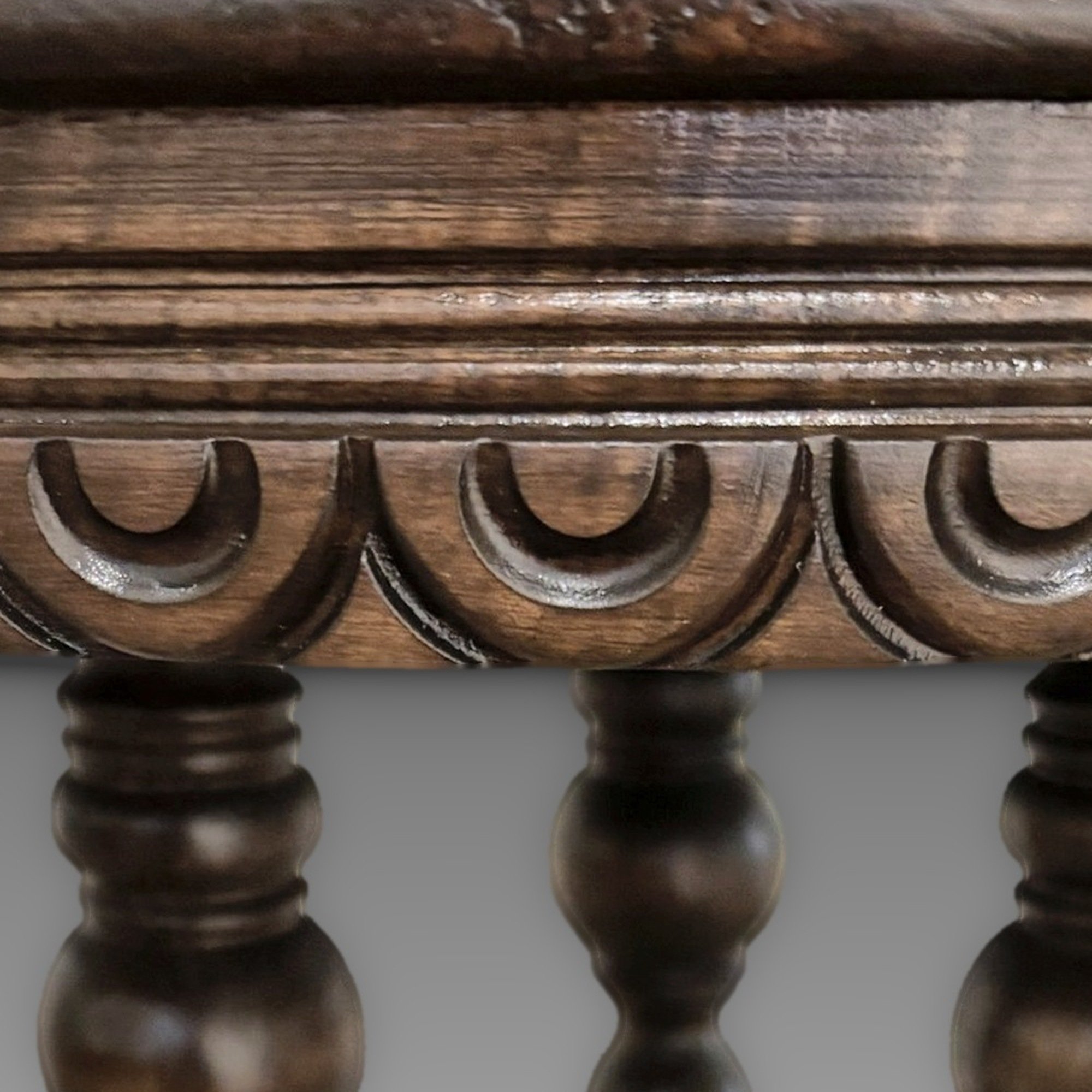 Image 4 of 10
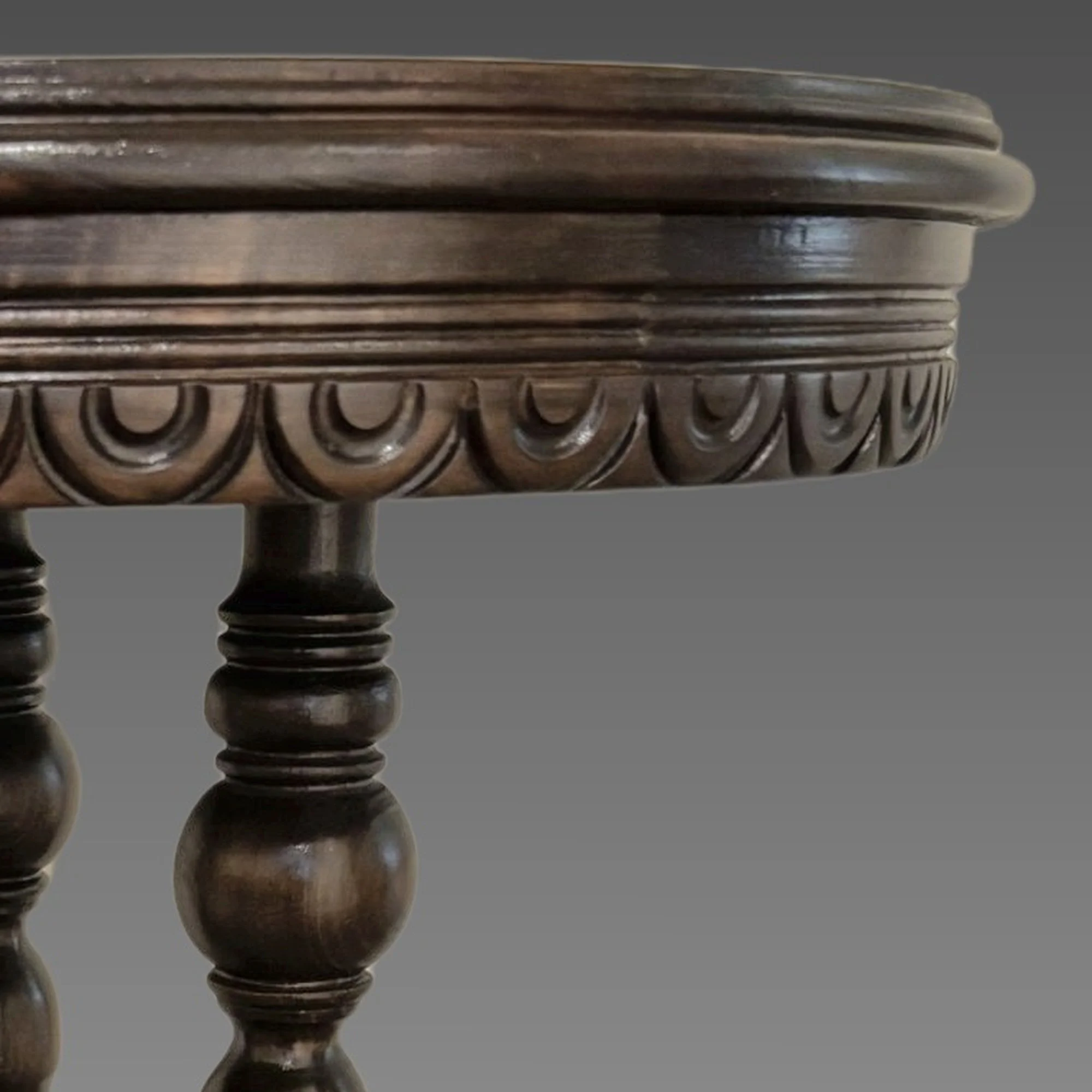 Image 5 of 10
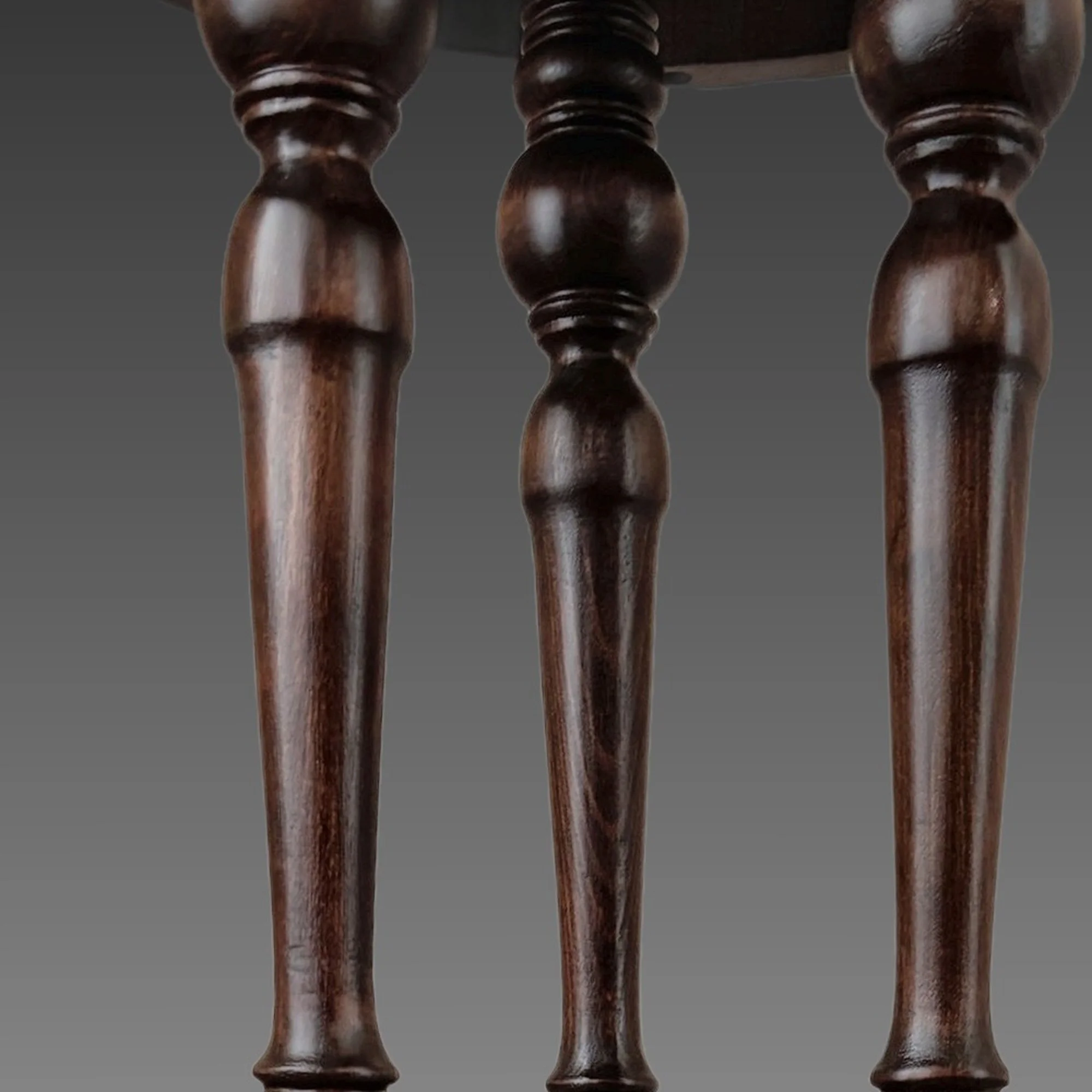 Image 6 of 10
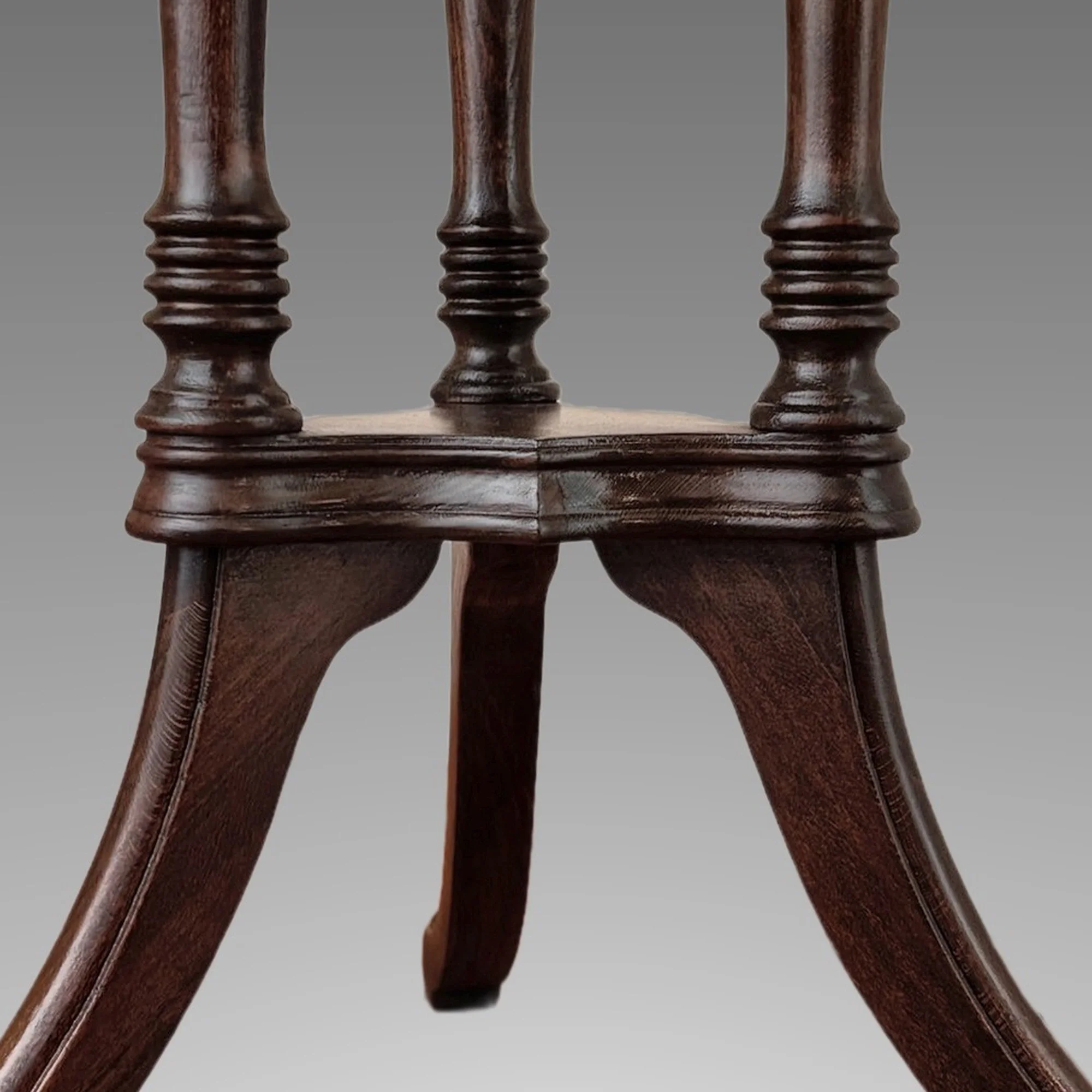 Image 7 of 10
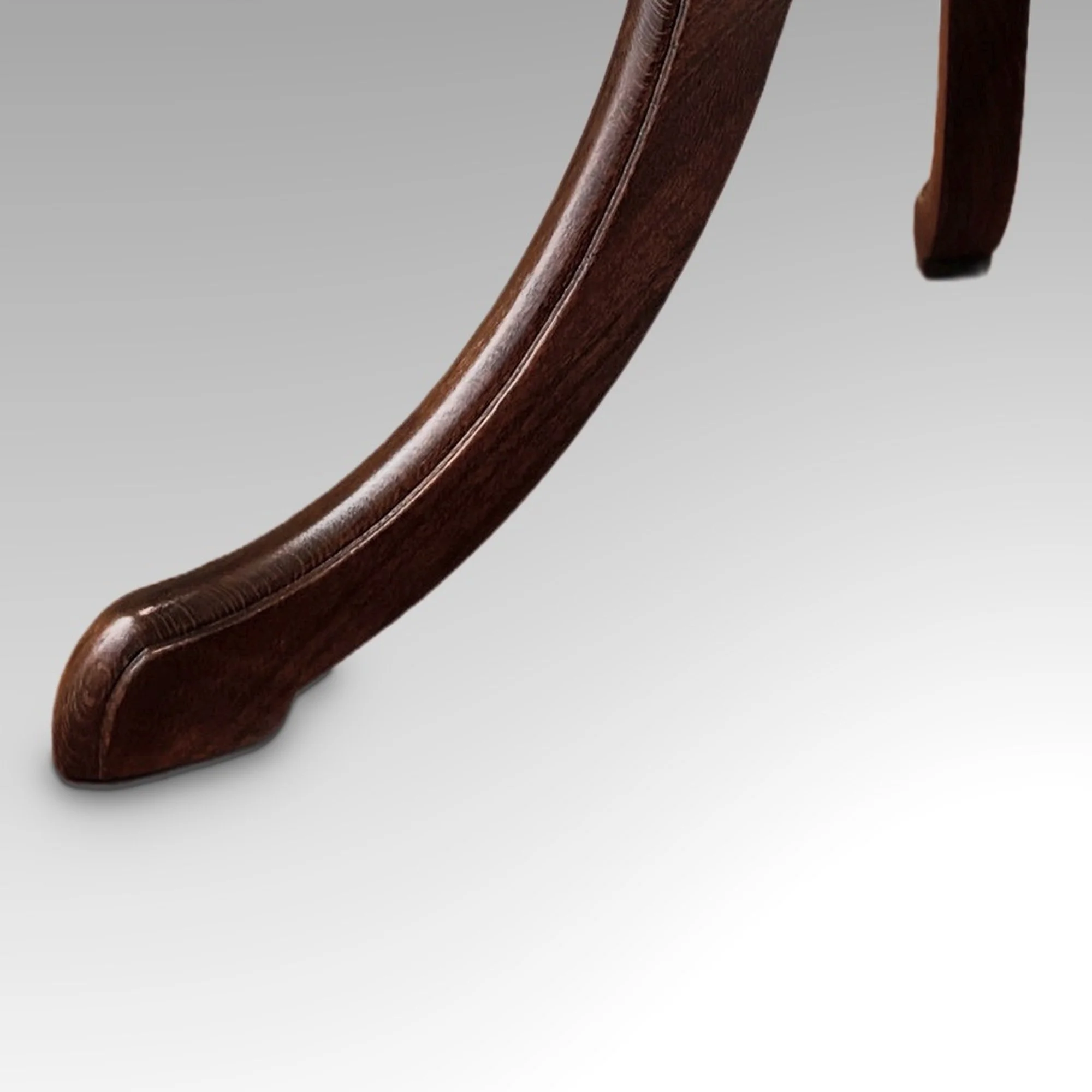 Image 8 of 10
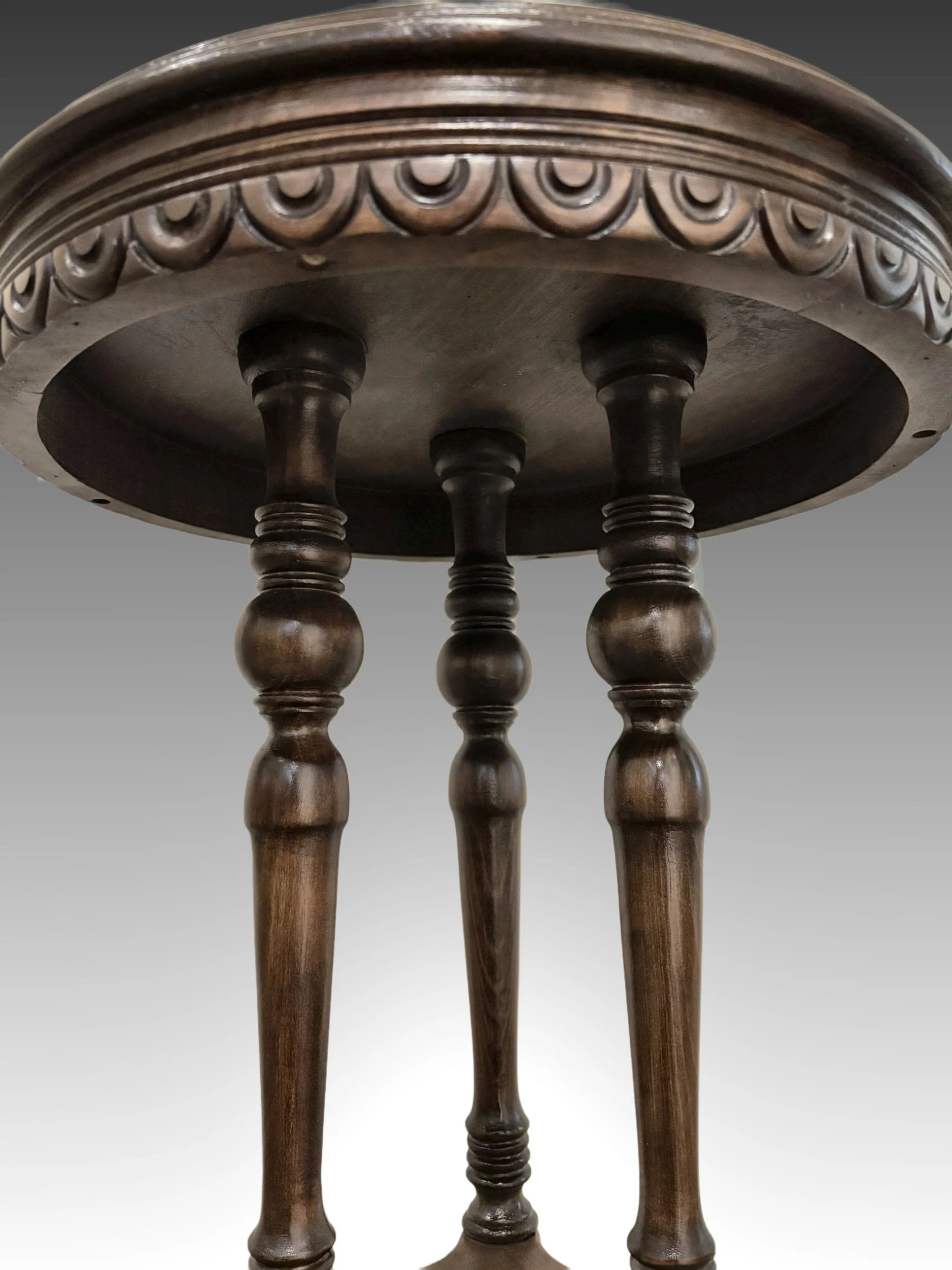 Image 9 of 10
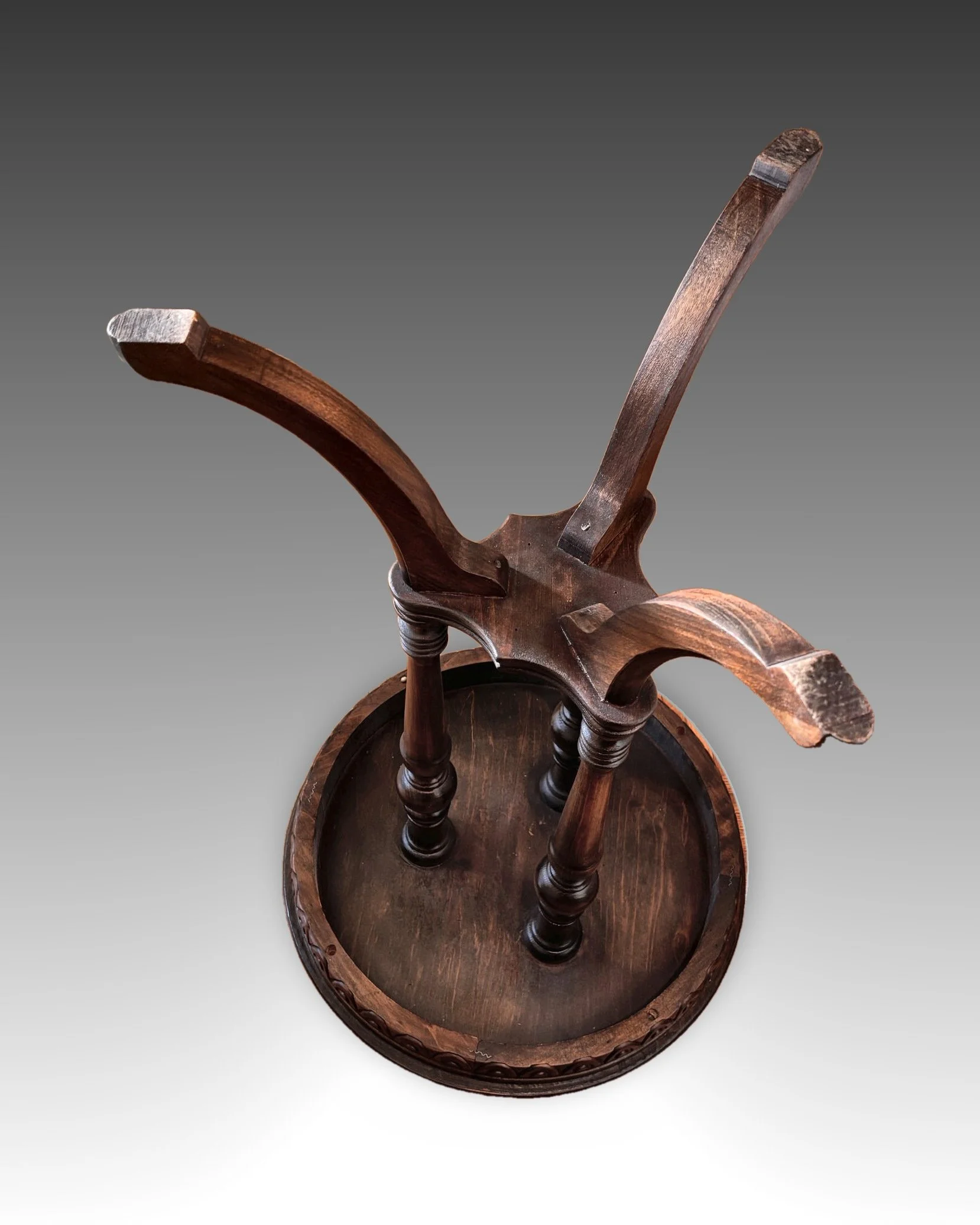 Image 10 of 10
Living With This Object
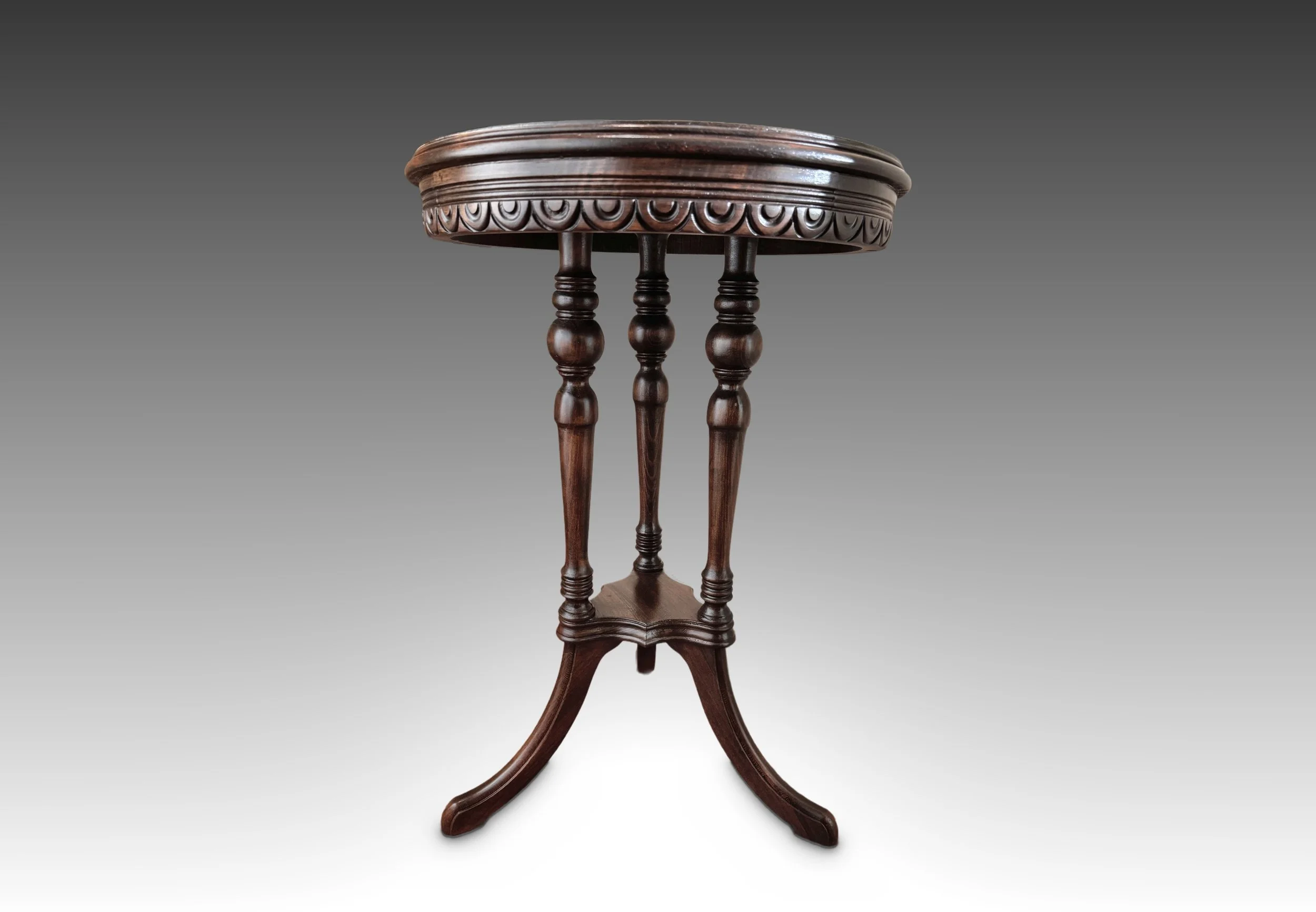
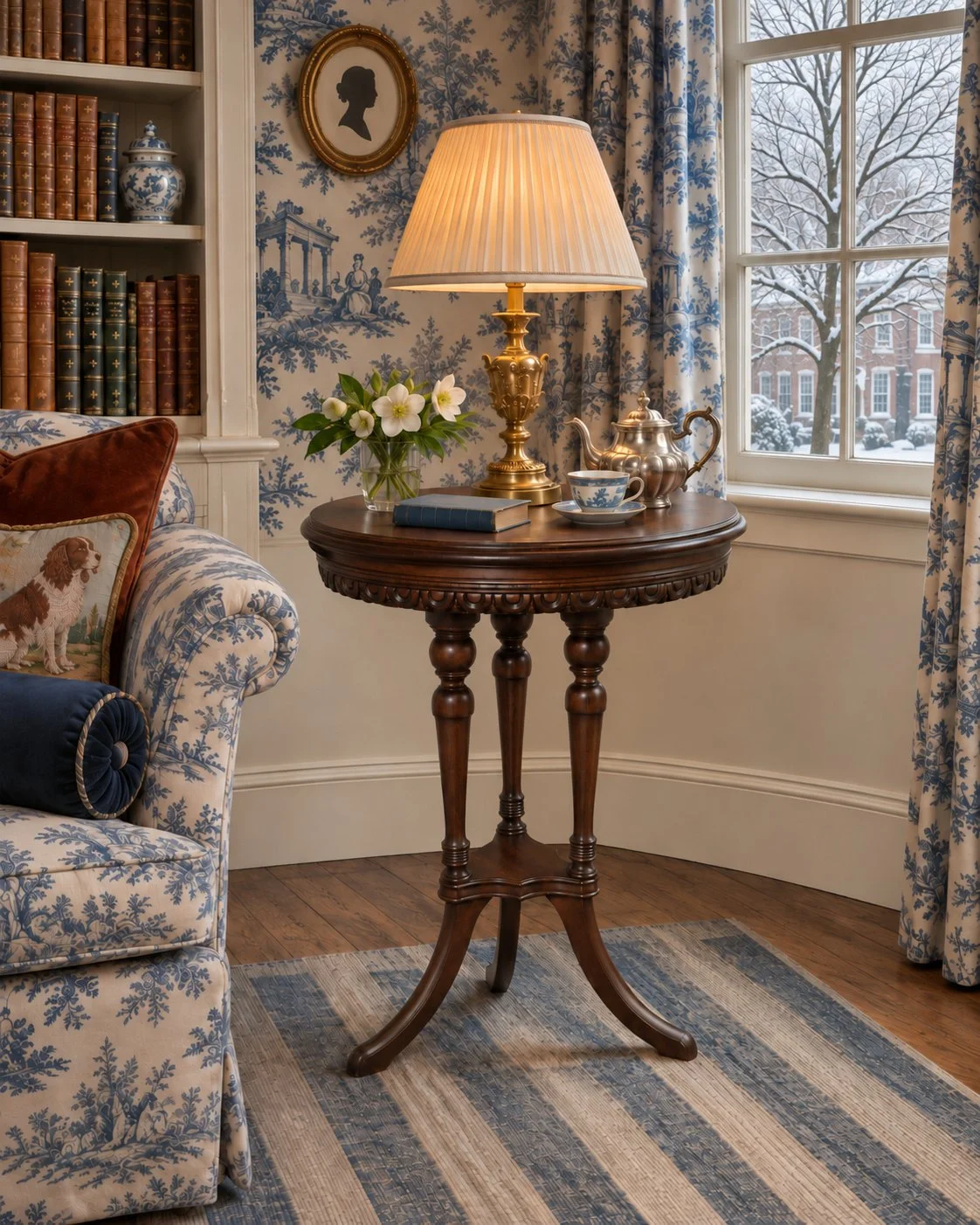
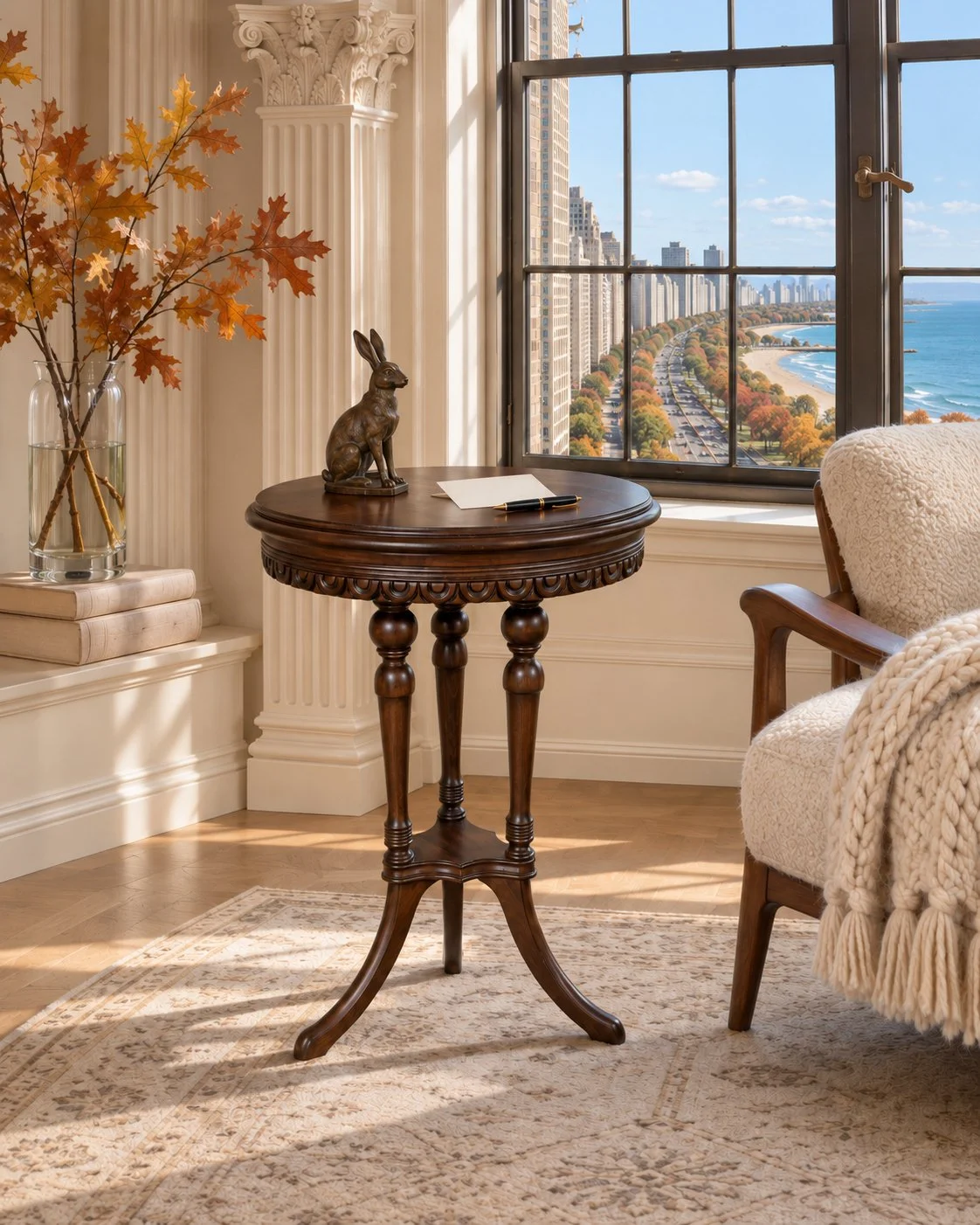
In a room the table reads as a tall, open form: the dark walnut-stained top rests on three turned columns, and the saber legs spread wide enough to stand steady beside a chair or a bed. At 27¼ inches its top sits just above a standard sofa arm, and the 17¾-inch round holds a lamp and a cup without crowding.
The room views below are AI visualizations, offered to suggest scale and placement. They are rendered images, not photographs of the table in these rooms.
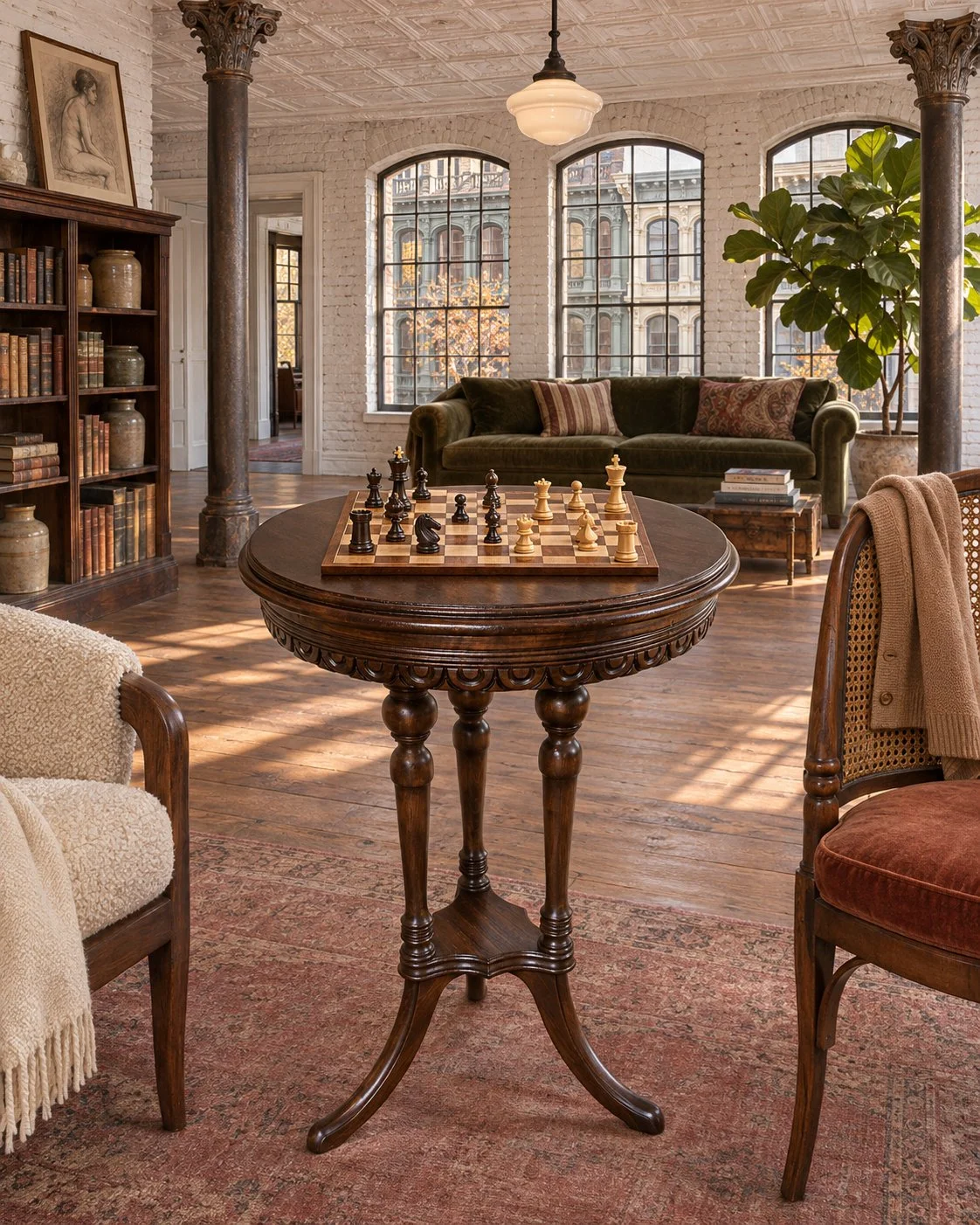
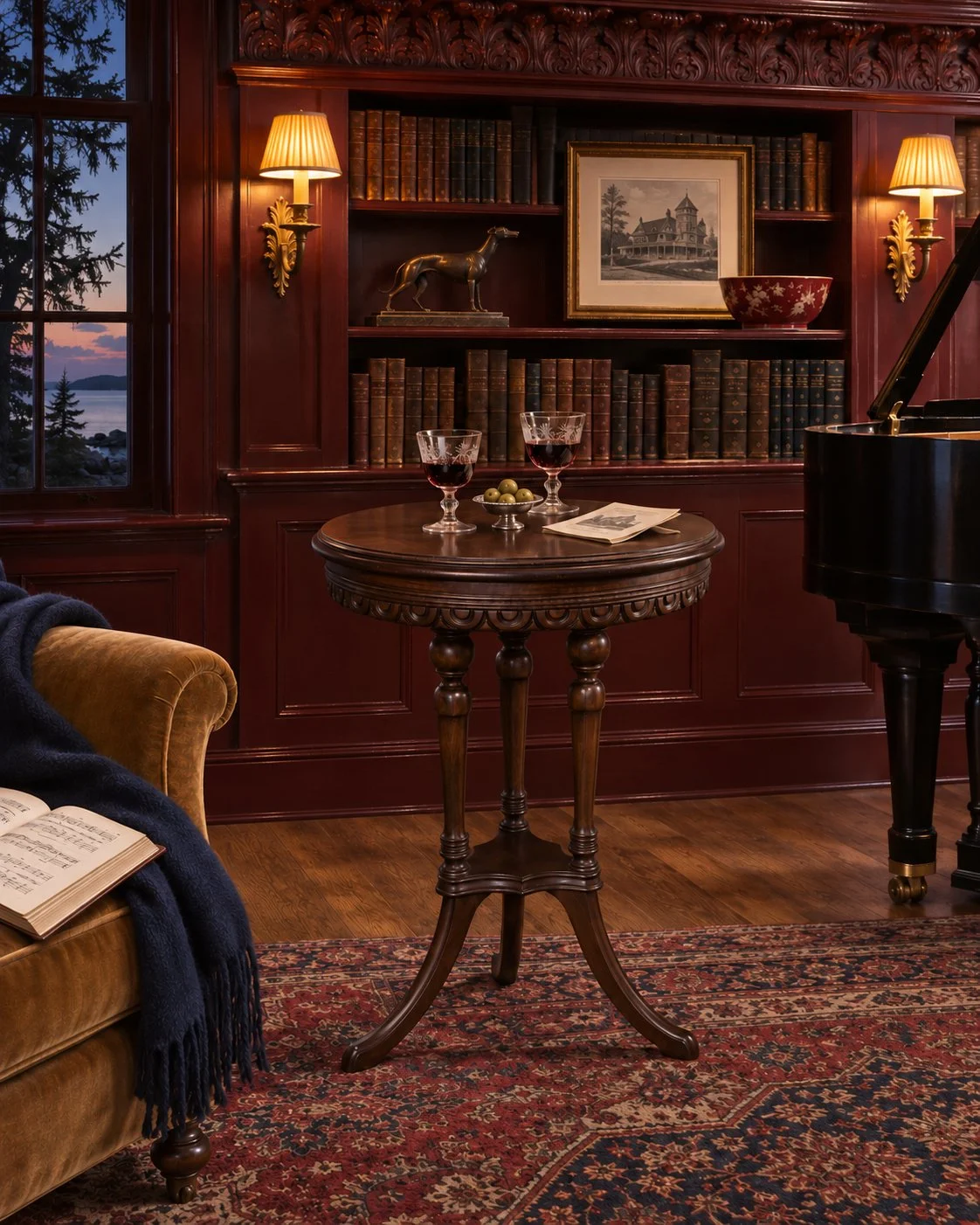
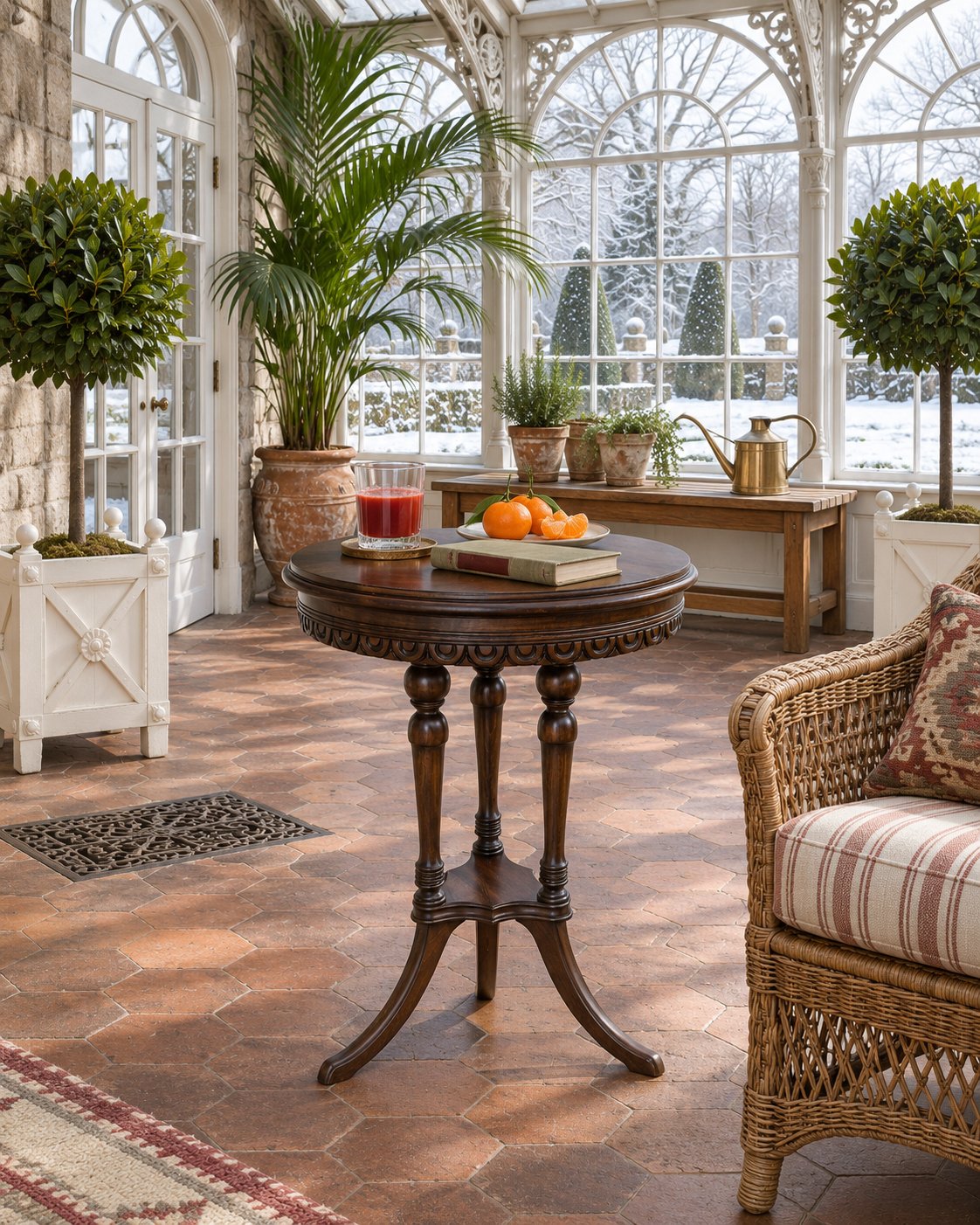
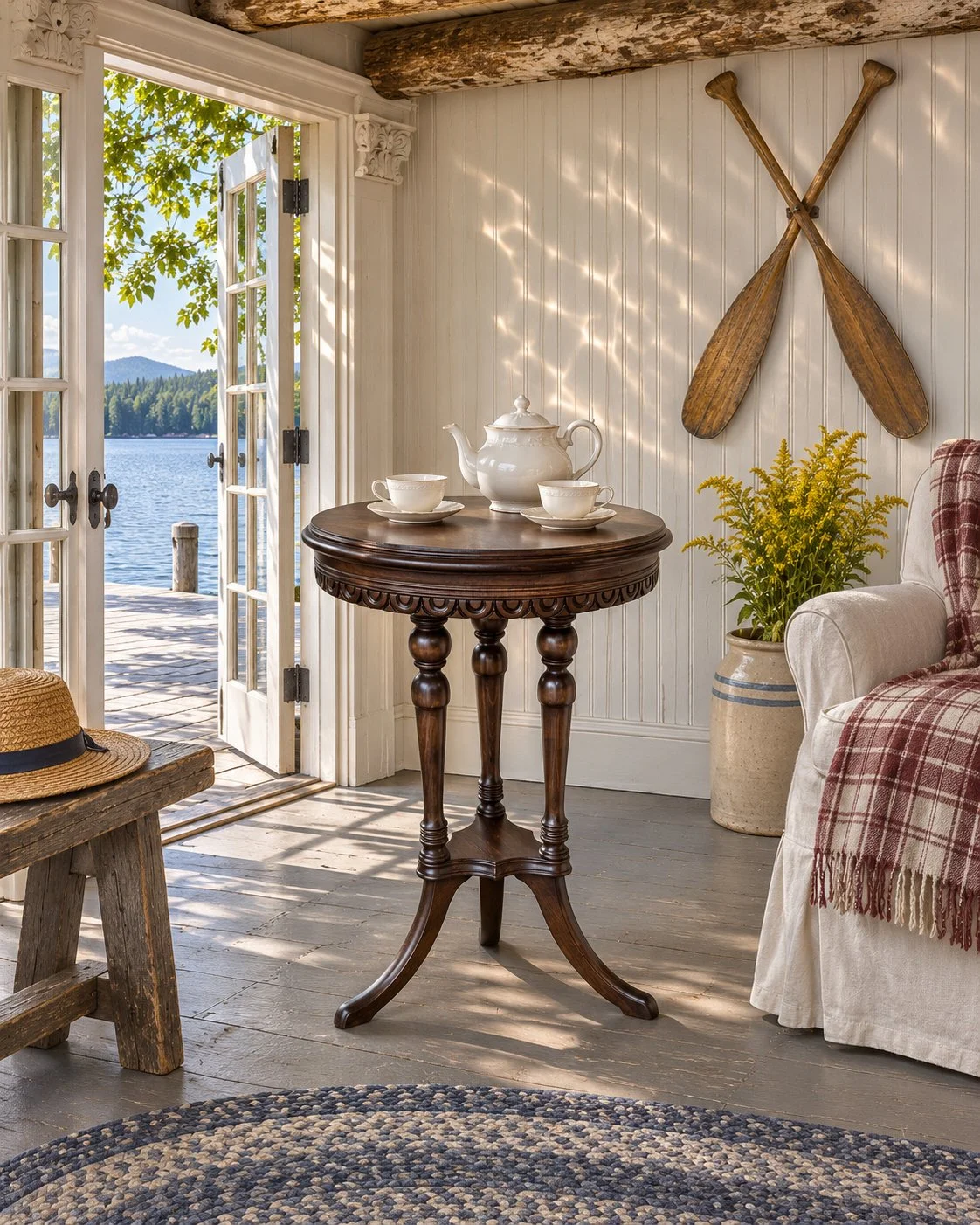
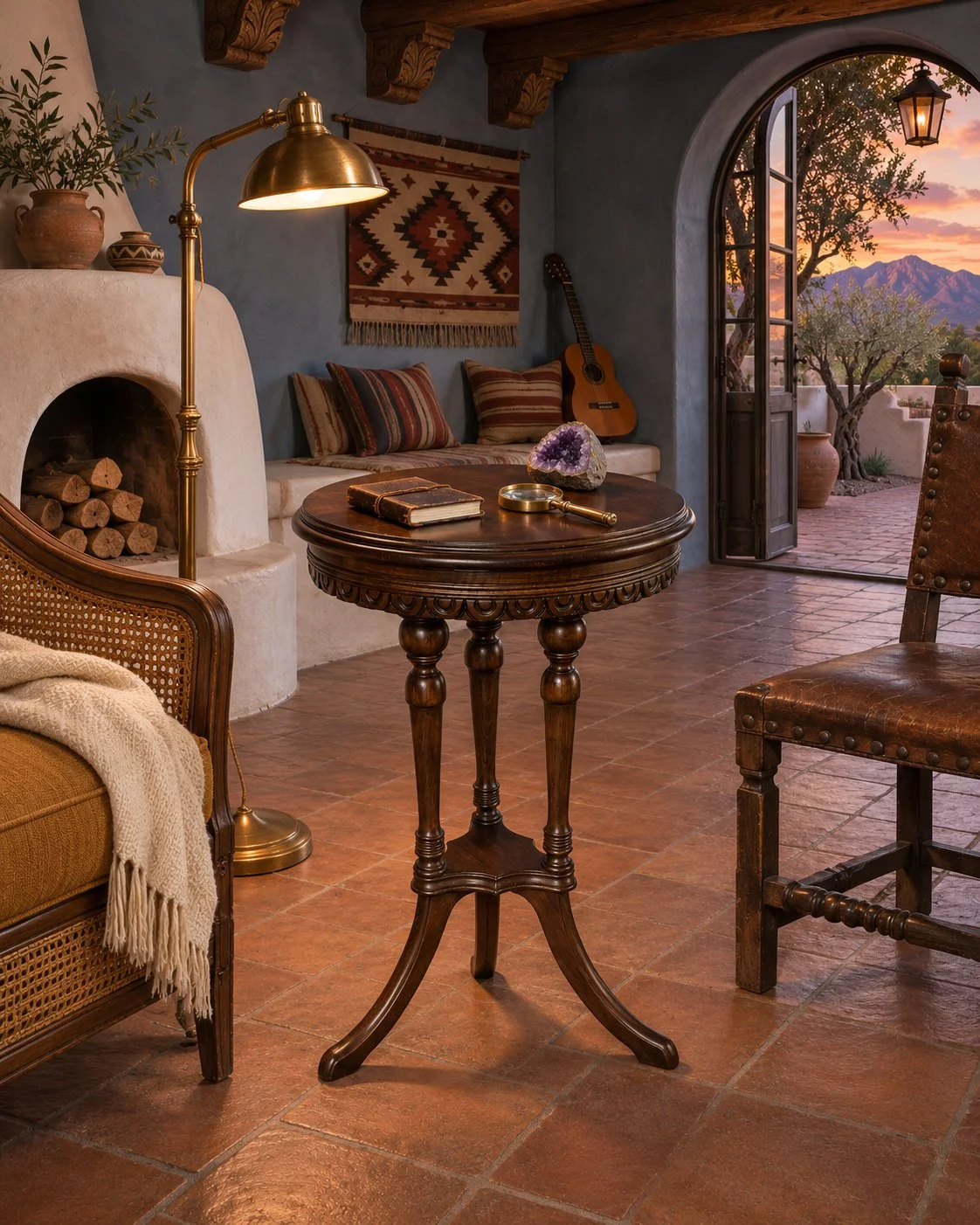
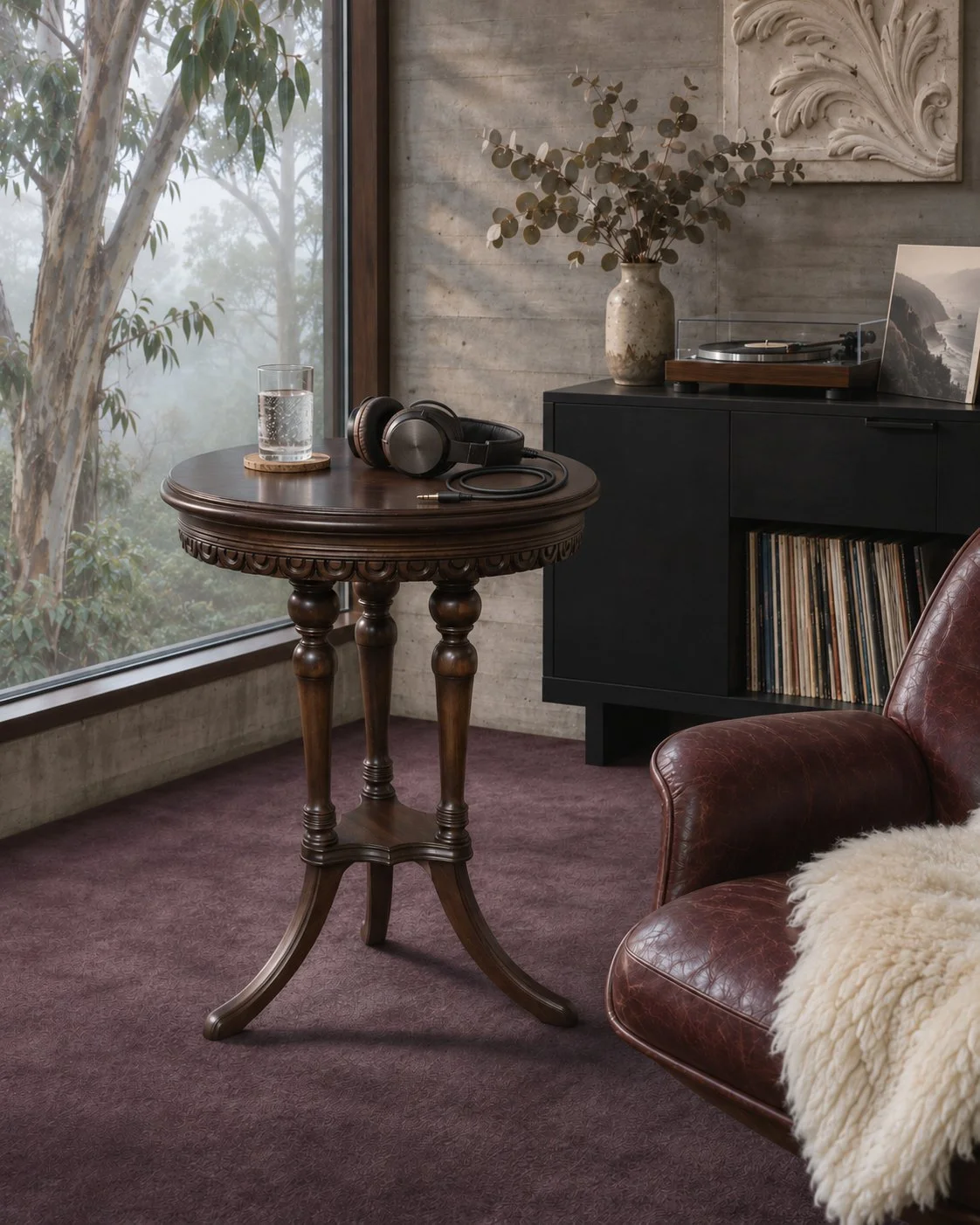
-
At 27¼ inches, the top sits about two inches above a standard 25-inch chair or sofa arm, within reach of a seated person. The 17¾-inch top holds a small lamp and a cup, or a single object on its own.
-
Top: round, with a thick, double-rounded molded edge. Stripped during refinishing, the top showed a strong, mirrored open-grain figure, which suggests a veneered surface; the present finish is dark and subdued
Apron: a plain band and fine reeded lines above a continuous carved frieze of half-circle arches, each with a recessed inner crescent
Supports: three identical ring-turned columns, each with a short plain neck, a stack of fine rings, a large ball, a ring collar, a second baluster swelling and a long taper ending in a ring cluster
Undershelf: shaped triangular, with concave sides and a molded edge, set low on the base.
Legs and feet: three outswept legs, each with a fine incised line along its upper edge, ending in flat pad feet with a stepped toe
Marks: a stenciled number on the underside of the top, read as “6-A188”; the letter after the dash is partly obscured and may be an M
Provenance: from a private residence in Palos Verdes Estates, California, where it had stood for many years (owner-reported)
-
Original: To our knowledge, every element is original: the top, apron, columns, undershelf and legs.
Replaced: No elements have been replaced.
Reconstructed: No elements were reconstructed.
Repaired: No structural repairs have been made.
Finish Work: The table has been refinished. Before the work, the earlier dark finish was worn through along the edges, columns and feet, and the top was heavily scratched. The old finish was stripped from the top, undershelf and legs. The wood was then colored with a walnut stain, sealed and finished with a lacquer topcoat, giving the present deep brown satin surface.
Remediation: None.
Other: None.
-
The carved frieze runs as an unbroken band of half-circle arches around the whole apron, each arch holding a smaller recessed crescent. Set beneath the reeded lines and the heavy molded top, it gives the edge of the table a shadowed, rhythmic depth that reads clearly from across a room.
-
The maker is not recorded. The stenciled number on the underside is a model, pattern or inventory number, not a maker's mark, and it does not by itself identify a maker or a place of manufacture. Origin has not been established.
-
The primary wood has not been identified. Stripped, the top showed a pronounced open grain in a mirrored figure, and the undershelf and legs showed a paler, closer-grained wood beneath the old finish. The columns are lathe-turned and appear to be socketed into the underside of the top. Each leg is fixed to the underside of the undershelf, each held by a single round, flat-headed nail driven up through the leg into the shelf. Seen from below, the carved apron is a ring built from four curved segments, butted end to end and held at each joint by a corrugated metal fastener driven across the seam. Small round holes through the ring mark where the top is fixed to it.
-
Who made the table, and where, is not recorded. The stenciled number on its underside points to production in quantity, a numbered pattern rather than a commission. Its first documented chapter is a long residence in a single home in Palos Verdes Estates, California, as reported by the owner, from which it came to Acanthus Home. The scratches across its top and the finish worn through along its edges, columns and feet are the marks of that everyday use. It was then refinished. The record ends where the evidence ends.
-
What are the dimensions? 17¾ inches in diameter and 27¼ inches high.
What wood is it? The wood has not been identified. It is an open-grained hardwood, now finished with a walnut stain, and we describe it rather than name a species we cannot confirm.
How old is it? The evidence does not yet permit dating. We will add a date range when construction evidence supports one.
Has it been restored? It has been refinished. To our knowledge every element is original, and nothing has been replaced, reconstructed or repaired.
Where did it come from? From a private residence in Palos Verdes Estates, California, where it had stood for many years, as reported to us.
Will it hold a lamp? The 17¾-inch top holds a small table lamp with room for a cup or a book.