 Image 1 of 2
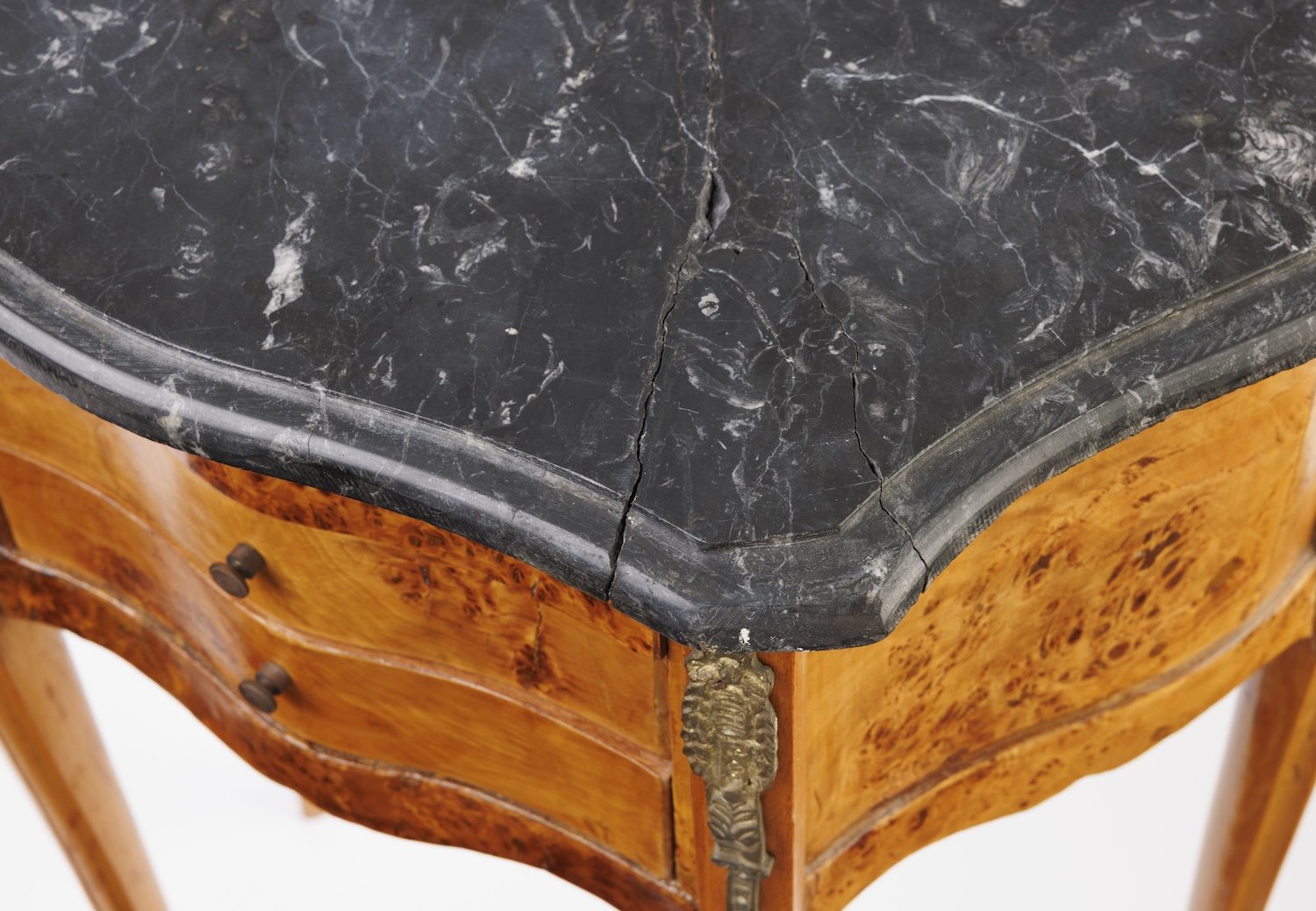 Image 2 of 2
Living With This Object
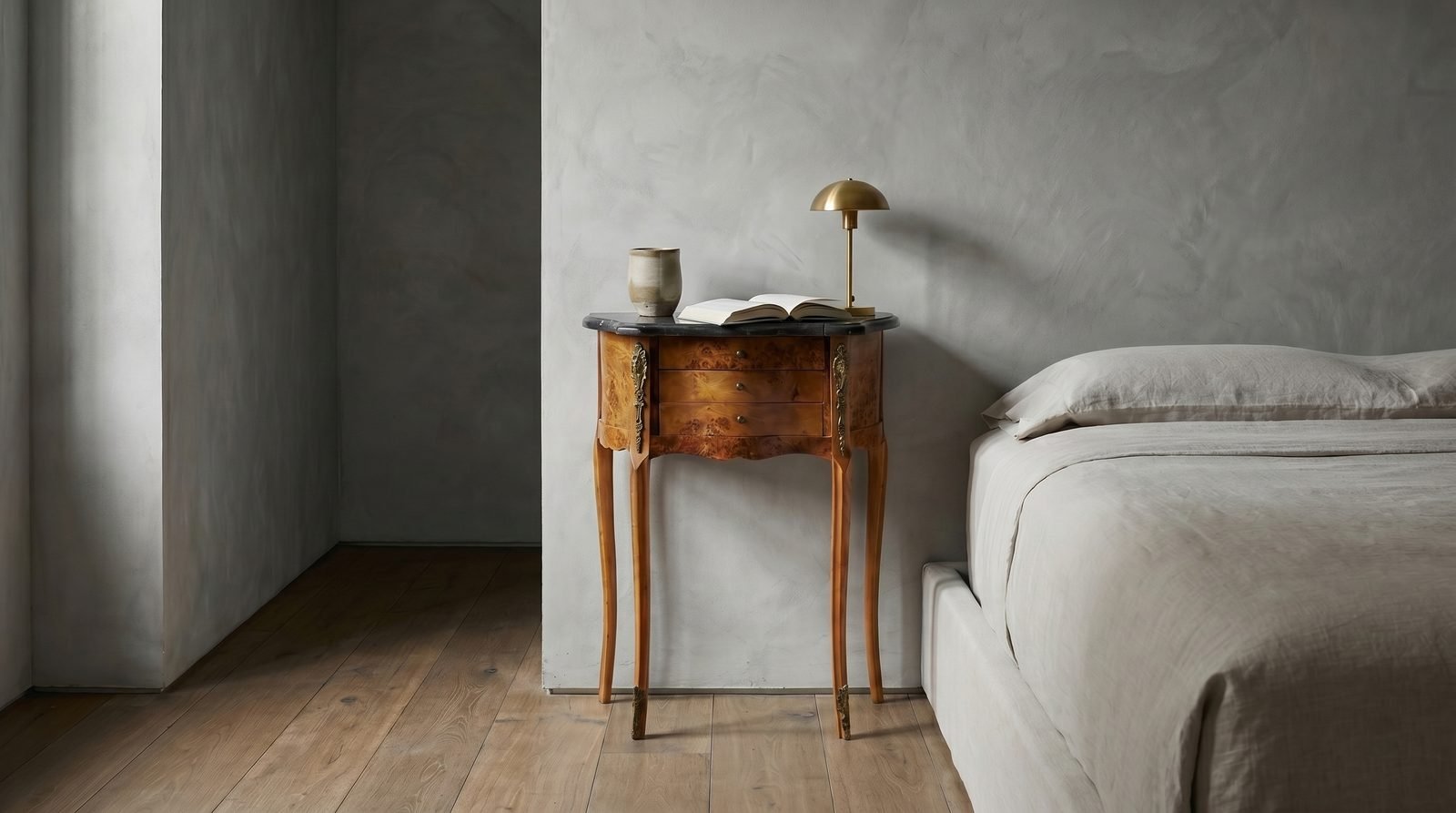
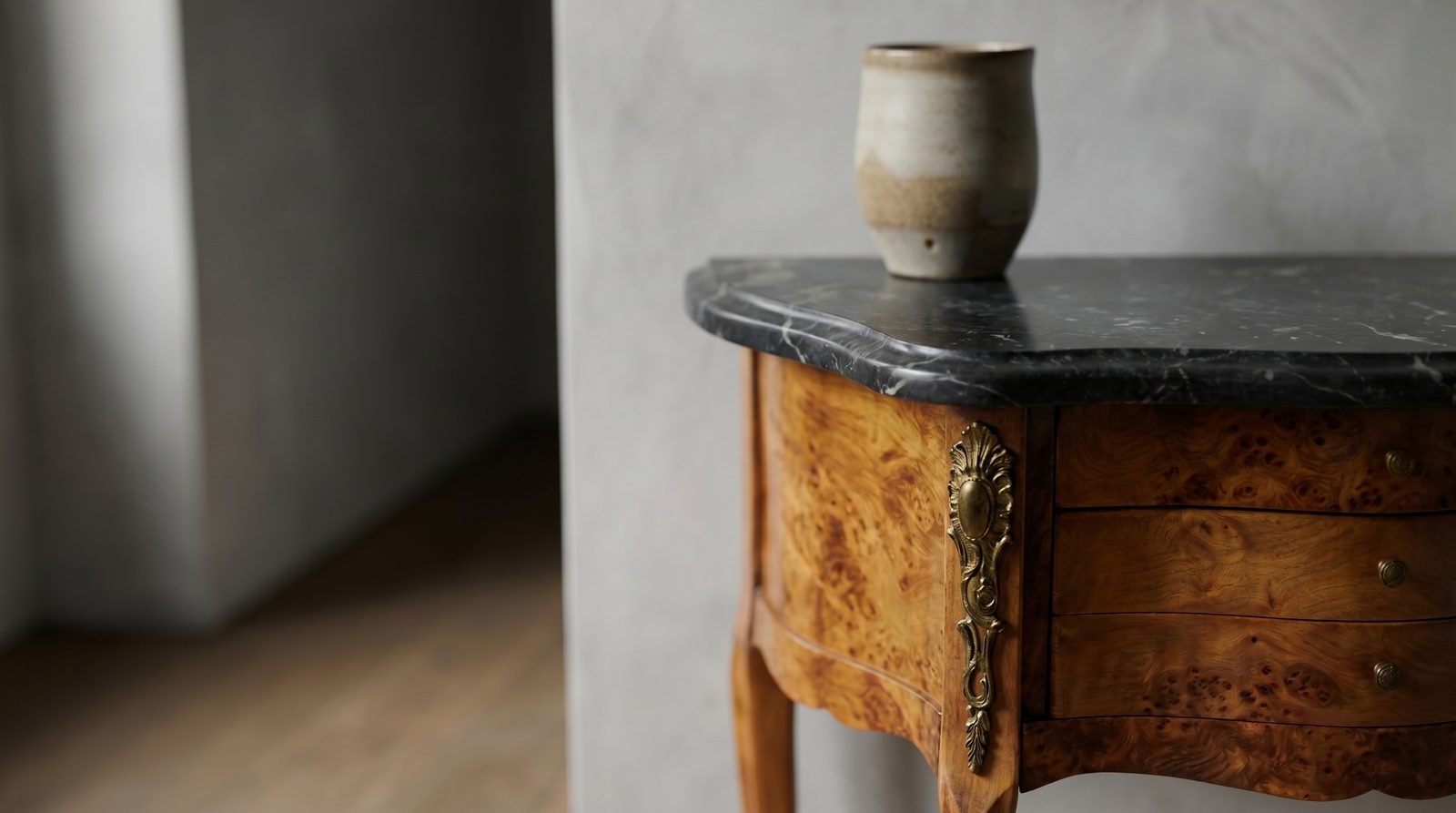
The following images are AI-generated visualizations intended to illustrate scale, proportion, and possible interior settings. They are conceptual, not photographs of the object in an existing room, and they preserve the documented proportions, finish, hardware, repairs, mirror, and construction of the piece.
-
Type: Side table (bedside / occasional)
Style: Louis XV style, a French form
Date: Early to mid-20th century
Origin: Not established
Material: Burl wood veneer; pale solid hardwood frame and legs; black marble top
Finish: Original surface retained and revived in restoration
Construction: Veneered shaped carcass; three drawers; cabriole legs; gilt-metal mounts
Maker / Attribution: Unattributed (no mark located)
Condition: Restored; old crack to the marble top, stabilized; light historic wear
Dimensions: 21 W × 12 D × 29 H in.
-
Original. The wood and burl veneer appear retained, with no evidence of replacement to the show surfaces.
Repaired. The marble top carries an old crack at one shaped corner, stabilized. Light historic wear is present across the marble and the wood.
Finish Work. The original surface was retained and revived in restoration, not stripped and renewed.
-
No maker's mark or label was located, so the piece is unattributed. The form is Louis XV, an eighteenth-century French style; this example is a later interpretation of it. Because the form was produced in more than one country and the piece carries no mark, the manufacture origin is not established, and the French association describes the style rather than where this example was made.
The early-to-mid-twentieth-century date rests on construction, not on a mark or documentation. The Louis XV silhouette, the bombé front, cabriole legs, serpentine marble, gilt mounts, and burl veneer, was reproduced for well over a century and does not date the piece on its own. What points to a revival production is the character of the work: the gilt-metal mounts read as cast and standardized rather than individually chased, the proportions are slender, and the veneer is regularly cut. These are cautions, not a fixed year. An in-hand look at the drawer construction, dovetails, secondary woods, marble attachment, and underside could narrow the date or move it.
-
The show surfaces are faced in burl veneer with dense, irregular figuring that shifts in tone with the light; the species is unconfirmed, as burls converge in appearance under a finish. The frame and the four cabriole legs are a pale solid hardwood, species likewise unconfirmed.
The top is a black marble slab with a shaped serpentine front edge and a molded profile; the pale lines through it are natural veining, not a stain. Three drawers are set into the bombé apron, fitted with small knob pulls. Gilt-metal mounts in the ormolu manner sit at the front corners, and the cabriole legs end in gilt-metal sabots. The legs taper toward the floor and splay slightly.
-
The small marble-topped table on tall legs belongs to the Louis XV vocabulary of the table de chevet, the bedside table that held a candle, a book, or a carafe within reach of the bed; its marble top answered a practical need for a surface that resisted heat and water. This example carries the marks of that use: historic wear to the marble and the surface, and an old corner crack that has been stabilized, its finish revived rather than its material replaced. Its maker, the year it was made, the country it was made in, and the hands it passed through are not recorded. The record ends where the evidence ends.
-
The proportions suit a bedside or a narrow occasional position, where the tall legs keep the footprint small and the marble top carries a lamp, a book, or a single object without crowding. The dark top and figured body read against a plain wall or a quiet textile, and the height sits comfortably beside a standard bed or a low chair.
-
Is this an antique or a vintage piece? It is a vintage Louis XV side table. Antique means one hundred years or older; the Louis XV silhouette was reproduced for over a century, and the cast mounts, slender proportions, and regular veneer read as a revival production rather than an eighteenth-century original. No mark or document fixes the year, so the date is given as early to mid-20th century, and the piece is classed vintage rather than rounded up.
What wood is it? The body is faced in burl veneer with dense, irregular figuring, and the frame and legs are a pale solid hardwood. Neither species is named here: burl and blond hardwoods converge in appearance after years under a finish, so naming one would claim more than the surface shows.
Has it been restored? Yes. The original surface was retained and revived in restoration rather than stripped and renewed, so the figuring you see is the piece's own material. The black marble top shows historic wear and an old crack at one corner that has been stabilized. No components of the wood body were replaced on the evidence available.
Where was it made? The style is Louis XV, a French form, but that names the design tradition, not the workshop. The piece carries no maker's mark, and the form was produced in several countries, so the manufacture origin is not established. The French association here describes the style rather than a documented place of making.