 Image 1 of 5
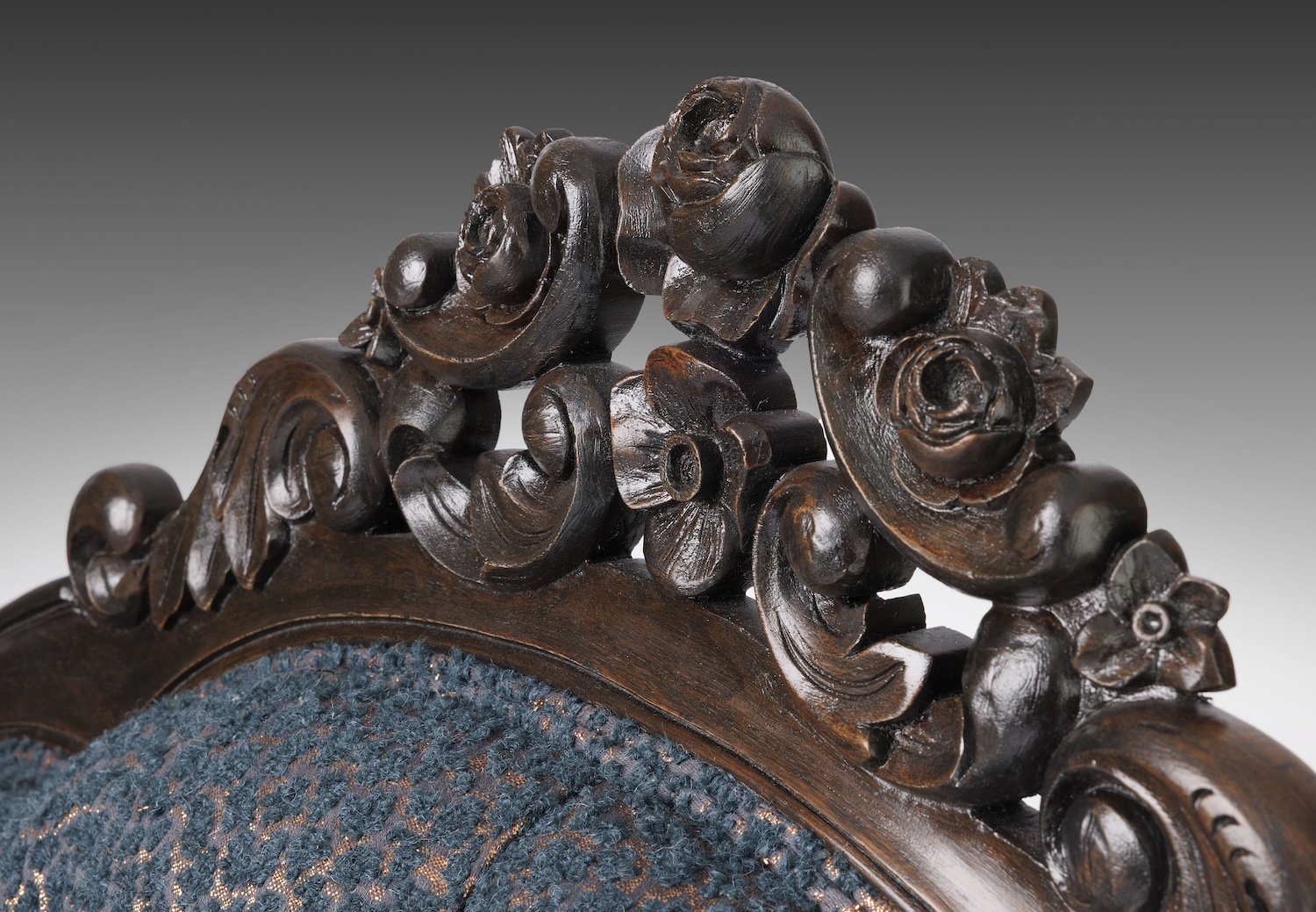 Image 2 of 5
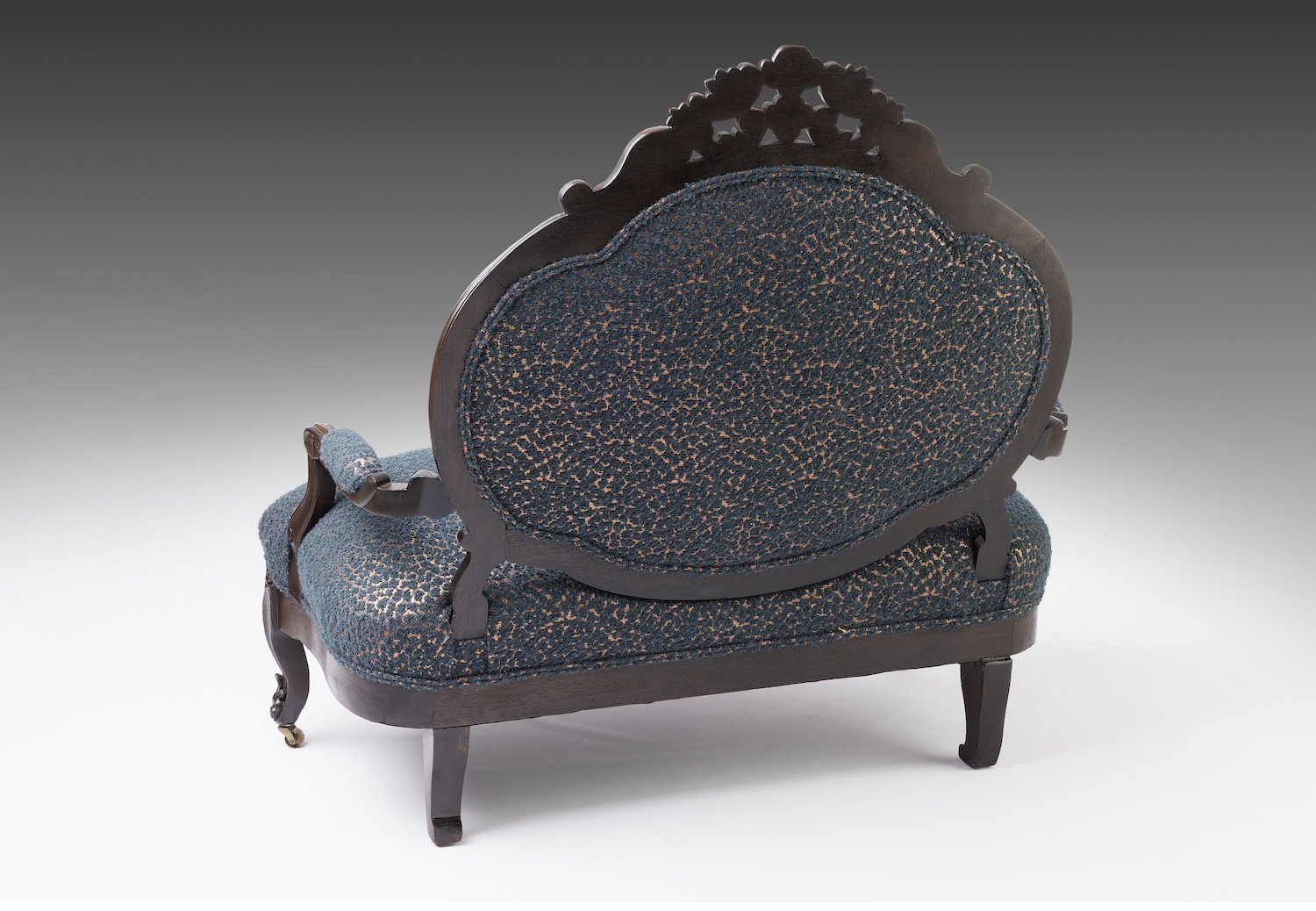 Image 3 of 5
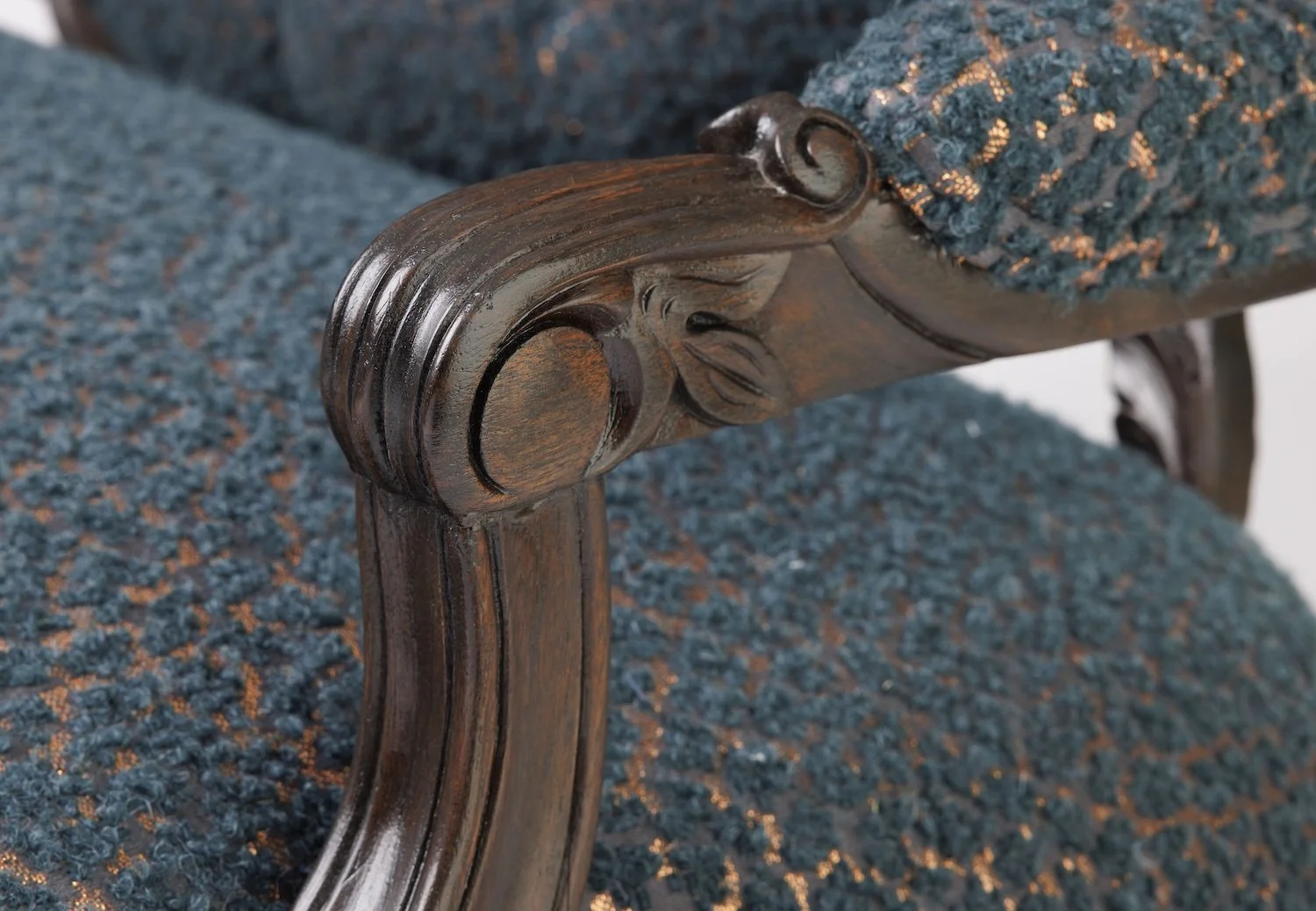 Image 4 of 5
 Image 5 of 5
Living With This Object
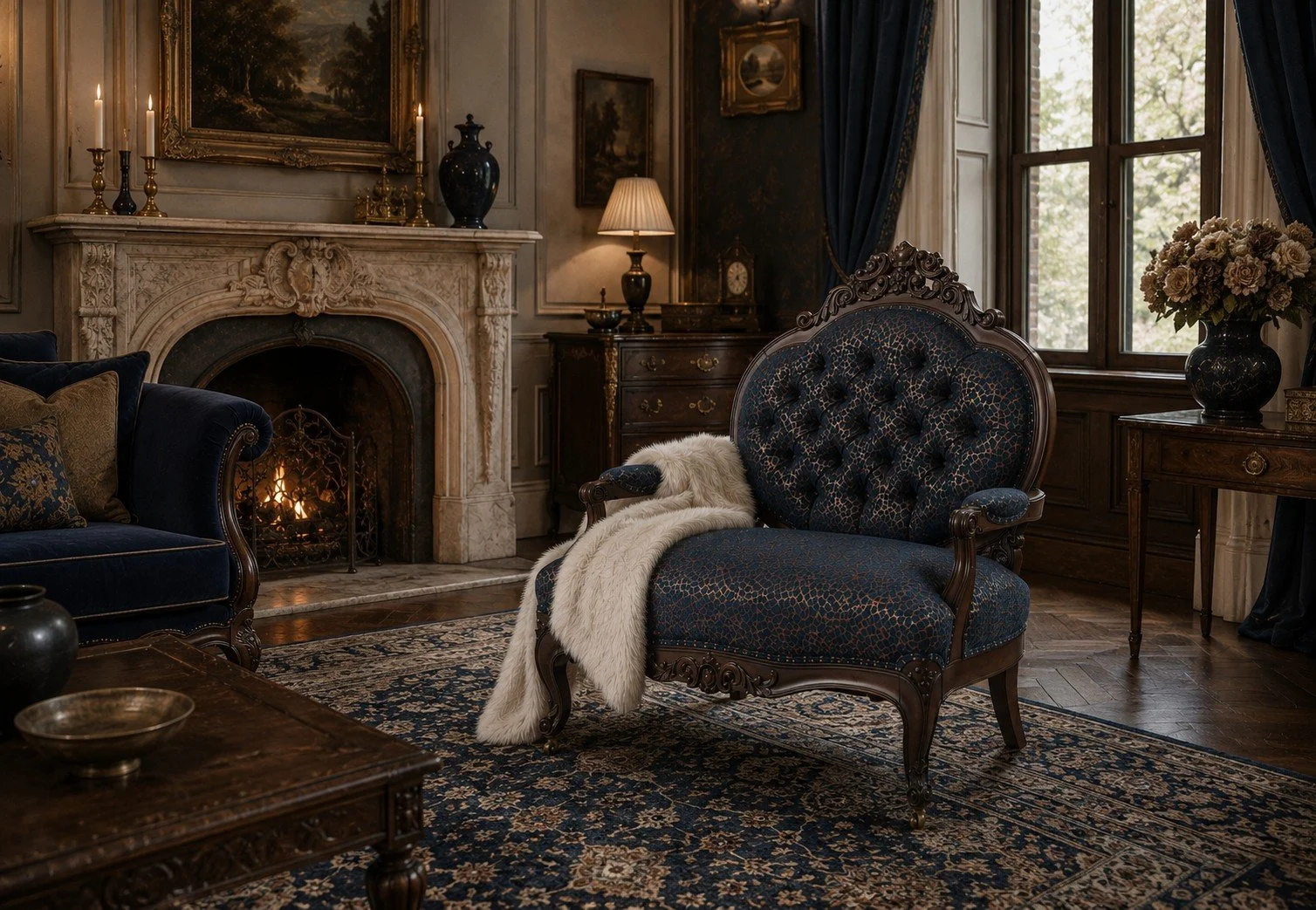
In a room, the settee reads as a single carved silhouette: the pierced rose crest crowns a button-tufted medallion back, and the scrolled arms and cabriole legs keep the frame light on its feet. The original finish, cleaned and lightly toned, frames the Deep River blue covering, so the carving holds the eye while the upholstery settles quietly against the surrounding furnishings.
The images below are AI-generated room visualizations, offered to suggest scale and placement. They are rendered images, not photographs of the settee in these rooms.
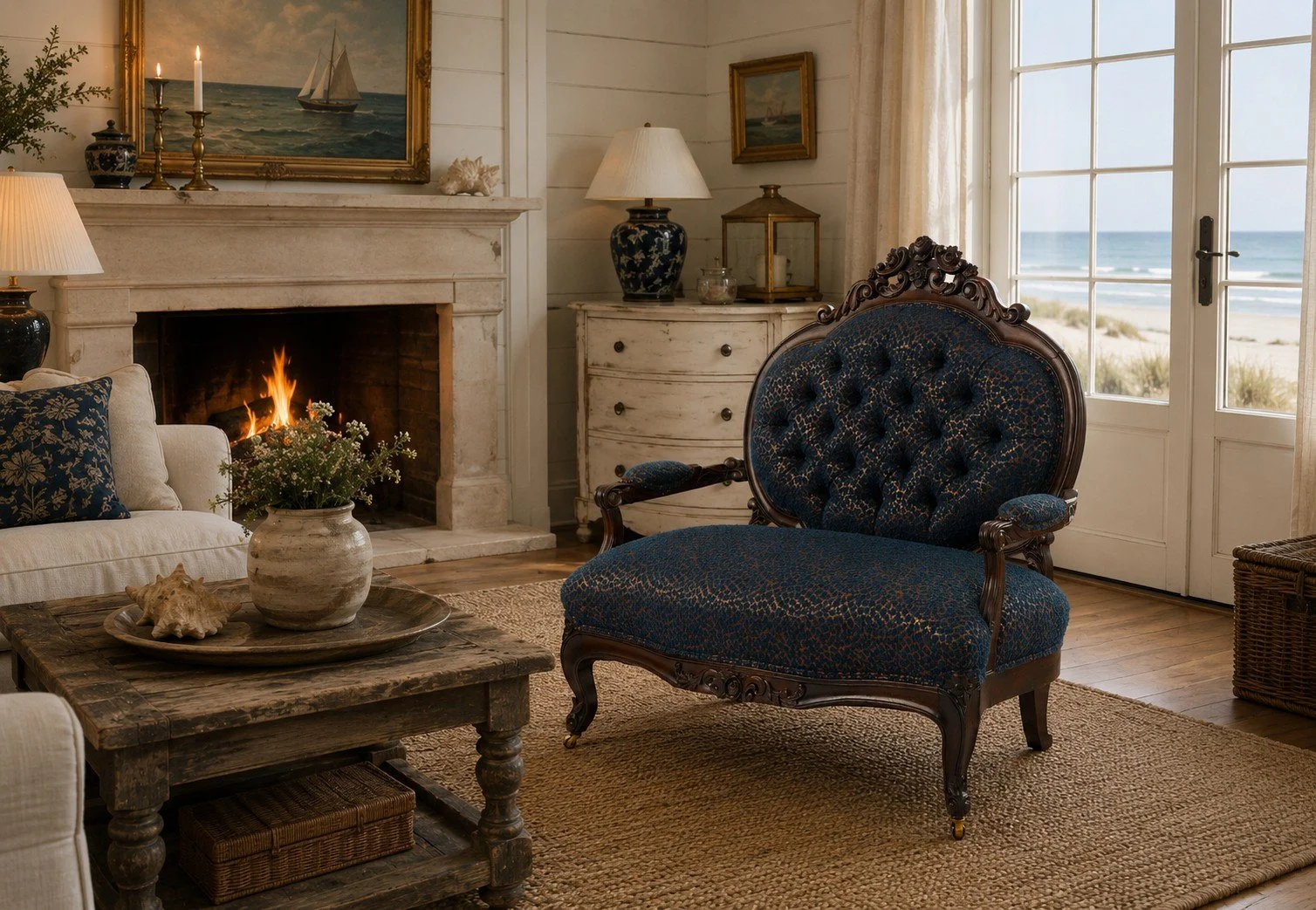
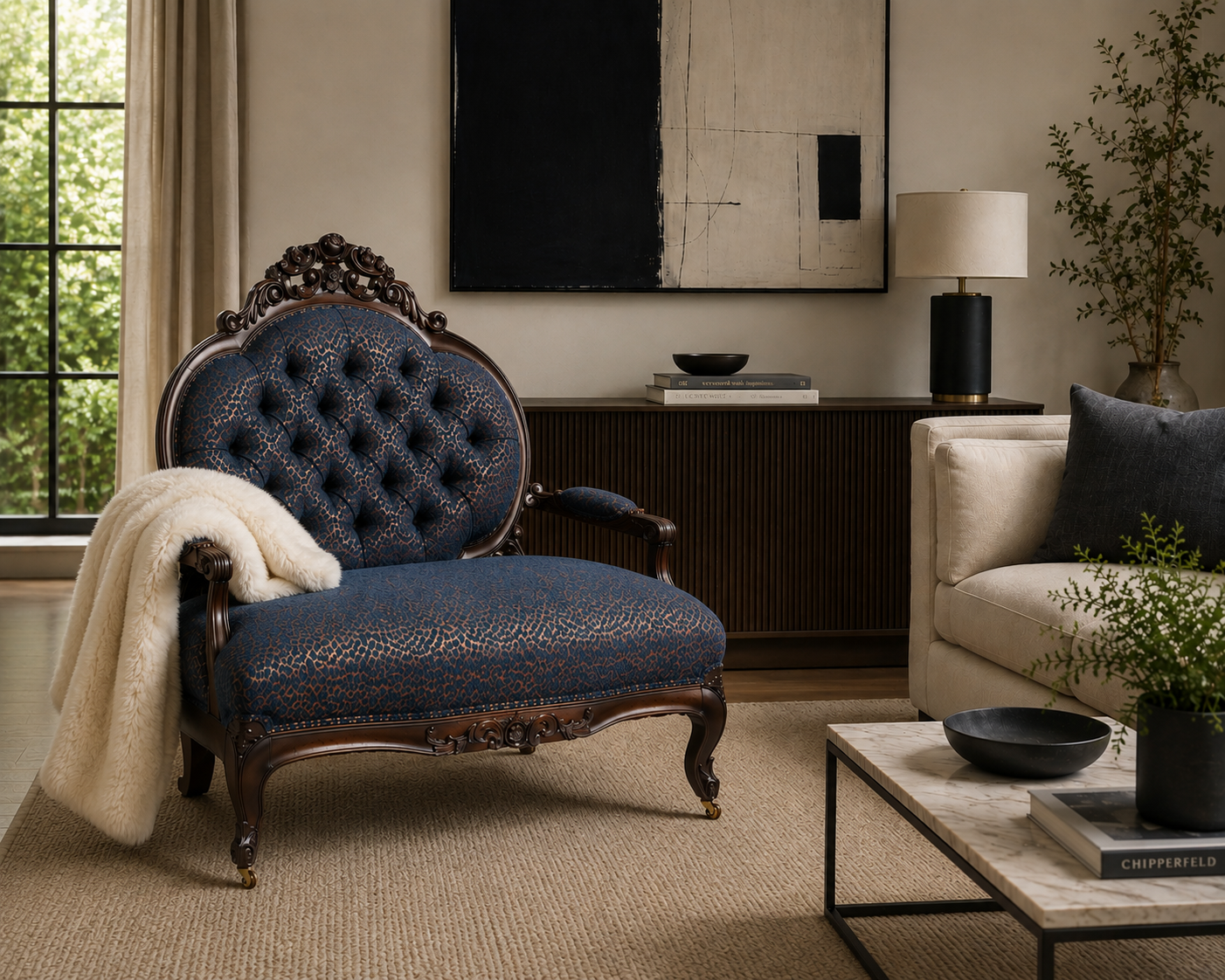
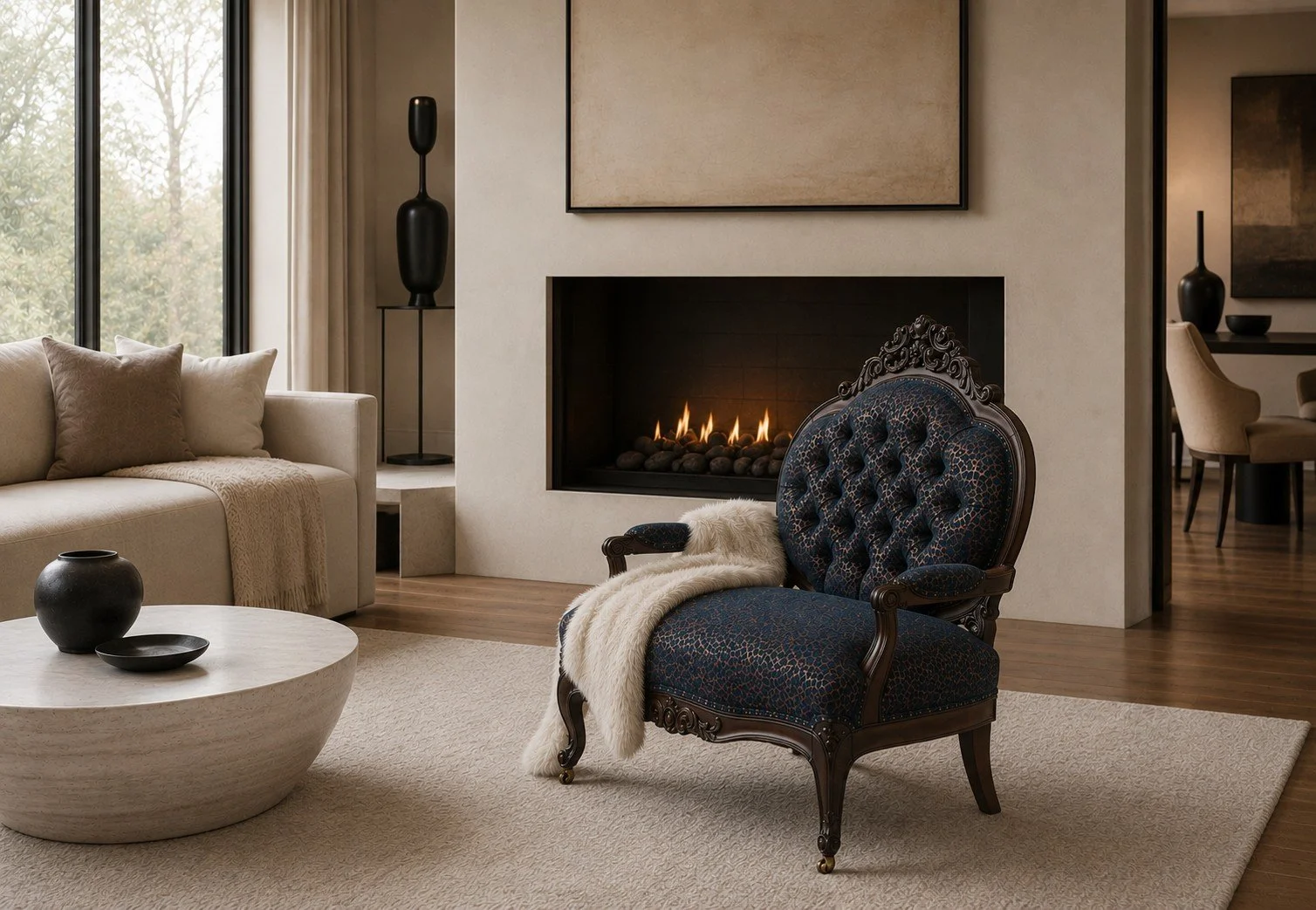
-
Whether placed in a sitting room or dressing room, in a bedroom, or welcoming guests in an entry, the settee finds its place. Its compact width holds a corner, a hall, or the foot of a bed where a full sofa would overwhelm, and the deep blue covering settles against both pale and saturated walls.
-
Type: Settee; medallion-back parlor seat
Style: Victorian, Rococo Revival
Date: Circa 1860–1890
Origin: Not established (unmarked)
Provenance: Most recent documented acquisition through a New Hampshire auction
Material: Hardwood frame; brass cup casters at the front legs
Finish: Original finish, cleaned; a light stain applied in restoration
Construction: Carved show-frame; sprung seat; button-tufted sprung back
Maker & Origin: Unattributed; no mark located
Condition: Cleaned, lightly stained, and fully reupholstered; age-related wear to the show-wood
Dimensions: 42½ W × 22 D × 45 H in.; seat height 16½ in.
Upholstery: Temperley London x Romo bouclé, fully reupholstered (see Upholstery)
-
Original: The carved hardwood frame is retained, with its brass front casters.
Replaced: The covering and all show textile, fully replaced in this restoration (see Upholstery).
Reconstructed: No elements were reconstructed.
Repaired: No structural repairs are documented.
Finish Work: The show-wood was stripped and refinished; the present surface is applied and deeper in tone than the earlier finish. The carving and the wear of age remain legible through it.
Other: The frame carries age-appropriate wear: surface abrasion to the legs and minor checking to the show-wood at the front. These remain visible after refinishing.
-
Above the back, the crest is carved and pierced with a cluster of full-blown roses, smaller five-petalled blossoms, and open C-scrolls, worked through the wood so that light passes behind the cresting. The same carved vocabulary returns quietly in a smaller cartouche at the center of the seat rail and in the foliate terminals of the arm scrolls. The carving is hand-cut, and it is offered just as the object shows it.
-
No maker's mark, label, or stamp was located, so the settee is left unattributed rather than assigned. Its form belongs to the Rococo Revival, the mid to later nineteenth-century revival of Louis XV design, which was produced in the United States, Britain, France, and across continental Europe. Because the form was made in several countries and this example is unmarked, the manufacture origin is not established. The date, circa 1860–1890, rests on the form and the carving rather than on a mark or document, so it stands as an informed inference.
-
The frame is a close-grained hardwood. Under the applied dark finish the species cannot be named from the surface, since several fine cabinet woods converge in appearance once finished and oxidized, so the machine-facing material is recorded simply as hardwood. The back is a sprung and stuffed oval, upholstered on both faces and suspended within the shaped crest frame, then finished with deep button tufting. The seat is an edge-stuffed sprung cushion set over the frame, and the arms are open, carried on scrolled supports. At the front the legs are cabriole, each riding on a brass cup caster, while the rear legs are plain and raked, without casters.
-
A woven bouclé in a saturated river-blue, carrying copper-toned metallic glints across a small-scale dot weave. Depth comes from tonal and dimensional variation rather than contrast, and the surface reads as structured yet soft.
Manufacturer: Temperley London x Romo
Pattern: Lulu, colour Deep River
Design Style: Dot / Spot, small-scale
Fabric Type: Decorative woven bouclé, wool blend
Composition (as stated): 64% cotton, 15% polyester-cotton, 7% alpaca wool, 7% wool, 4% polyamide, 3% polyester
Performance (as stated): Martindale 25,000 rubs; rated for heavy domestic upholstery
Textile origin: United Kingdom
Certifications: REACH compliant
Reupholstered: Yes, fully
-
Settees of this kind belonged to the Victorian parlor, the room a household reserved for receiving, where seating was arranged to order conversation and mark its formality. This example carries the wear of long use. Its documented recent history begins with its purchase through a New Hampshire auction house. After acquisition, the present owner cleaned the frame and applied a light stain to refresh the tone, preserving the original surface and the evidence of age, and selected the current bouclé upholstery, taking the seating back to the frame without altering its original proportions. The maker, the exact year, the rooms it passed through before the auction, and the road it traveled earlier remain undocumented, and are left as they stand. The record ends where the evidence ends.
-
Is this an antique or a vintage piece? It is an antique Victorian settee. The dating, circa 1860 to 1890, rests on the Rococo Revival form and the hand carving rather than on a maker's mark, so the antique designation is an informed inference; even at the latest end of that range the settee is well over a century old.
Has it been refinished or reupholstered? The upholstery is fully new; the finish is not. The frame was never stripped or refinished: it was cleaned and a light stain was applied to refresh the tone, so the surface the settee has carried through its life remains, with the carving and the marks of age legible. The seating was taken back to the frame and fully reupholstered in the documented bouclé, and the original proportions were retained.
Why this fabric? The bouclé was chosen for a depth of color that holds the eye without contrast, a saturated river-blue carrying copper-toned glints across a small-scale dot weave. Rated to 25,000 Martindale rubs, it is specified for heavy domestic seating, so the covering suits daily use rather than display alone.