 Image 1 of 2
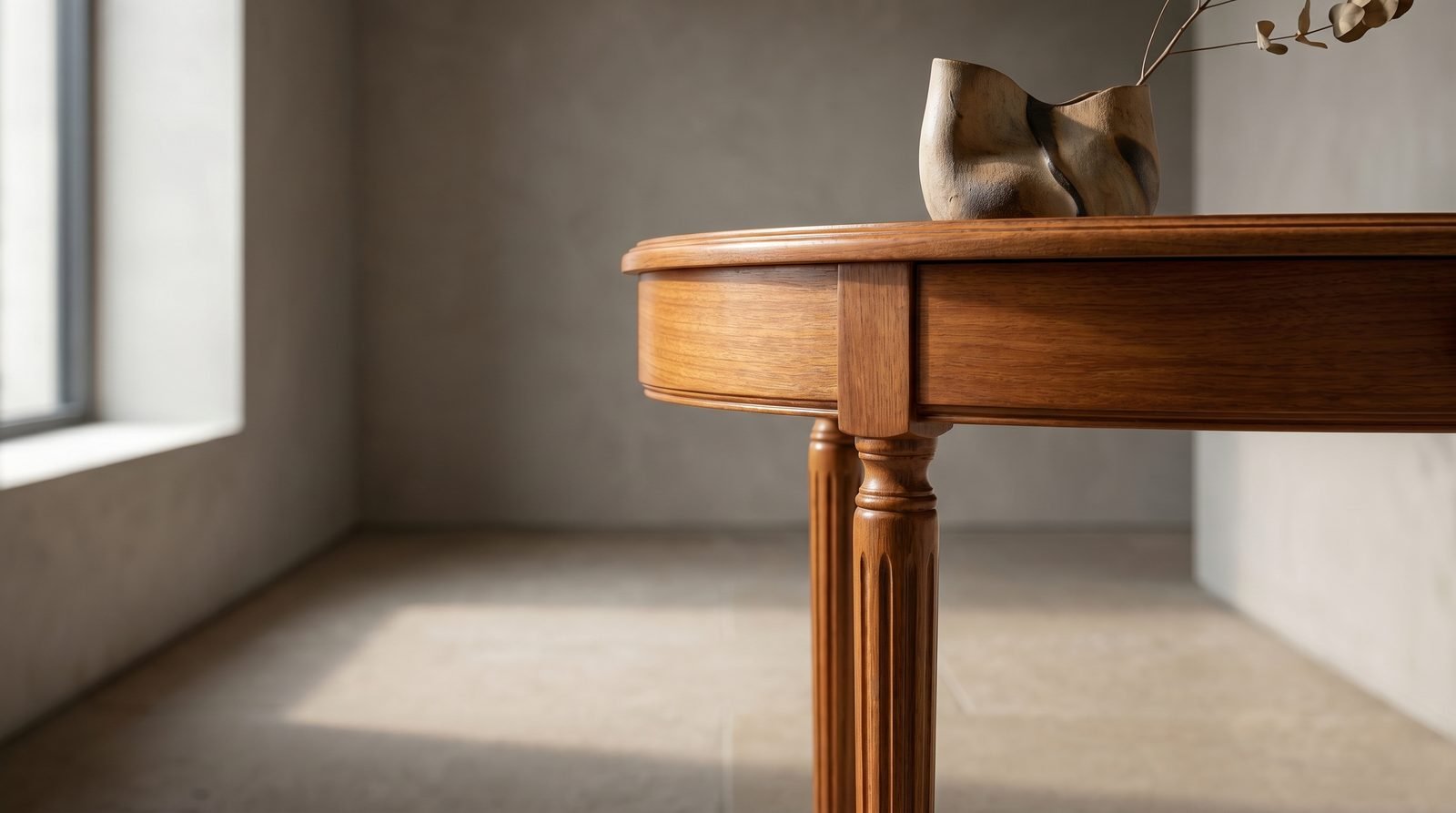 Image 2 of 2
Living With This Object
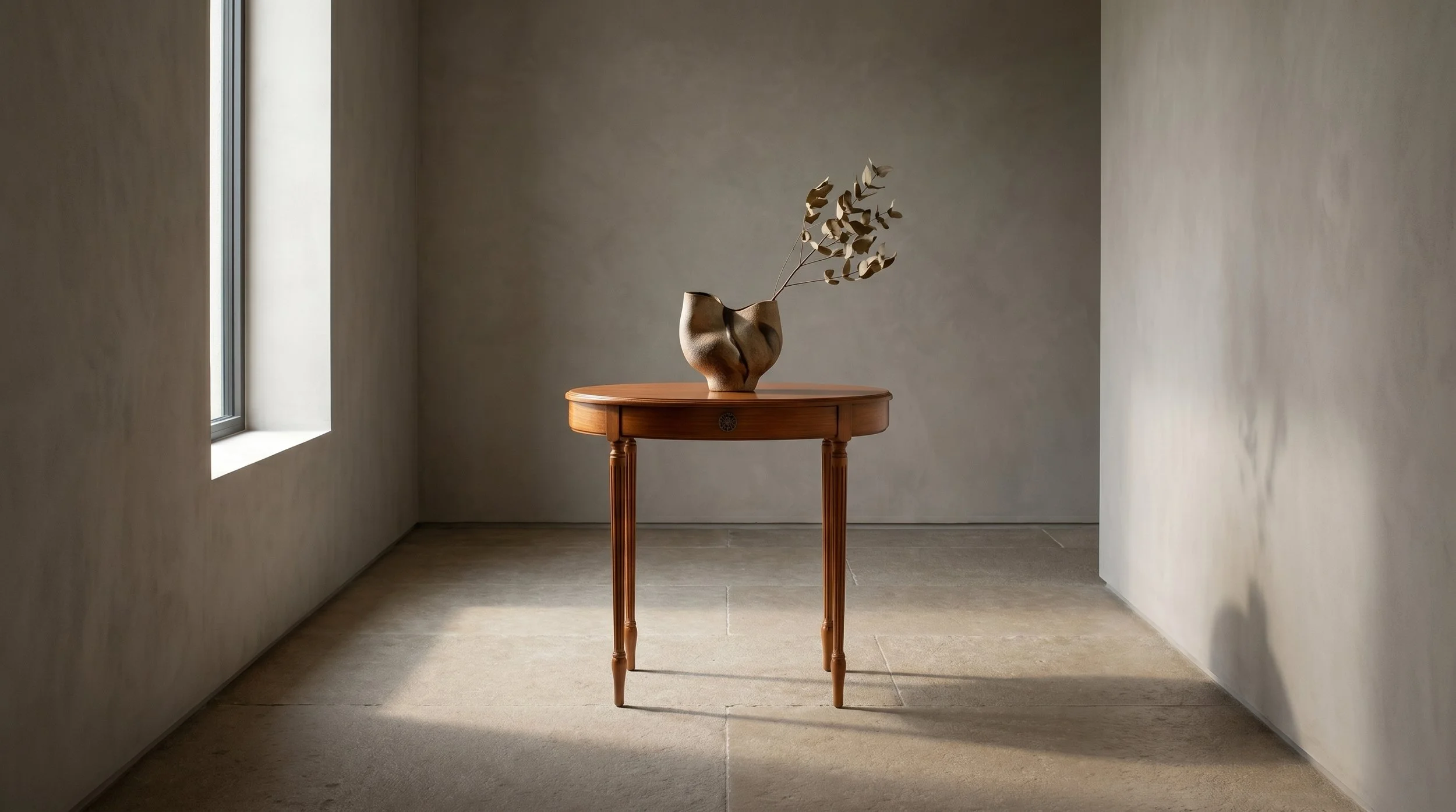
The following images are AI-generated visualizations intended to illustrate scale, proportion, and possible interior settings. They are conceptual, not photographs of the object in an existing room, and they preserve the documented proportions, finish, hardware, repairs, mirror, and construction of the piece.
-
Whether placed beside a settee, between a pair of chairs, or at a bedside, this table provides a graceful surface for a lamp, a stack of books, or a morning coffee or evening cup of tea. The single drawer keeps smaller necessities close at hand without adding visual weight.
-
Type: Side table; oval top, single drawer
Style: Neoclassical, in the French Louis XVI manner
Date: Circa 1940–1970
Origin: Not established (unmarked)
Material: Hardwood, species unconfirmed; brass pull
Finish: Applied in restoration
Construction: Fluted, tapered legs with small turned feet; molded top edge; beaded apron molding; single apron drawer with pierced brass pull
Maker & Origin: Unattributed; no mark located
Condition: Restored; surface stripped and refinished; structure and proportions retained
Dimensions: 35½ W × 17⅛ D × 30⅛ H in.
-
Original: The oval top, the single drawer, the apron, and the four fluted legs are all retained, with no evidence of replacement to the structure or proportions.
Replaced: No component was identified as replaced. The originality of the pierced brass pull remains unconfirmed and is left unclaimed.
Reconstructed: No elements were reconstructed.
Repaired: No repairs are recorded.
Finish Work: The original surface was worn, scratched, and discolored, so it was stripped and a new finish applied. The present surface is applied in restoration.
-
No maker's mark or label is present. The oval one-drawer form on fluted, tapered legs was made in France, England, and the United States during the neoclassical revival, so its origin is not established. The construction methods and cast brass pull are consistent with a twentieth-century reproduction rather than a period piece, which places it circa 1940–1970.
-
The wood carries a warm honey-brown tone, with a fine, straight grain and subtle figuring across the top and a more open, striped grain along the apron. Its species is left unconfirmed. The top has a molded edge, and a beaded molding follows the lower edge of the apron. The legs are fluted and gently tapered, ending in small turned feet, and the drawer is fitted with a pierced brass pull. Joinery is not visible in the available views.
-
Oval occasional tables of this kind were familiar furnishings in neoclassical-influenced interiors, set beside seating to hold a lamp, a book, or a cup rather than to command a room. This example carries the wear of long use beneath its refinished surface, its earlier life still suggested by the wear the restoration carefully addressed. Its maker, its precise date, and the households it passed through are not recorded, and are left so. The record ends where the evidence ends.
-
Is this antique or vintage? Antique means 100 years or older. No mark or document establishes this table's age, and its construction and cast brass pull read as a twentieth-century reproduction of the neoclassical style rather than a period piece, so it is dated circa 1940 to 1970 and described as vintage rather than antique.
What style is this piece? The table is Neoclassical, in the French Louis XVI manner, recognizable in the oval top, the fluted and tapered legs, and the restrained, symmetrical form. Neoclassical design favored clean line and balanced proportion over applied ornament, qualities that remain evident throughout the piece.
Has it been restored? Yes. The original surface was worn, scratched, and discolored, so it was stripped and a new finish applied to the wood. The oval top, drawer, apron, and fluted legs are the original components, and the structure and proportions were not altered during the work.
What wood is it? The wood shows a warm honey-brown tone, a fine straight grain on the top, and a more open, striped grain on the apron. The species is left unconfirmed, since a refinished surface and long handling can make several hardwoods difficult to tell apart.