 Image 1 of 3
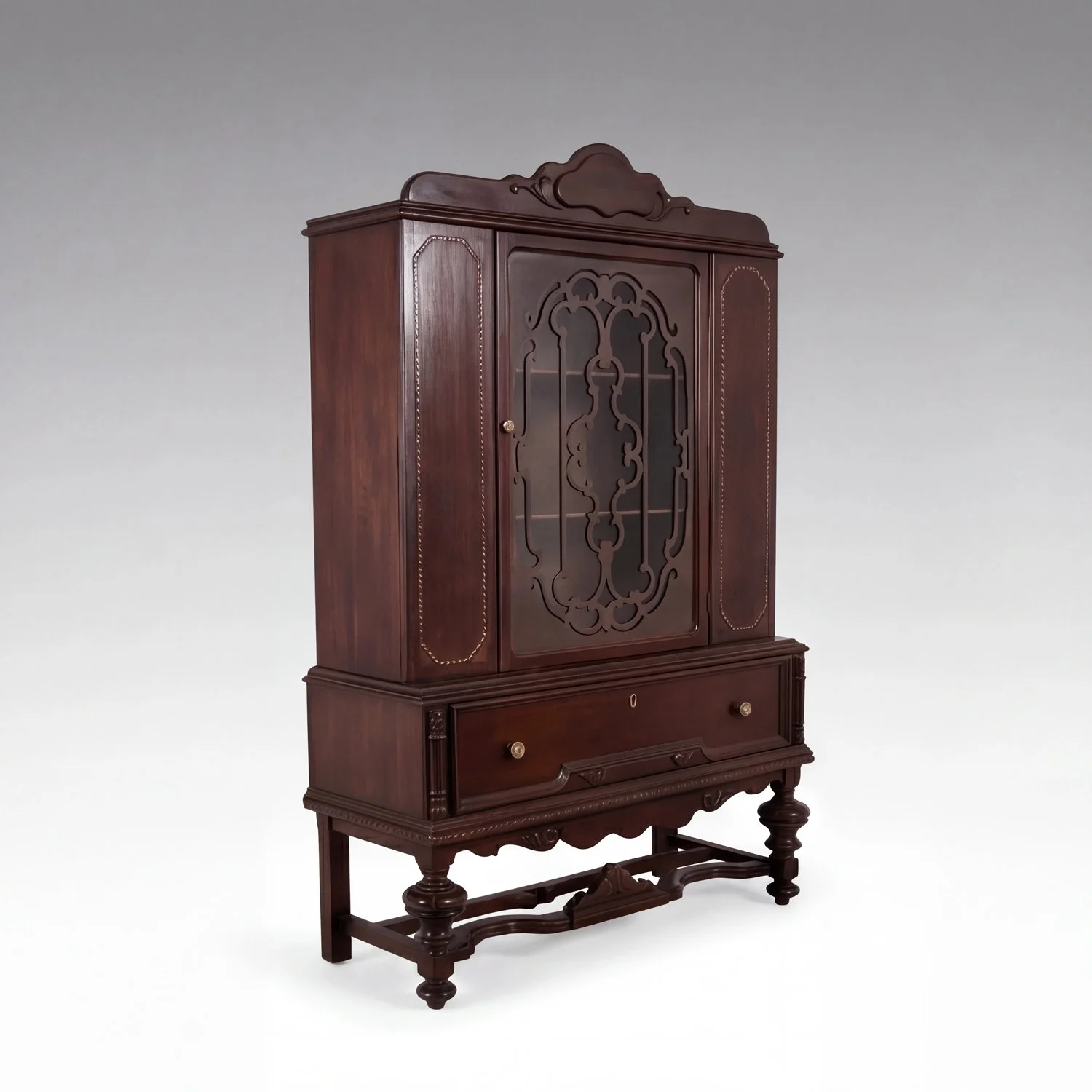 Image 2 of 3
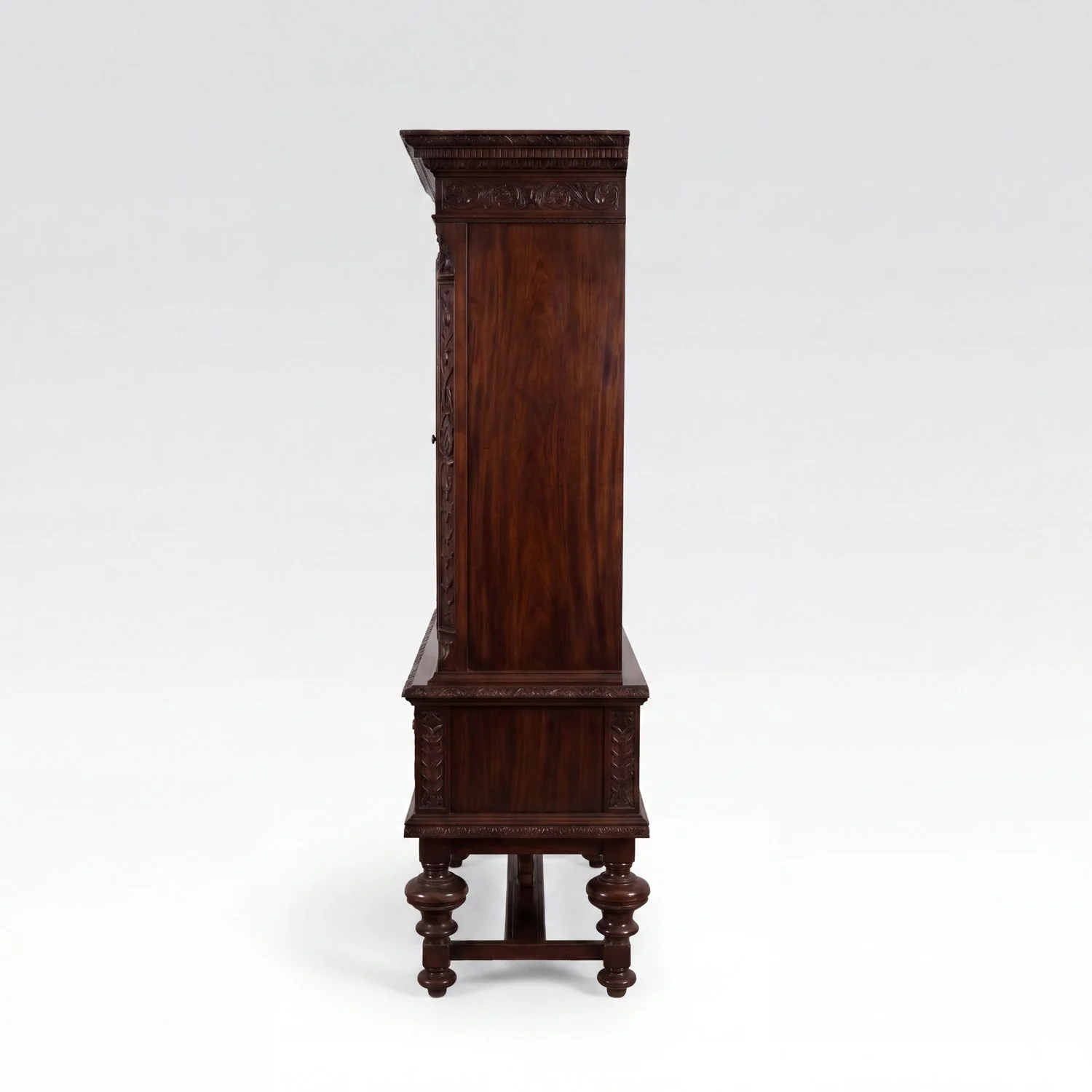 Image 3 of 3
Living With This Object
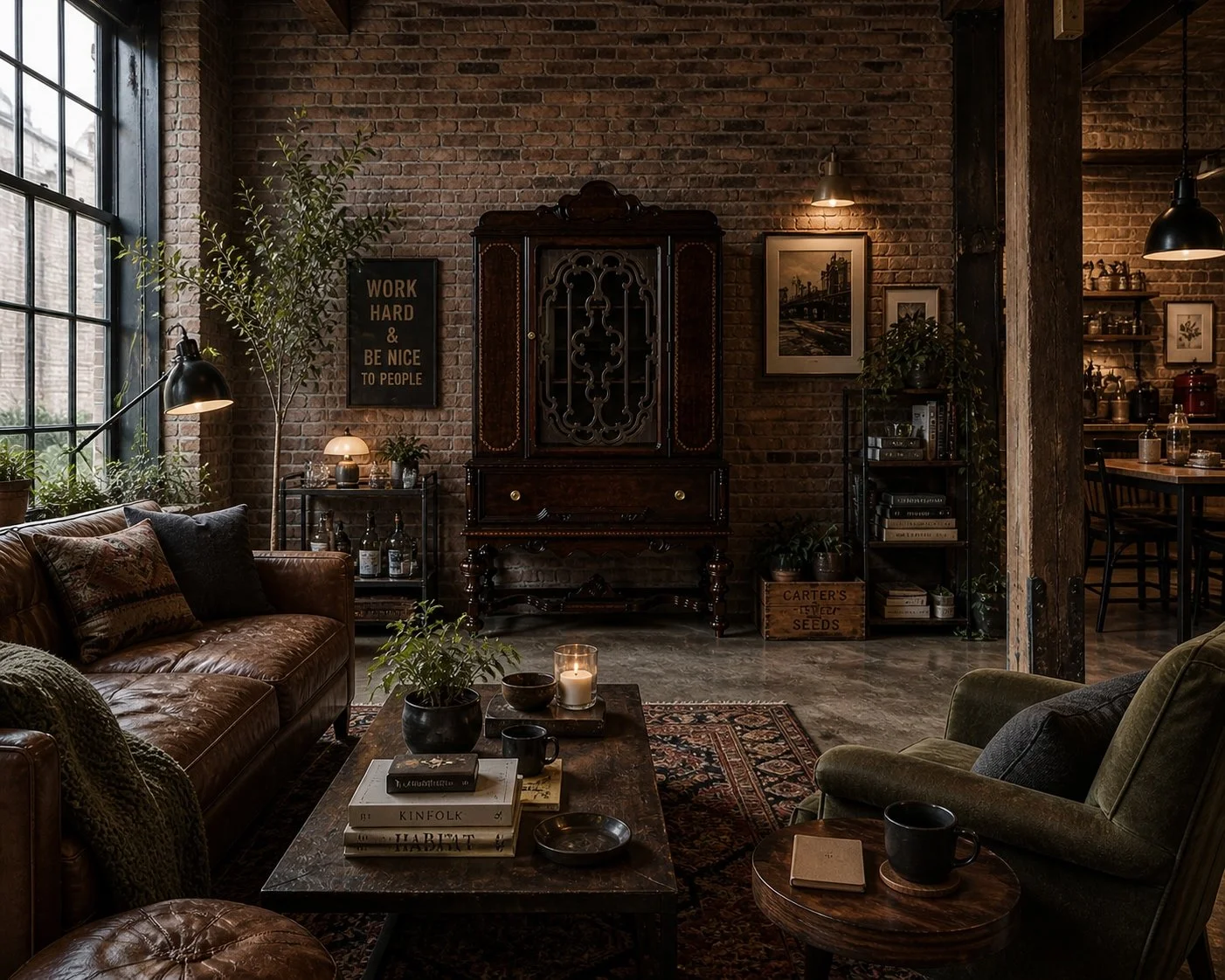
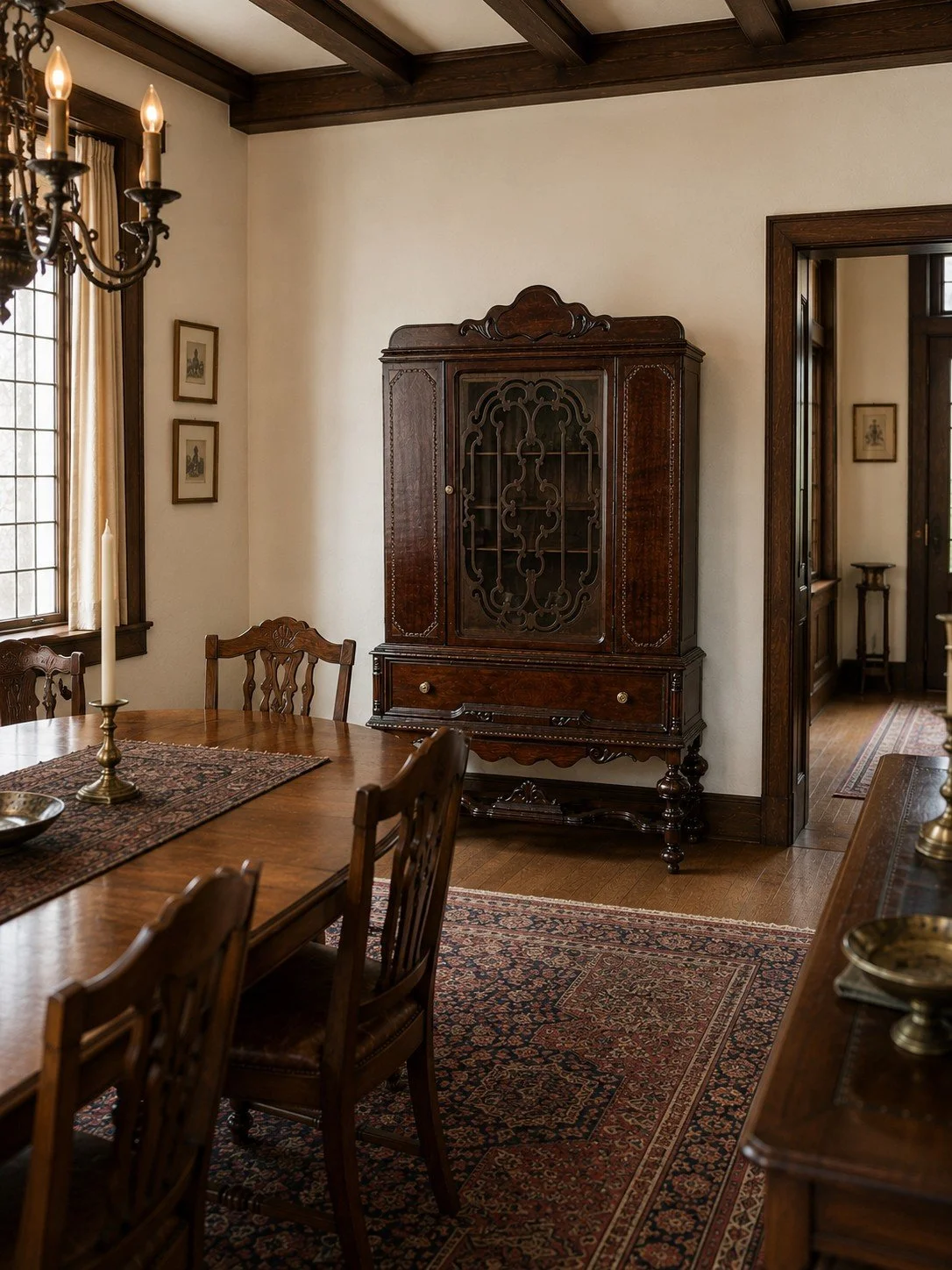
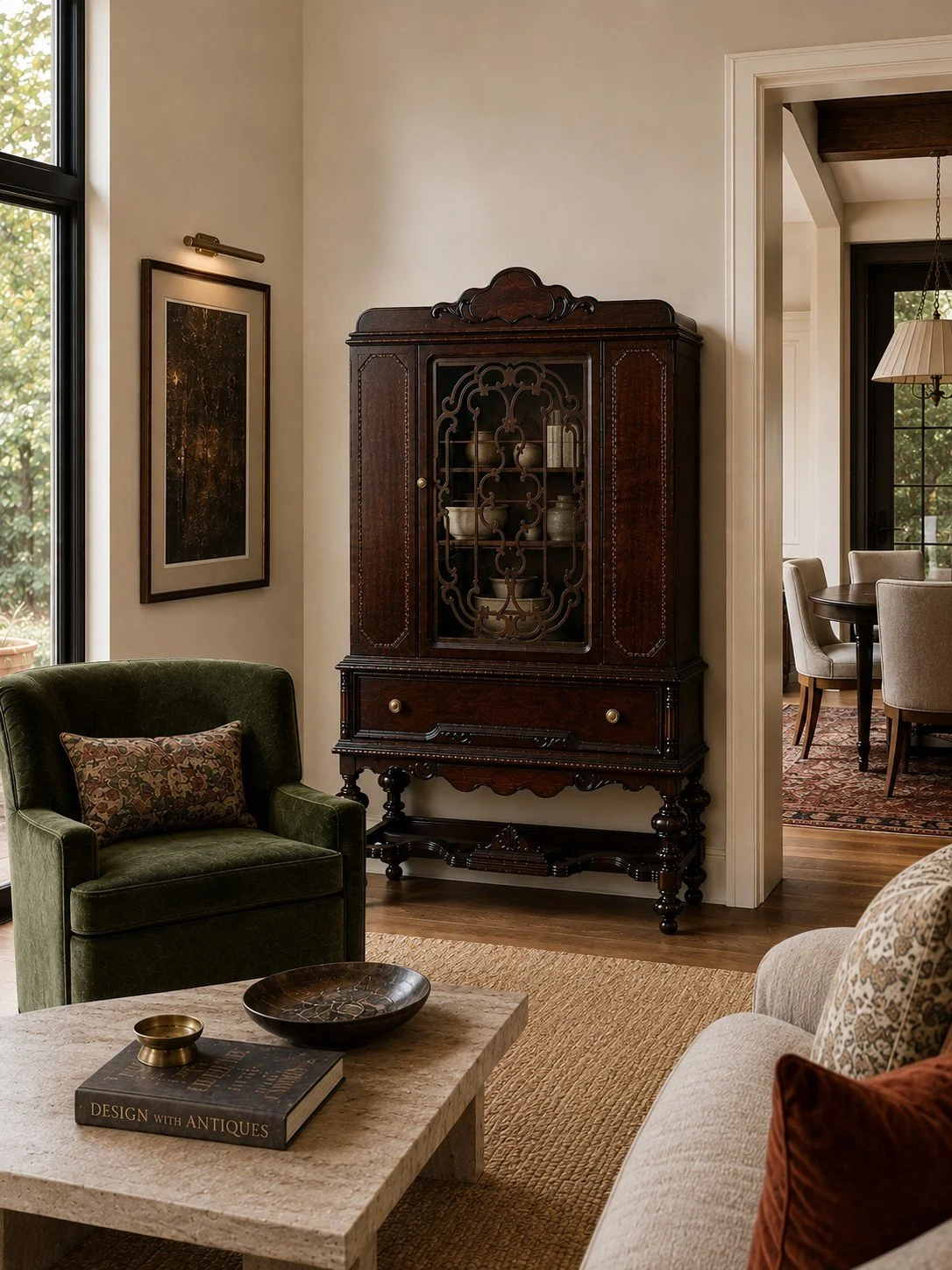
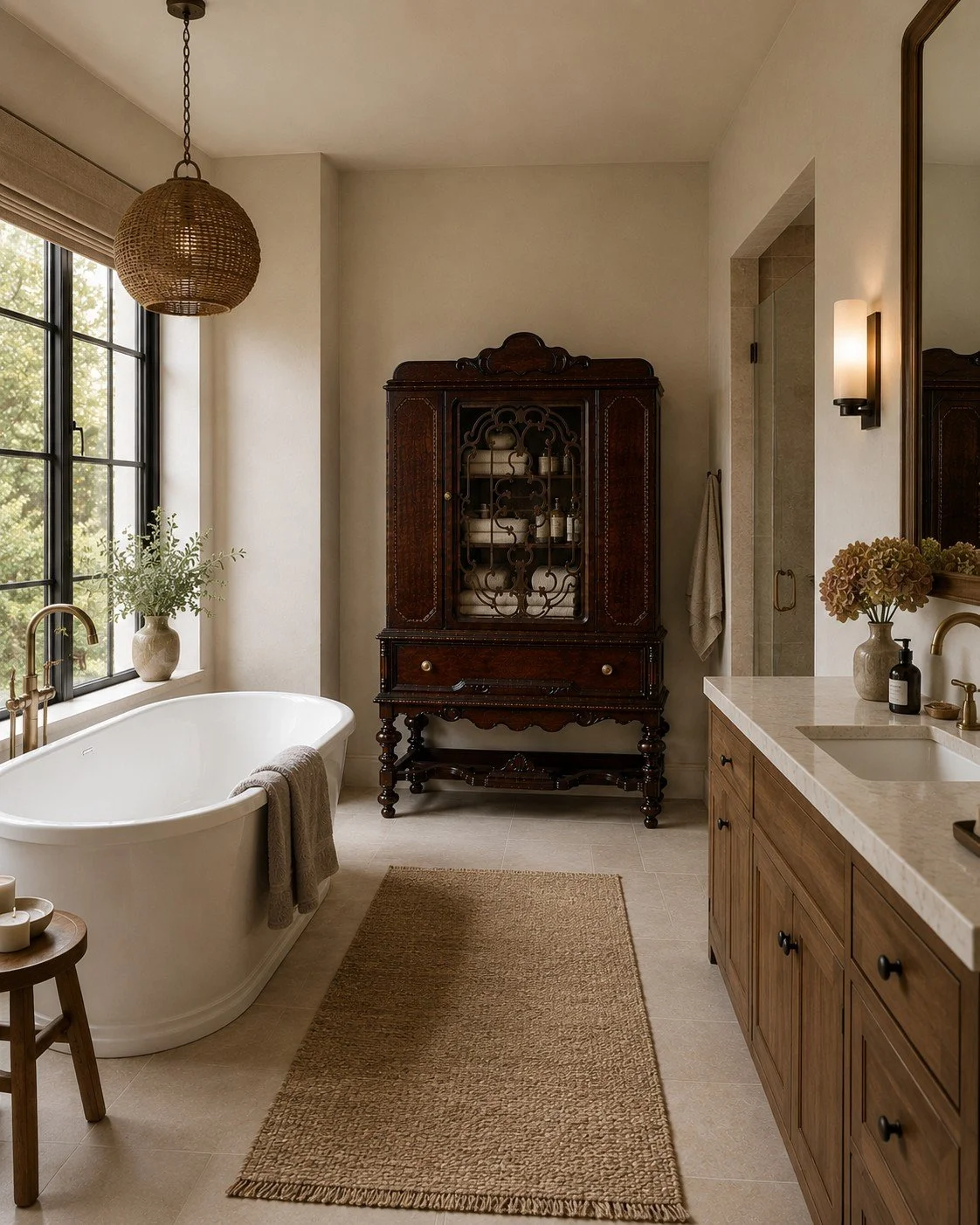
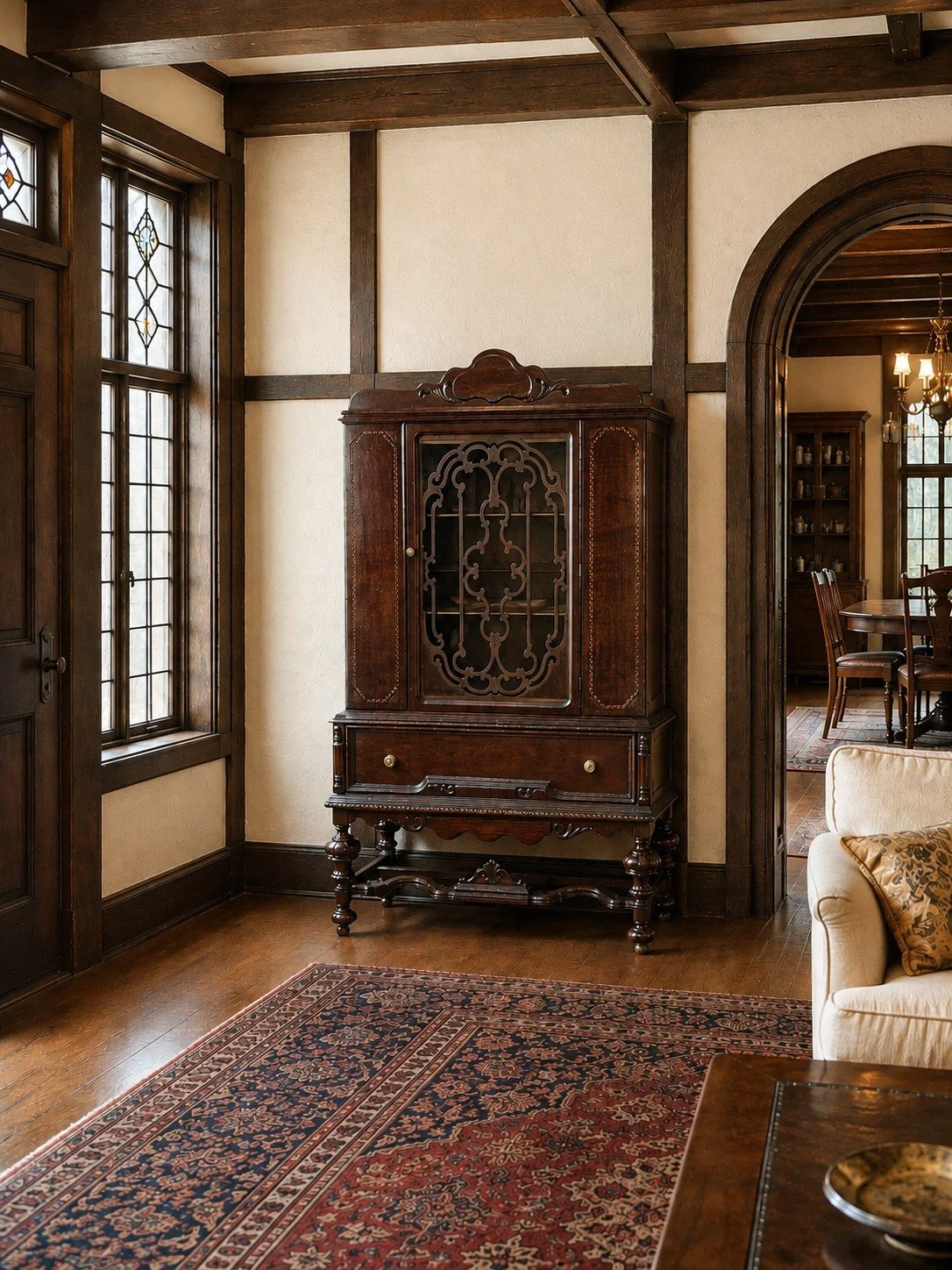
In a room, the cabinet stands as a vertical anchor. The glazed upper case keeps its contents in view while the fret-cut door screens them, the single drawer holds flat storage, and the open stretcher base gives the cabinet a lighter visual presence. It suits a dining room, an entry, or a living-room wall where a tall, shallow footprint is welcome.
The room views below are AI visualizations, offered to suggest scale and placement. They are rendered images, not photographs of the cabinet in these rooms.
-
Set against a dining room or entry wall, the Corvane offers its glazed door for china, glass, or collected objects, while the single drawer keeps flatware or linens close at hand. At roughly four feet wide and six feet tall, it reads as a freestanding display cabinet, equally at home beside a sideboard or dining table of similar tone.
-
Type: China cabinet (glazed display cabinet)
Style: Jacobean Revival, drawing on William and Mary forms
Date: Circa 1920–1930
Origin: Not established (unmarked)
Provenance: Most recent documented acquisition from a private residence in Belmont Heights, Long Beach
Material: Hardwood with figured veneers; glass; metal pulls
Finish: Applied in restoration; not the original surface
Construction: Glazed display case over a single drawer, on a baluster-turned stretcher base; machine-made plywood back
Maker & Origin: Unattributed; no mark located
Condition: Restored; surfaces stripped and refinished; original back retained
Dimensions: 47 W × 19½ D × 72 H in.
-
Original: The machine-made plywood back panels, original to the build rather than a later repair; the carved, inlaid, and fret-cut detail, which remains clearly legible after the finish work.
Replaced: Nothing was replaced in the documented work.
Reconstructed: No elements were reconstructed.
Repaired: No structural repairs are documented.
Finish Work: The surfaces were stripped and refinished, so the present finish is applied, not the original.
-
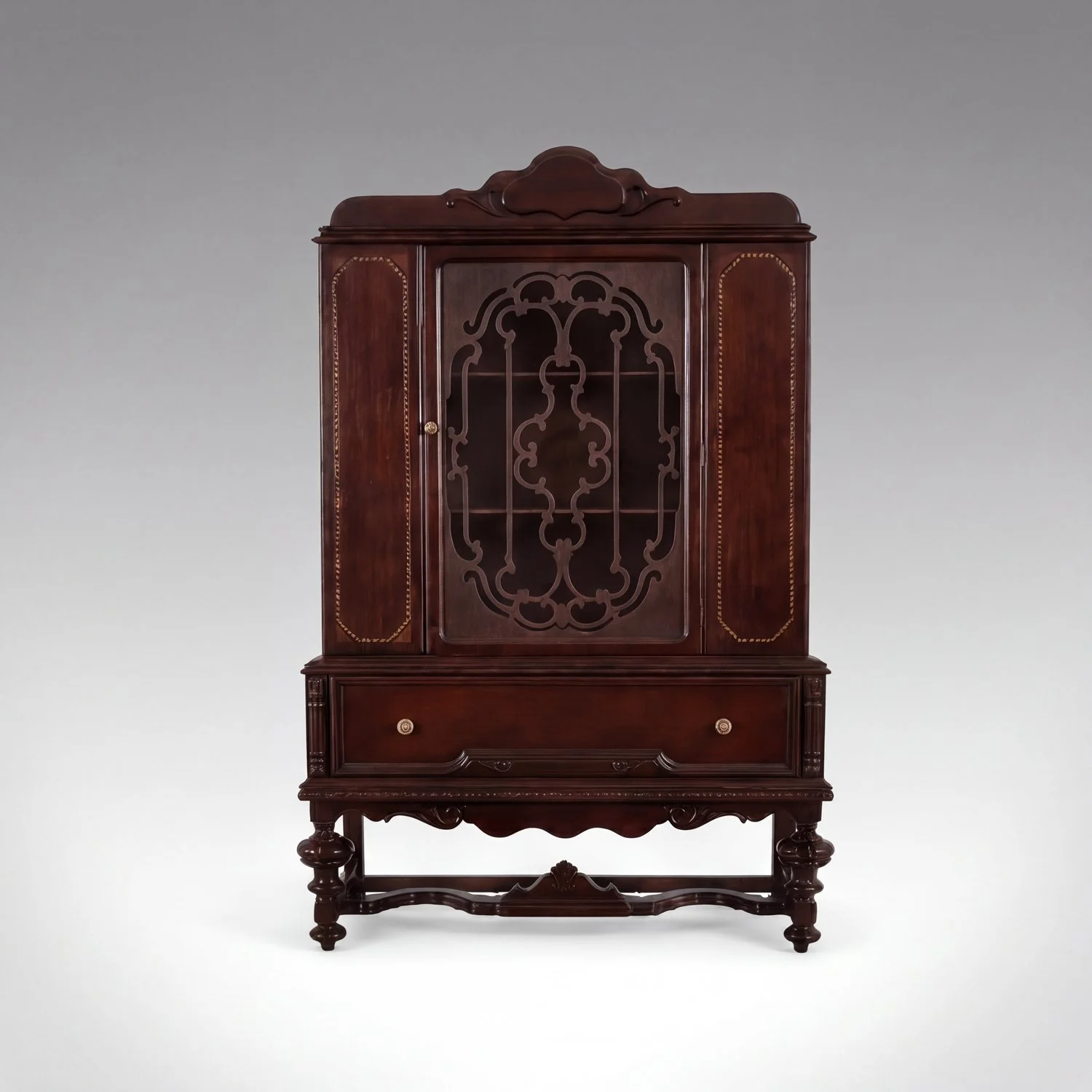
At the center, a pierced fret-cut wood overlay faces the glazed door, worked in scrolling, symmetrical patterns. Set over the glass, it partially screens the interior shelves while allowing their contents to remain visible, and it carries the most worked detail on the case. A turned knob sits at the door edge, and the latch fitting is present, though it was not tested.
-
The cabinet carries no maker's mark or label, and rather than assign one, we leave it unattributed. Its form is a Jacobean Revival type, drawing on William and Mary forms, that American factories produced in quantity through the 1920s. No mark tells us where this example was made, and the form was made in more than one country, so its origin is not established. The machine-made plywood back and factory construction are consistent with American production of the period and place manufacture in the twentieth century; the revival form supports a date of circa 1920–1930.
-
With the finish stripped during restoration, the show surfaces reveal figured veneers over a secondary structure. Beneath the applied dark finish, the wood is pale rather than naturally brown, with a fiddleback ripple across the flanking panels, a mottled figure on the drawer front, and a bold stripe through the crest panel.
The back is constructed from machine-made plywood panels, a construction method consistent with early twentieth-century manufacture. Banded inlay frames the flanking panels with corner segment detail, while carved foliate scrolls accent the shaped crest. The cabinet stands on baluster-turned front legs with square rear legs, joined by a shaped stretcher centered on a carved ornament. Round metal pulls finish the drawer, and the pierced fret-cut wood overlay is described above.
-
Glazed china cabinets of this kind were familiar in American dining rooms through the 1920s, when factories turned out Jacobean and William and Mary Revival forms for a broad market. This example entered the Acanthus Home collection from a residence in the Belmont Heights Historic District of Long Beach, California. Its documented restoration included stripping and refinishing the surfaces while retaining the original plywood back. Its maker, exact year within the decade, and earlier ownership history remain unknown. The record ends where the evidence ends.
-
Is this china cabinet antique or vintage? This vintage Jacobean Revival china cabinet dates to circa 1920–1930. Antique generally means a hundred years old or more, and since the exact year within the decade isn't documented, it is classed as vintage rather than antique. A dated mark or paperwork placing the build before 1926 would move it to antique.
Where was this cabinet made? No maker's mark or label survives, so the country of manufacture is not established. The form is a Jacobean Revival type that American factories produced through the 1920s, and the machine-made plywood back is consistent with American work of the period; even so, without a mark that origin stays unconfirmed.
What wood is it? The show surfaces are veneered. With the finish removed during restoration, the wood beneath appears pale and figured, with fiddleback, mottled, and striped grain visible across different components. Because the species cannot be confirmed without further examination, it is described by its figure rather than assigned a specific wood.
Has it been restored? Yes. The surfaces were stripped and refinished, so the finish you see is applied rather than original, while the original plywood back was kept. Beyond that refinish, no further repairs or replacements are known, and the carved and inlaid detail remains clearly legible after the work.