 Image 1 of 8
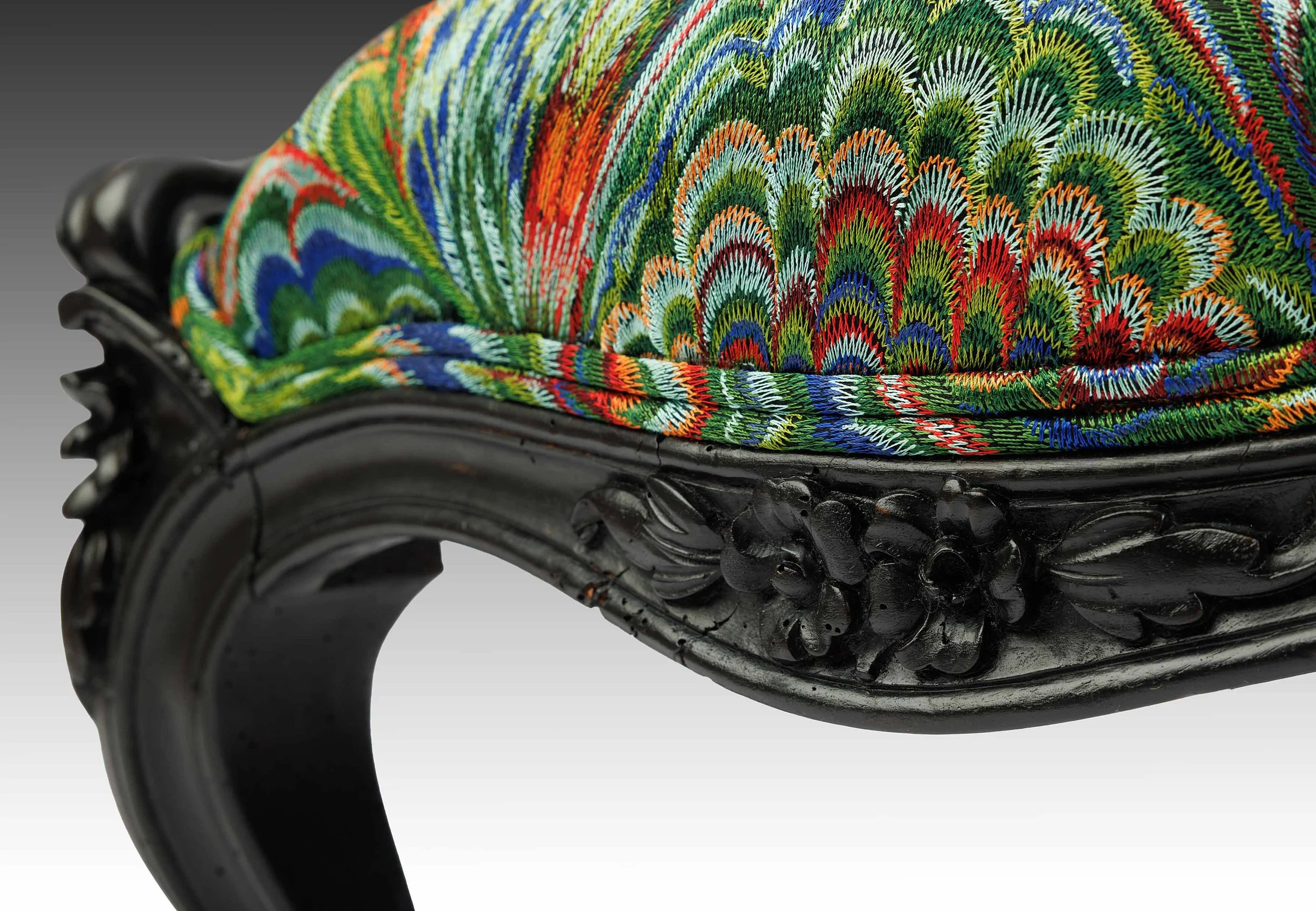 Image 2 of 8
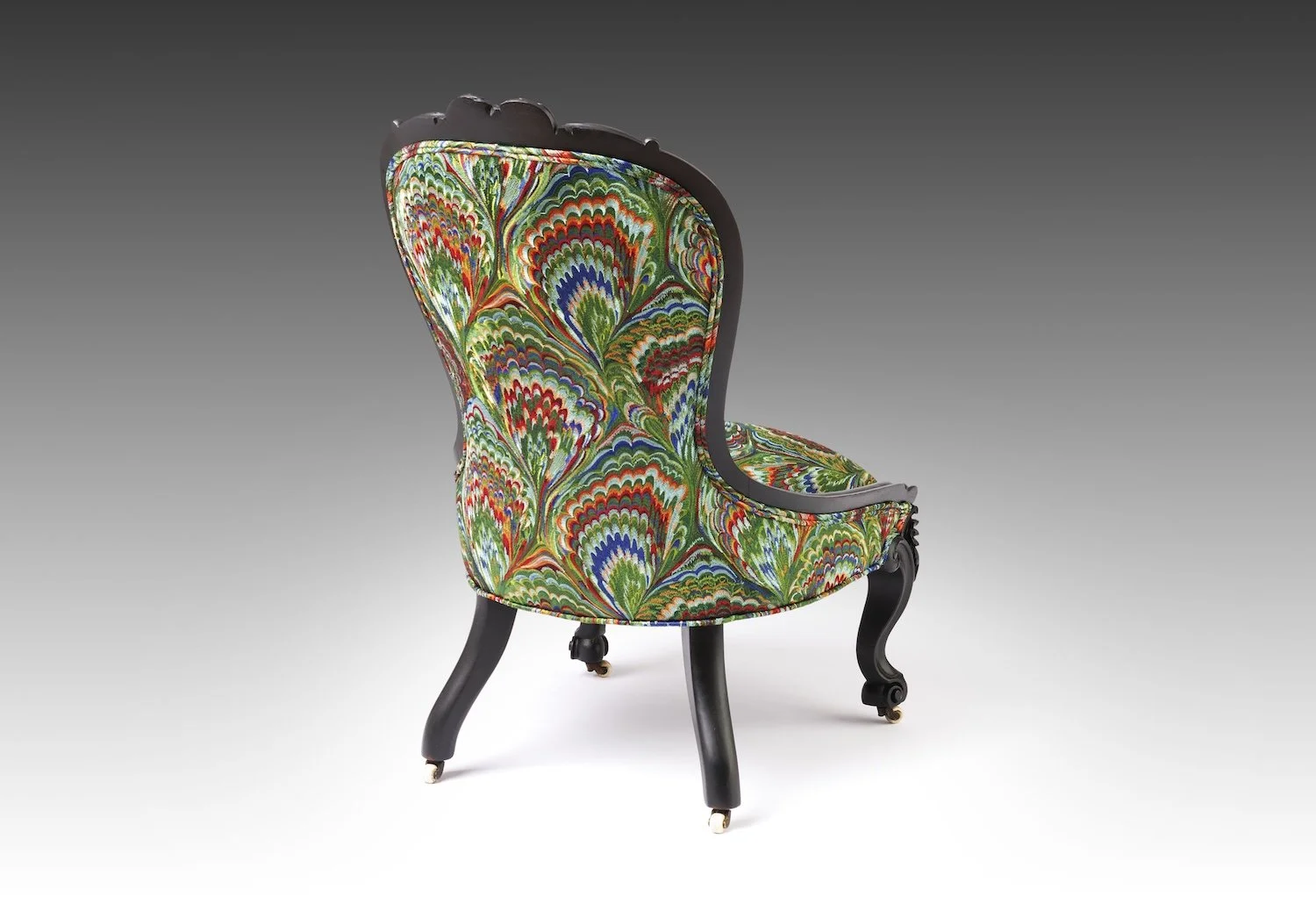 Image 3 of 8
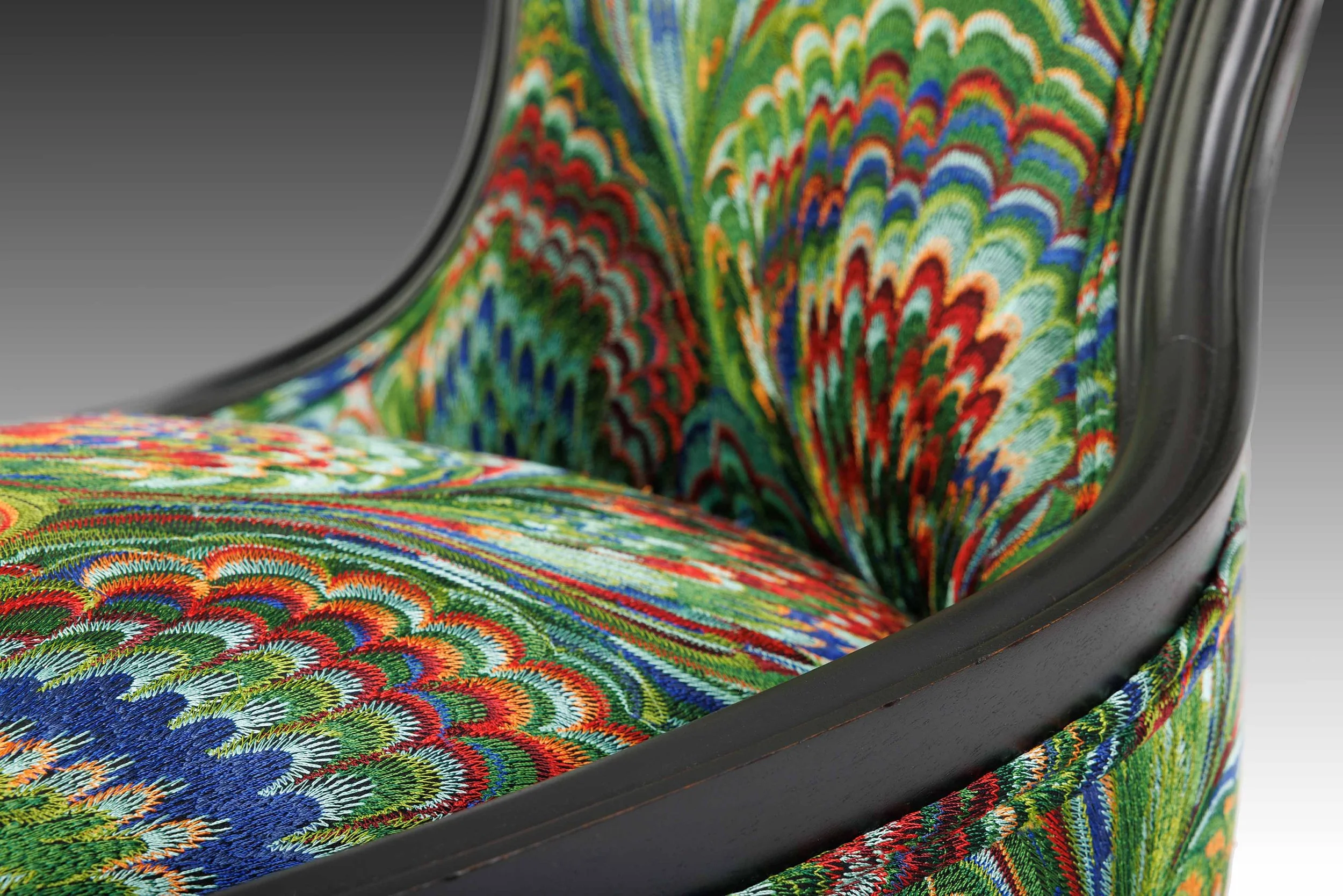 Image 4 of 8
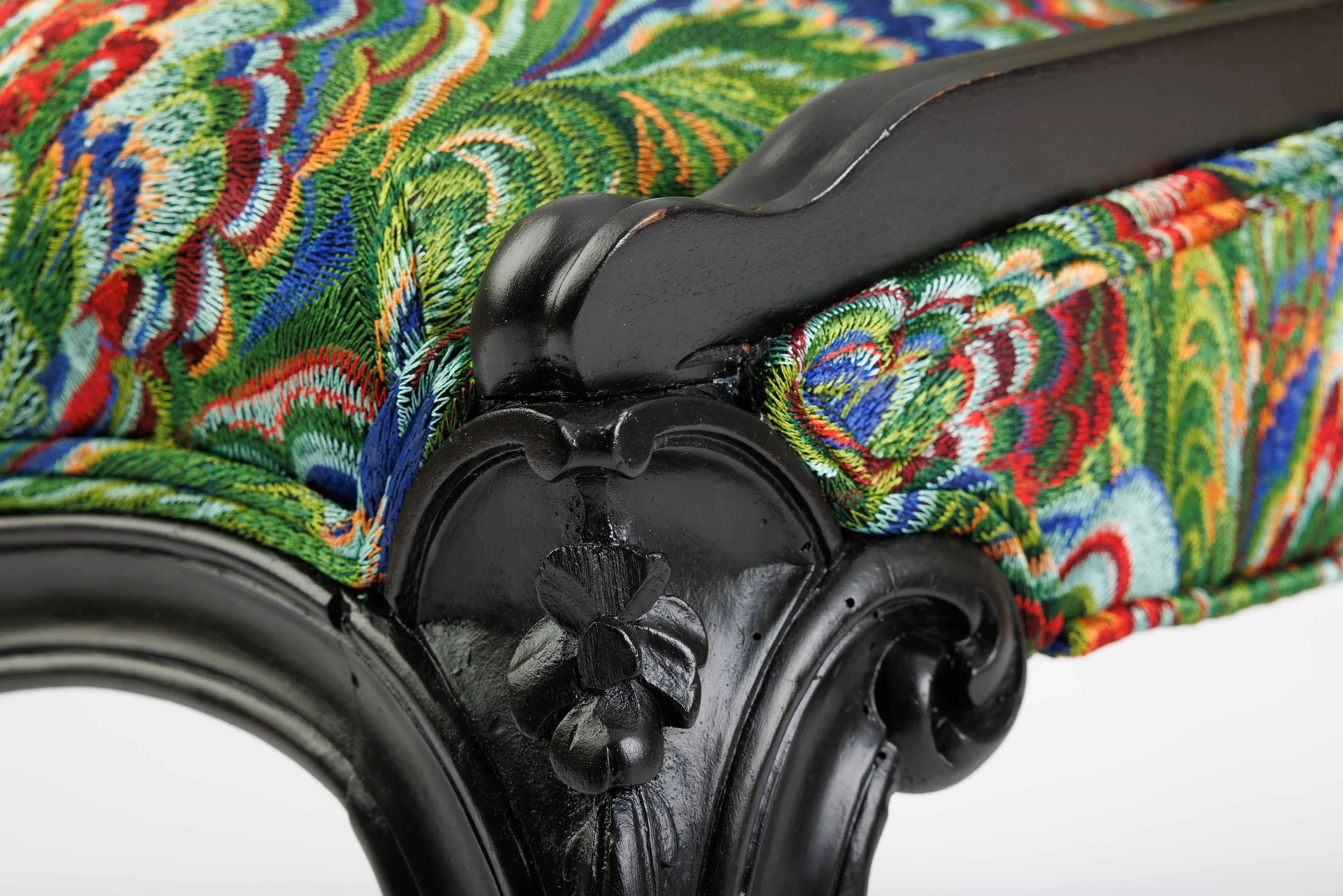 Image 5 of 8
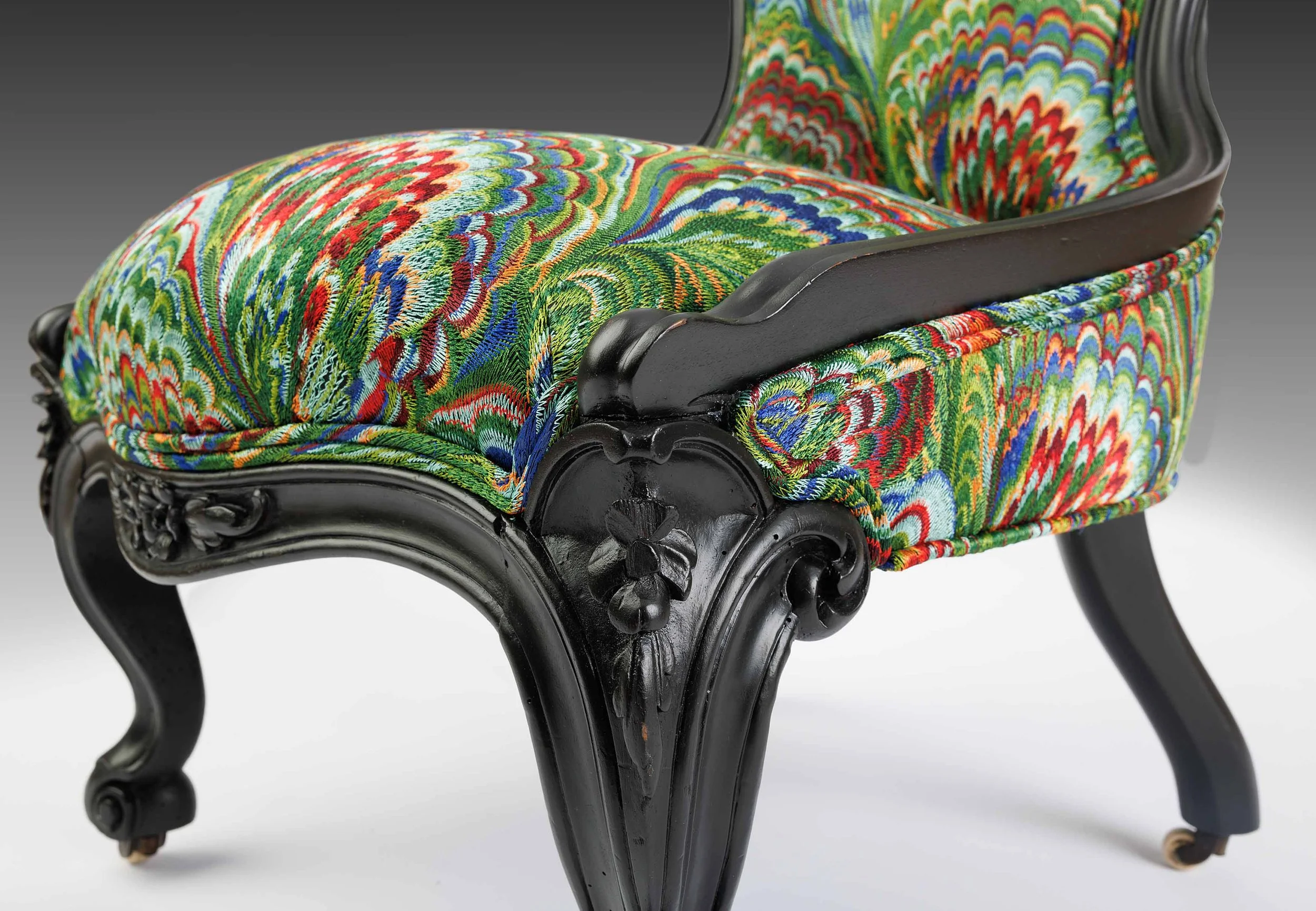 Image 6 of 8
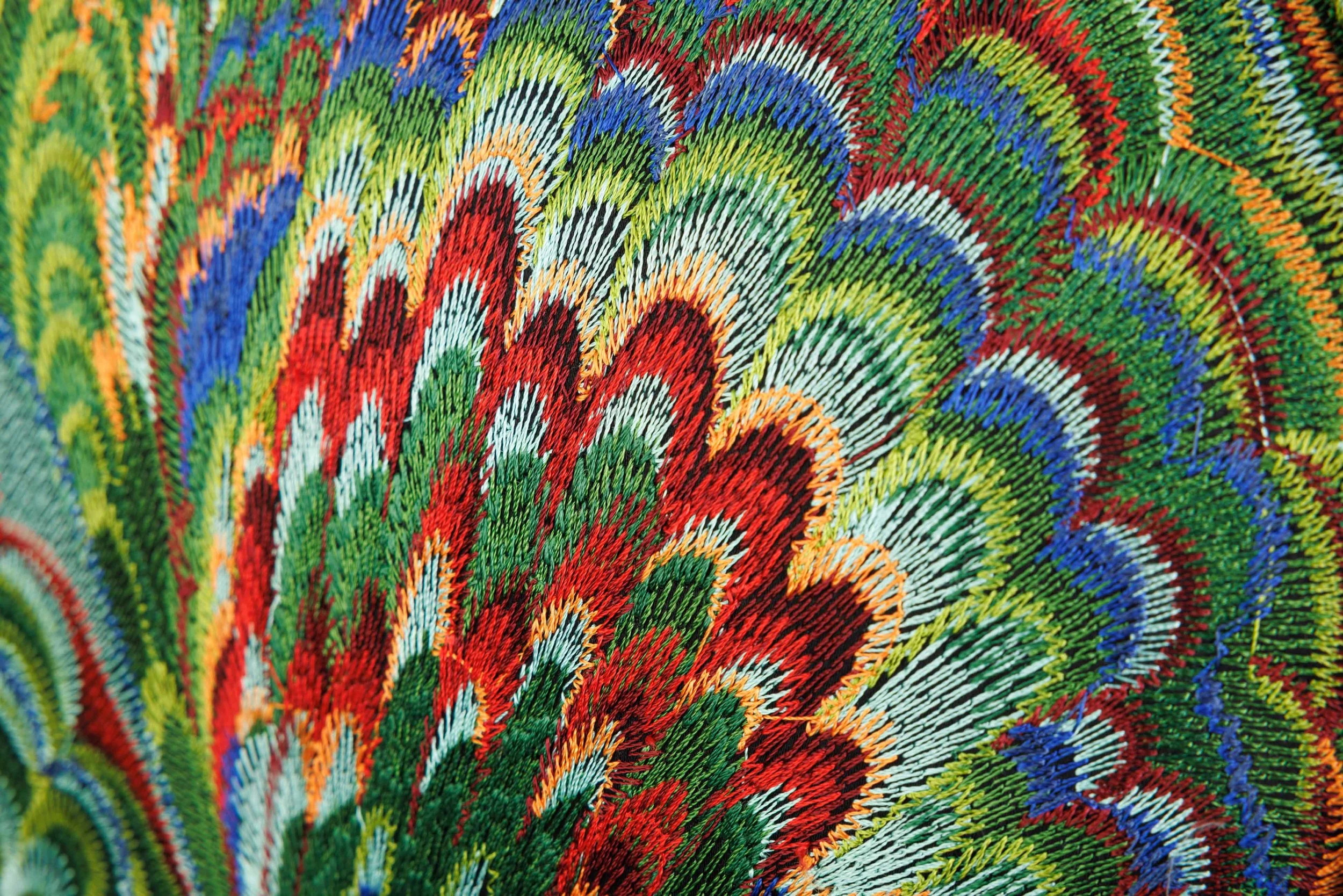 Image 7 of 8
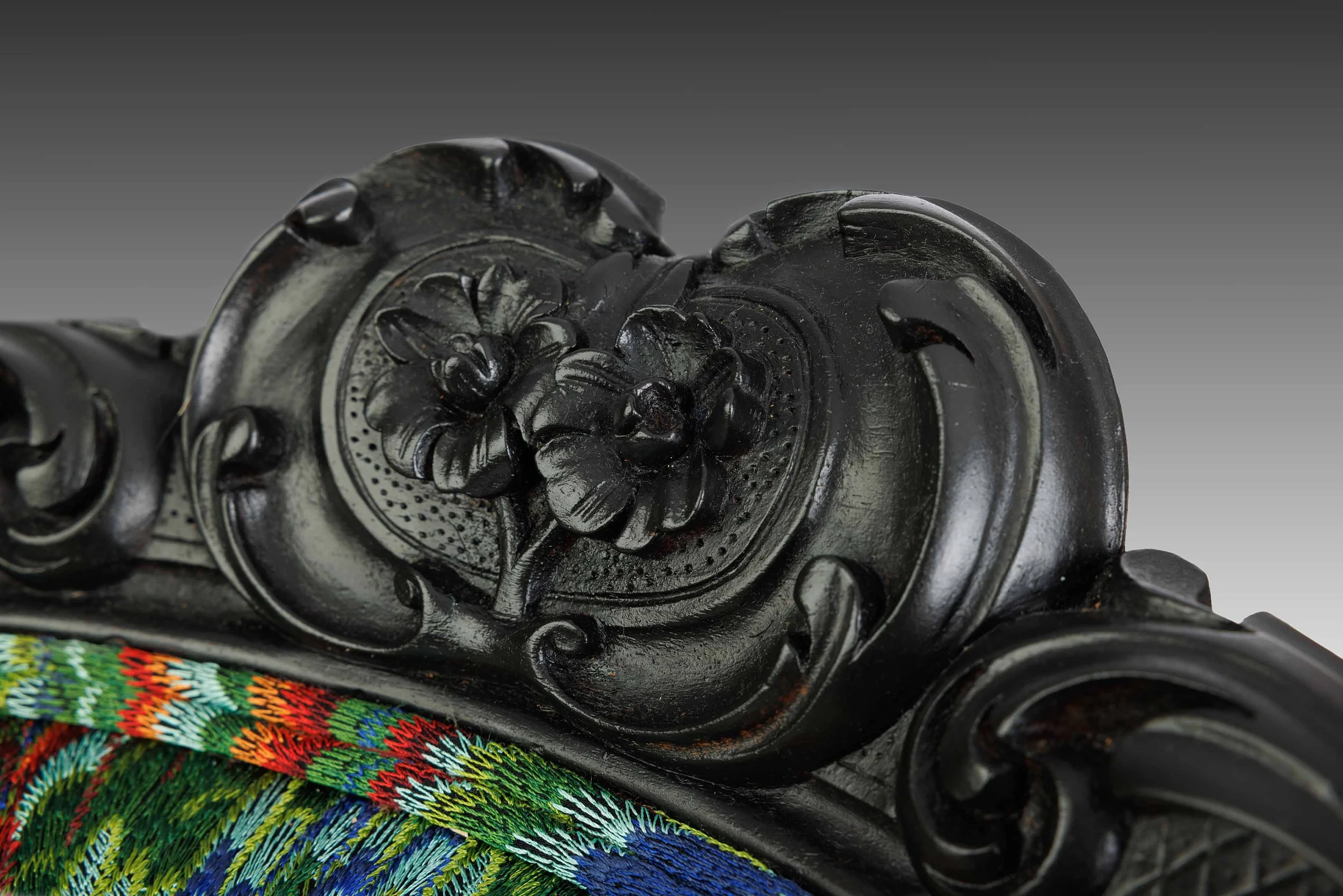 Image 8 of 8
Living With This Object
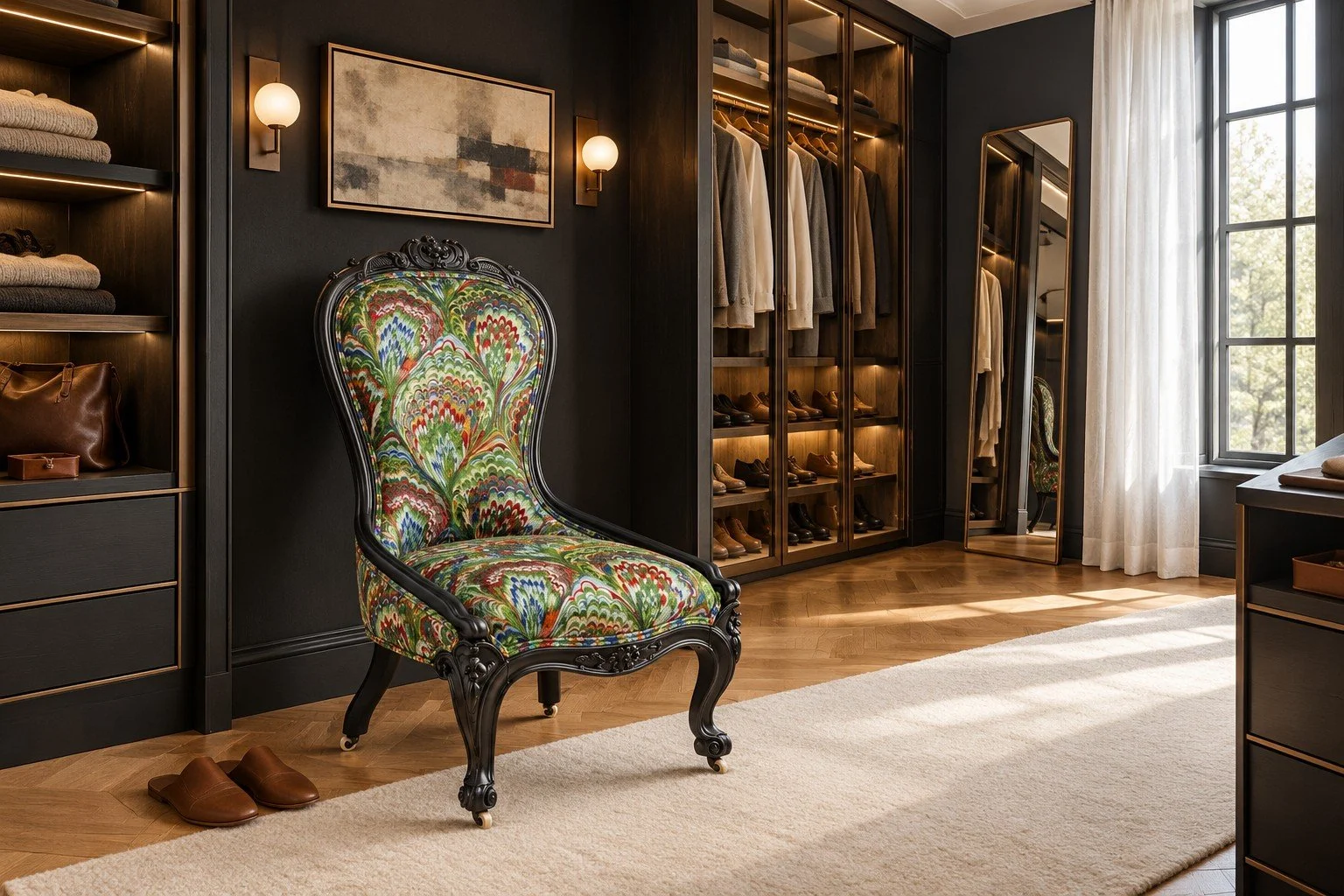
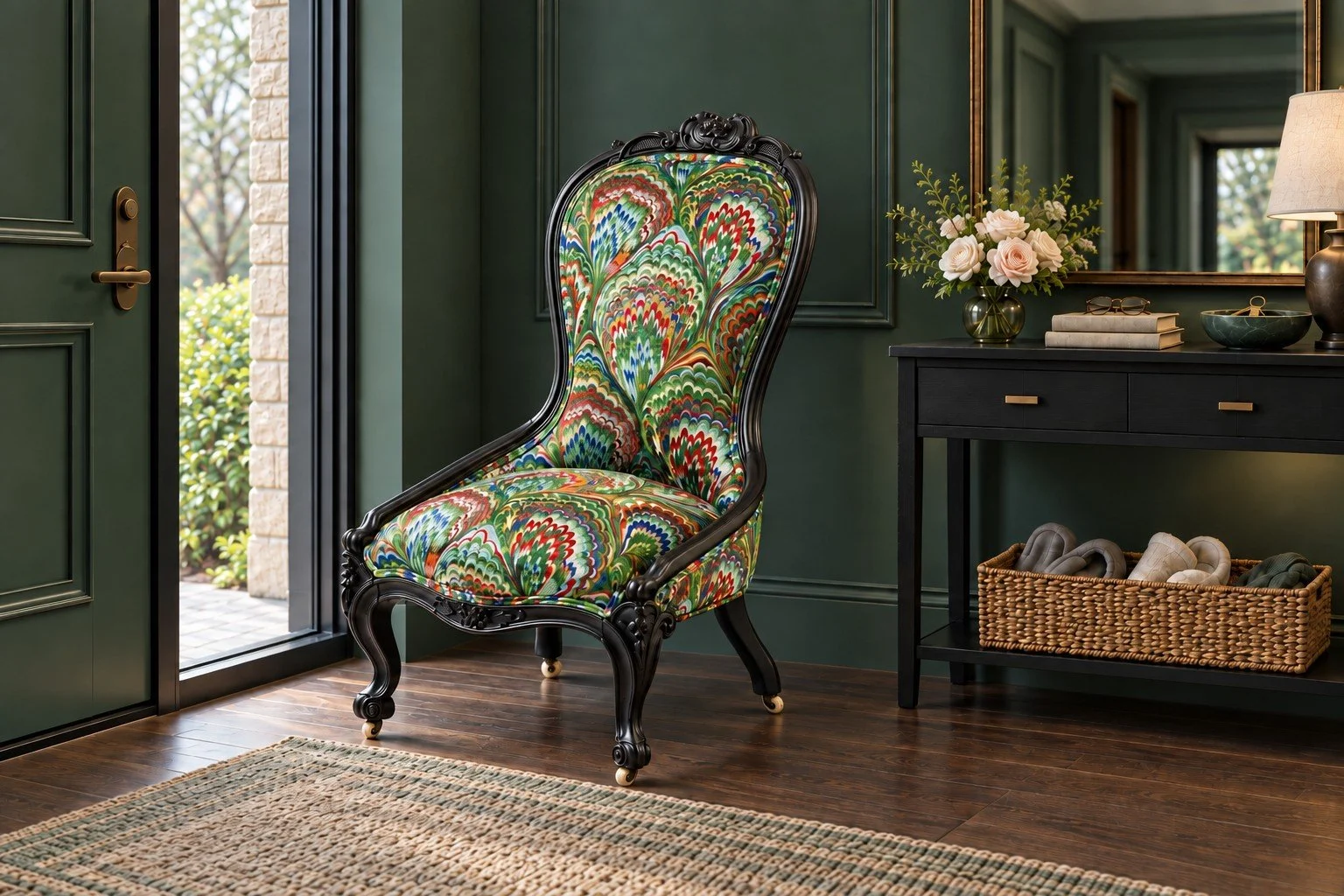
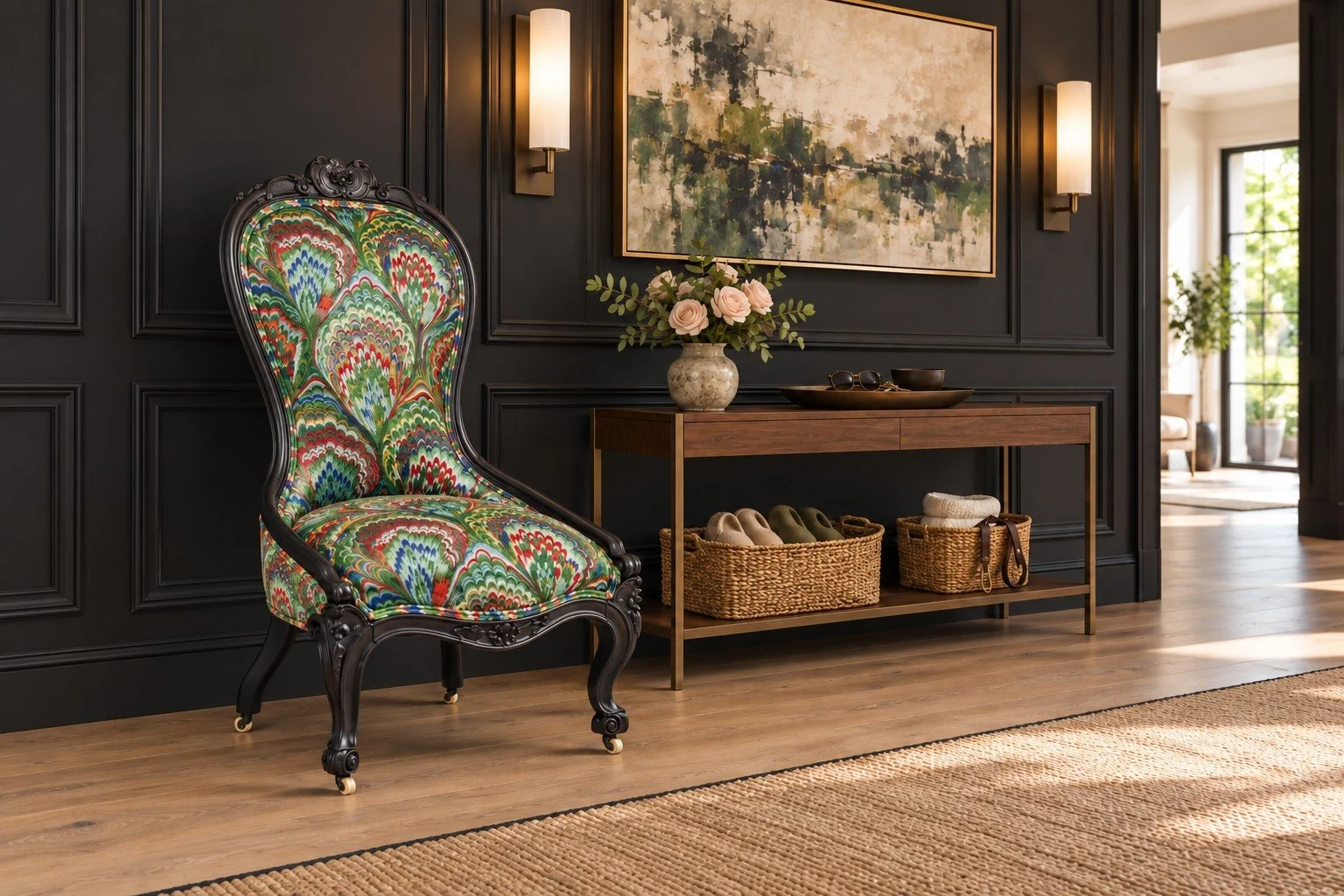
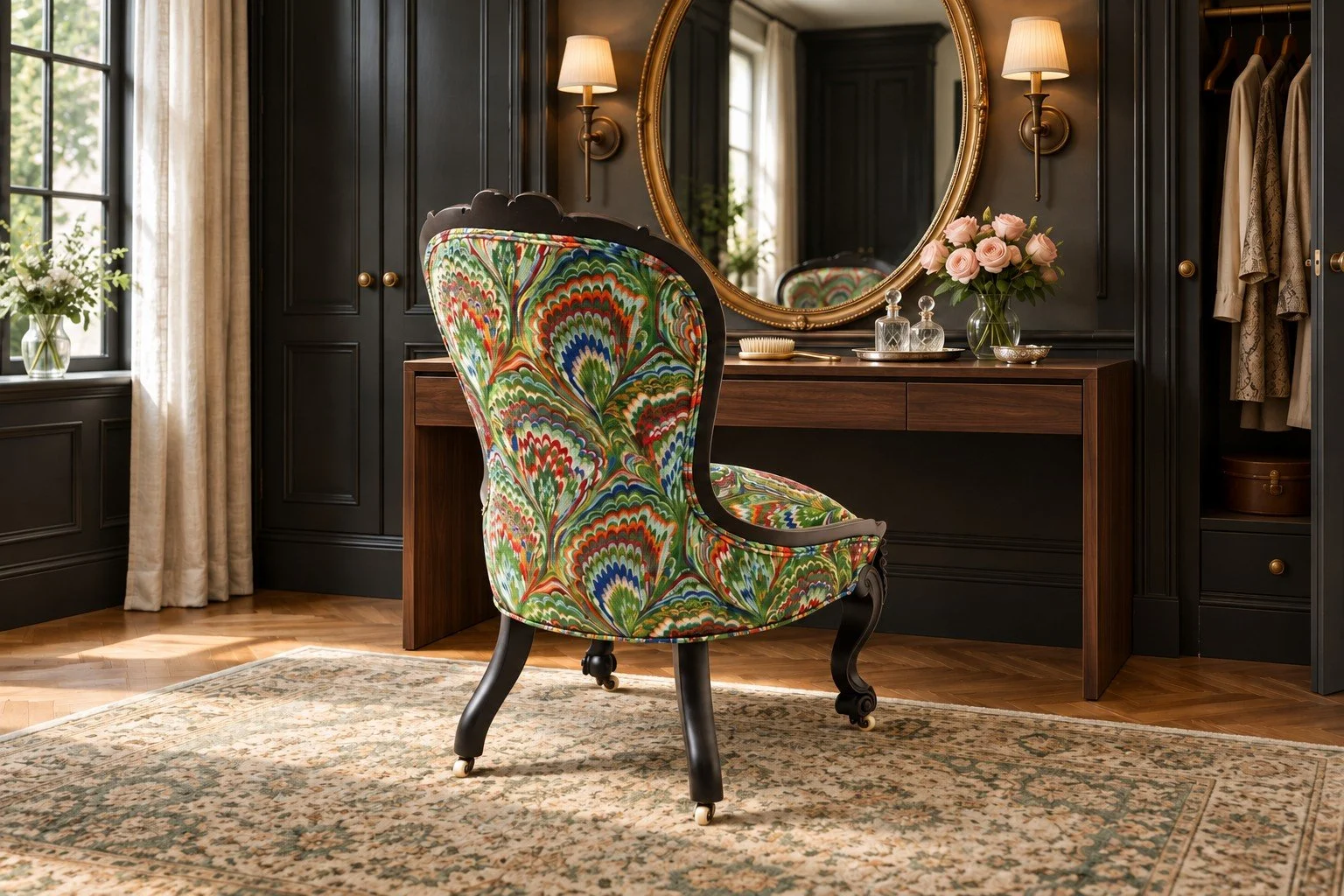
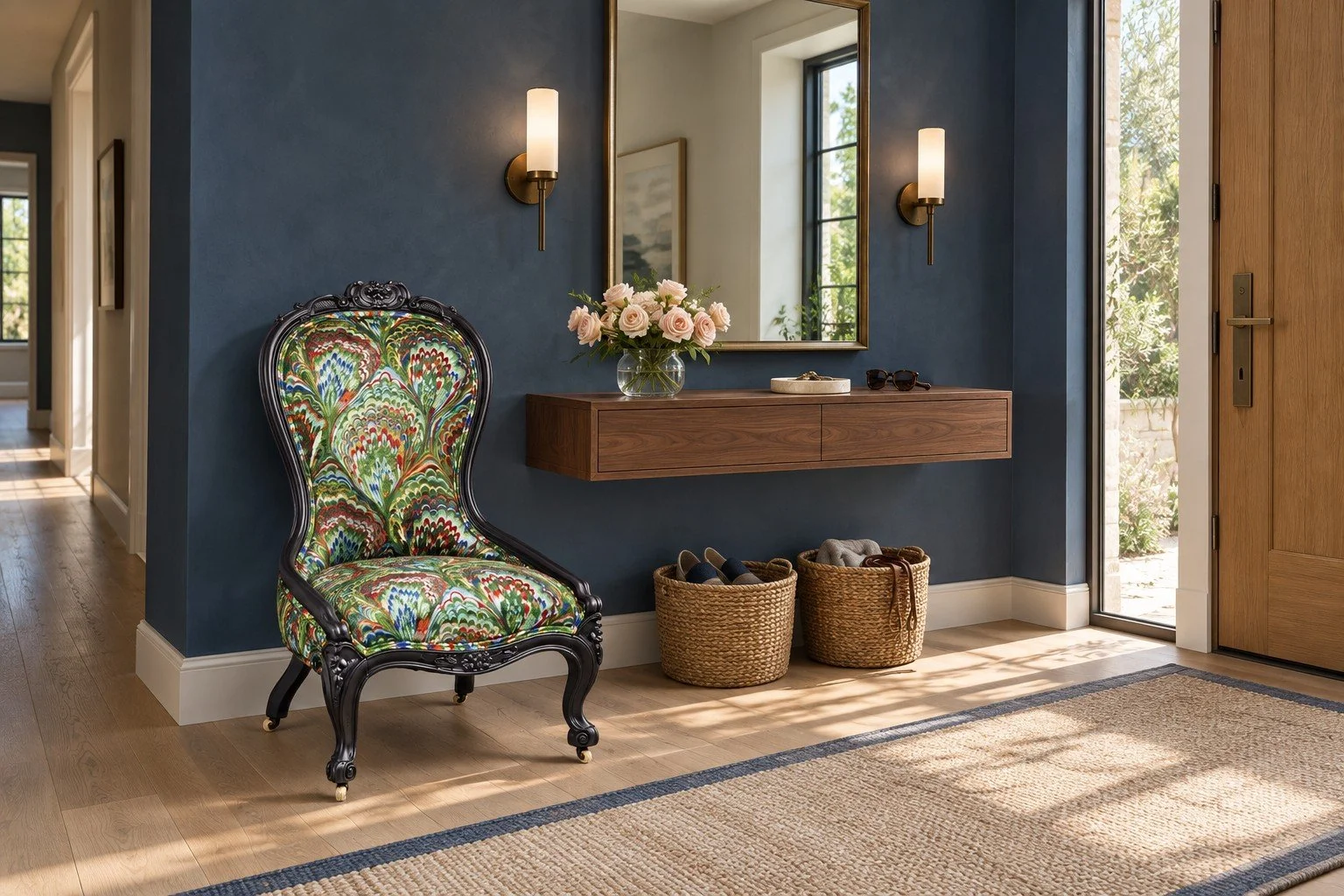
The following images are AI-generated visualizations, intended to suggest scale and a few possible interior settings. They are conceptual, not photographs of the object in real rooms. The chair's form is represented closely, but details such as the arrangement of the embroidered pattern, the carving, and exact proportions are approximations. For the object as it is, see the photographs above.
-
The chair suits interiors that favour restraint and can carry one strong note of colour. The footprint is compact and the back low, so it reads as a grounded, self-contained form rather than a statement of height. It works at the side of a bedroom, in a library or dressing area, in an entrance hall, or as a single accent in a reception room, used alone or paired. The ceramic castors mean it can be moved and repositioned easily within a room.
-
Type: Slipper chair; armless low-back parlor seat, called a nursing chair in British usage
Style: Victorian, Rococo Revival
Date: Circa 1860–1875
Origin: Not established (unmarked)
Material: Carved hardwood show-wood frame; brass-mounted ceramic castors
Finish: Stained black (ebonized) in restoration; an ebony stain, not an original finish
Construction: Carved show-wood frame; traditional hand-tied coil-spring seat over jute webbing; layered stuffed upholstery over the rebuilt seat and back
Maker & Origin: Unattributed; no mark located
Condition: Restored; frame stabilized and ebonized; seat and back fully reupholstered; original frame retained
Dimensions: 21⅞ W × 24 D × 38⅞ H in.; seat height 17½ in
Upholstery: Pierre Frey 'Bastian' embroidery, fully reupholstered (see The Pierre Frey 'Bastian' Embroidery)
-
Original: Carved show-wood frame; ceramic castors with brass forks.
Replaced: All show-fabric, padding, and fill. The seat foundation was renewed as part of the reupholstery; the original coil springs were retained. The original stuffing and fabric remnants from inside the chair (horsehair, degraded velvet, hessian, and wadding) were removed.
Reconstructed: None.
Repaired: Frame joints structurally stabilized; a central back support batten added during reupholstery.
Finish Work: The frame was stained black (ebonized) in this restoration with an ebony stain. The black is applied, not original; as a stain it colours the wood rather than forming a film.
-
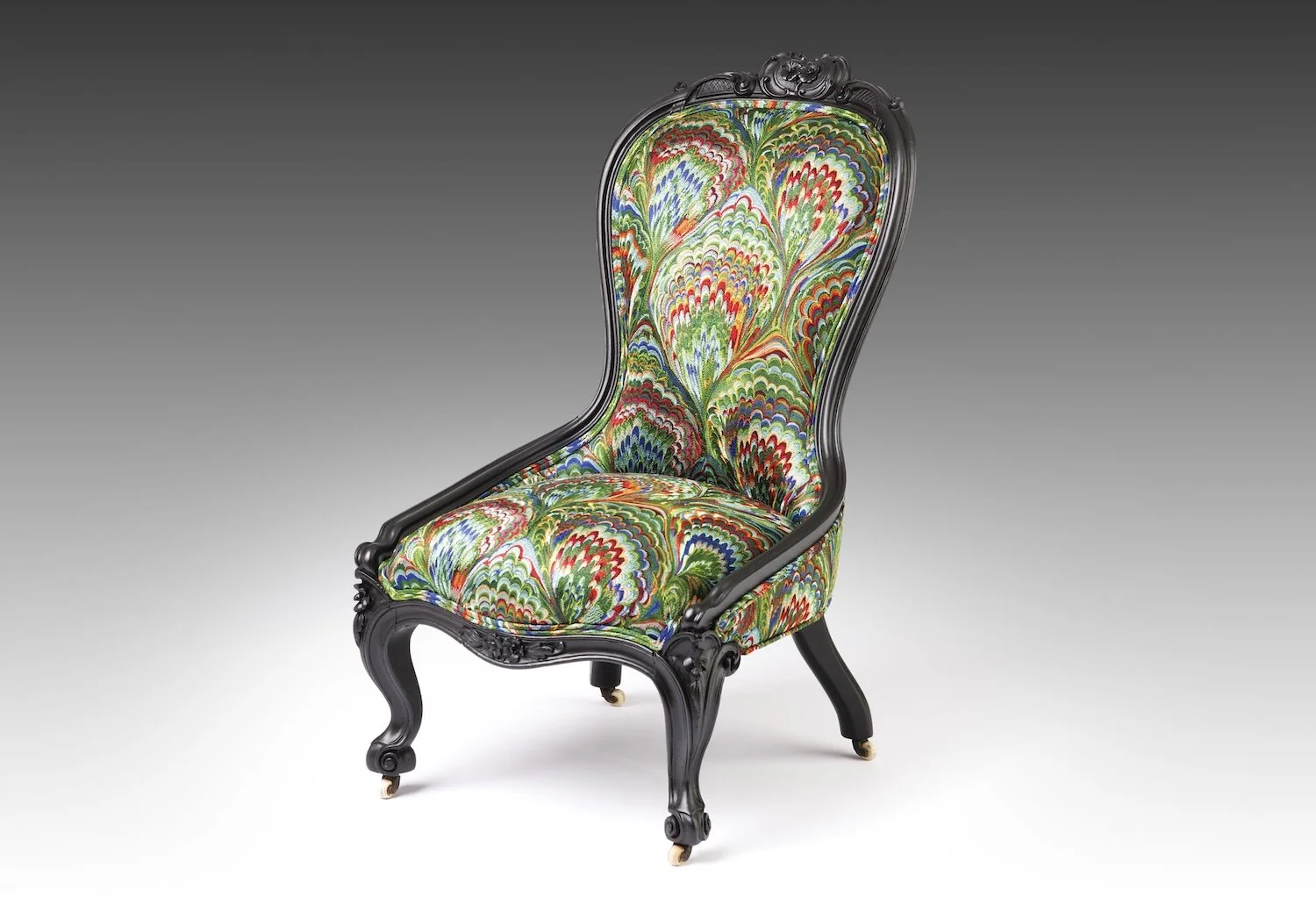
The covering is the chair's defining feature and its namesake, chosen for this restoration rather than original to the chair. It is a densely embroidered cloth, stitched rather than printed, so the fan and plume motifs stand in raised, directional thread. The palette runs through ruby, emerald, sapphire, aquamarine, and ochre against a dark ground, the pattern derived from Venetian marbled papers of the kind valued by bookbinders, so the surface reads as stitched depth rather than print.
Manufacturer: Pierre Frey (Fadini Borghi house)
Collection: Serenissima
Pattern: Bastian, colorway Sfumato
Composition: 57 percent cotton, 43 percent viscose (as stated by the manufacturer)
Performance: Rated by the manufacturer for decorative, light domestic use; no Martindale rub count is documented
Care: Professional cleaning only
Textile origin: France (Pierre Frey)
Reupholstered: Yes, in full, in this restoration
-
No ownership records predate Acanthus Home's acquisition, and no maker's mark, label, or documentary evidence identifying the chair has been found, so no maker is named. The Rococo Revival carving on the crest and knees and the ceramic castors support a circa 1860–1875 date and a mid-Victorian, Rococo Revival classification. The country of manufacture is not established, since this balloon-back form was made in Britain, continental Europe, and North America and the chair carries no mark to settle it. "Victorian" is used here as a period and style descriptor, not as a claim of British manufacture.
-
The show-wood frame is a hardwood; with the frame stained black, the species is not identified. The show-wood is carved at the crest with paired scrolls and a floral cartouche, and again at the cabriole knees with flowerheads and foliate scrolls. The front legs are cabriole and end in scrolled toes; the rear legs splay outward in the typical slipper-chair manner. Each leg retains a ceramic castor on a brass fork. The seat is built in the traditional way, on its original hand-tied coil springs over jute webbing.
-
The documented record begins with the chair's acquisition by Acanthus Home through a nonprofit charity shop in Lomita, California. By then it had already lived a long life: rows of old tack holes along the seat rails and back uprights mark earlier reupholsteries before the present one, though the carved frame is original and retained and the chair stands on what appear to be its original ceramic castors. The slipper or nursing chair belongs to the mid-nineteenth-century move toward smaller, more intimate rooms, where seating was set close to the body rather than held at a formal distance, and this example was made in that Rococo Revival taste. Its restoration, detailed under Condition & Restoration, is the first fully documented chapter. Earlier chapters remain unrecorded: the maker is unknown, the exact year undocumented, the country of manufacture unestablished, and the owners it served and the route it travelled unknown. The record ends where the evidence ends.
-
Is this an antique or a vintage chair? Antique. This antique Victorian slipper chair predates 1926, the cutoff Acanthus uses, and its Rococo Revival form, carved frame, and ceramic castors place it in the circa 1860–1875 range. That makes it roughly 150 to 165 years old, well inside the antique threshold rather than vintage.
Is the frame original, and what was restored? Yes. The carved frame is original and was retained, with its ceramic castors. The restoration stabilized the frame, fully reupholstered the seat and back, and stained the frame black. One point stated honestly: the black is a modern ebony stain, applied in this restoration, not an original finish.
What is the upholstery, and how should it be treated? The covering is Pierre Frey's 'Bastian' in the Sfumato colorway, an entirely embroidered textile from the Serenissima collection whose pattern derives from Venetian marbled papers. It is 57 percent cotton and 43 percent viscose. The maker rates it for decorative, light domestic use, so it suits occasional seating rather than heavy daily wear. Professional cleaning only.
Is the chair marked or attributed to a maker? No maker's mark, label, or stamp was found on the frame, so the chair is offered without attribution. The country of manufacture is not established either: this Rococo Revival form was made in Britain, continental Europe, and North America, and the chair is unmarked. The date rests on the form, carving, and castors.