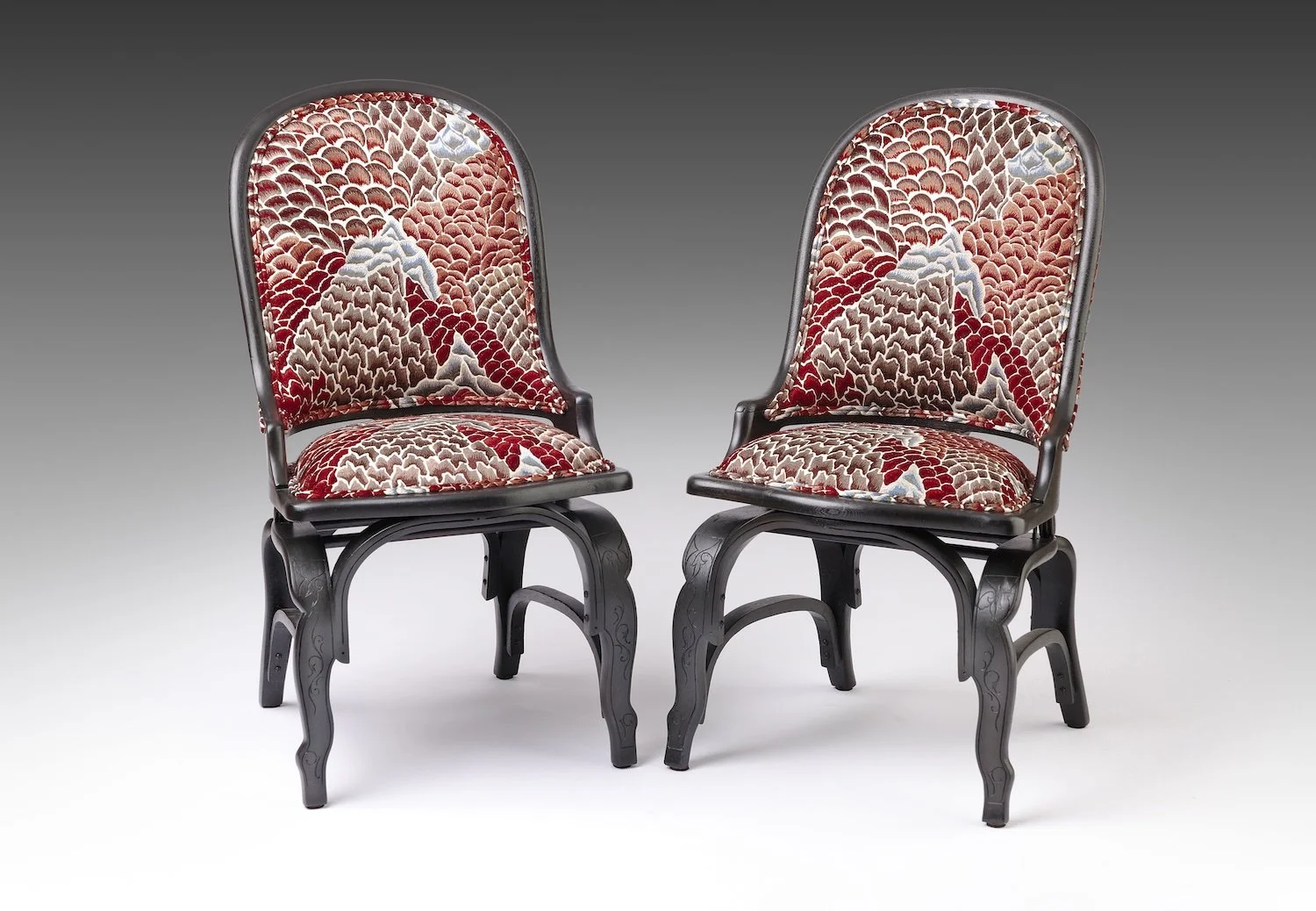
 Image 1 of 4
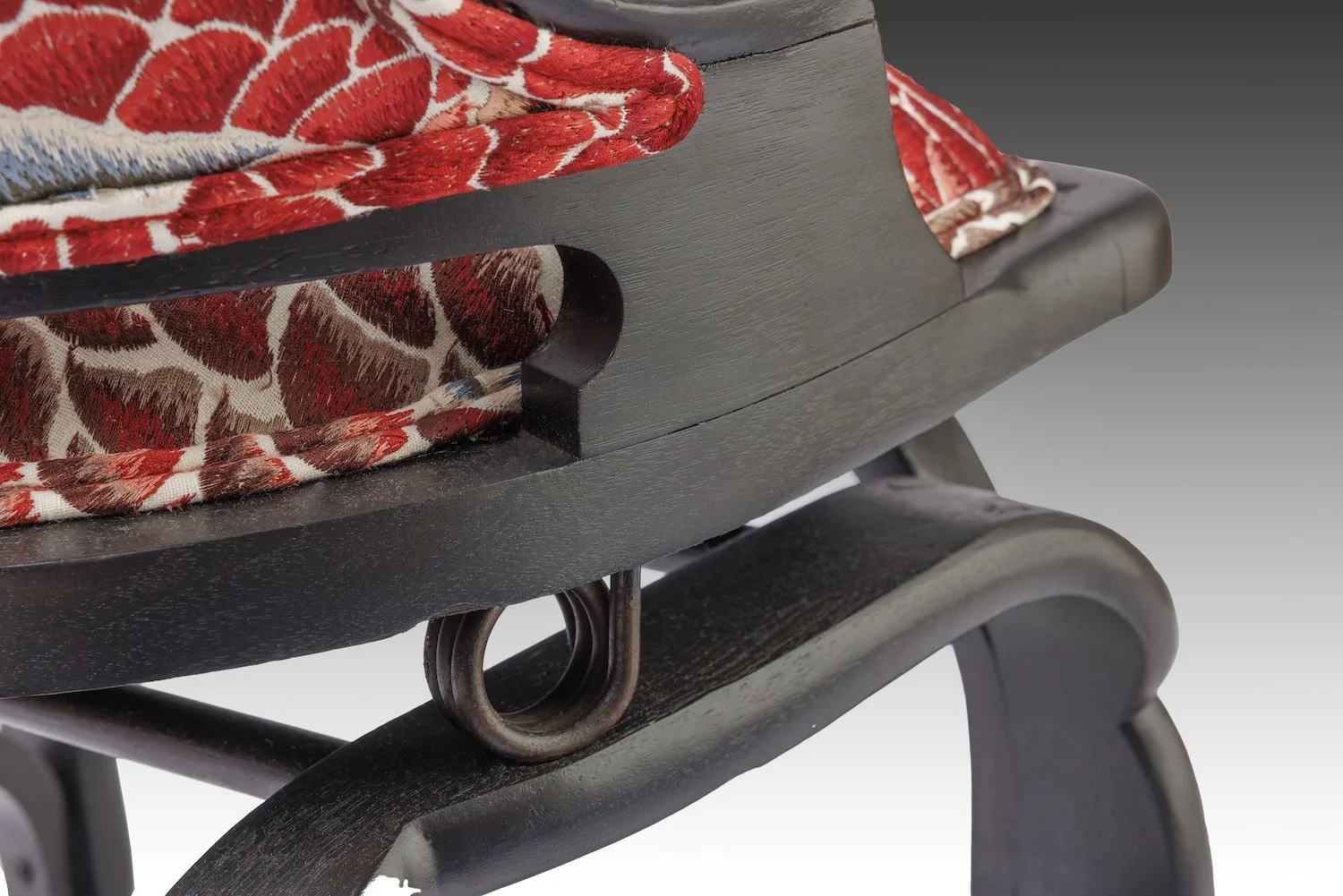 Image 2 of 4
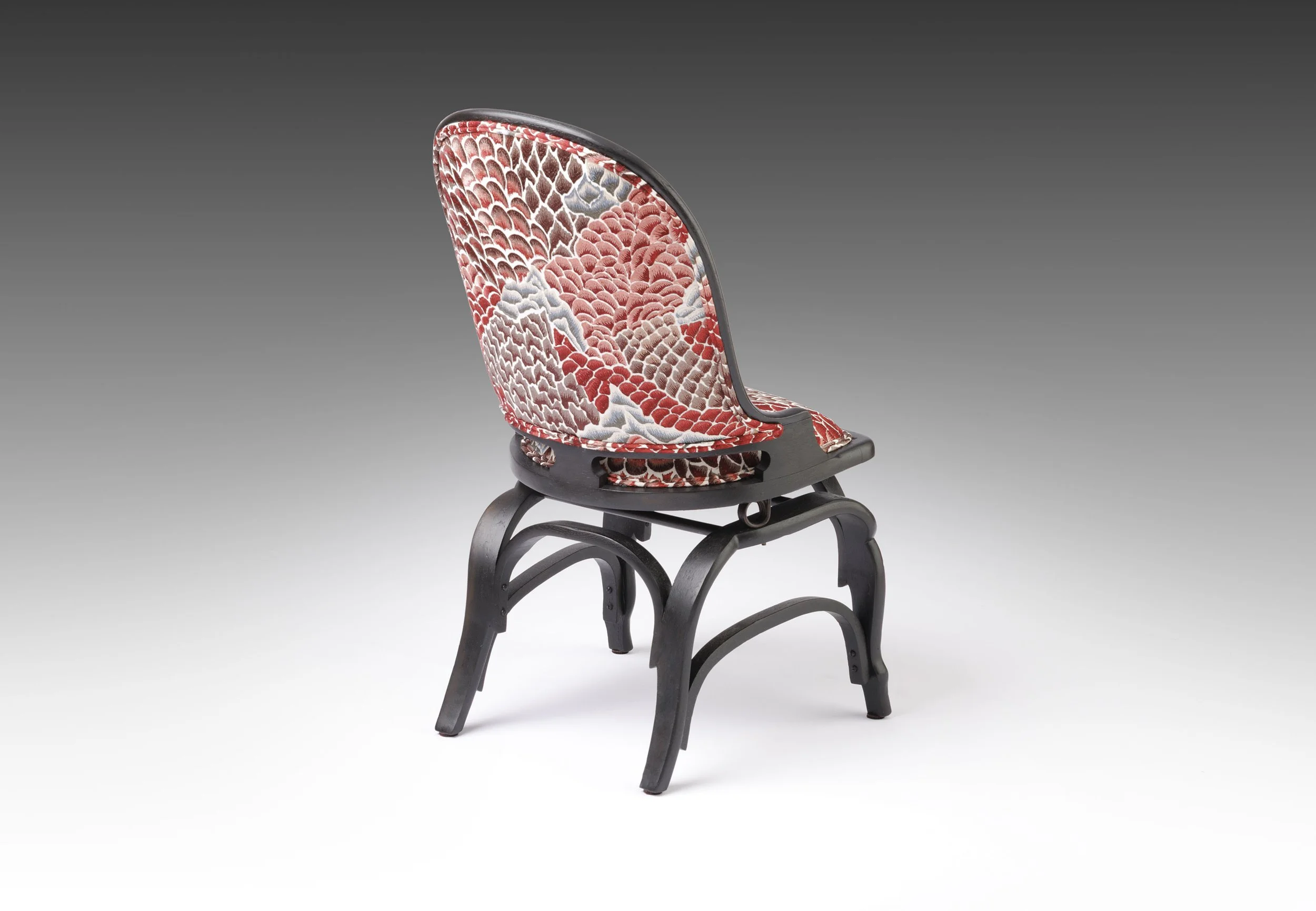 Image 3 of 4
 Image 4 of 4
Living With This Object
In a room, the pair reads as light, upright seating that moves easily to where it is needed, flanking a fireplace, a window, or a sofa. Armless and narrow, the chairs take little floor space, and the concealed spring lets the back give gently to a sitter without altering the chairs' formal, vertical line.
The room views below are AI visualizations, offered to suggest scale and placement. They are rendered images, not photographs of the chairs in these rooms.
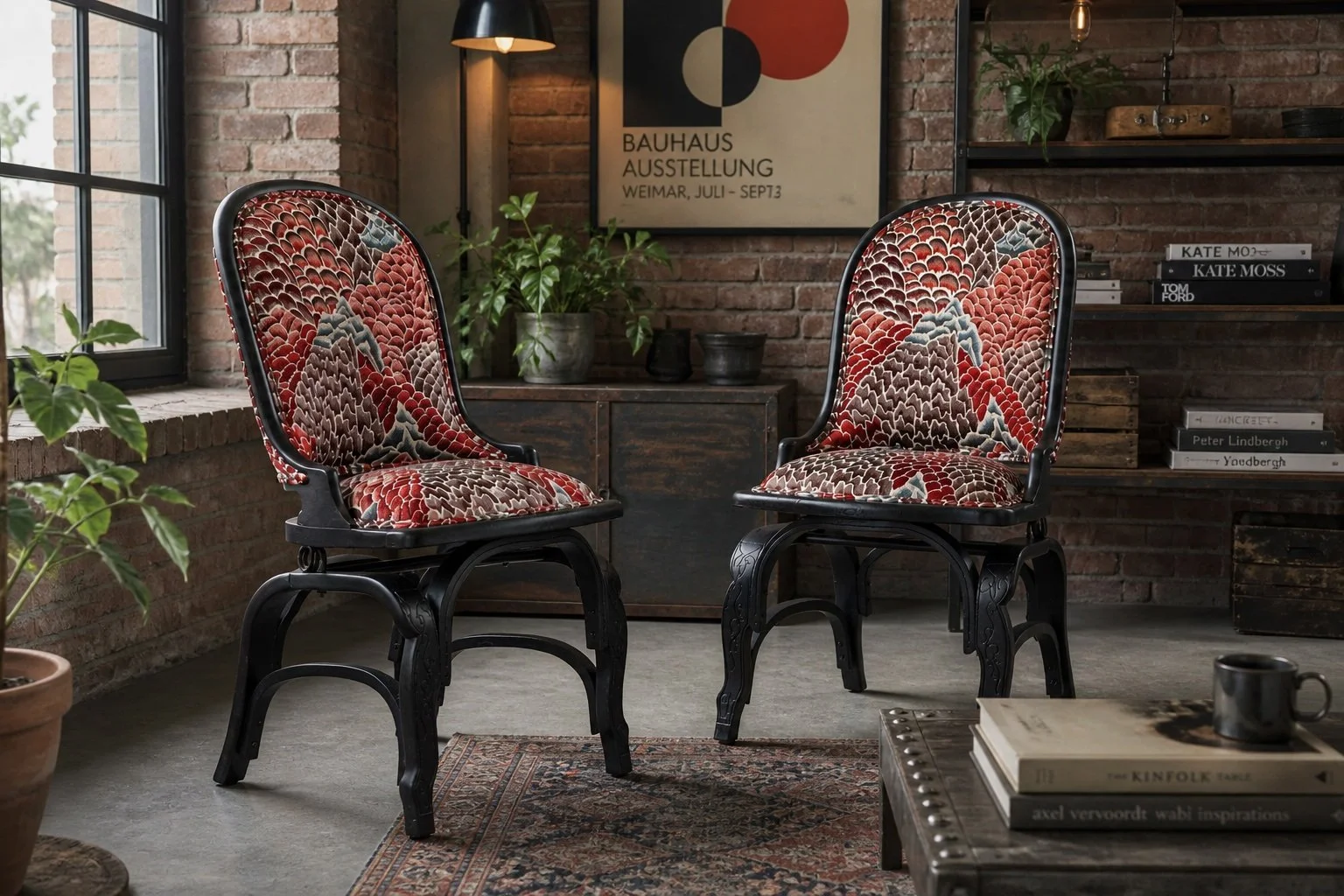
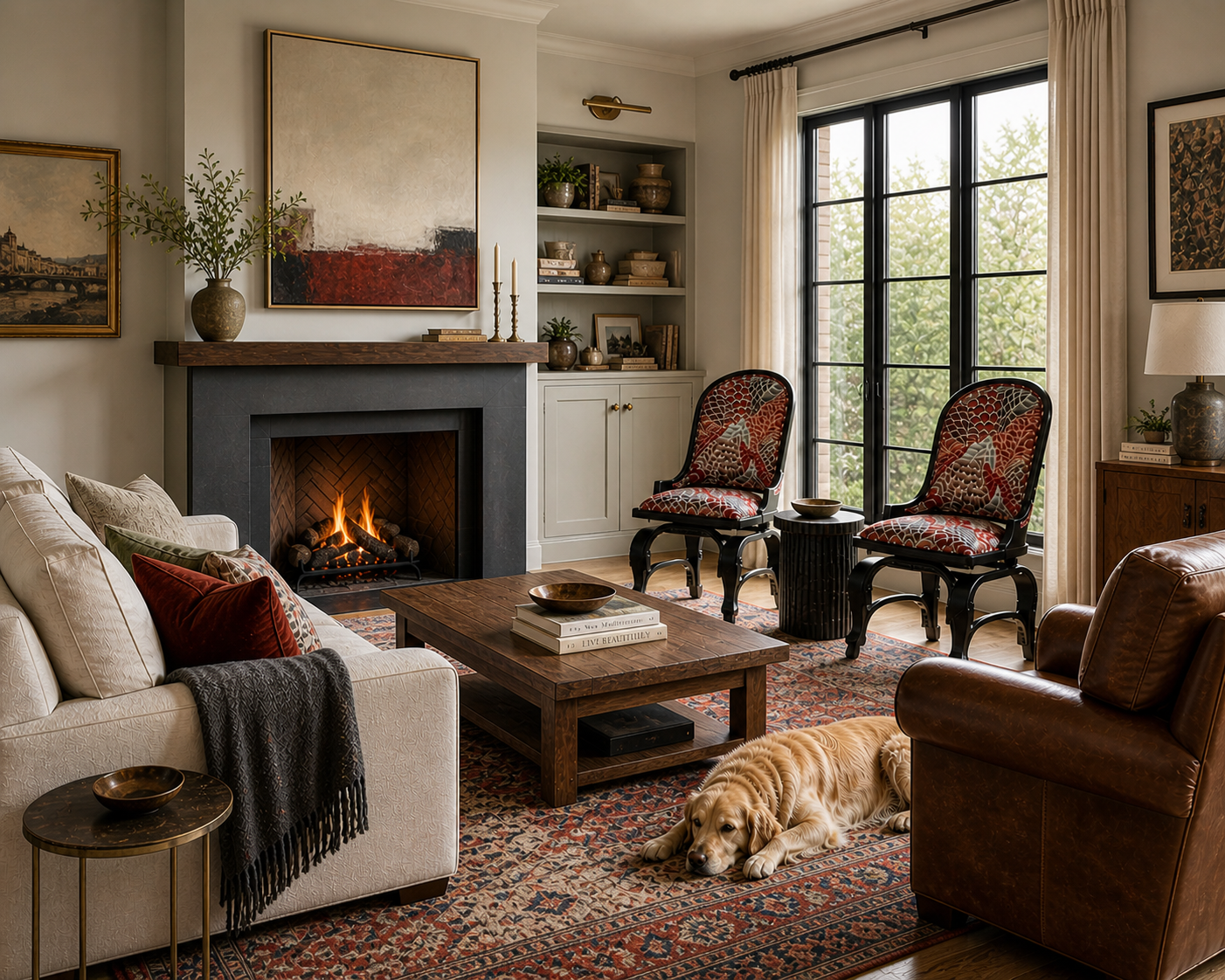

-
Whether set beside a fireplace, beneath a window, or flanking a console, the pair keeps its restrained profile and settles into a room without overwhelming it. The chairs are equally at home in a library, bedroom, dressing room, or sitting room, wherever comfort and conversation are valued together.
-
Type: Reclining parlor side chairs, armless; offered as a pair
Style: Victorian
Date: Circa 1870–1900
Origin: Not established (unmarked)
Provenance: Most recent documented acquisition from an antiques dealer in Redondo Beach
Material: Hardwood frame; internal coil seat springs and a concealed steel spring-back mechanism
Finish: Ebony stain (ebonized), applied in restoration; not original
Construction: Coil-sprung seat over a shaped frame; a concealed coil spring at the rear links the seat to the base, forming the spring-back mechanism
Maker & Origin: Unattributed; no mark located
Condition: Restored and sound; frames refinished, full reupholstery, original spring-back mechanisms operational
Dimensions: 19 W × 15 D × 35 H in; seat height 18 in (per chair)
Upholstery: Pierre Frey Broderie Le Rocher embroidered viscose-linen, reupholstered (see The Pierre Frey 'Broderie Le Rocher' Embroidery)
-
Original: The concealed spring-back mechanisms were retained and remain operational.
Replaced: Top fabric and interior fill fully replaced. The chairs were reupholstered in a Pierre Frey embroidery over new padding, replacing the original textile and stuffing.
Reconstructed: No elements were reconstructed.
Repaired: Frame members cleaned and prepared for refinishing. The seat rails and back frame carry rows of old tack holes along the upholstery margins, the normal record of earlier reupholstery; these sit under the new covering and do not affect structure.
Finish Work: The present finish is an ebony stain, applied in restoration and not original. It colors the wood rather than building a film, so the grain remains in the surface.
-
A concealed coil spring at the rear of each seat links the seat frame to the base. Lean into the back and it tilts gently rearward against the spring while the legs stay planted on the floor, then the spring returns it upright; the movement is the back reclining under pressure, not the whole chair rocking or tipping forward. Because the spring stays hidden under the frame, the chair keeps its plain, armless, vertical line whether at rest or in motion. Both mechanisms are the original fittings, retained through the restoration and confirmed operational.
-
No maker's mark, label, or stamp was located, so the pair is left unattributed rather than assigned. The armless sprung-parlor form was produced in more than one country during the Victorian period, so the manufacture origin of this example is not established; "Victorian" denotes the period style here, not a documented English origin. The date is read from the evidence itself: the coil-sprung seats and spring-back mechanisms, together with the overall form. Articulated fittings of this kind belong to mechanically articulated seating produced in the later Victorian period, which places the pair at circa 1870–1900.
-
The exposed frame is consistent with a close-grained hardwood such as beech, a wood commonly used for shaped and steam-bent chair members of the period, though the species is not confirmed. Each seat is coil-sprung, and the concealed rear spring that provides the recline is described under The Concealed Recline. Shallow floral relief runs along the legs, still legible beneath the ebony stain. Much of the joinery sits out of sight beneath the upholstery and finish, and what remains visible is consistent with period shaped-frame techniques.
-
The covering is an embroidered ground of overlapping forms that suggest layered rock, in crimson, chestnut, soft rose, and pale blue, chosen for this restoration rather than original to the chairs. The motif is stitched rather than printed, so its depth comes from raised thread and tonal variation rather than a flat pattern. The raised embroidery echoes the shallow carved relief on the frames, so texture, not color alone, defines the surface.
Manufacturer: Pierre Frey
Pattern: Broderie Le Rocher
Composition: 55 percent viscose, 45 percent linen (as stated by the manufacturer)
Performance: Rated by the manufacturer for light domestic use, including occasional seating; no Martindale rub count is documented
Care: Keep out of direct sustained sun; address spills promptly
Textile origin: France (Pierre Frey)
Reupholstered: Yes, in full, in this restoration
-
Chairs of this kind served as light, movable seating for the room where a household received its guests. Coil springs and concealed spring-back mechanisms brought a new measure of comfort while keeping the upright form expected of formal seating; that mechanism is also the part most likely to fail, so articulated seating like this survives less often than the fixed chairs of its period. This pair entered the Acanthus Home collection from an antique shop in Redondo Beach, California, where it stood unrestored in the shop's window before conservation. It was then refinished and reupholstered with its original spring-back mechanisms retained, as detailed under Condition & Restoration. Its maker, its exact date, the country where it was made, and the interiors it occupied before that window remain unknown. The record ends where the evidence ends.
-
Are these antique or vintage chairs? Antique. These antique Victorian reclining parlor chairs date to the late nineteenth century, circa 1870–1900, on the evidence of their coil-sprung seats, concealed spring-back mechanisms, and Victorian form. That puts them at roughly 125 to 155 years old, comfortably past the 100-year antique threshold, so the pair is antique rather than vintage.
How does the recline work? A concealed coil spring at the rear of each seat links the seat frame to the base. Lean into the back and it tilts gently rearward against the spring, then returns upright. The legs stay planted on the floor throughout; it is the back that reclines under pressure, not the whole chair. Both original mechanisms were retained and remain operational.
What was restored? The frames were cleaned and stained ebony black, a finish applied in restoration and not original. The seats were fully reupholstered in a Pierre Frey embroidery over new padding, replacing the original textile and fill. The original spring-back mechanisms were left in place through the restoration and remain operational.
What wood is the frame? The frames are consistent with a close-grained hardwood such as beech, a common choice for shaped and steam-bent chair frames of the period, though the species is not confirmed. The ebony stain darkens the wood and makes the grain hard to read, so the species is left unconfirmed rather than named.
Is the upholstery new, and how should it be treated? Yes. Both chairs were reupholstered in Pierre Frey's Broderie Le Rocher, an embroidered textile of 55 percent viscose and 45 percent linen, worked in crimson, chestnut, soft rose, and pale blue. The maker rates the cloth for light domestic use, so the pair suits occasional seating rather than heavy daily wear.