 Image 1 of 9
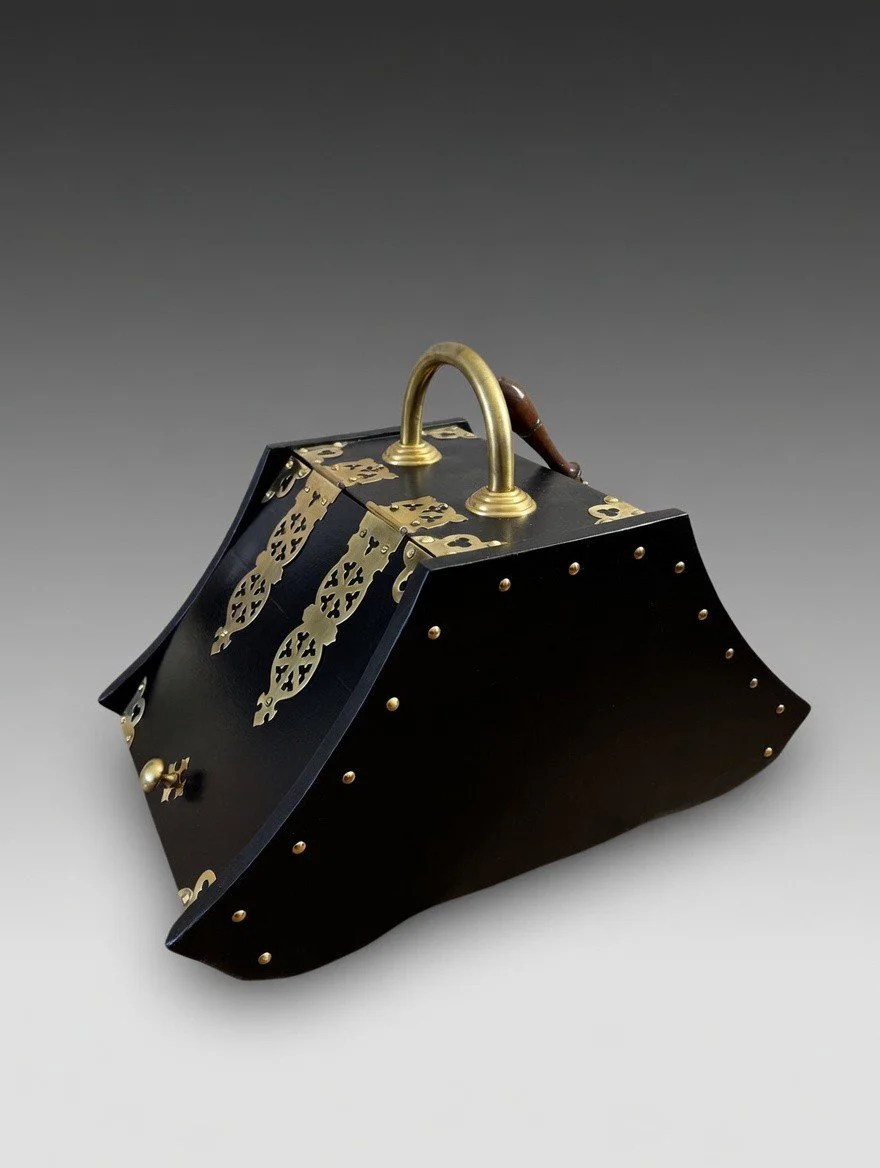 Image 2 of 9
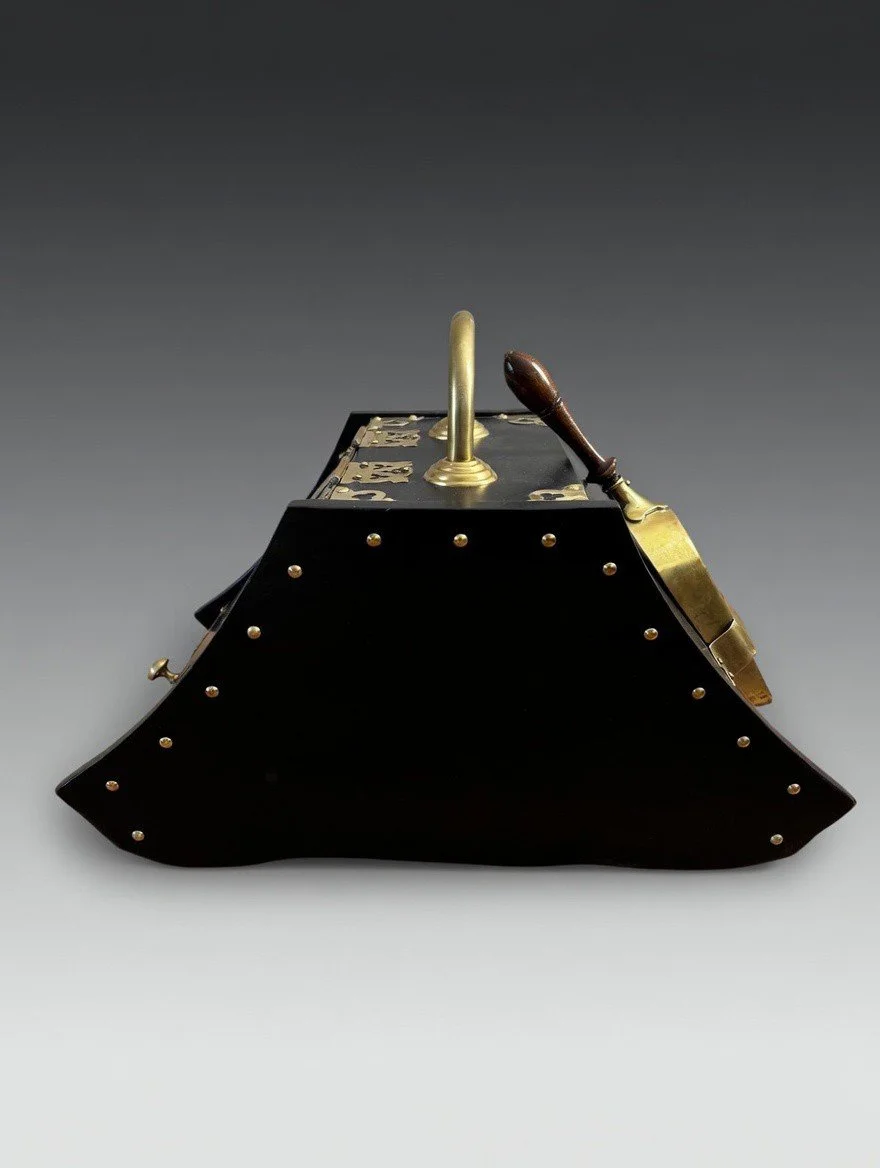 Image 3 of 9
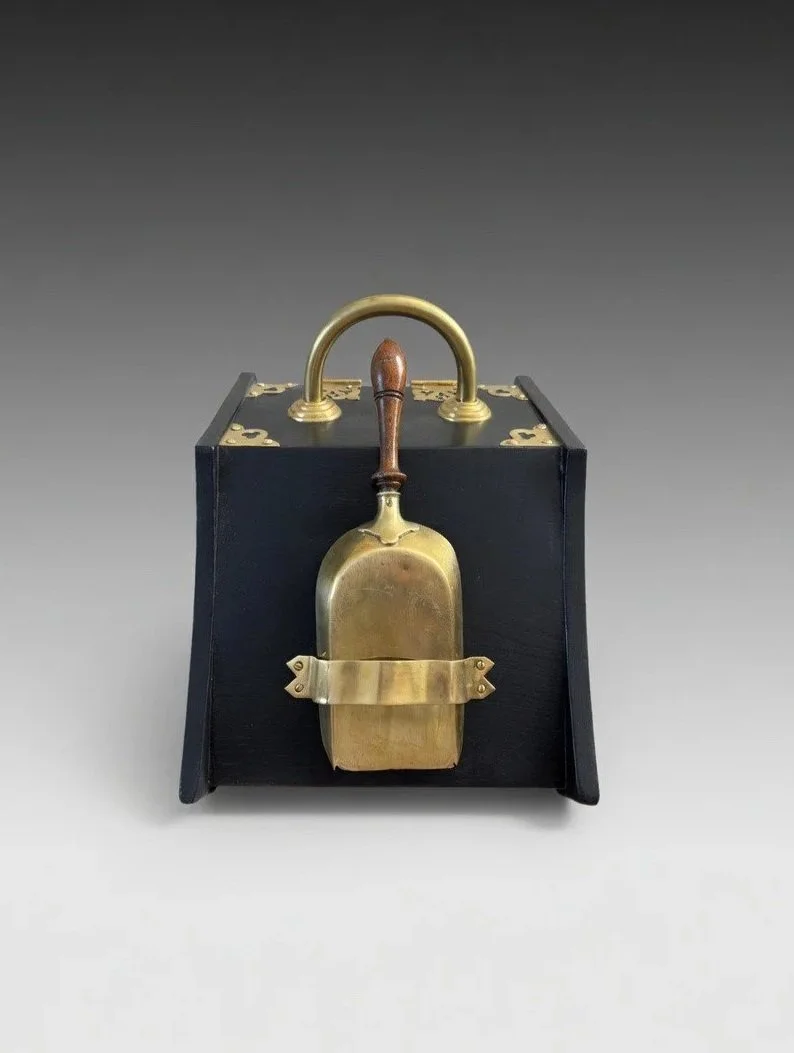 Image 4 of 9
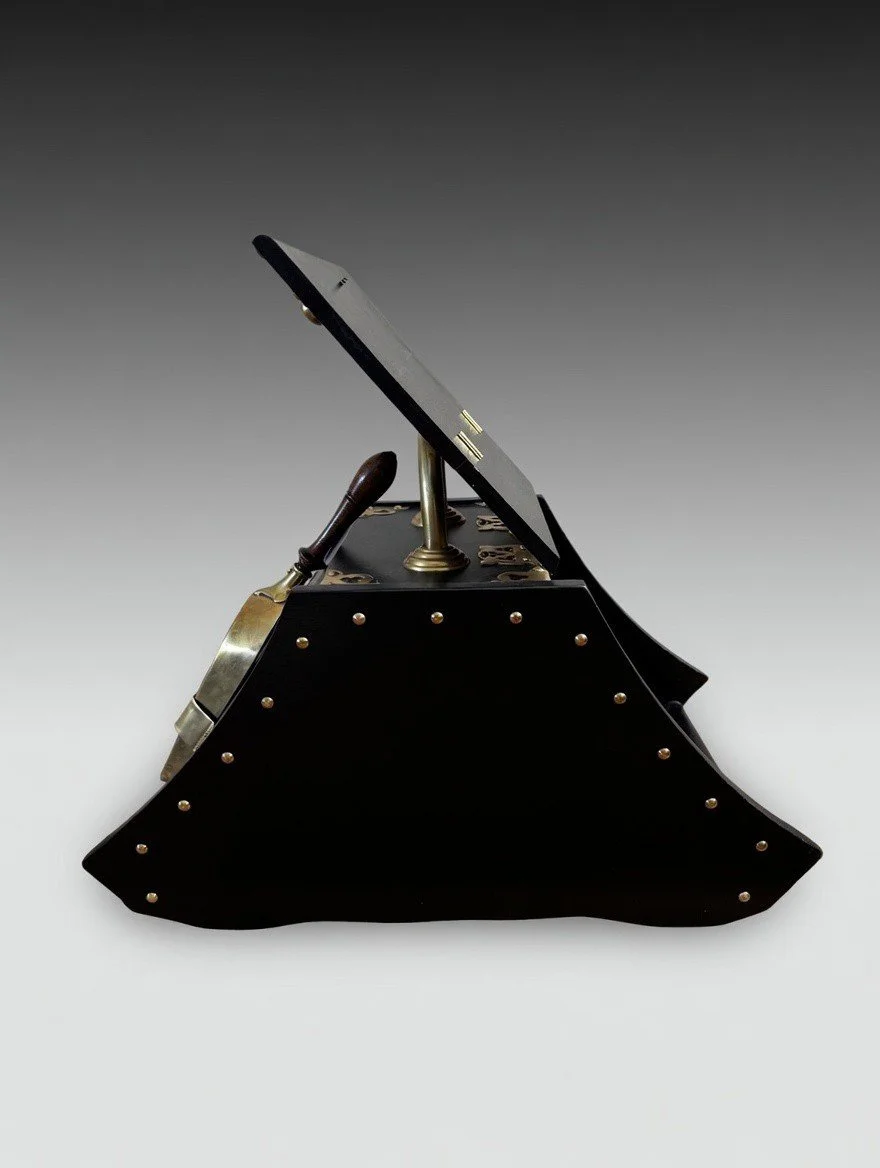 Image 5 of 9
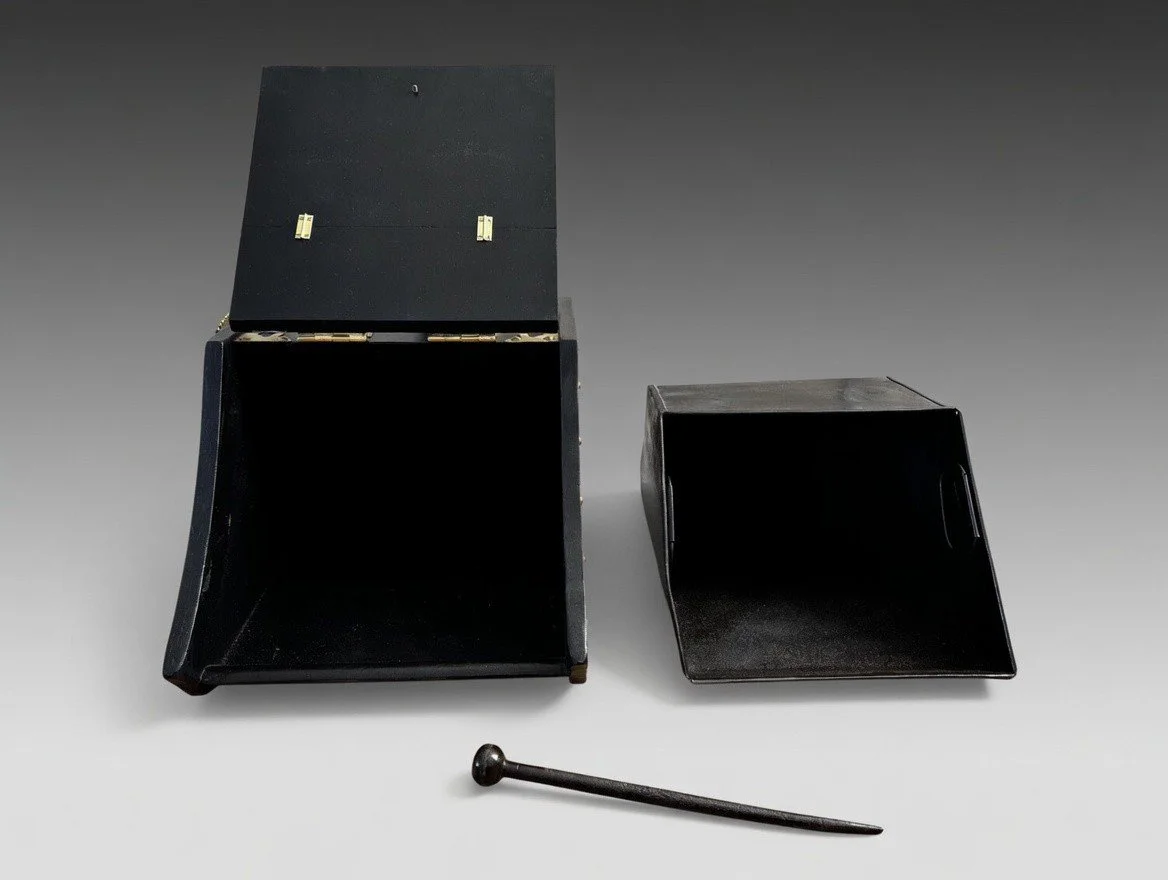 Image 6 of 9
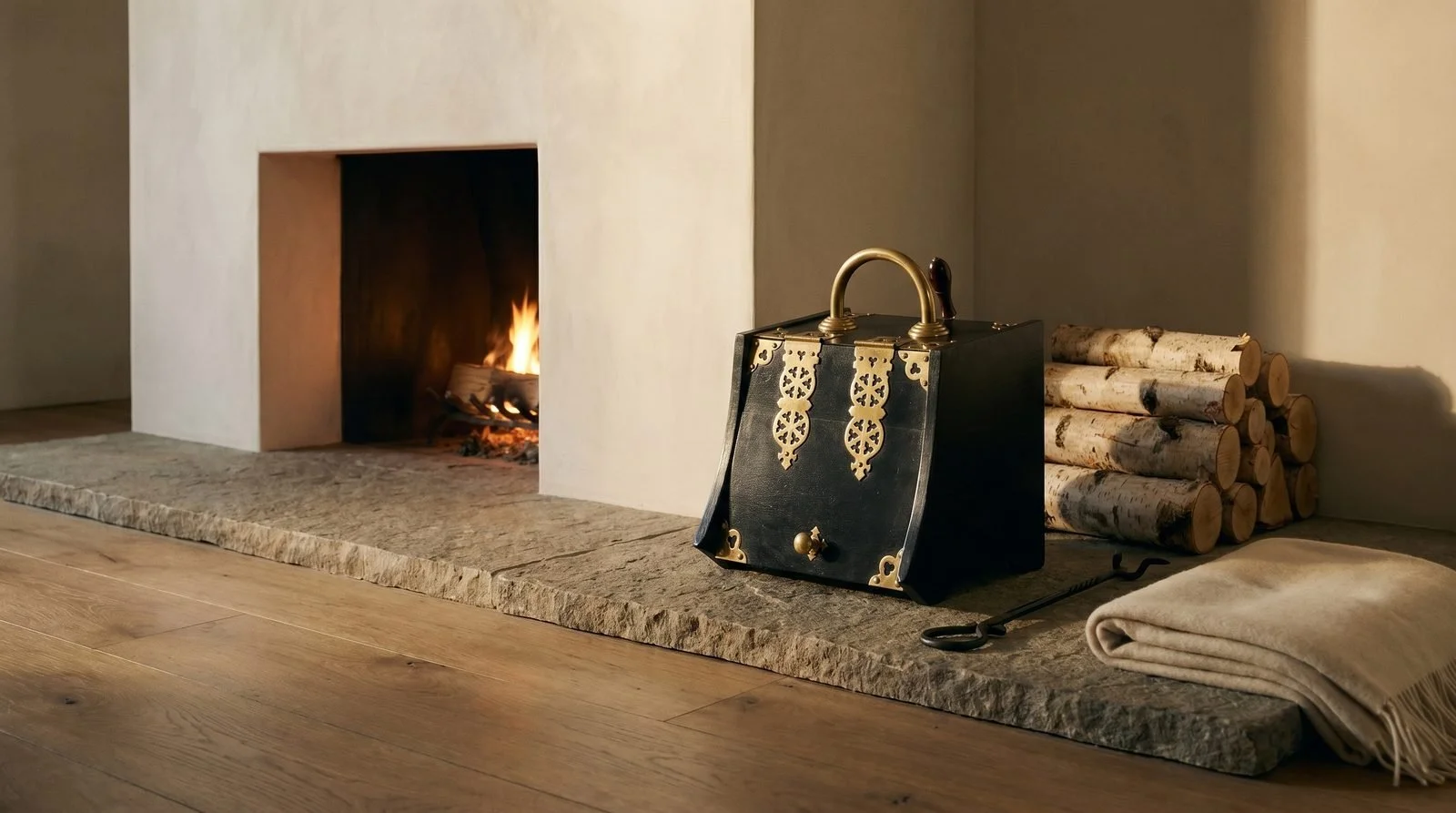 Image 7 of 9
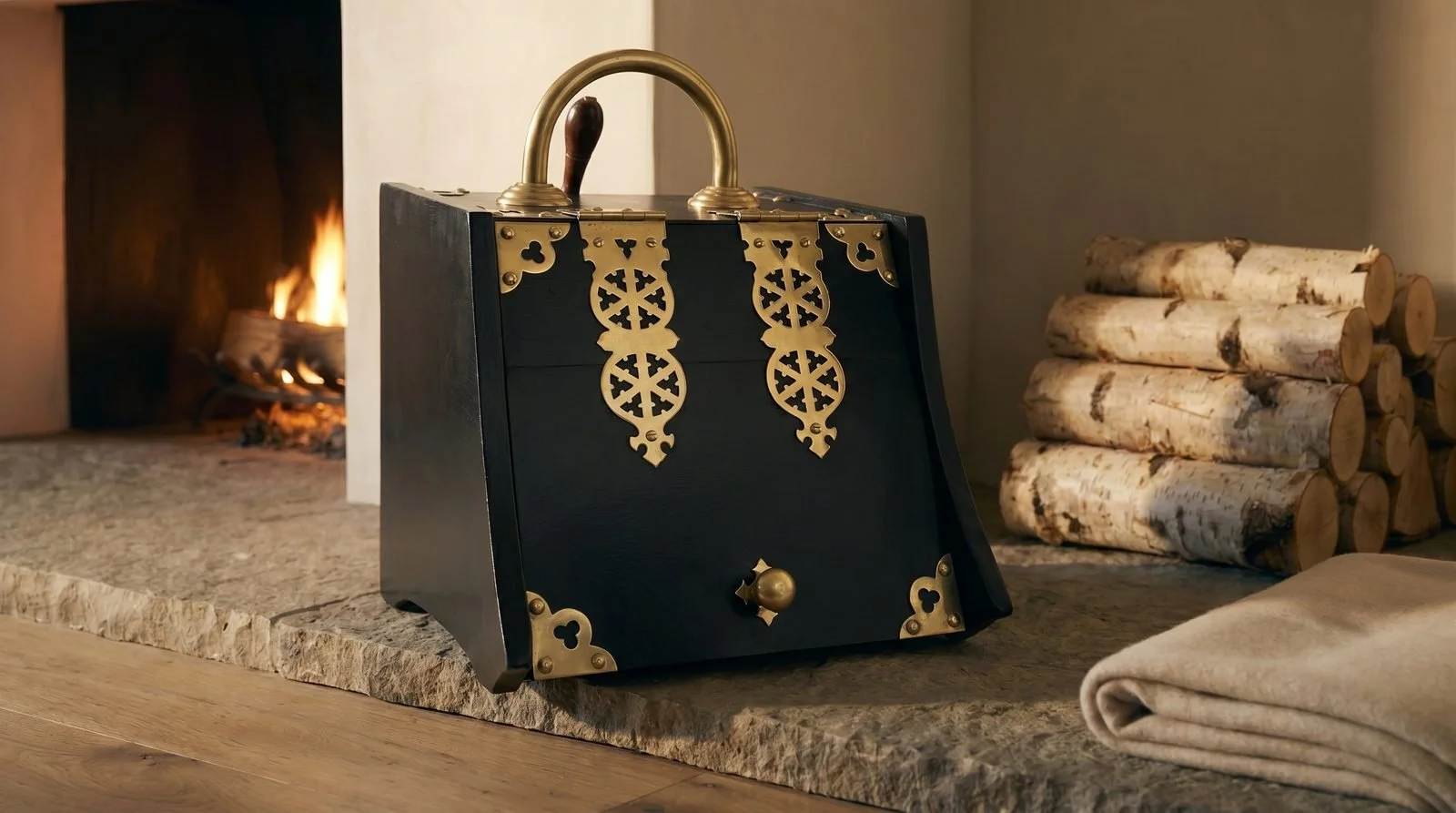 Image 8 of 9
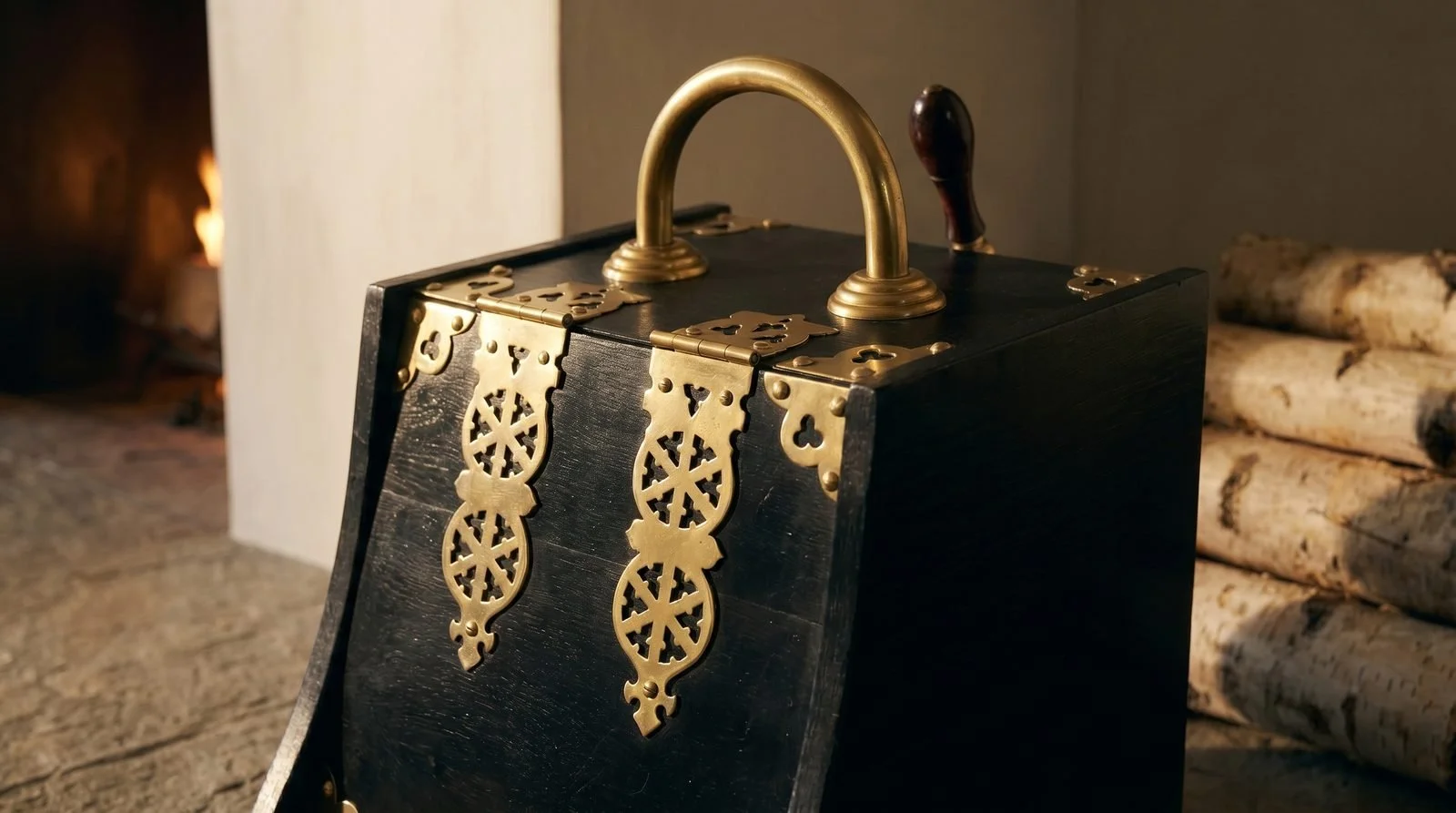 Image 9 of 9
Living With This Object
The following images are AI-generated visualizations intended to illustrate scale, proportion, and possible interior settings. They are conceptual, not photographs of the object in an existing room, and they preserve the documented proportions, finish, hardware, repairs, mirror, and construction of the piece.
-
Type: Coal box (purdonium form)
Style: Aesthetic Movement (Gothic Revival brass mounts)
Date: Circa 1880–1900
Origin: Not established (unmarked; British form tradition)
Material: Oak; brass mounts; sheet-metal liner
Finish: Applied in restoration (ebonized, stained black)
Construction: Solid-board carcass, shaped side panels, brass-mounted; hinged lid; fitted removable liner
Maker / Attribution: Unattributed (no maker's mark located)
Condition: Stripped and ebonized; sound; brass cleaned and refitted; retains liner, shovel, and poker
Dimensions: 13 W × 22½ D × 15 H in.
-
Original. The oak carcass, the pierced brass mounts, the brass bail handle, the brass-and-wood shovel, the iron poker, and the sheet-metal liner are retained rather than replaced.
Repaired. The brass mounts and the decorative nailhead trim were removed for refinishing and refitted; the nailheads were reset.
Finish Work. The original surface was stripped and the wood stained black (ebonized); the present surface is applied, not the original revived. The brass was cleaned and polished. The liner was cleaned and finished black.
-
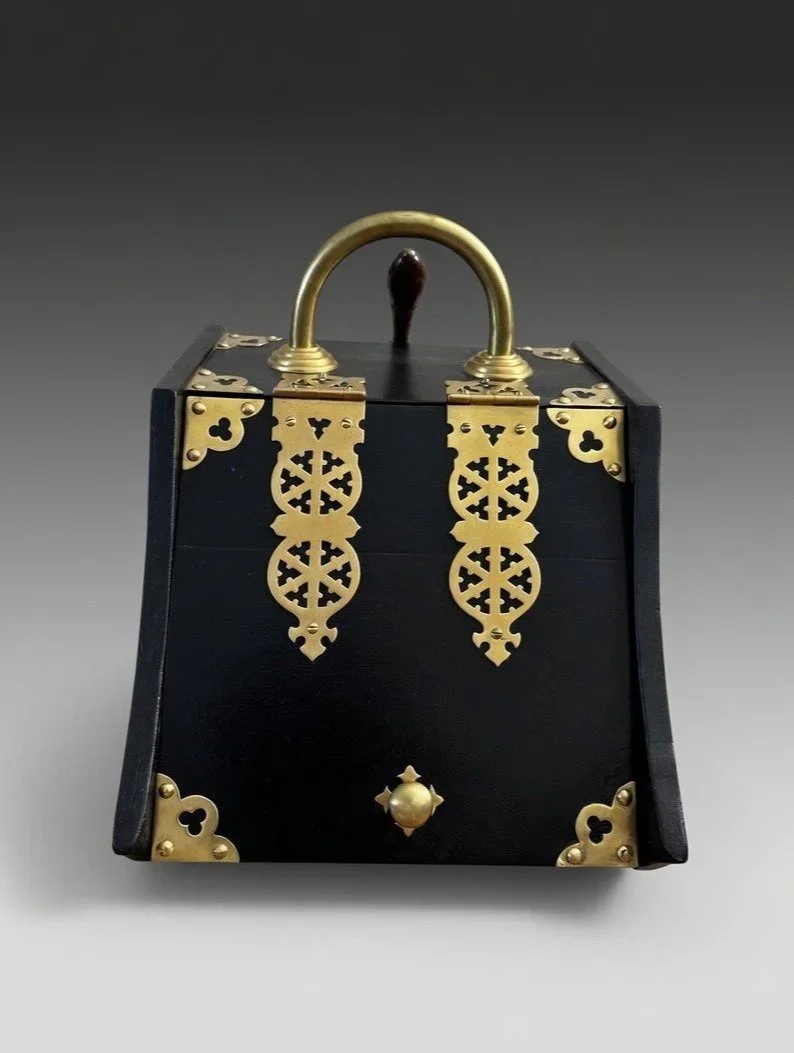
The front is dressed with a suite of pierced brass: two long strap mounts running down the sloped face, four corner mounts pierced with trefoils, a central quatrefoil boss, and a round brass knob below it. The strap mounts are decorative rather than working hinges. A brass bail handle is mounted to the top, with a turned wood knob alongside that lifts the lid. The piercing, trefoils and quatrefoils in the Gothic Revival manner, is the object's defining decoration.
-
Unattributed: no maker's mark was located on the carcass, mounts, liner, or underside.
This coal-box form was made in more than one country, and the piece carries no mark, so its place of manufacture is not established; a British association belongs to the form as a tradition, not to this example as a documented fact. Documented twentieth-century ownership in California, set out in the Object Biography, records where the piece has been, not where it was made. The circa 1880–1900 date rests on the style of the pierced brass and the form, an informed inference rather than a documented date; an in-hand examination of the construction could move it.
-
The carcass reads as oak: the coarse, open grain and ray figure on the side panels and runners, read before the wood was stained black, support the identification; an in-hand check of an unfinished edge would firm it. The carcass is of the boxed, lidded coal-store type known as a purdonium, built of solid boards, the side panels shaped so they rise into hand grips at the top and extend into runners at the base. The lid is hinged at its rear edge over a fitted, removable sheet-metal liner shaped to lift clear of the box; the liner measures 17½ L × 11½ W × 9 H in. The interior holds roughly 17 in. of depth with the liner in place and 18⅞ in. without it. The pierced brass detailed under the Signature Feature is fixed to the front and corners. The accompanying shovel has a brass scoop and a turned wood handle and stores on the rear slope in a brass strap bracket; the poker is plain iron with a knopped end. Function of the lid and fittings was not bench-tested; the fittings are present and described as seen.
-
The wooden coal box kept a day's fuel beside the grate in a nineteenth-century British household, presentable enough to stand in a sitting room rather than the cellar, and carried its own shovel so the fire could be fed without leaving the room. The documented life of this example is later and American: it has remained with a single family for nearly a hundred years, first in northern California and, from about 1950 until 2025, in a Rancho Palos Verdes home. It shows the wear of long domestic use, addressed in a recent chapter of ebonizing detailed under Condition & Restoration. Its maker, its exact year, where it was made, and how it first reached the family are not established. The record ends where the evidence ends.
-
Beside a hearth it returns to its original use as a fuel store. Away from a fire, the lidded, lined interior serves as a self-contained store for a sitting room or entry, holding kindling, periodicals, or throws under a closed top.
-
Is this an antique or a vintage piece? It is an antique Aesthetic Movement coal box. The pierced Gothic Revival brass and the purdonium form place it circa 1880 to 1900, which clears the hundred-year line for antique status. There is no maker's mark or dated label, so the date is an informed estimate from style and form rather than a documented year.
Has it been restored? Yes. The original surface was stripped and the wood stained black, so the present surface is applied rather than the original revived. The brass mounts and nailhead trim were removed, cleaned, and refitted, with the nailheads reset, and the metal liner was cleaned and finished black. The carcass, brass, shovel, and poker are retained.
What wood is it? The carcass reads as oak, from the coarse open grain and ray figure on the side panels and runners, read before the wood was stained black. The ebonizing now subdues that grain, so it is no longer easy to read on the object; an in-hand look at an unfinished edge would confirm the species.
What comes with it? Three pieces convey with the box: the fitted metal liner, the brass-and-wood shovel, and the iron poker. The liner lifts out so the box can be emptied and wiped clean, and the shovel and poker are the working tools kept with it. No maker's mark or label was found on the piece.