Frances Josephine Hadley and the Shape of a Life
Frances Josephine Hadley was a Pasadena schoolteacher who trained at the Los Angeles State Normal School, the institution that would later become UCLA, and who gave nearly four decades to The Shakespeare Club of Pasadena, twice serving as its president. We know her in part through one modest, printed object: the commencement program from her 1916 graduation, held briefly by the class and then set aside, which still lists her name among the graduates who would go on to teach a growing California.
Nothing about the paper announces its importance. A program is printed to mark a single afternoon and is rarely kept. This one, its title set in blackletter, records the exercises of graduation of the summer class of 1916, held on June 22 in the auditorium of the Bible Institute of Los Angeles. It carries an entire graduating class, the teachers the school sent out in the years before it became UCLA. That commencement, and the man who led the school, are the subject of a companion journal. Josephine is one of the names on the program, followed forward. The surviving program opens a clear view onto a life shaped by education, civic ritual, and steady, unglamorous work.
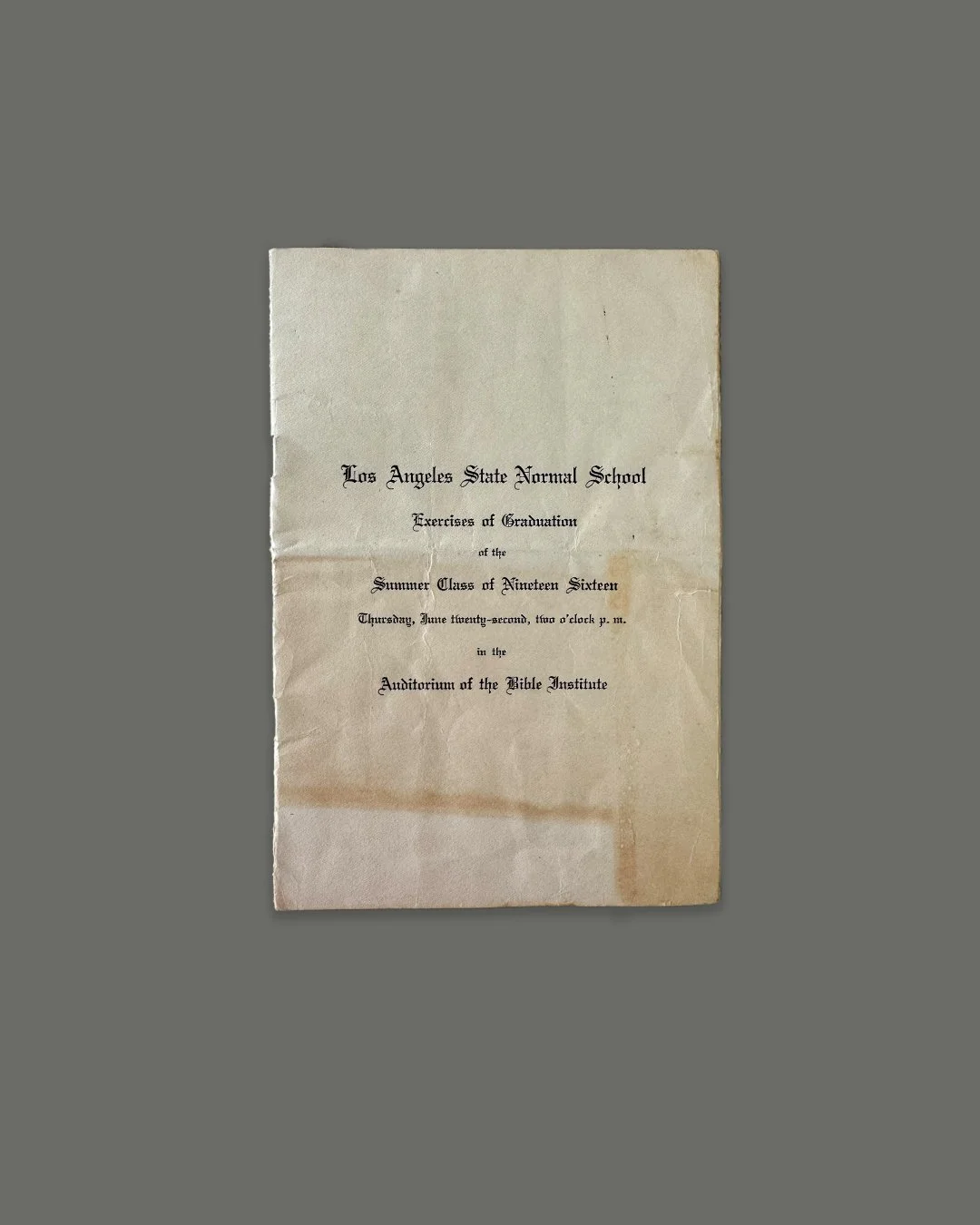
The 1916 commencement program of the Los Angeles State Normal School. Its summer class graduated on Thursday, June 22, 1916, in the auditorium of the Bible Institute of Los Angeles; Frances Josephine Abberley is listed among them.
Who was Frances Josephine Hadley?
In the 1916 program her name appears as Frances Josephine Abberley. She was born in Lincoln, Nebraska, around 1895, into a family whose movements can be traced through small notices in Midwestern newspapers: church events, social calls, professional relocations, across Ohio and Indiana before the household turned west. The records are modest in tone. Together they sketch a family that followed vocation from place to place rather than settling in one.
By her teenage years Frances was living in Los Angeles and attending Manual Arts High School, one of the city's early answers to its own rapid growth. She finished her teacher training at the Los Angeles State Normal School and graduated in 1916, at a moment when the city was still deciding how large and how ambitious its public schools would be.
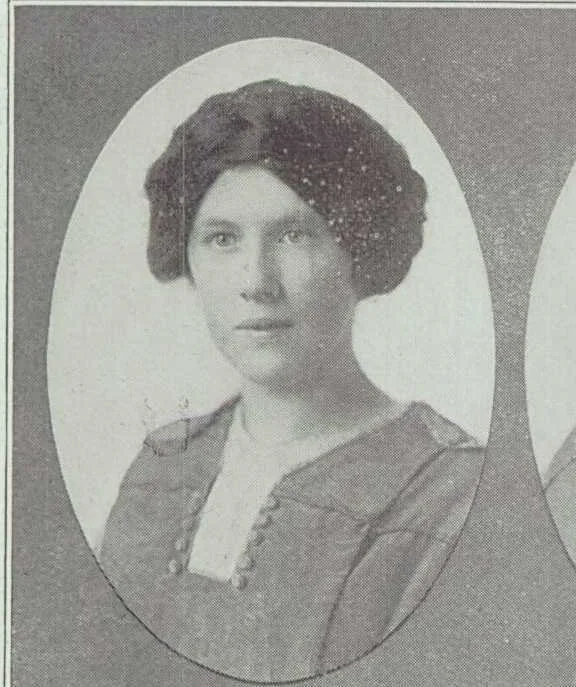
Frances Josephine Abberley in a portrait from her student years in Los Angeles, near the time of her 1916 graduation from the Los Angeles State Normal School.
Her first post was in Santa Monica, at the Washington School, by 1918. She then came to Pasadena, where she taught for decades at McKinley School. McKinley had burned in February 1922, its campus destroyed and its classes carried on for a year and a half in homes and churches before the school was rebuilt. To spend a career there was to teach inside a building the city had lost once and made again.
Through the 1920s and early 1930s the newspapers keep placing her in Pasadena's schools. Across those years her name settles into Josephine, the form she used in her professional and civic life. The change is small and worth noticing. It reads less like reinvention than like belonging.
In 1935 she married Earle Hadley, a fellow teacher in the Los Angeles schools, and took the name under which the rest of her public life is recorded. She joined him on East Mountain Street, in a house he had built with his first wife, who had died two years earlier. She made her home there for the remainder of her teaching career.
The Shakespeare Club Years
In 1948 Josephine joined The Shakespeare Club of Pasadena, one of the city's oldest cultural institutions. Her involvement went far beyond membership. Over close to four decades she worked across committees devoted to education, art, public affairs, hospitality, and governance, and she held the presidency for two consecutive terms in the mid-1950s.
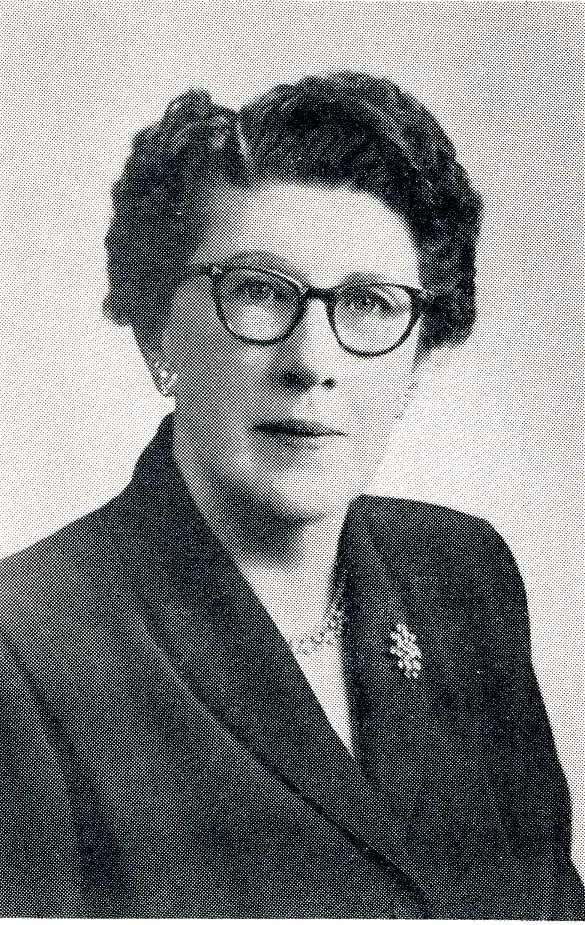
Josephine Hadley in a later portrait, from her years with The Shakespeare Club of Pasadena, where she served two consecutive terms as president in the mid-1950s.
That structure of service remains visible today. The Club continues to support education, public literary life, and charitable work within Pasadena, extending the same civic ethic that shaped Josephine's decades of service.
Women's clubs of the mid-twentieth century were not decorative organizations. They were working civic frameworks that funded scholarships, sustained cultural life, and carried a community's memory through the labor of their members. Josephine's place in that structure rests on continuity. Her influence is easiest to see in the return, year after year, to the same rooms and the same obligations.
The Same Page
The 1916 program holds one more thing. My own great-grandmother appears on the same page of graduates. The two women would have walked the same corridors, heard the same addresses, and held identical copies of the leaf now kept in our care. Whether they knew one another remains unrecorded. What survives is proximity: two names set close together on a printed list, joined by an institution and an afternoon long before anyone thought to tell a story about it.
A printed program holds evidence much the way furniture does. It was made to be used and then let go, and the use is what fixed it: a name set in type, bound to a date and a place, pressed into the record of a class. A chair keeps a different testimony, the tone that deepens along an armrest where a hand returned again and again, yet the principle is shared. The object carries what happened to it. Read with attention, a line of names and a worn edge are both evidence of a life that passed through.
At Acanthus Home we keep objects like this program for what they carry. History often survives in unassuming forms, and memory lives not only in furniture but in the plainer records left by education, service, and long civic presence.
The ceremony is long over. No monument was ever raised. The program remains, and it still carries her name.
With thanks to The Shakespeare Club of Pasadena for sharing archival and contemporary material that helped inform this journal, and for the work they continue to do in service of their community.
Object in This Journal
A 1916 Commencement Program, Los Angeles State Normal School
A single printed leaf listing the 1916 graduating class, still carrying the name Frances Josephine Abberley. This object remains in the Acanthus archive.
Reading Furniture Like a Text, a companion essay on how an object holds the record of its use.
See the collection's antique writing desks and secretaries.
Related Reading
The Last Commencement: Dr. Jesse F. Millspaugh. The 1916 class and what became of the Los Angeles State Normal School.
The Bench Was Empty: A Love Letter from 1919. Another paper heirloom that keeps a life.
Thoughtfully Collected. Quietly Shared.
