 Image 1 of 6
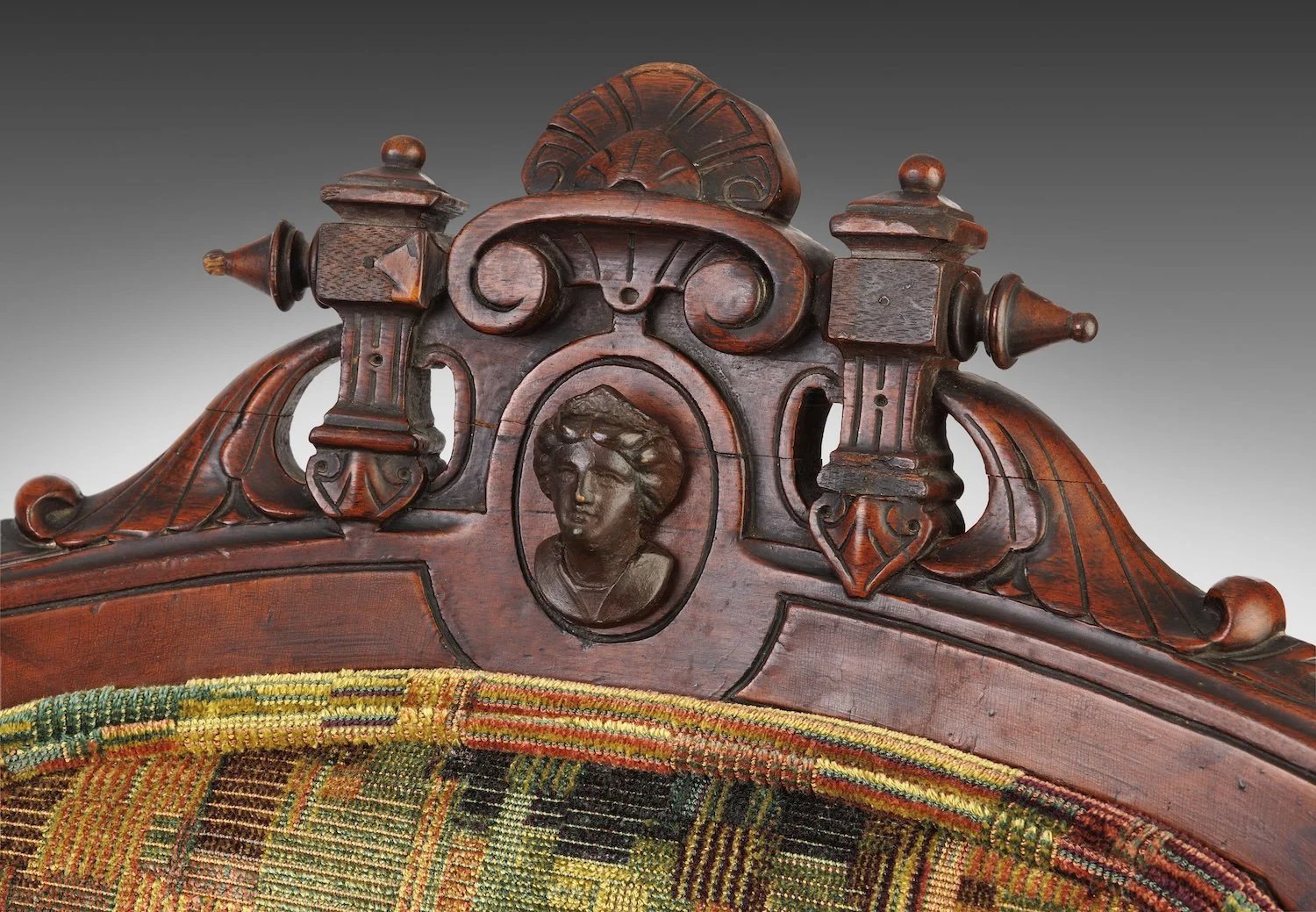 Image 2 of 6
 Image 3 of 6
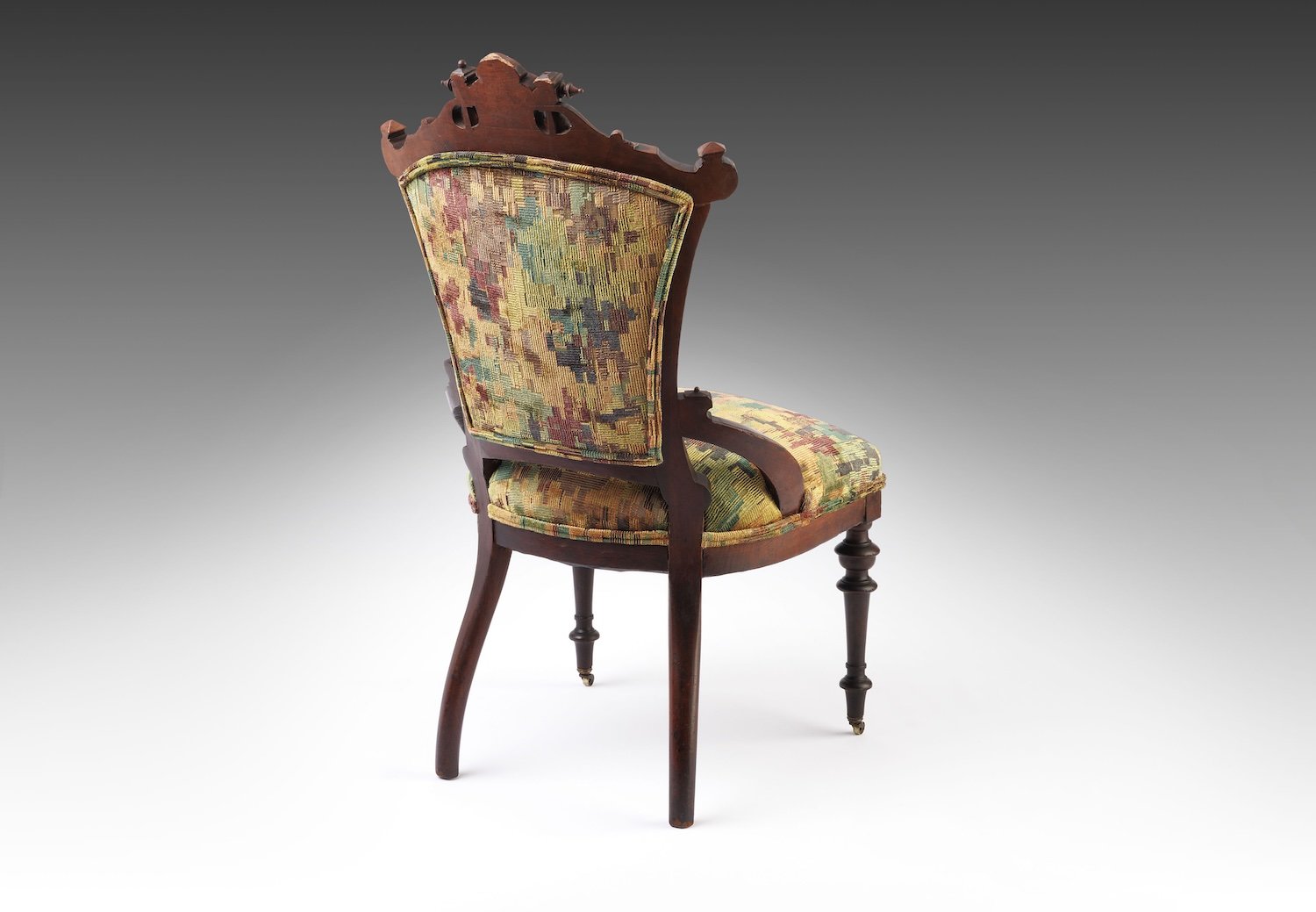 Image 4 of 6
 Image 5 of 6
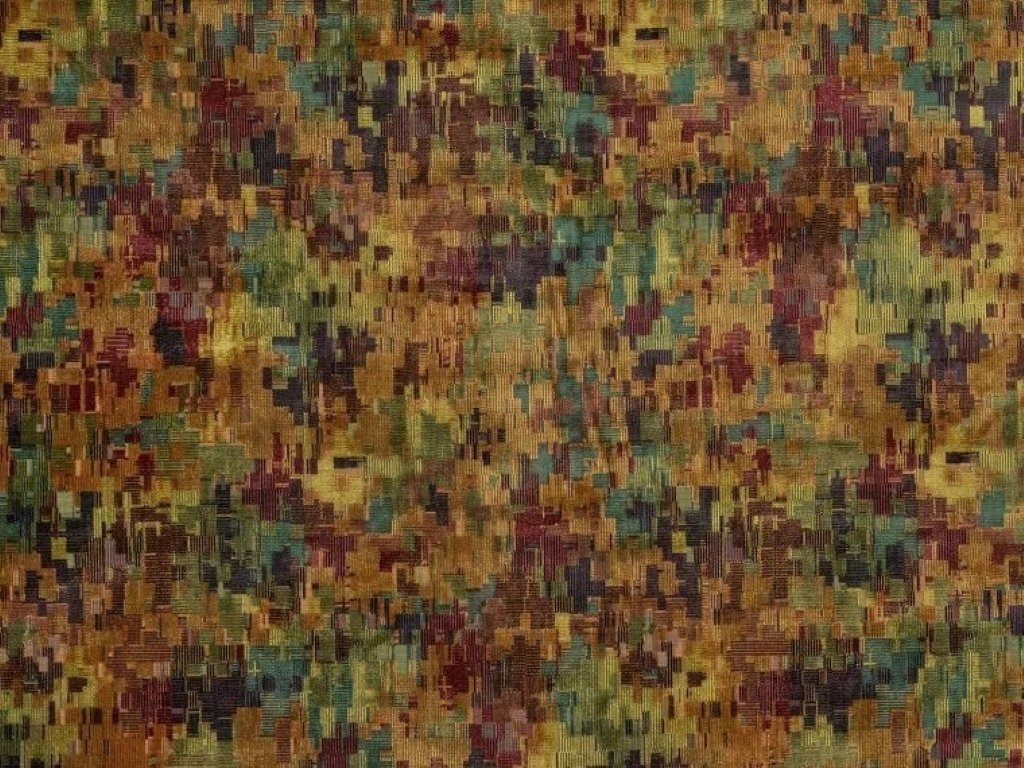 Image 6 of 6
Living With This Object
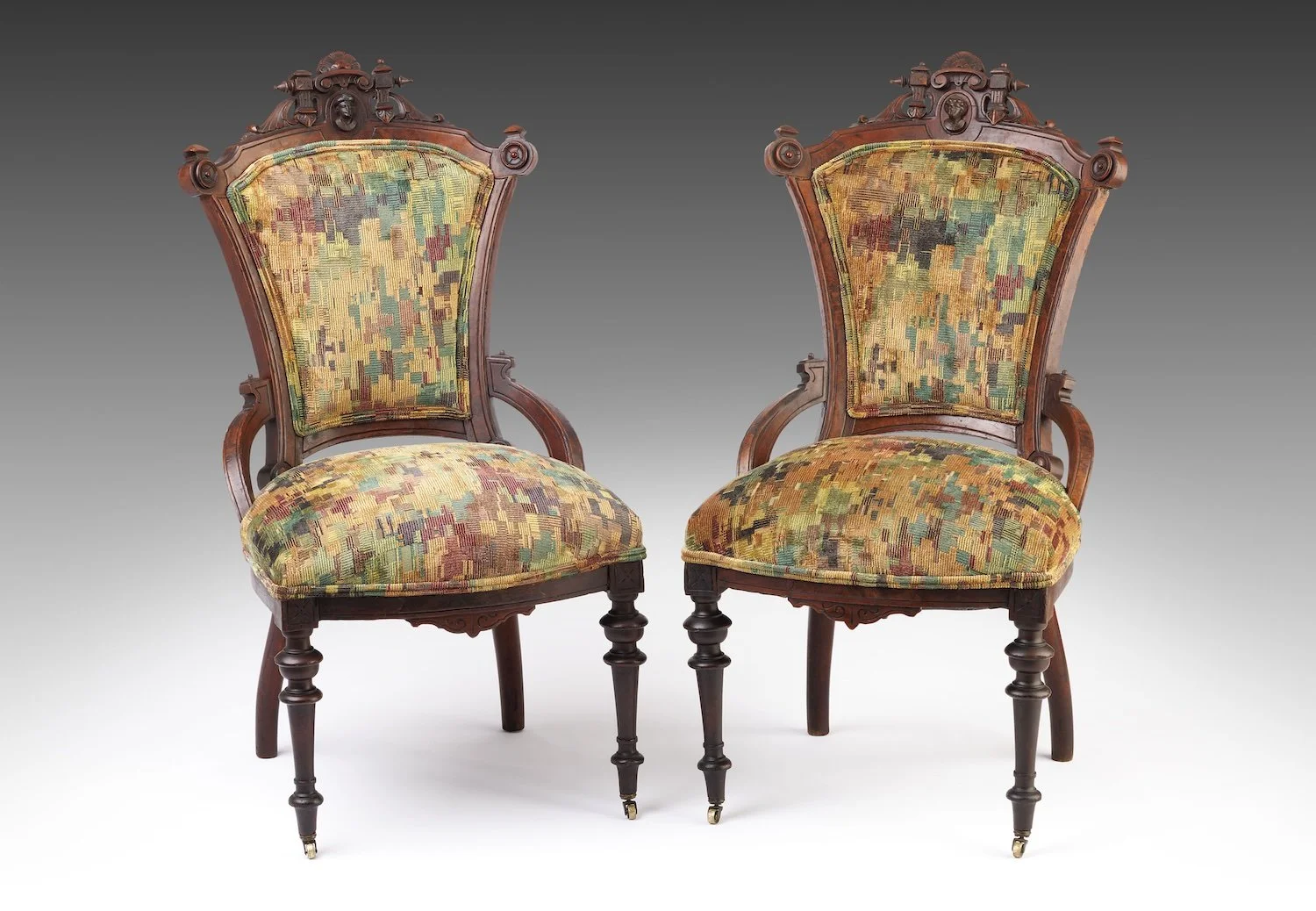
Set as a matched pair, the two chairs establish a formal symmetry: like crests, like frames, and the same multicolored weave reading across both, whether they flank a window or draw together for conversation. The warm walnut and the ebonized turned legs frame the abstract covering, with the portrait medallions set prominently within the carved crests.
The room views below are AI visualizations, offered to suggest scale and placement. They are rendered images, not photographs of the chairs in this room.
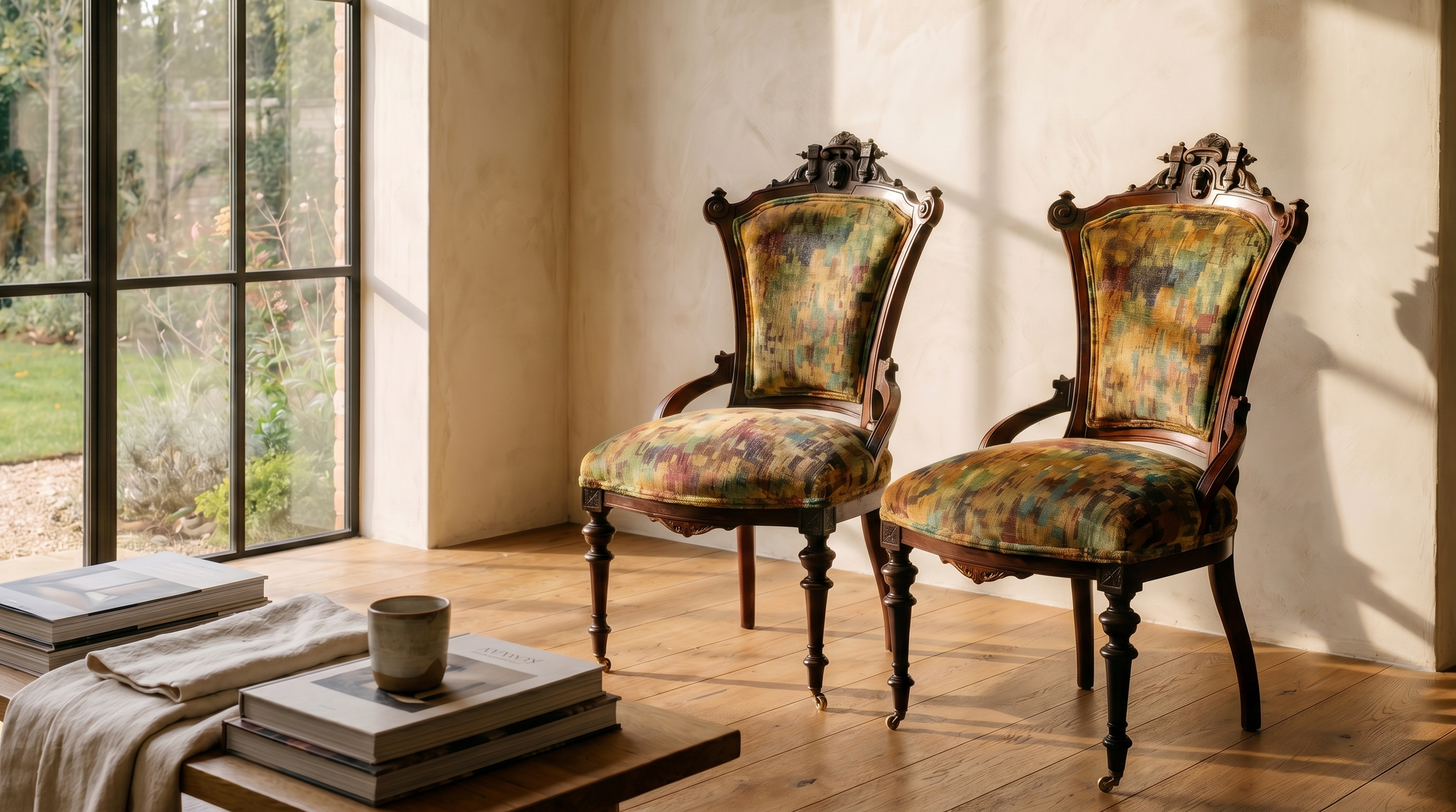
-
Whether set in a salon, a sitting room, or a library, the pair works as matched seating, two like chairs holding a fixed point in the room as they flank a console, a fireplace, or a window, or draw together for conversation. The casters let them be repositioned without lifting.
-
Type: Parlor chairs, sold as a pair; low open scrolled arms
Style: Renaissance Revival (Victorian era)
Date: Circa 1865–1875
Origin: United States (inferred)
Material: Walnut
Finish: Original, retained
Construction: Solid frames, mortise-and-tenon; turned front legs on brass casters
Maker & Origin: Unattributed; no mark located
Provenance: Most recent documented acquisition through a Connecticut auction
Condition: Original frames and finish retained, minor carving losses; reupholstered
Dimensions: 21 W × 20½ D × 41½ H in.; seat height 18½ in. (each)
Upholstery: Pierre Frey 'Gregorio Sotto Bosco', reupholstered (see Upholstery)
-
Original: Both frames are retained, with their carved cresting, finials, medallions, and original brass casters. Wear, tonal variation, and minor marks are consistent with age. The cresting carries minor age-related losses: at least one slender turned finial has a chipped or lost tip that exposes lighter raw wood, and the raised carving is rubbed at the high points. The portrait medallions are intact.
Replaced: The show covering, replaced in full with the woven textile detailed under Upholstery. The carved frames remained otherwise unaltered during reupholstery.
Reconstructed: No elements were reconstructed.
Repaired: No repairs are recorded.
Finish Work: None. The original finish is retained and was not refinished. The turned front legs carry their original darker, ebonized surface, set against the lighter frame.
-
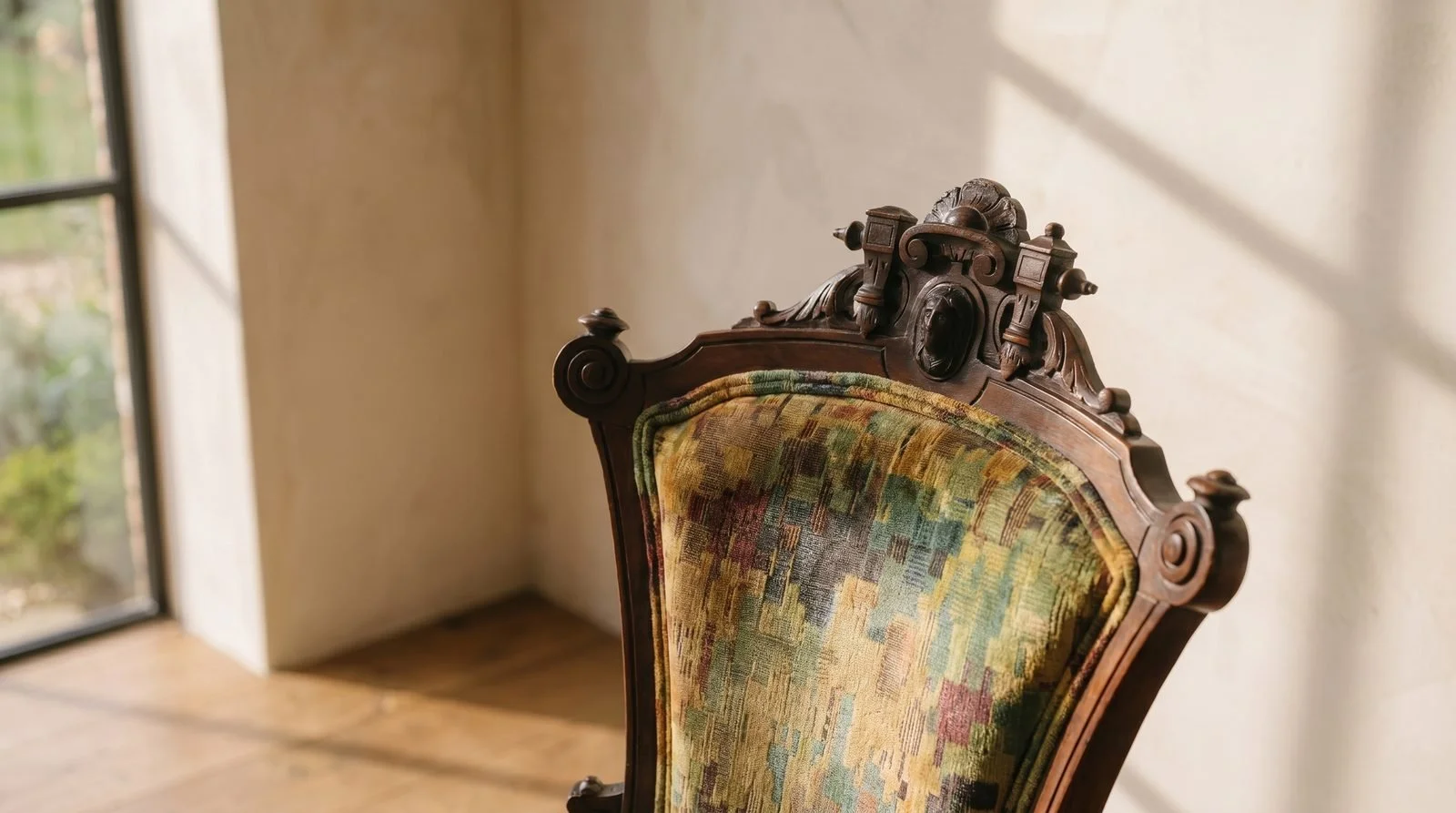
Each crest is centered on an oval portrait medallion in a contrasting dark, patinated finish: one a male bust in a plumed cap, the other a female bust with a wreath and bound hair. It is this pairing of a gentleman's chair and a lady's that gives the set its name. The medallions sit within carved cresting of paired finials, scrollwork, and a central palmette, and the two chairs vary in their carving rather than mirror one another. The medallion material is not confirmed, and the record does not guess.
-
No maker's mark or label was located, so the pair is left unattributed. The form belongs to the American Renaissance Revival tradition of medallion-back parlor seating made in matched pairs, and because the style was produced in more than one country, United States manufacture is an inference from the form and construction rather than a documented origin. The circa 1865–1875 date rests on the same evidence: the portrait medallions, the turned legs, and the incised corner blocks. No mark fixes either the maker or the year.
-
The frames read as walnut: the open, warm-toned grain is legible on the unfinished surfaces, and walnut is the characteristic primary wood of the form. The species is named on that basis, and is not laboratory-confirmed. Construction is mortise-and-tenon throughout, consistent with the period, and the crest is carved and pierced. The front legs are turned and ring-turned, ending in brass cup casters, while the rear legs are raked. Incised geometric blocks sit at the front seat-rail corners, and the shaped front rail carries a carved pendant. The arms stay low, open, and scrolled.
-
An abstract woven field in golds, greens, reds, and blues, painterly in effect and reading as a continuous tonal surface rather than a graphic motif, with a plush low-pile hand. Its warm range stays close to the tones of the frame, so the covering settles into the carving rather than competing with it.
Manufacturer: Pierre Frey
Collection / Pattern: Gregorio Sotto Bosco
Composition: 77 percent viscose, 15 percent polyester, 8 percent cotton (as stated by the maker)
Performance: Martindale exceeding 100,000 rubs; suitable for heavy domestic and high-use seating (as stated)
Textile origin: France
Reupholstered: Yes
-
In the nineteenth-century parlor, seating ordered how a household received its visitors, arranging conversation, etiquette, and rank within the room. A matched pair set that order into furniture, two like seats holding the formal symmetry of the most ceremonial room in the house, and the portrait medallion drew on the Renaissance and classical portraiture then in fashion. This pair carries the wear of long use on its retained surface and was reupholstered by the current owner, who preserved the original frames and finish. It was acquired through an auction in Connecticut, the earliest documented point in its recent provenance. The maker, the exact year, and the households the chairs passed through before that sale are not recorded. The record ends where the evidence ends.
-
Are these chairs antique or vintage? They are antique. An antique is one hundred years old or older, and these portrait medallion chairs date to circa 1865–1875 on the evidence of their style and construction: the carved crests, the ebonized turned legs, and the incised corner blocks. No mark is present, so the date is an informed inference rather than a documented year.
Is this a courtship chair? Not in the strict sense. A courtship chair usually describes a two-seat conversational form, two seats joined on one frame. These are two separate chairs, and the name here refers instead to their paired portraits: a gentleman at one crest, a lady at the other, a matched convention of Renaissance Revival parlor seating.
Have the chairs been restored or reupholstered? The frames are unrestored and keep their original finish, showing wear and some minor carving losses consistent with age, disclosed in full under Condition & Restoration. The chairs were reupholstered in a documented Pierre Frey weave, with the carved frames left intact through the work.
What wood are the frames? Walnut. The open, warm-toned grain is legible on the unfinished surfaces, and walnut is the characteristic primary wood of parlor seating in this form. The species is identified on that basis rather than by laboratory analysis, which is why the record names it plainly while stating the grounds.
Why this fabric? The covering is rated by its maker for heavy domestic use, with a Martindale figure above 100,000 rubs, so the pair can stay in daily service. A contemporary abstract weave was also a deliberate choice against the nineteenth-century carving, rather than an imitation of a period textile.