 Image 1 of 6
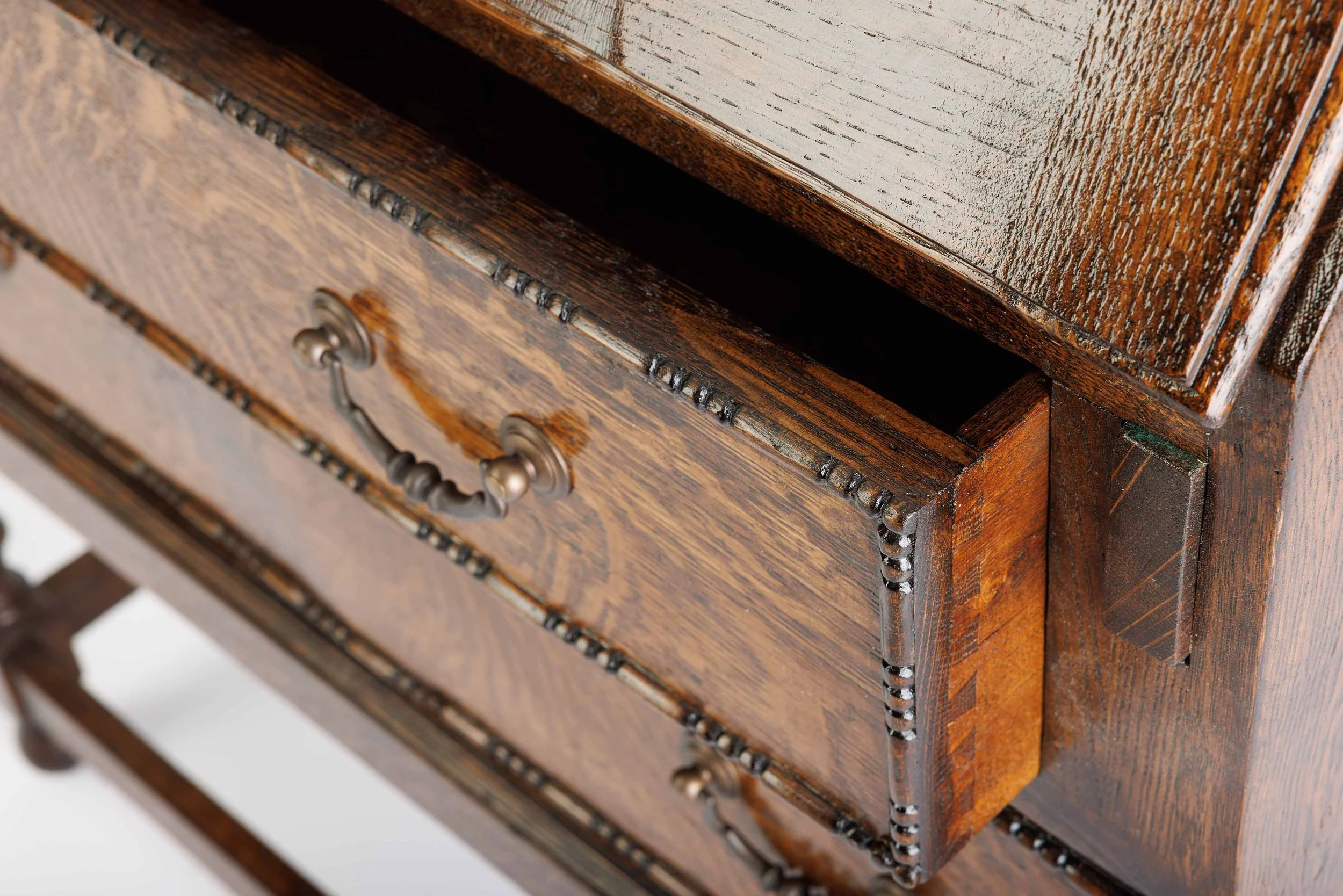 Image 2 of 6
 Image 3 of 6
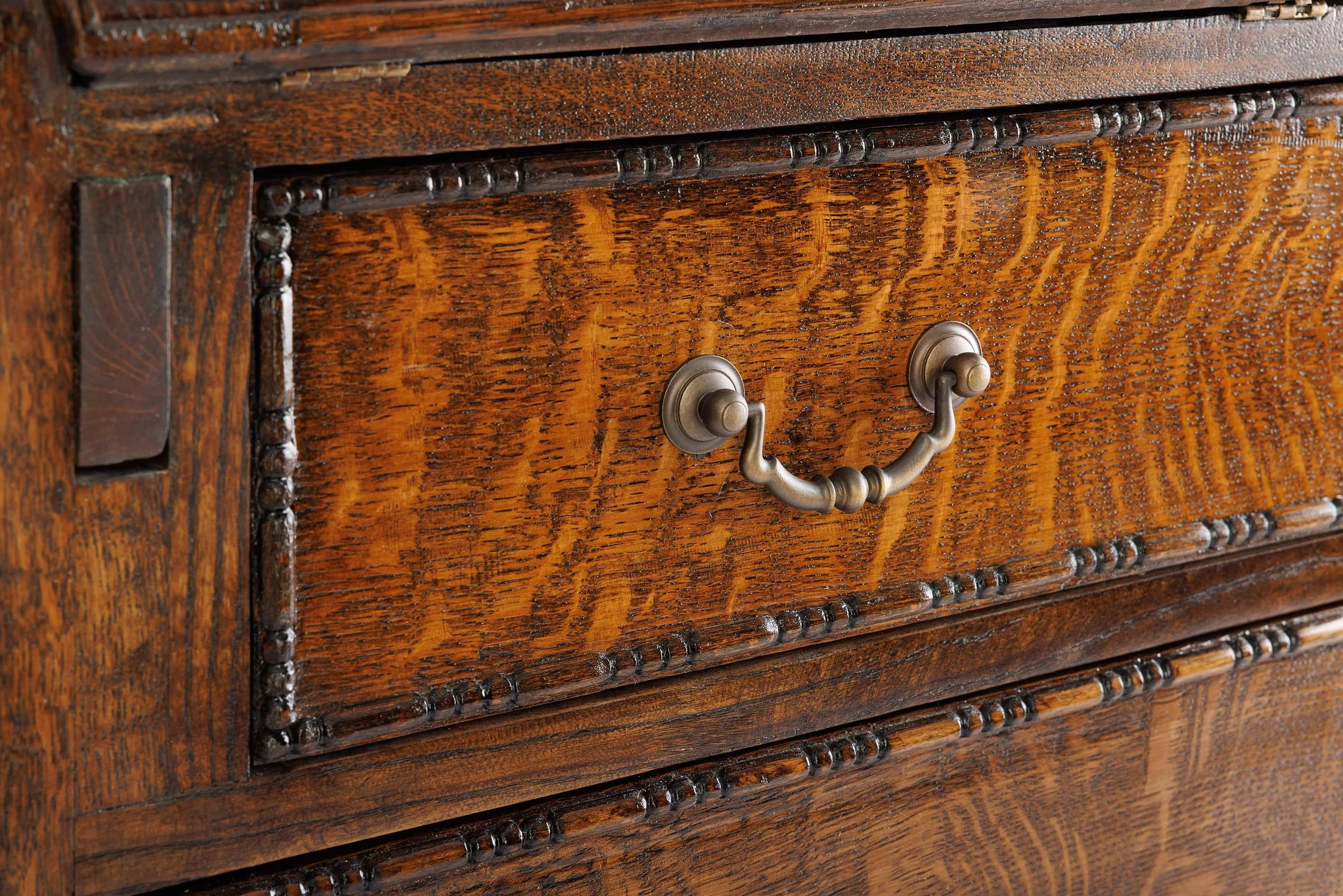 Image 4 of 6
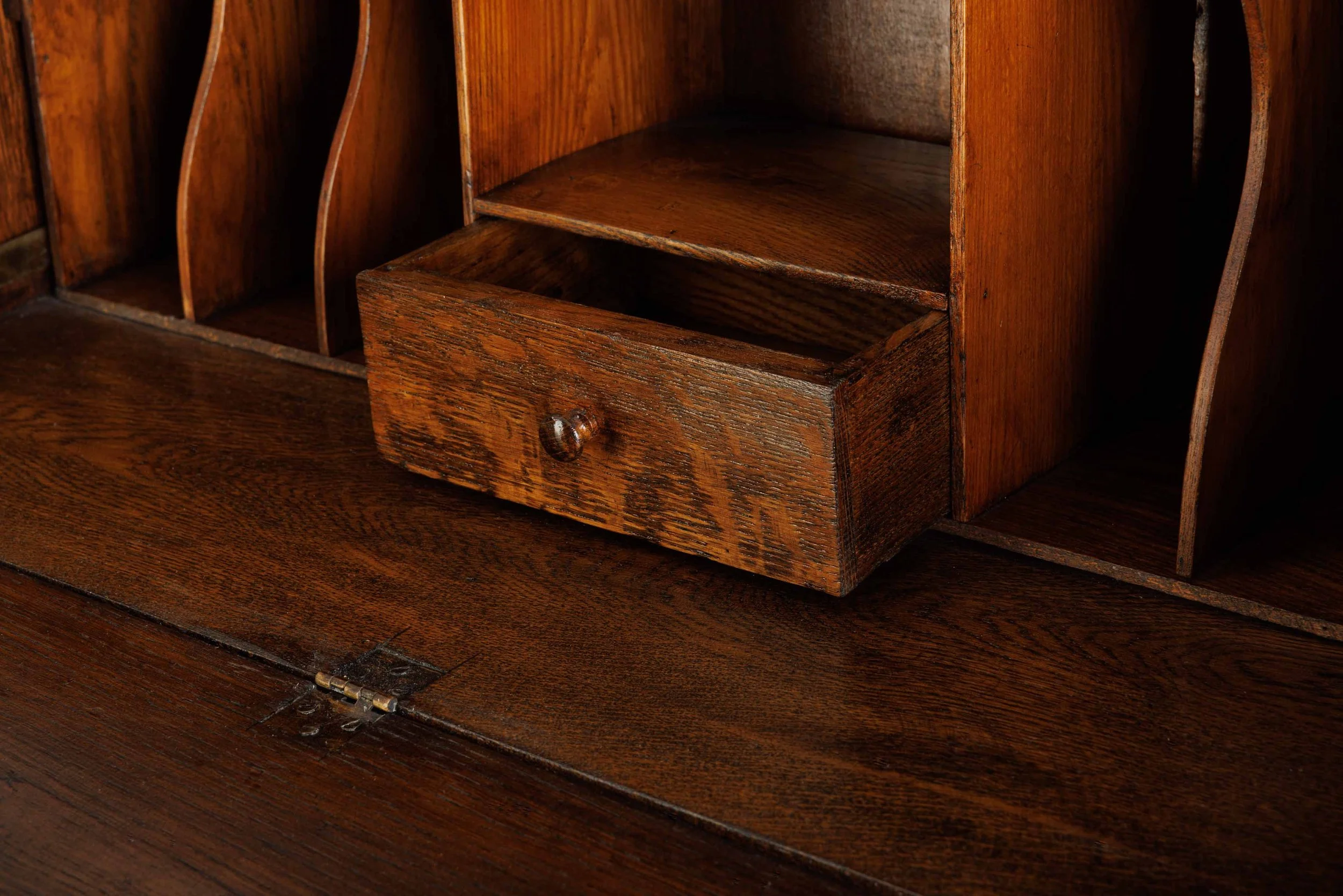 Image 5 of 6
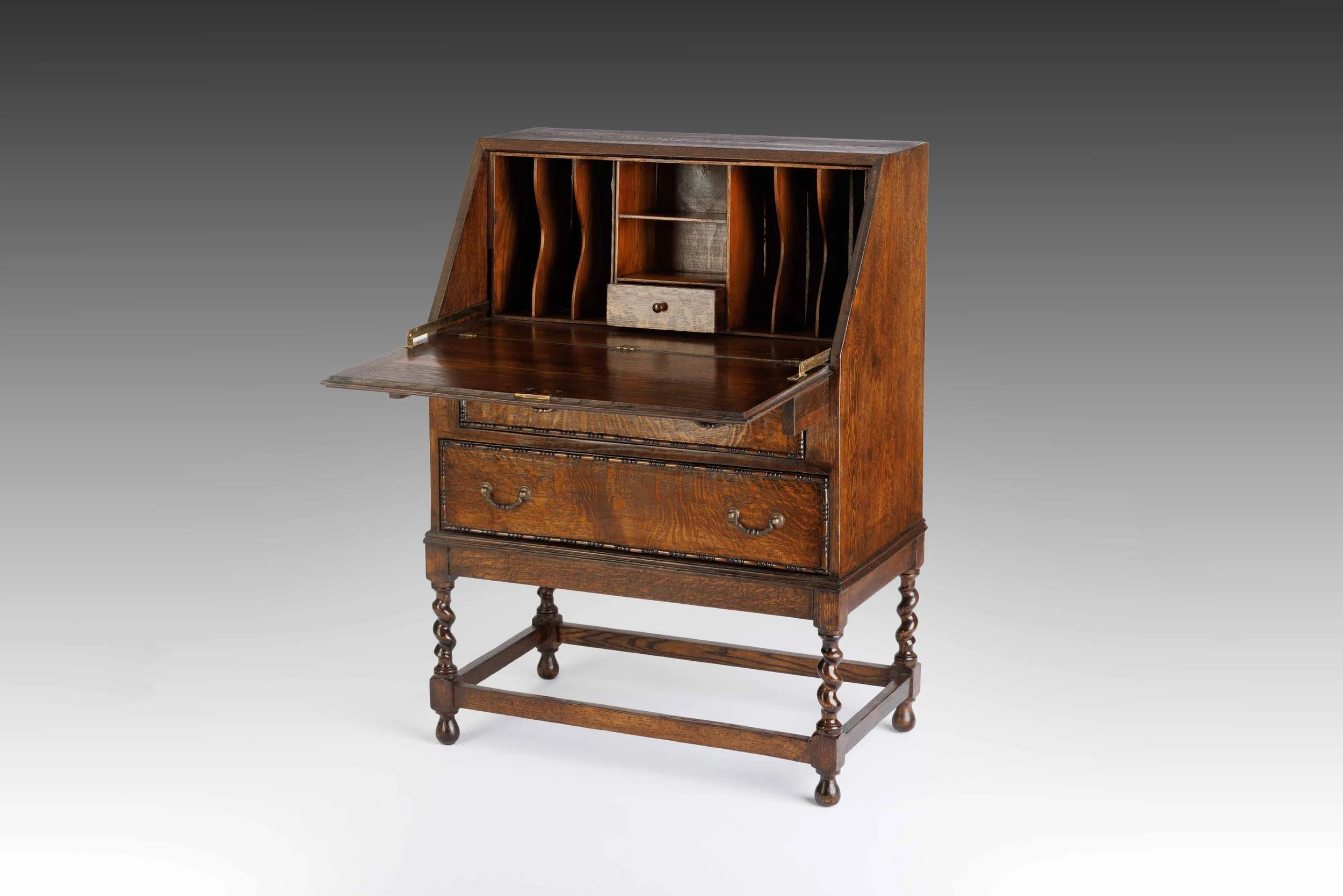 Image 6 of 6
Living With This Object
The following image is an AI-generated visualization intended to illustrate scale, proportion, and possible interior settings. It is conceptual, not a photograph of the object in an existing room, and it preserves the documented proportions, finish, hardware, repairs, mirror, and construction of the piece.
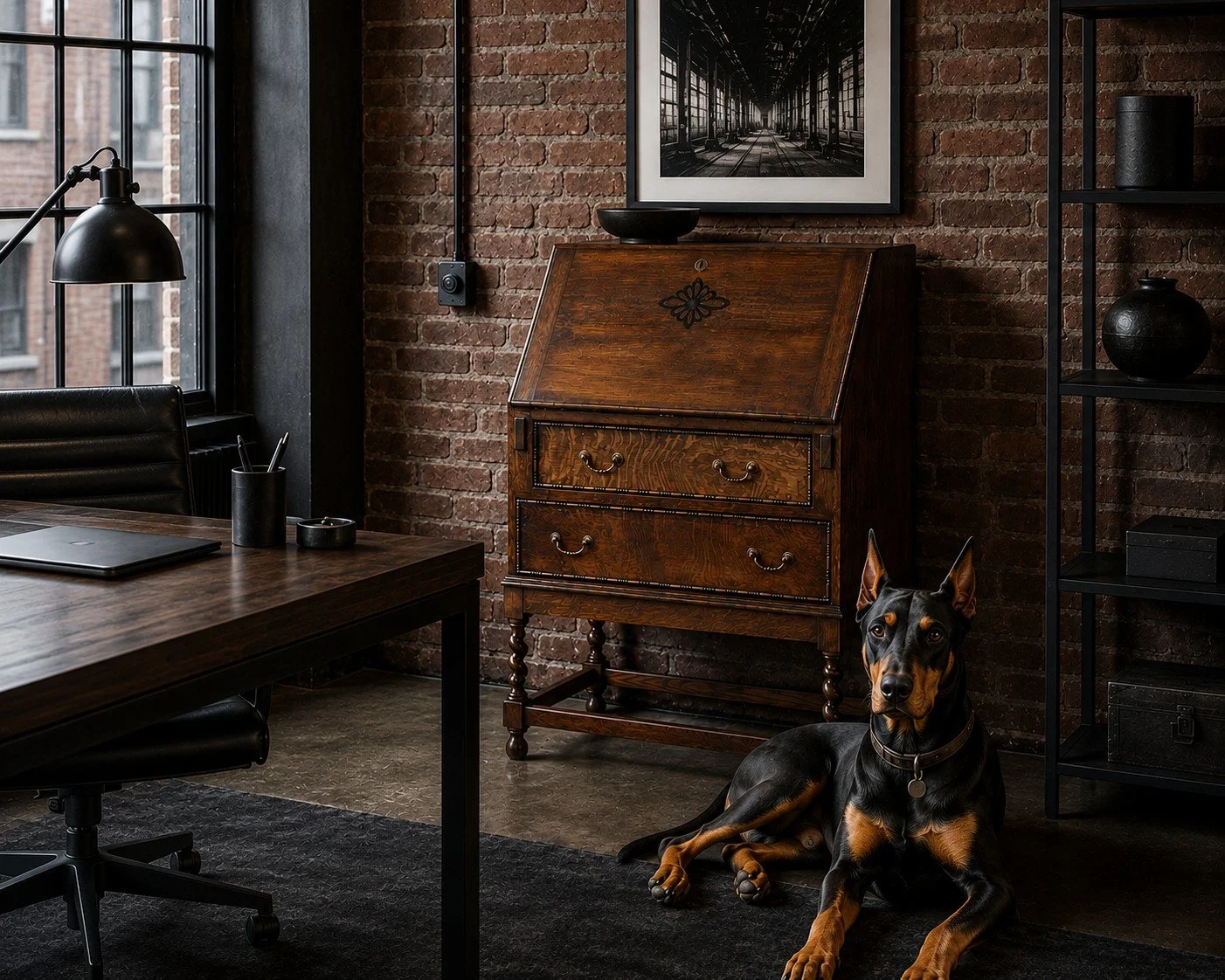
-
Suited to a study, library, bedroom, or a quiet passage where writing and sorting are still part of the daily rhythm. The footprint is compact, and the slope keeps the closed silhouette tidy against a wall; the lowered fall gives a firm, generous surface for correspondence, journals, and contemporary work.
-
Type: Fall-front secretary desk (writing bureau)
Style: Jacobean Revival
Date: Circa 1920–1935
Origin: United States (Grand Rapids, Michigan)
Material: Primary quarter-sawn oak ("tiger oak"), showing prominent medullary ray fleck; secondary woods in the interior dividers and drawer linings (oak and a lighter wood); brass bail pulls and a turned wood interior knob
Finish: Applied in restoration (walnut tone)
Construction: Dovetailed drawers; applied beaded molding to the drawer fronts; turned barley twist legs joined by a box stretcher on bun feet; fall front on slotted-screw brass hinges with pull-out lopers
Maker: Imperial Furniture Company (paper label present)
Condition: Restored and structurally sound; refinished, replaced lock and drawer pulls, reconstructed carved losses (full detail below)
Dimensions: 24 W × 21⅞ D × 38⅞ H in.
Upholstery: Not applicable
-
Original: Carcase, fall front and fitted interior, barley twist legs and stretcher, and the dovetailed drawer carcases; these show no evidence of replacement or recent alteration.
Replaced: Lock hardware, previously missing, now fitted; the original drop-ring drawer pulls, some of them broken, removed and replaced with brass bail handles.
Reconstructed: Areas of loss within the carved beaded framing rebuilt by hand to restore continuity.
Repaired: Drawer mechanisms adjusted to run smoothly; the original carved medallion, which had come loose and was found in a drawer, refixed to the fall front.
Finish Work: Stripped of its earlier finish and sanded, then refinished in a walnut-toned stain with clear protective coats. The present surface is applied in restoration, not an untouched original finish.
-
Inside a drawer the piece carries its maker's mark: a green, crowned triangular shield reading "Imperial, Grand Rapids, Mich.," set beside a black-and-gold "Made in Grand Rapids" mark. The shield matches the documented trademark of the Imperial Furniture Company, a Grand Rapids maker in business from 1903 to 1962. Lowered, the fall front reveals a fitted interior: serpentine vertical dividers forming pigeonholes to either side, a central pigeonhole above a small open shelf, and a single small drawer with a turned wood knob. The fall is carried on brass hinges and supported by pull-out lopers. On the closed front, below a reeded brass keyhole escutcheon, sits a carved, pierced floral motif darkened to read almost black against the oak, a quatrefoil of petals around a central boss.
-
Documented by the label above, the maker is the Imperial Furniture Company and the origin is Grand Rapids, Michigan. Imperial is best known for tables and occasional furniture in mahogany and cherry, so a quarter-sawn oak fall-front secretary sits outside the firm's best-known output. The label does not fix the year; the circa 1920–1935 range is read from the Jacobean Revival form and the machine-assisted construction, within the firm's long operating window.
-
The primary wood is quarter-sawn oak, cut to expose the medullary rays so the surface carries the rippling "tiger" fleck across the fall front and drawer faces. Drawer fronts are framed by applied beaded molding. The legs are turned in a barley twist and joined by a box stretcher. The fall-front hinges are set with slotted screws, while the replaced lock sits on modern bright screws, so the two are easy to tell apart. The drawers are dovetailed, the dovetails machine-cut.
-
Form and the Years Between
The fall-front writing bureau was the household's writing and record station, the place where letters, accounts, and private papers were kept and worked, and where closing the fall folded those daily routines back into a cabinet that sat as part of the room rather than apart from it. This example carries the evidence of later care rather than an unbroken provenance: a surface renewed in a walnut tone chosen to bring up the quarter-sawn figure, and the repairs documented above. The people who worked at it, the rooms it stood in, and the route it traveled go unrecorded; the record ends where the evidence ends.
-
Is this secretary desk antique or vintage? We classify it as a vintage Jacobean Revival secretary desk. The barley twist legs, machine-assisted construction, and the maker's label place it with the Imperial Furniture Company of Grand Rapids in the 1920s to early 1930s. As of 2026, antique means pre-1926; the date rests on form and construction rather than a dated mark, so absent firmer evidence we classify it vintage.
What is "tiger oak"? Tiger oak is quarter-sawn oak, cut to expose the medullary rays so the surface shows rippling flecks and stripes, the "tiger" figure seen across the fall front and drawers. It is the same species as plain oak; the difference is the cut, which yields the distinctive ray fleck and added dimensional stability.
Has it been restored? Yes, and the work is disclosed. The piece was stripped and refinished; the missing lock was fitted; the original drop-ring pulls, some broken, were replaced with brass bail handles; the loose original medallion was refixed; and losses in the carved beading were rebuilt. It is sound and usable.
Where was it made? In Grand Rapids, Michigan. The piece carries the paper label of the Imperial Furniture Company inside a drawer, so the origin is documented rather than inferred. The Jacobean Revival form is English in inspiration, but this example is American-made.