 Image 1 of 4
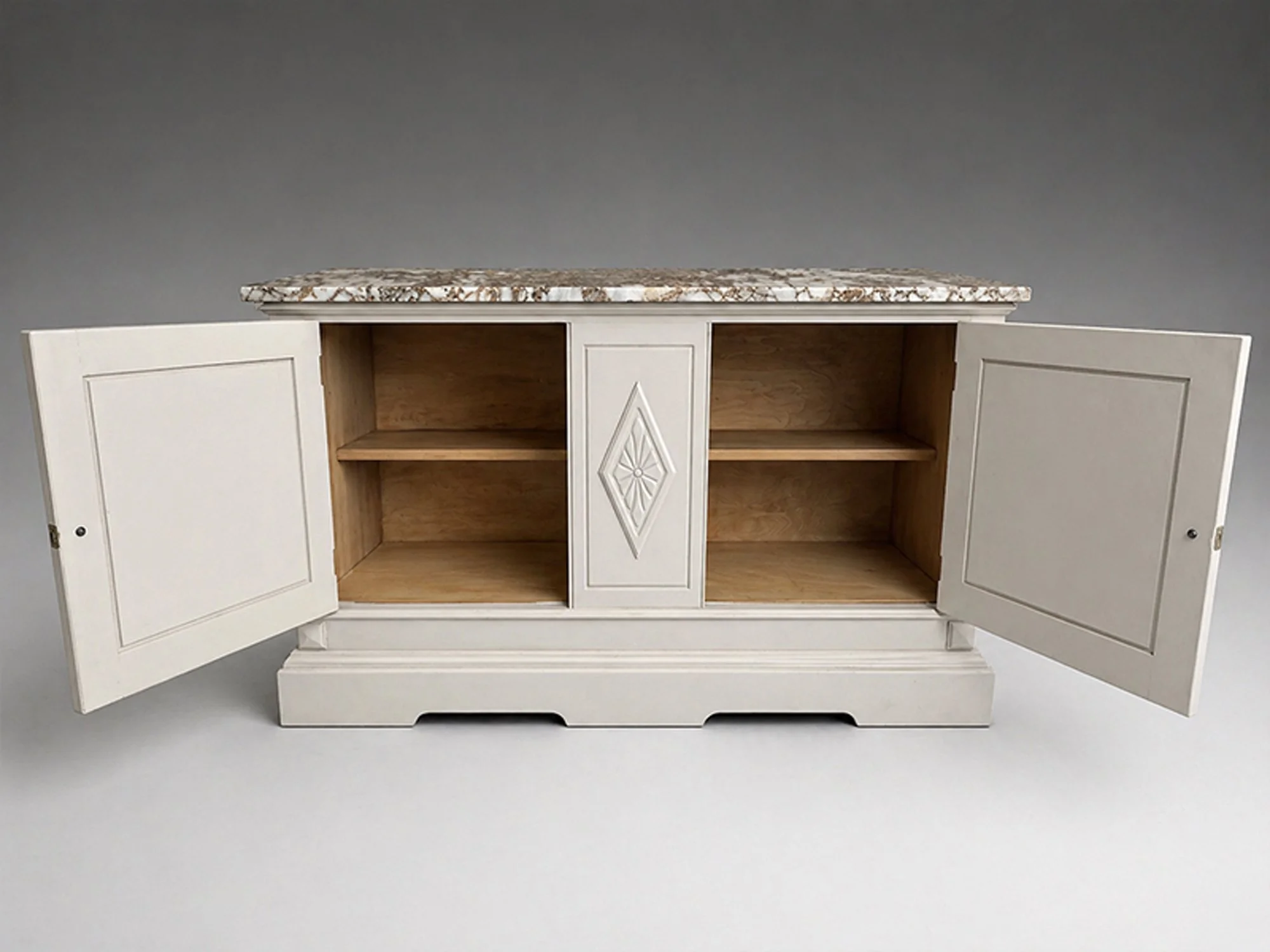 Image 2 of 4
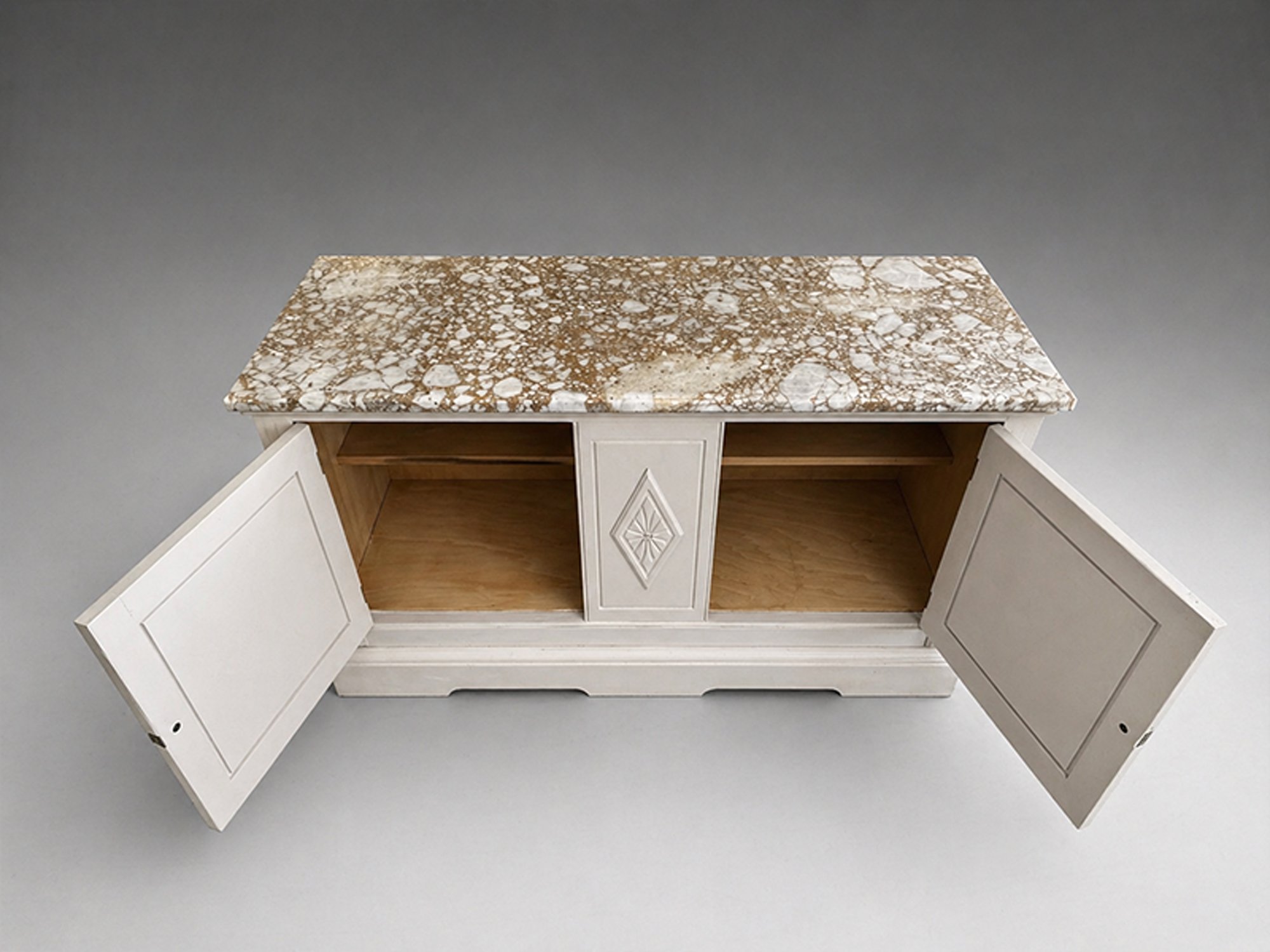 Image 3 of 4
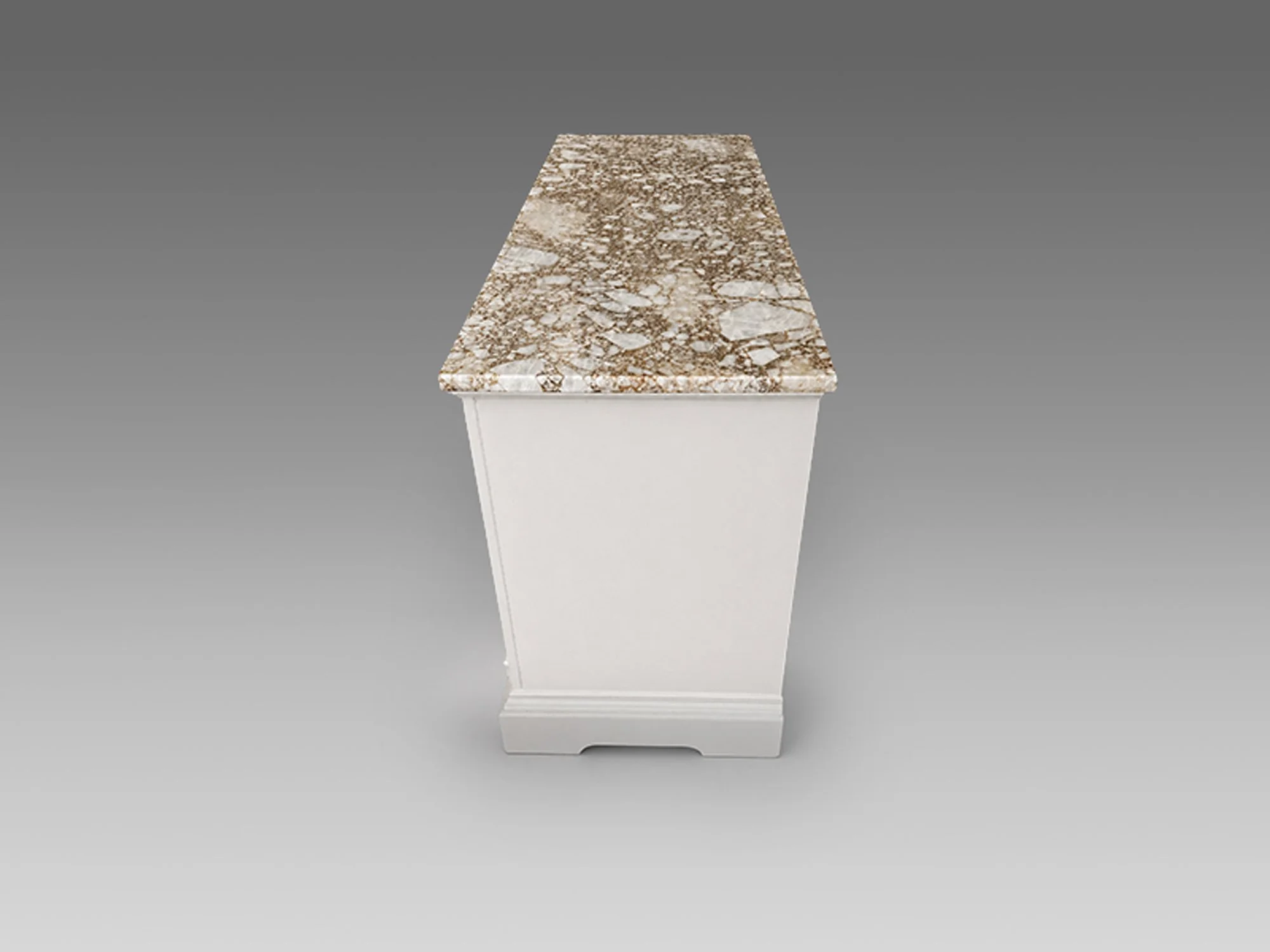 Image 4 of 4
Living With This Object
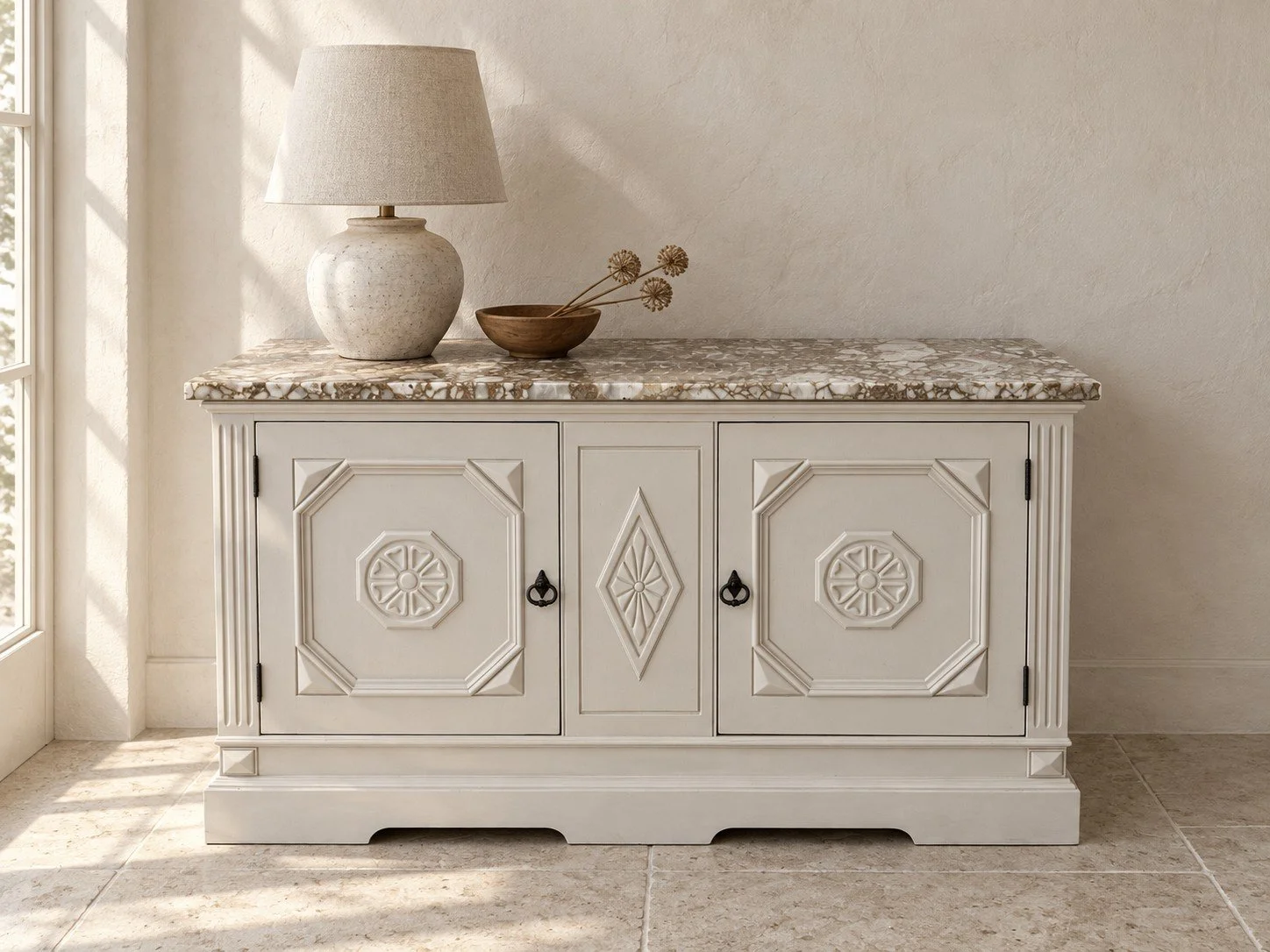
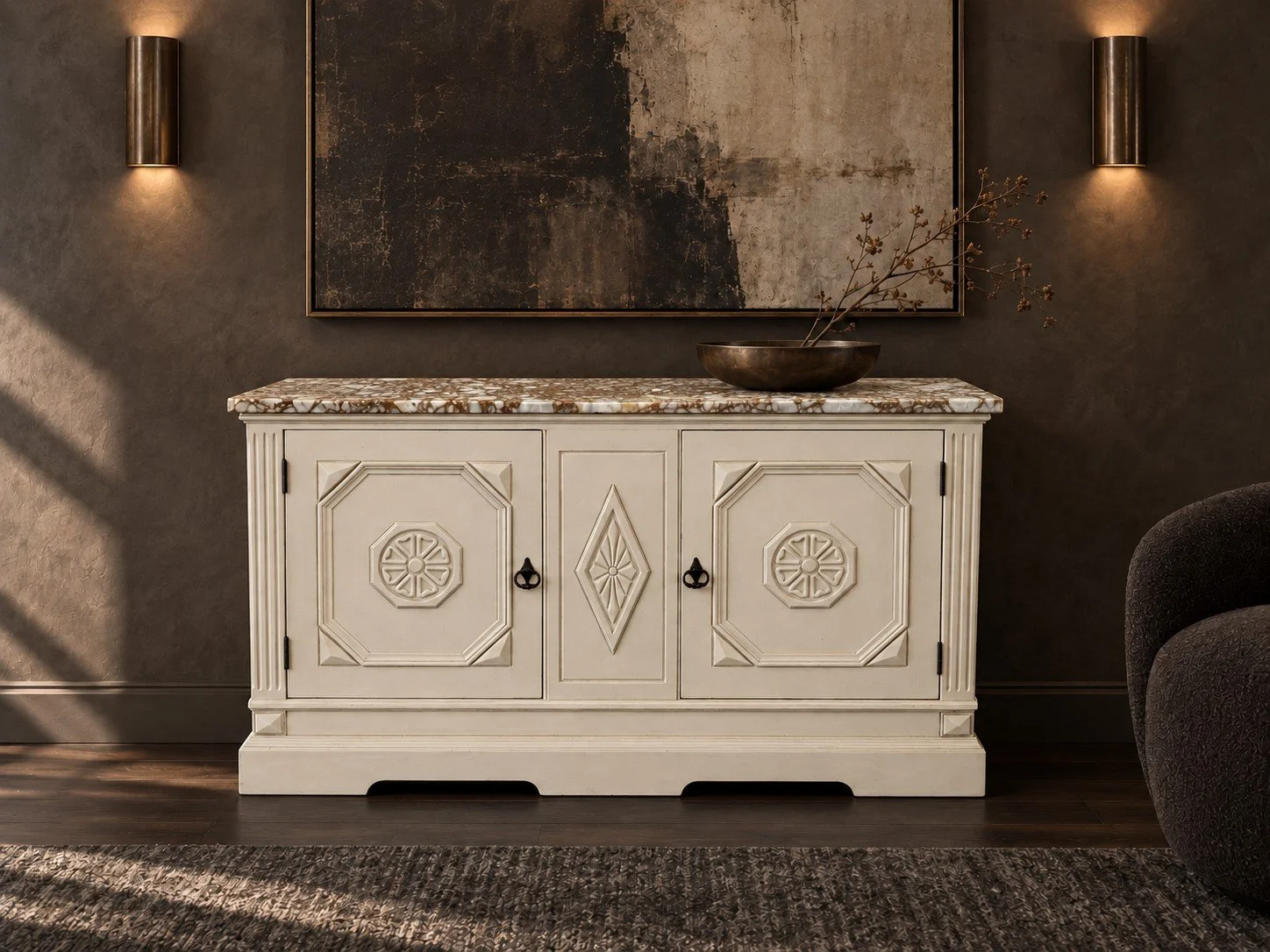
The room views below are AI visualizations, offered to suggest scale and placement. They are rendered images, not photographs of the cabinet in these rooms.
-
Set against a wall in a dining room, an entry, or a transitional space, the low, long profile and the stone top settle in easily, and the two compartments take linen, serving pieces, or storage. The fixed central panel keeps the front symmetrical, and the shallow depth lets it sit close to the wall in a passage. The stone surface comfortably supports a lamp, floral arrangement, serving pieces, or decorative objects without concern for the painted finish beneath. Spanish Colonial Revival cabinets combine Renaissance- and Iberian-inspired carved ornament with practical household storage, bringing architectural character to dining rooms, entries, and living spaces.
-
Type: Cabinet; low two-door case piece
Style: Not established
Date: Circa 1965–1980
Origin: Not established (unmarked; see Maker & Origin)
Provenance: Most recent documented acquisition from an estate sale in Rancho Palos Verdes
Material: Pale hardwood (species unconfirmed); breccia stone top; plywood back and interior surfaces
Finish: Repainted (applied, not original)
Construction: Framed and paneled carcass; flat doors carrying relief ornament; separate applied plinth base
Maker & Origin: Unattributed; no mark located
Condition: Restored; front and sides stripped and repainted, interior and back left as found
Dimensions: 47 W × 19 ½ D × 28 H in.
-
Original: The case, doors, relief ornament, fluted corner pilasters, plinth base, and the dark drop-ring pulls are retained from the piece as found. The interior and the back were not stripped or refinished.
Replaced: Nothing was replaced in the documented work.
Reconstructed: No elements were reconstructed.
Repaired: No structural repairs are documented; the restoration was confined to finish work.
Finish Work: The front and sides were stripped and repainted in a single pale tone, an applied finish. The interior and the back were left as found, though overspray from the repainting is visible on the back. The drop-ring pulls were retained in their darkened finish.
Other: A removable breccia slab rests over the cabinet's original wooden top, which remains beneath it and was left unfinished by the maker. The slab was present when the cabinet was acquired; whether it is original to the piece or a later addition is not established, and it is not the work of the present restoration.
-
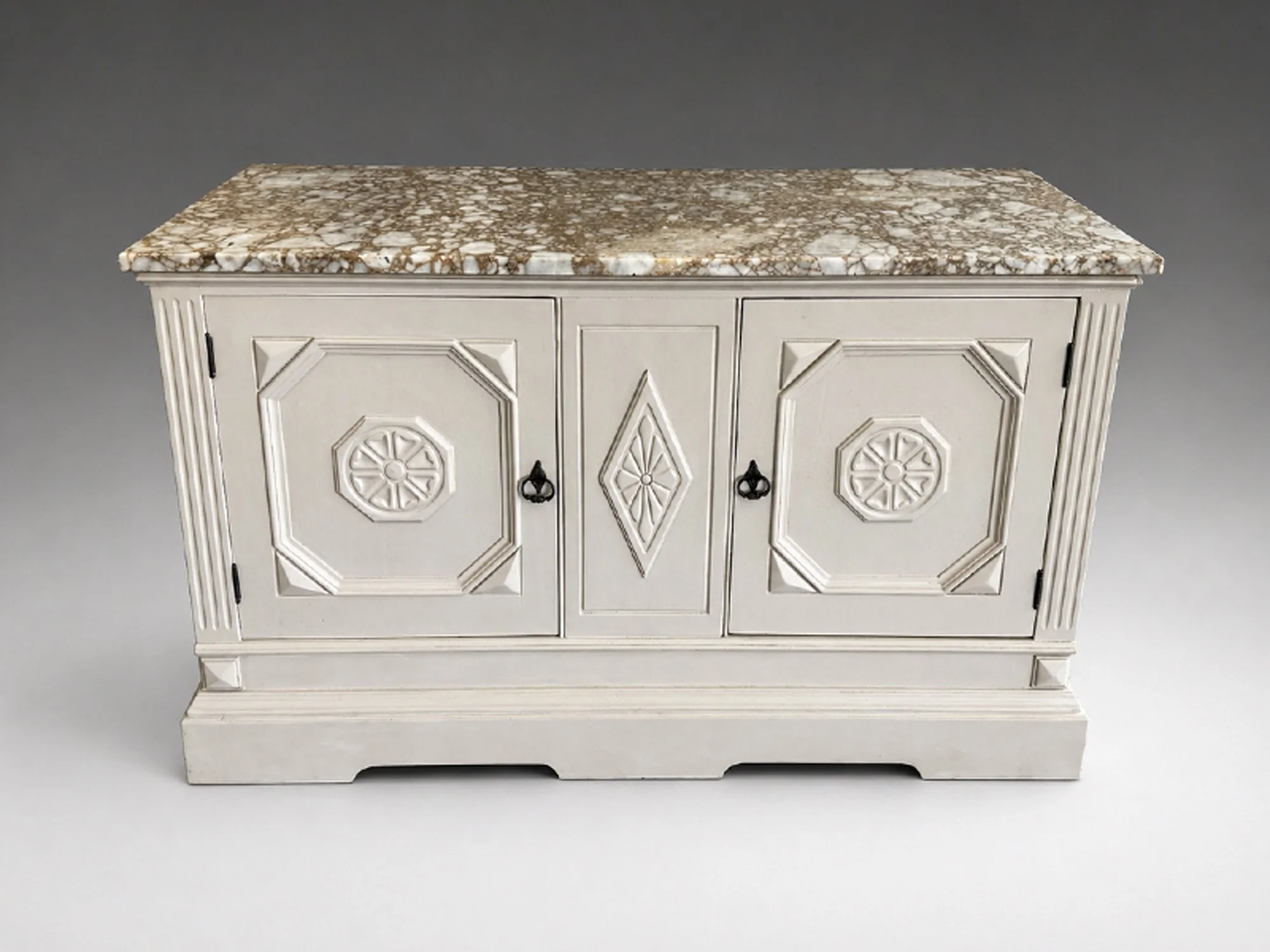
Each door carries a raised octagonal field centered on a wheel rosette, with raised blocks at the canted corners. The fixed center panel carries a raised diamond enclosing a radial fan.
-
No maker's mark, label, or stamp is present on the back, the interior, or the base, and the maker is not identified. Origin has not been established. The dating rests on construction.
The back and the case top are framed and paneled, with figured plywood panels set into a frame with a center stile. The base is a separate applied plinth in a pale softwood, unpainted on its reverse.
The case top was left unfinished by the maker, as a surface built to sit beneath a top rather than to be seen. Taken together these place the piece in mid-twentieth-century factory manufacture, and the framed and paneled back in particular, carrying a face veneer with pronounced flat-sawn figure, is inconsistent with the flush stapled panels that became standard in later mass production.
No documentary evidence fixes a year, and no style classification has been established.
Acanthus Home acquired the cabinet at an estate sale in Rancho Palos Verdes. Nothing of its history before that sale is documented.
-
The case is built as a framed and paneled box: a perimeter frame with a center stile carries the back panels, and the top is made the same way.
The doors are a different matter, each a flat panel carrying its ornament in relief rather than set into a frame, which is why the façade reads as one continuous surface rather than a run of openings.
The show wood is pale and largely straight grained, with scattered knots left visible beneath the paint; the species is not confirmed, so it is described rather than named.
The back panels are a plywood with pronounced flat-sawn figure, and the interior back, bay bottoms, and shelves are of similar sheet stock, with one shelf standing in each bay.
The stone is a breccia, pale clasts held in an ochre matrix and cut through by fine rust-colored seams; it rests loose over the cabinet's own wooden top, which the maker left unfinished as a surface never meant to be seen. The specific stone has not been identified.
The doors swing on surface-mounted butt hinges and carry darkened drop-ring pulls, and beneath the case a separate plinth in pale softwood, unpainted on its reverse, lifts the piece off the floor on a shaped apron.
-
The most recent acquisition is owner-reported: Acanthus Home bought the cabinet at an estate sale in Rancho Palos Verdes. Where it stood before that sale, and who owned it, are unrecorded. The record ends where the evidence ends.
-
Is this cabinet antique or vintage? Its construction places this cabinet circa 1965–1980, well short of the 100-year line that separates antique from vintage, so the age is stated as it is rather than rounded up. Because the date rests on construction rather than a dated mark, it is given as a range.
Has it been restored? Yes, and the work is disclosed in full. The front and sides were stripped and repainted in a single pale tone, while the interior and the back were left as found, keeping their original surfaces. The original drop-ring pulls were kept in their darkened finish. The stone slab top is not part of this restoration.
What is the top made of? A breccia: pale clasts held in an ochre matrix, cut through by fine rust-colored seams. The specific stone has not been identified and has not been tested, so it is described by what is visible rather than given a name. The slab is removable and rests over the cabinet's own wooden top, which the maker left unfinished beneath it.
What wood is it? The case is a pale, largely straight-grained hardwood with small, scattered knots, visible on the original interior surfaces. The species is unconfirmed, so it is described rather than named. The back is a figured plywood panel set within a frame, part of the original construction.