A tall, narrow cabinet produced in the 19th century, constructed as a multi-drawer storage form for private interiors. Its vertical proportion, compact footprint, and serpentine drawer fronts place it within a tradition of domestic cabinetry used for garments, linens, and personal effects.
The case is fitted with six graduated drawers, each formed with a subtle wave across the front and framed by carved floral medallions. Original aged brass pulls remain intact. Paneled sides are articulated with restrained botanical carving, and the cabinet is raised on cabriole legs terminating in shell-carved knees.
Hand craftsmanship is evident throughout. The drawers are assembled with hand-cut dovetail joints, irregular in spacing and depth, indicating individual fitting rather than mechanized production. Roman numerals are carved beneath each drawer, used to return uniquely fitted components to their original position.
Beneath the stone top, faint handwritten marks remain visible on the upper surface of the case. The inscription appears to be a maker’s notation, preserved where it was not intended to be seen.
The cabinet has been finished with a natural shellac applied by hand. A later-added Alexandrita quartzite surface crowns the piece, cut with a scalloped edge that follows the curvature of the case. Veining in taupe, green, gray, and soft peach introduces material contrast while maintaining the cabinet’s proportion.
Placed in bedrooms, dressing rooms, or private interiors where vertical storage defines position within the room.
A tall, narrow cabinet produced in the 19th century, constructed as a multi-drawer storage form for private interiors. Its vertical proportion, compact footprint, and serpentine drawer fronts place it within a tradition of domestic cabinetry used for garments, linens, and personal effects.
The case is fitted with six graduated drawers, each formed with a subtle wave across the front and framed by carved floral medallions. Original aged brass pulls remain intact. Paneled sides are articulated with restrained botanical carving, and the cabinet is raised on cabriole legs terminating in shell-carved knees.
Hand craftsmanship is evident throughout. The drawers are assembled with hand-cut dovetail joints, irregular in spacing and depth, indicating individual fitting rather than mechanized production. Roman numerals are carved beneath each drawer, used to return uniquely fitted components to their original position.
Beneath the stone top, faint handwritten marks remain visible on the upper surface of the case. The inscription appears to be a maker’s notation, preserved where it was not intended to be seen.
The cabinet has been finished with a natural shellac applied by hand. A later-added Alexandrita quartzite surface crowns the piece, cut with a scalloped edge that follows the curvature of the case. Veining in taupe, green, gray, and soft peach introduces material contrast while maintaining the cabinet’s proportion.
Placed in bedrooms, dressing rooms, or private interiors where vertical storage defines position within the room.
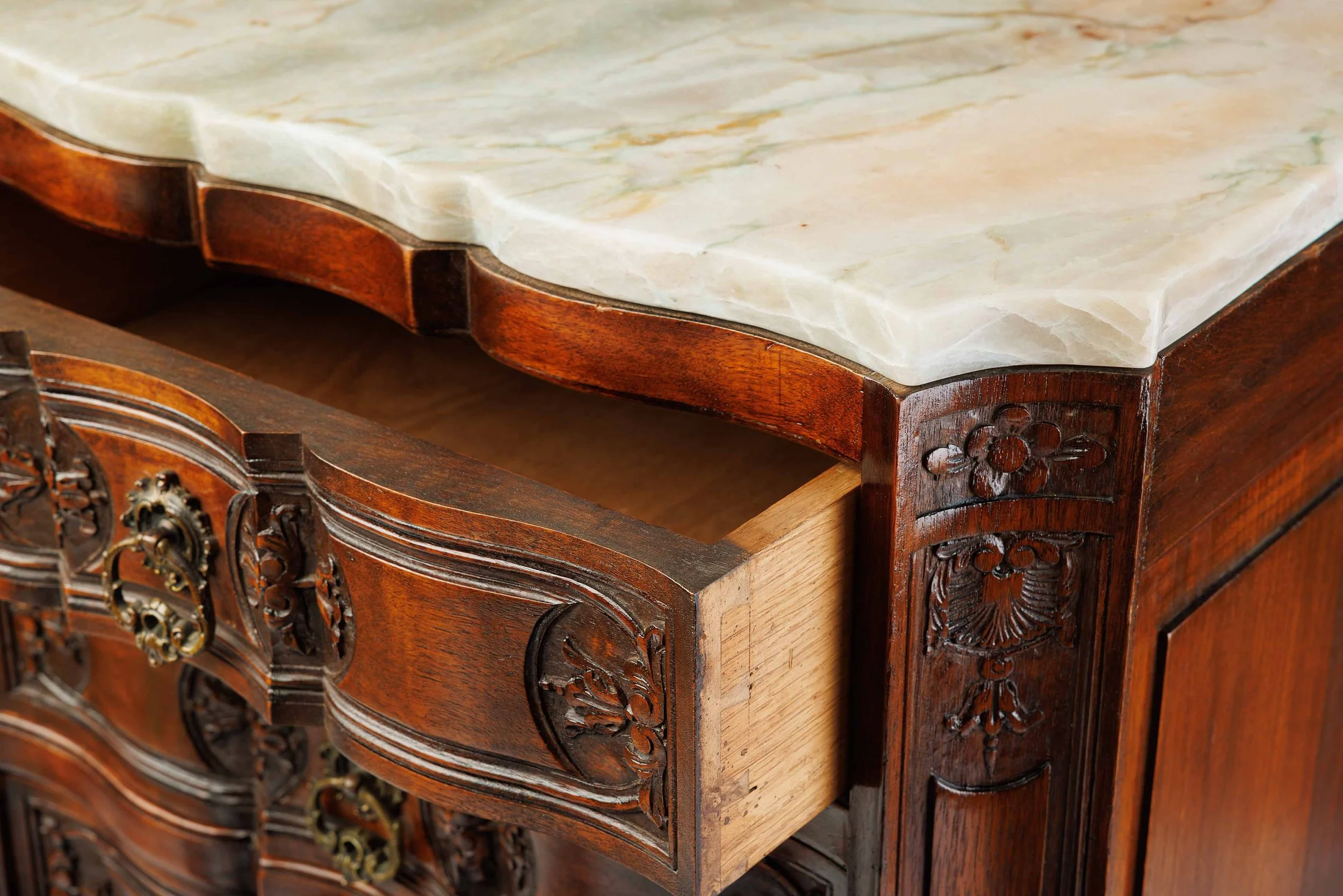 Image 1 of 5
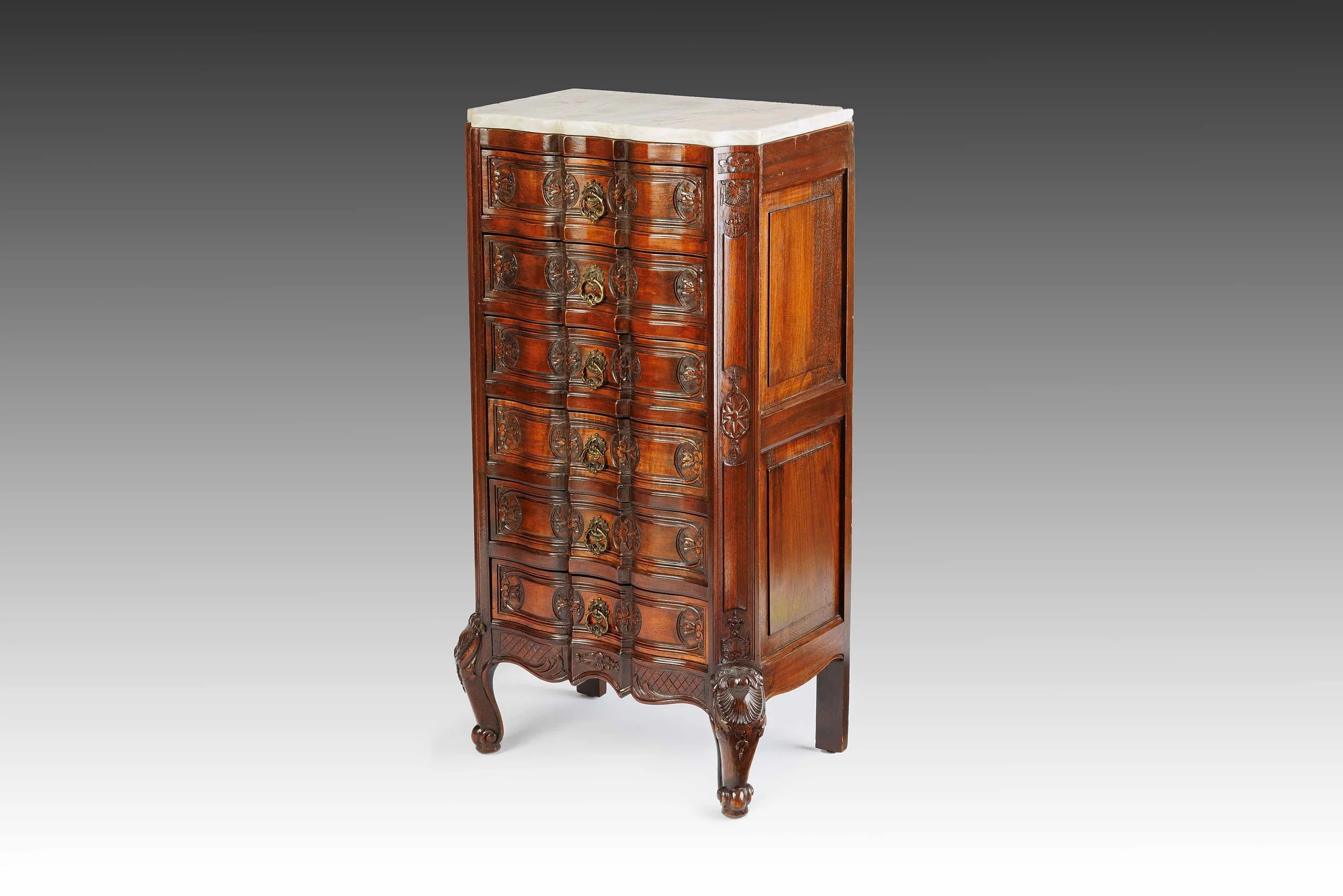 Image 2 of 5
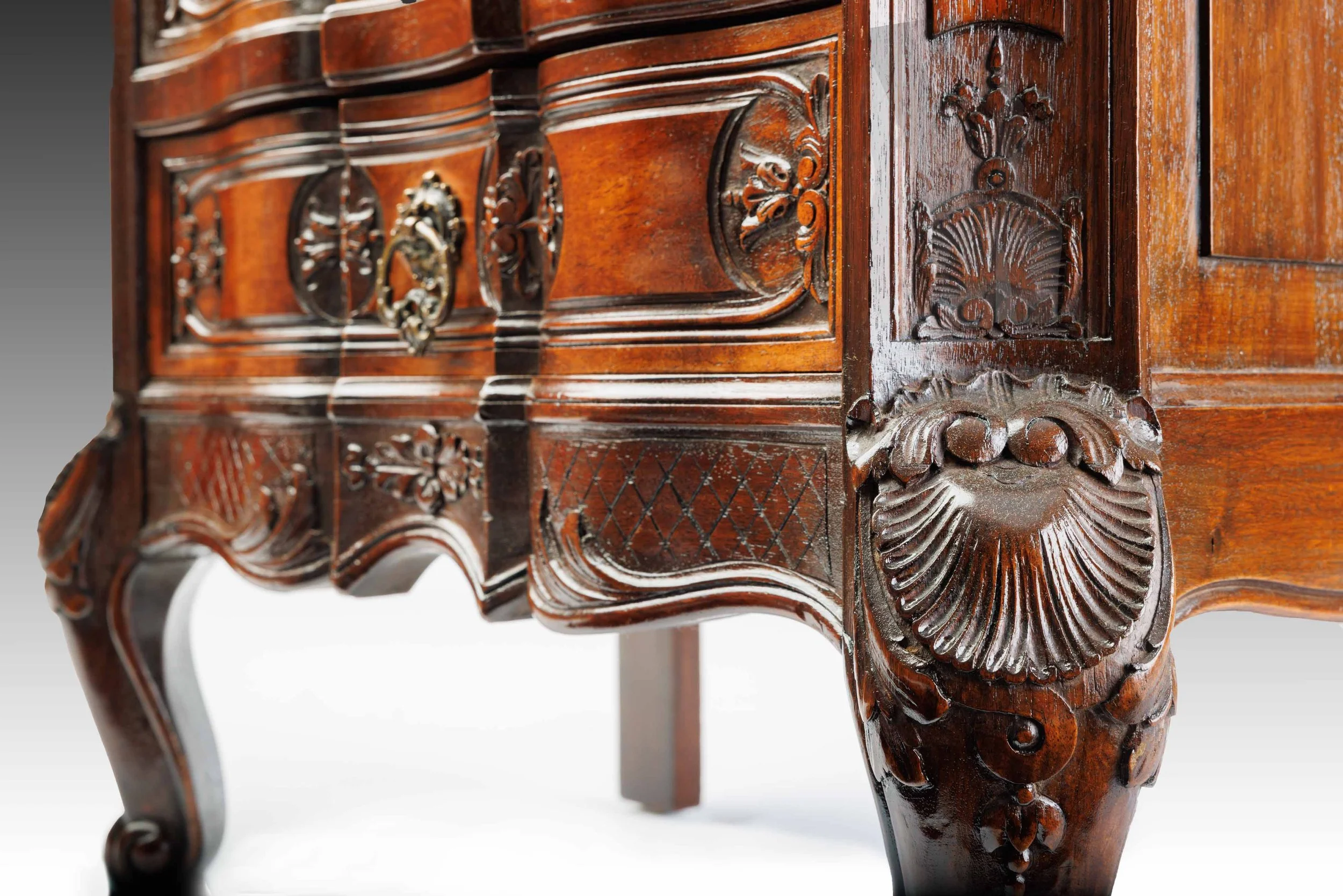 Image 3 of 5
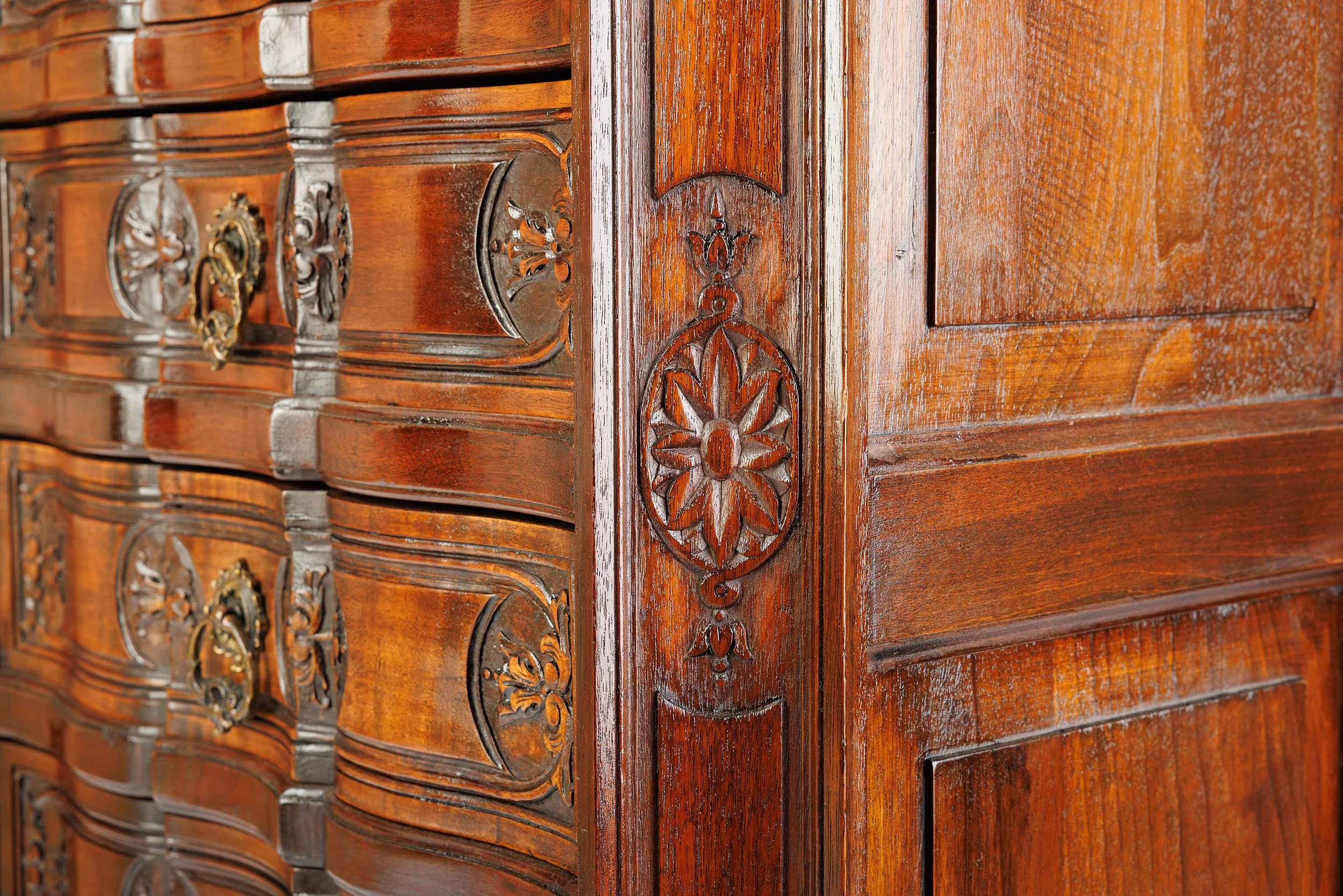 Image 4 of 5
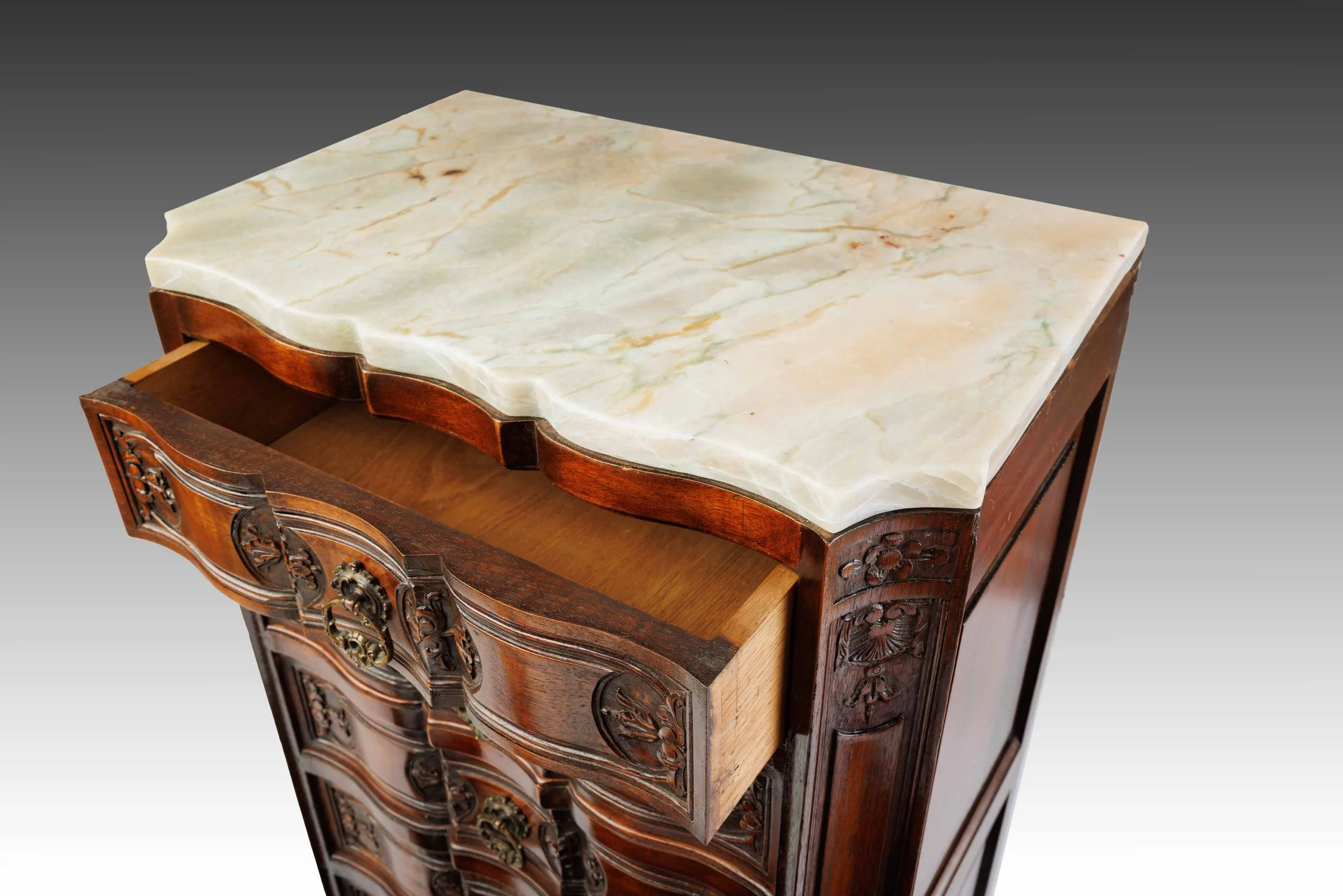 Image 5 of 5