 Image 1 of 5
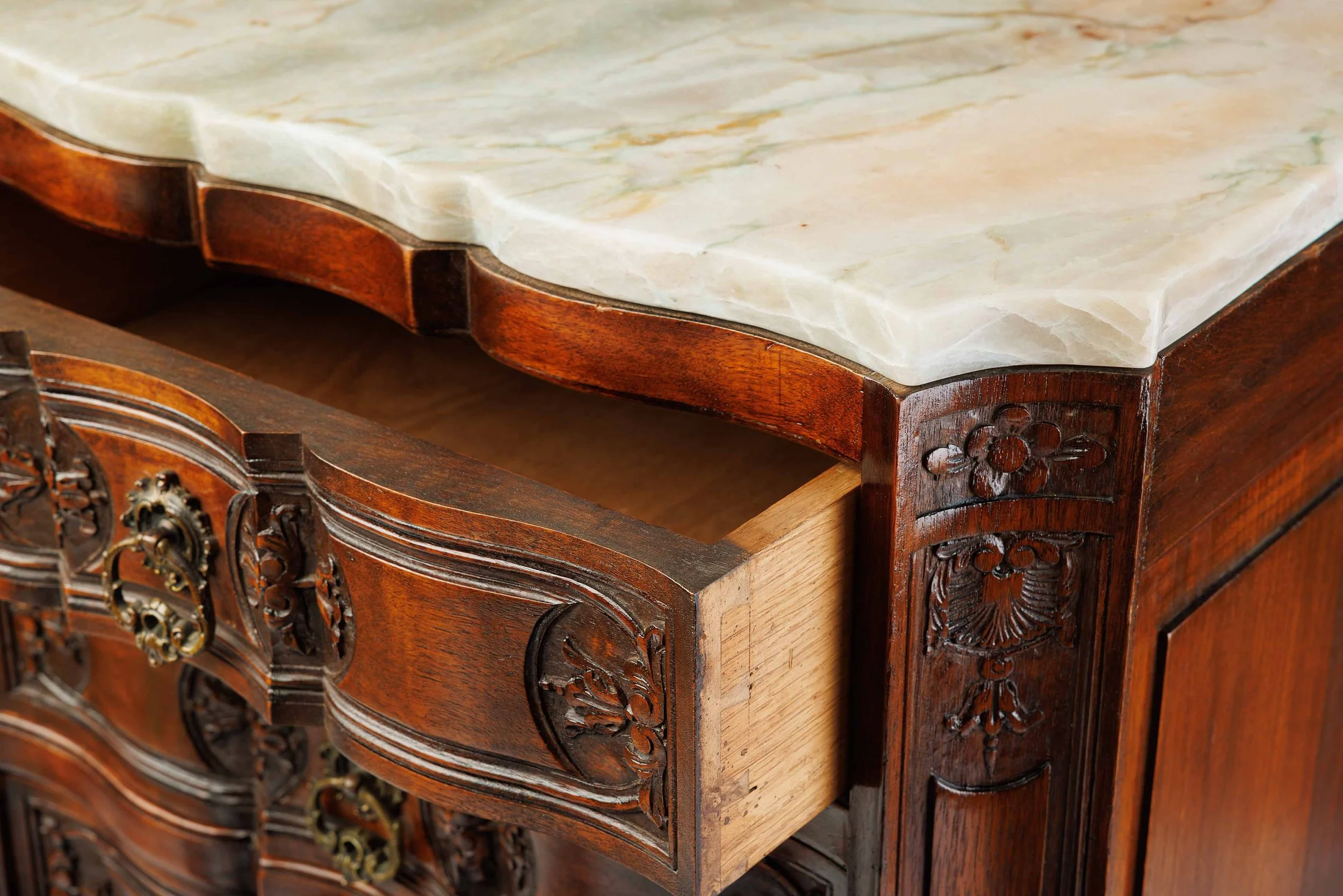 Image 2 of 5
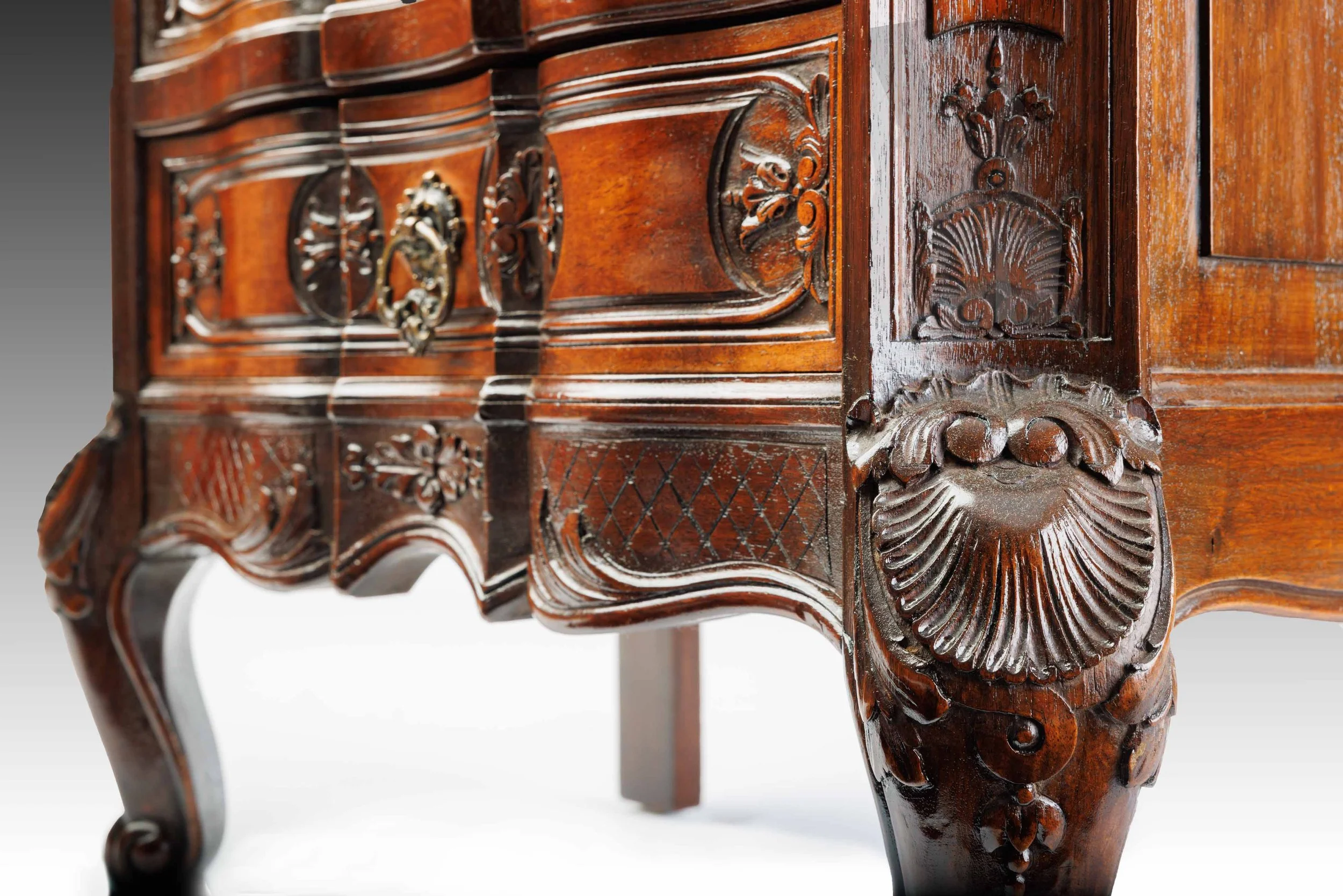 Image 3 of 5
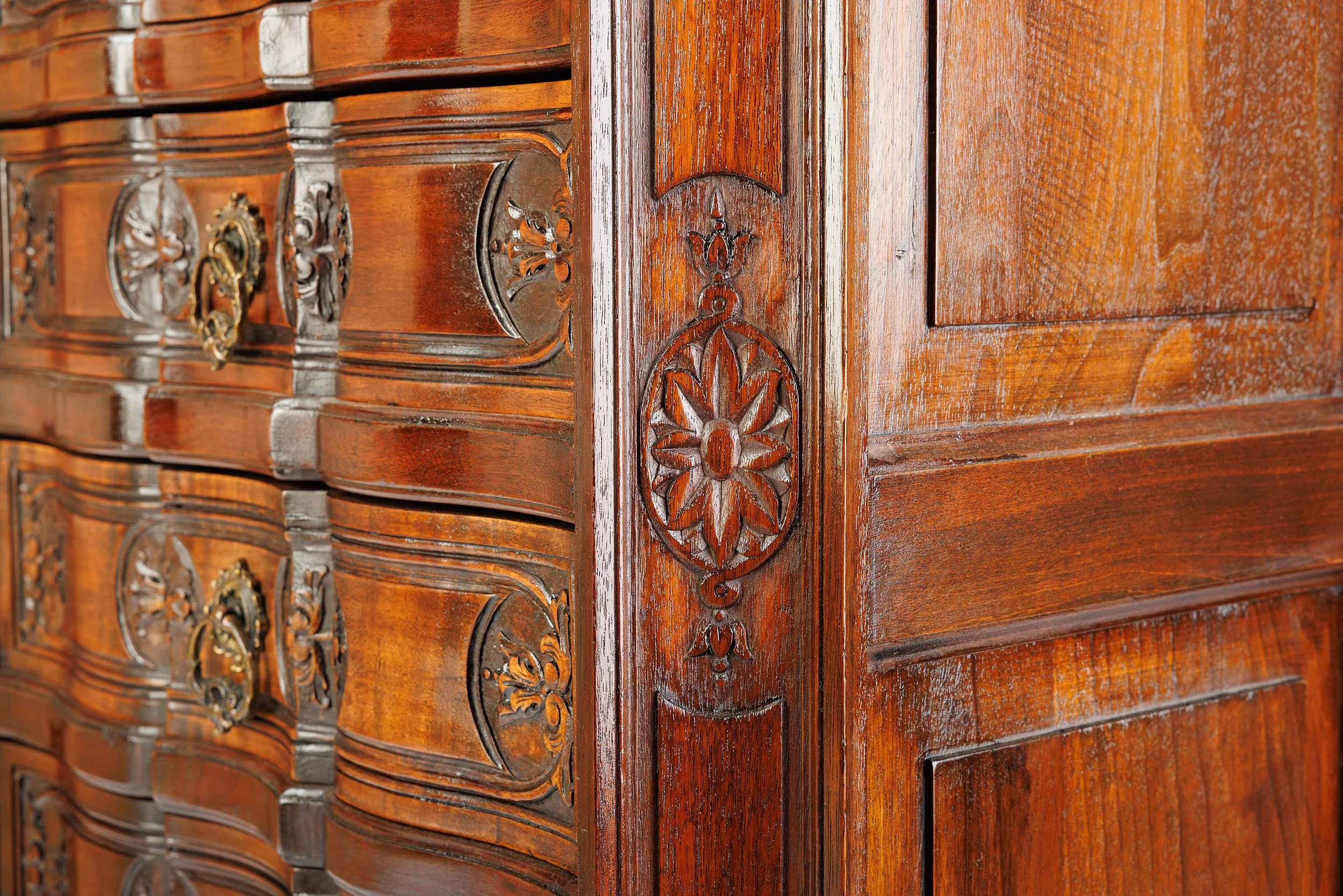 Image 4 of 5
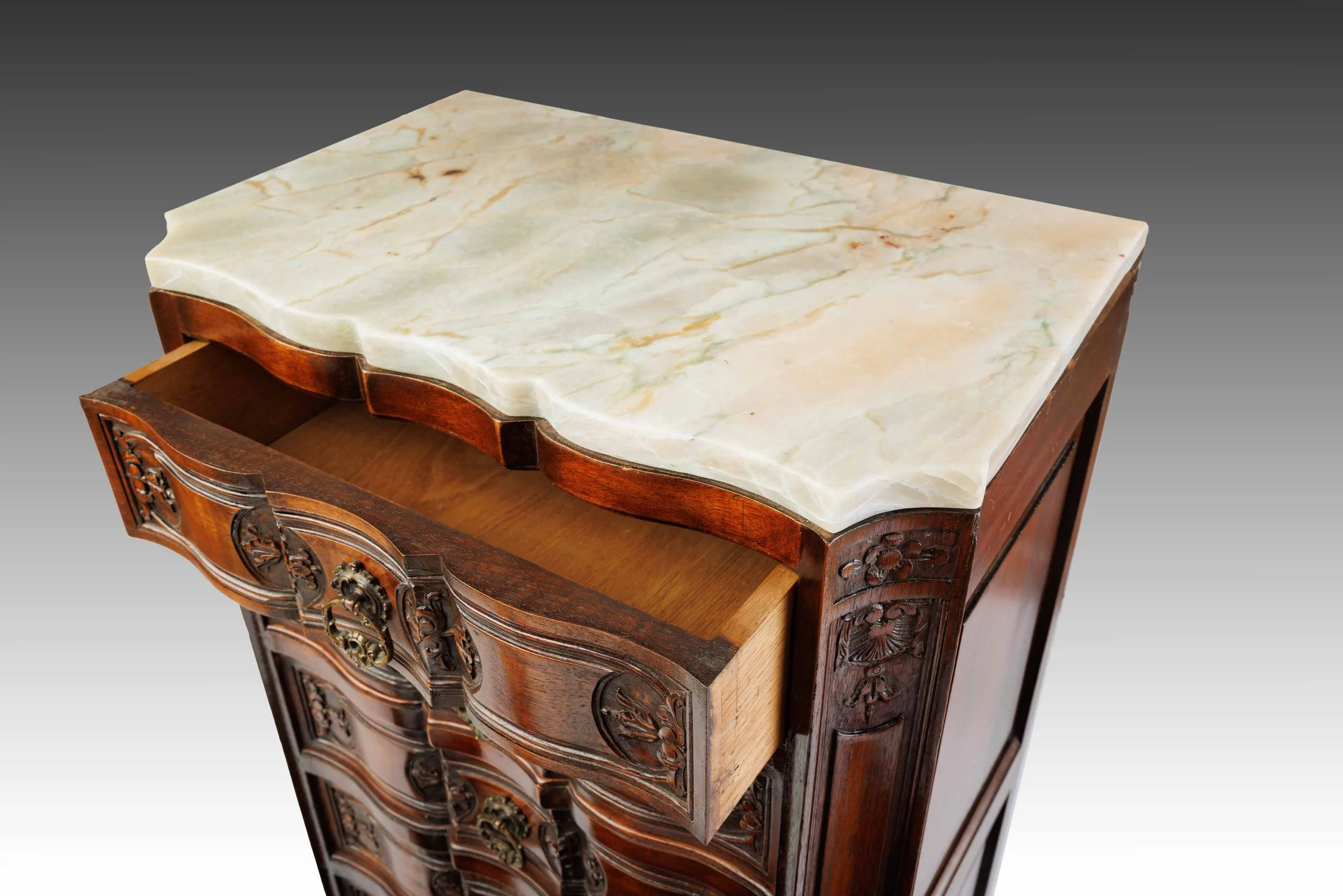 Image 5 of 5
Living With This Object
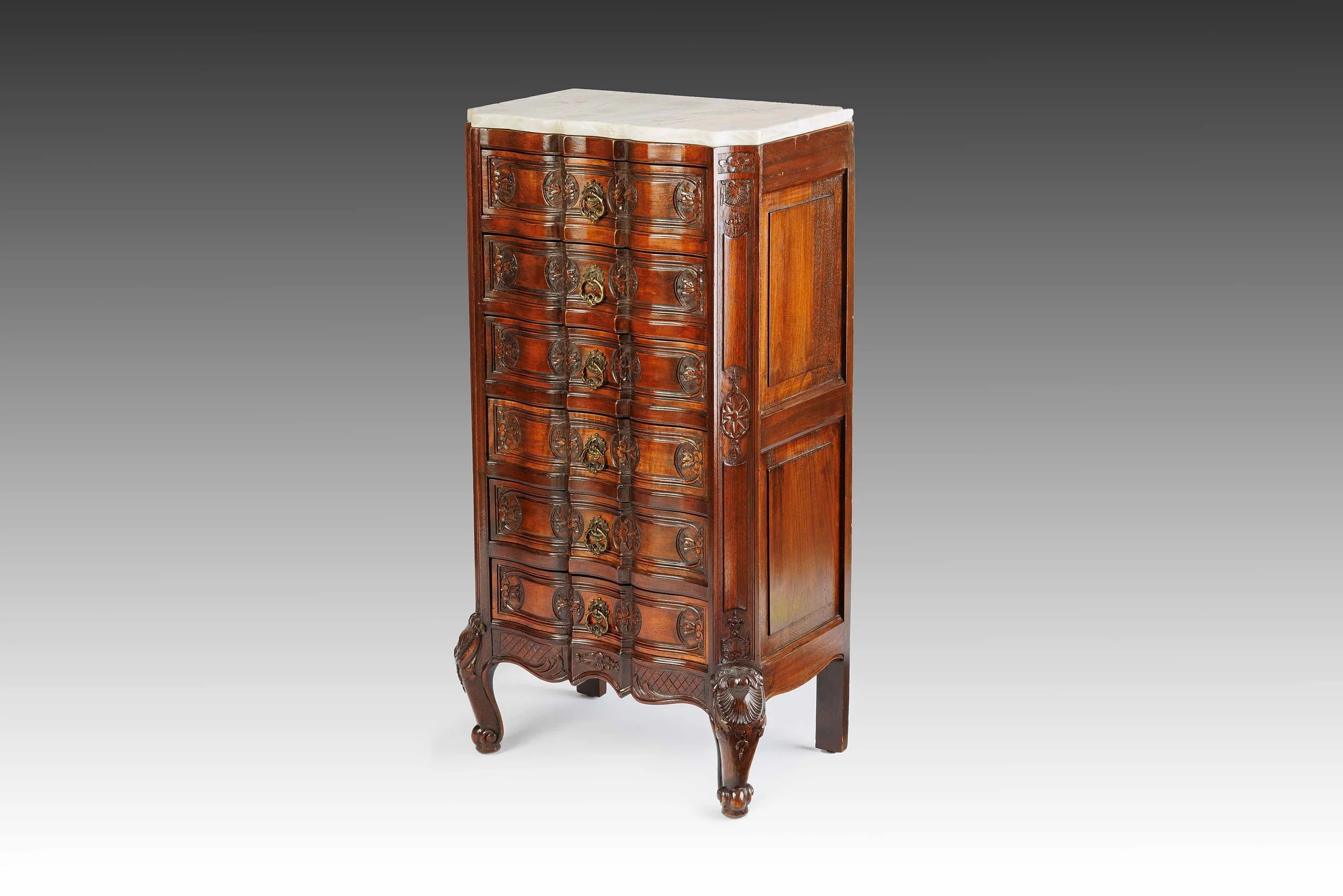
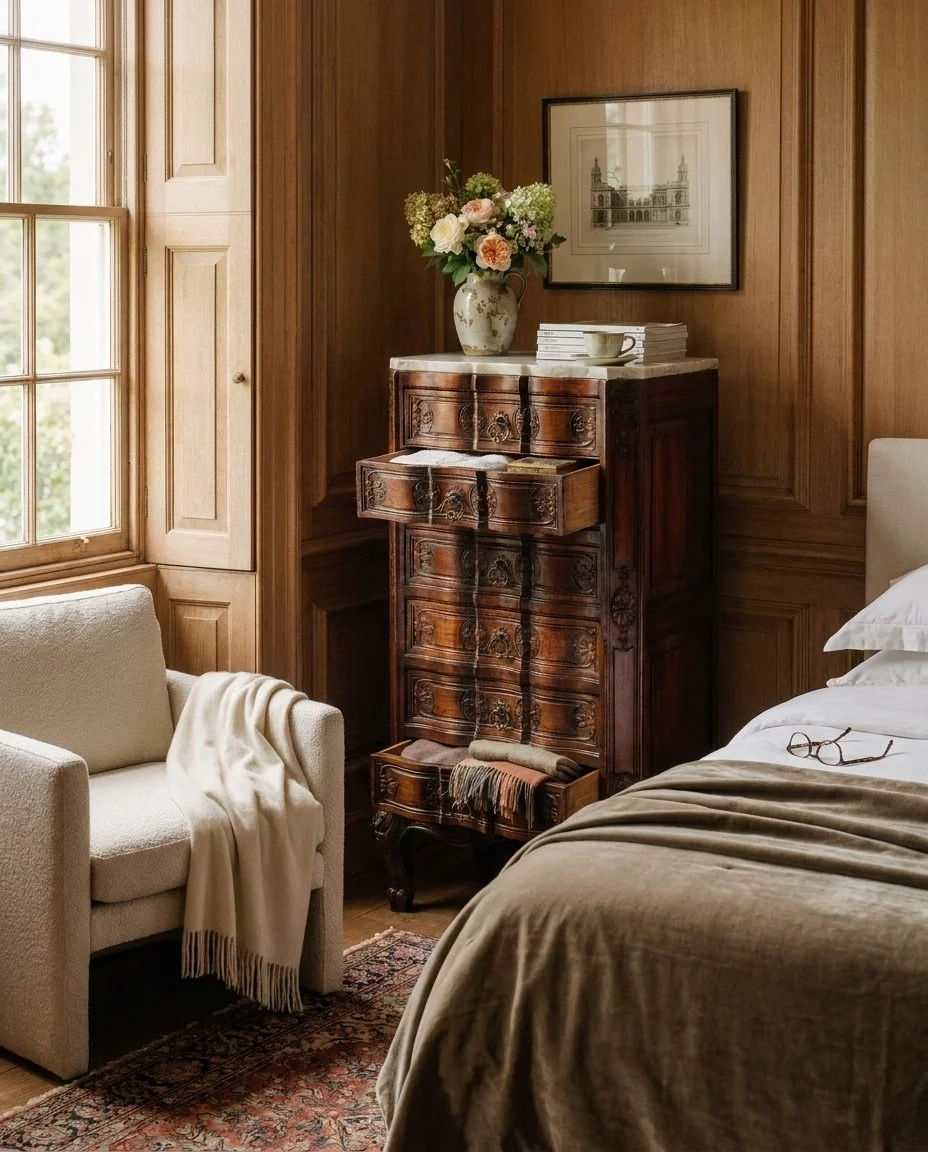
In a room, the chest reads as a tall, narrow vertical accent, its carved drawer fronts and pale stone top taken in at a glance.
The room view below is an AI visualization, offered to suggest scale and placement. It is a rendered image, not a photograph of the chest in this room.
-
Whether it settles into a bedroom, a dressing room, or a hall, this chest suits a spot where a tall, shallow footprint is wanted. At 21 inches wide and 14 inches deep, it holds to a wall or sits beside a bed without crowding the floor, and its height provides generous vertical storage while occupying very little floor space. The quartzite top offers a finished surface for a lamp, a tray, or a mirror.
-
Type: Chest of drawers; tall, narrow six-drawer case
Style: Louis XV style (provincial revival)
Date: Circa 1890–1920
Origin: Not established (unmarked; French-language paper label)
Provenance: Most recent documented acquisition through a New Hampshire auction
Material: Oak case and drawer linings; cast brass pulls; quartzite top (replacement)
Finish: Shellac, stripped and renewed by hand in restoration; applied, not original
Construction: Solid paneled oak case; six serpentine drawers with hand-cut dovetails, individually fitted
Maker & Origin: Unattributed; penciled name and partial French paper label, neither identified
Condition: Restored; renewed finish, replacement stone top, old patched repairs to drawer linings
Dimensions: 21 W × 14 D × 41½ H in.
-
Original: The oak case, the six carved serpentine drawer fronts, the paneled sides, and the cast brass pulls appear original, with no evidence of replacement at the fronts, hardware, or panels.
Replaced: The stone top. The original stone was missing when the chest was acquired, and an Alexandrita quartzite top was cut to the shape of the case in the recent restoration; its scalloped edge follows the curve of the case.
Reconstructed: No elements were reconstructed.
Repaired: The oak drawer linings carry old patched repairs, small inset pieces let into the sides and bottoms where the timber was made good. These are earlier repairs, predating this restoration, and sit out of sight when the drawers are closed.
Finish Work: The shellac finish was stripped and renewed by hand; the present surface is applied, not the original.
-
Each of the six drawers carries a Roman numeral, the cabinetmaker's way of returning every drawer to its own opening; the numbers run in the thirties, a workshop's batch sequence. On the upper surface of the case, beneath the present top, a penciled name survives beside a partial printed paper label carrying the abbreviation "N°" and a large initial. The penciled name has not been identified. These are the working marks of a piece built and numbered by hand, left where they were never meant to be seen.
-
The maker is left unattributed. The penciled name and the partial paper label noted under A Hand-Fitted Case are the only written evidence the chest carries, and while the label is printed in French, which bears on origin, a label of this kind records a name or a number rather than a confirmed place of manufacture. The Louis XV provincial carving and the oak construction belong to a tradition worked both in France and in the Liège region of francophone Belgium, and the label's French is consistent with either, so the manufacture origin of this example is not established. The hand-cut joinery and individually fitted drawers reflect traditional cabinetmaking practices of the late nineteenth to early twentieth century. "Louis XV" is used here as a style descriptor: the chest is a provincial revival of the style, not of the period.
-
The chest is oak throughout. The carcass, the paneled back, and the drawer linings show the quarter-sawn ray fleck that identifies oak, clearest on the back rails and the drawer sides; the carved fronts are the same timber, finished in a warmer tone. The drawers are joined with hand-cut dovetails, uneven in spacing and depth from drawer to drawer, individually fitted rather than machine-made. The front carries six serpentine drawer faces with oval foliate medallions; the canted corners are carved with rosettes above shell-and-husk drops; the apron has a lattice diaper centered on a shell; and the front cabriole legs are carved with shells at the knee and end in scrolled feet, while the rear stiles run straight to the floor. The hardware is cast brass in a rococo cartouche pattern, and the top is Alexandrita quartzite, softly banded, with a scalloped edge.
-
Chests of this kind, tall and narrow with many small drawers, were a familiar bedroom and dressing-room form, made to hold linens, garments, and small personal effects upright against a wall where floor space was short. This example carries the wear and warm color of long domestic use, and the numbered drawers and the pencil line on the case are the trace of the hand that built it. It later surfaced at an auction house in New Hampshire before entering the Acanthus Home collection. Although its earlier ownership remains undocumented, its appearance at auction provides the first confirmed point in its modern provenance. A recent restoration renewed its finish and, because the original stone had been lost before the chest was acquired, fitted a quartzite top cut to the profile of the case so it could be returned to daily use. Its maker is unrecorded, the exact year undocumented, and the owners who lived with it before its appearance at auction remain unknown. The record ends where the evidence ends.
-
Is this antique or vintage? Antique. We date this antique chest of drawers circa 1890 to 1920 on its hand-cut dovetails, its individually fitted drawers, and its Louis XV provincial carving. Even at the latest end of that range the piece is more than a century old, so it is antique rather than vintage, though the exact year is undocumented.
What wood is it? Oak. The same quarter-sawn ray fleck that runs across the carcass, the paneled back, and the drawer linings identifies the wood, and the carved fronts are that same timber finished in a warmer tone, which is why they can read as walnut at a glance. Inside the drawers and on the back of the case the bare oak is plain to see.
Has it been restored? Yes. The shellac finish was stripped and renewed by hand, so the present surface is applied rather than original, and the missing stone was replaced with a quartzite top cut to fit. The oak drawer linings carry older patched repairs that predate our work, while the carved fronts, brass pulls, and paneled sides appear original.
Is the stone top original? No. The original stone was already missing when the chest was acquired, so an Alexandrita quartzite top was cut to the shape of the case in the recent restoration. It is softly banded in pale green, cream, and soft peach, and the veining and the small mineral inclusions are natural to the stone, not damage or staining.