 Image 1 of 9
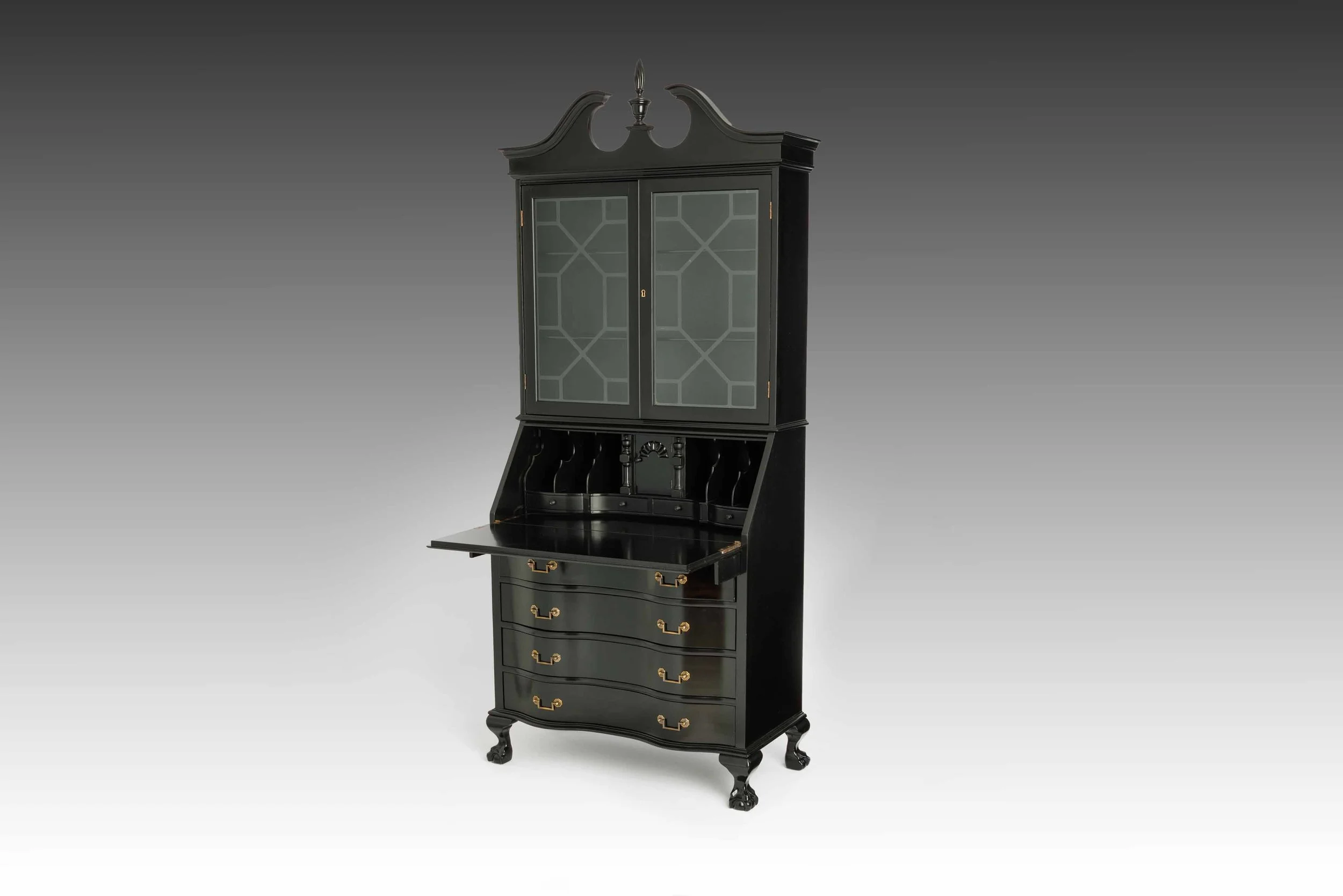 Image 2 of 9
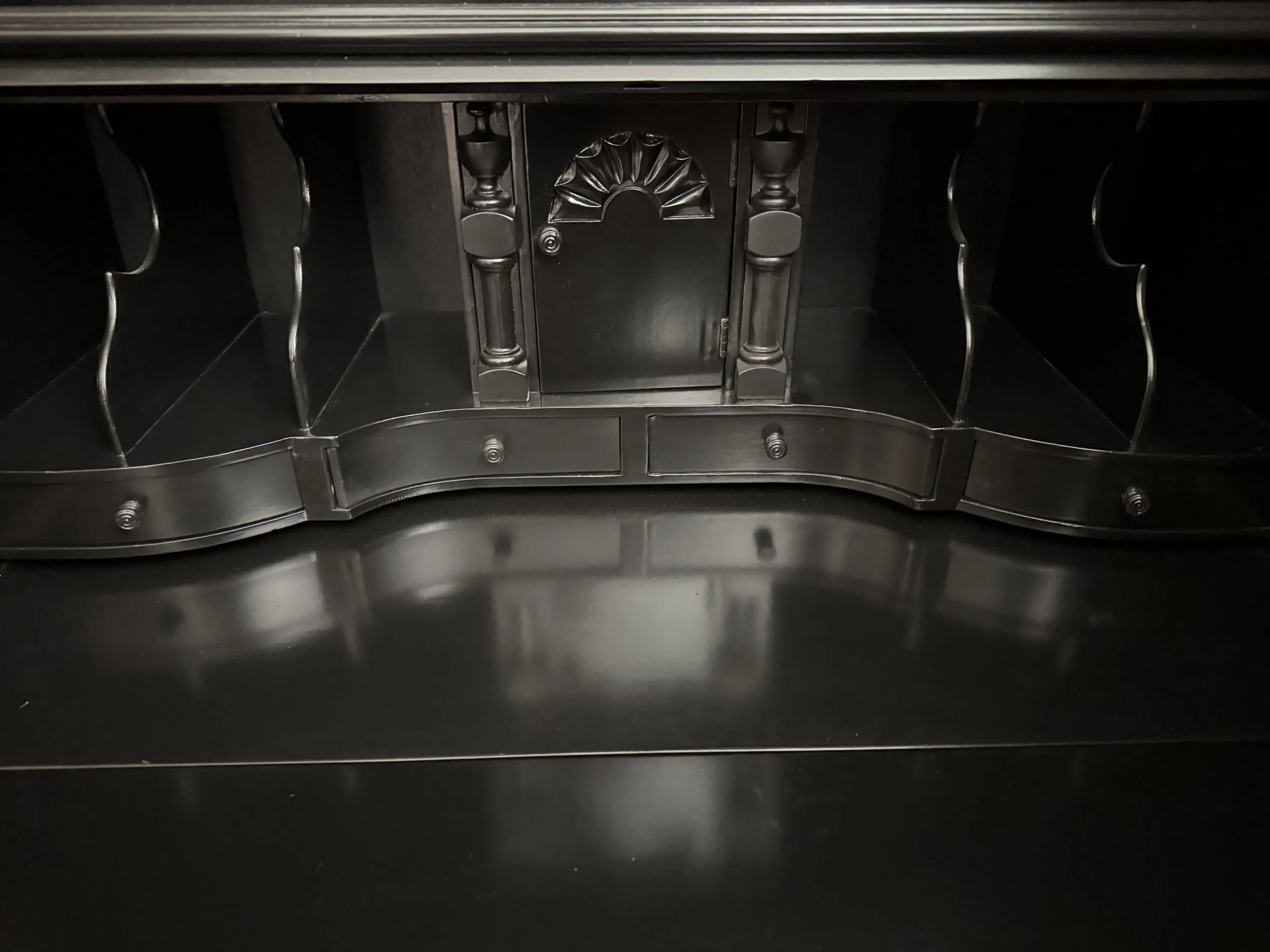 Image 3 of 9
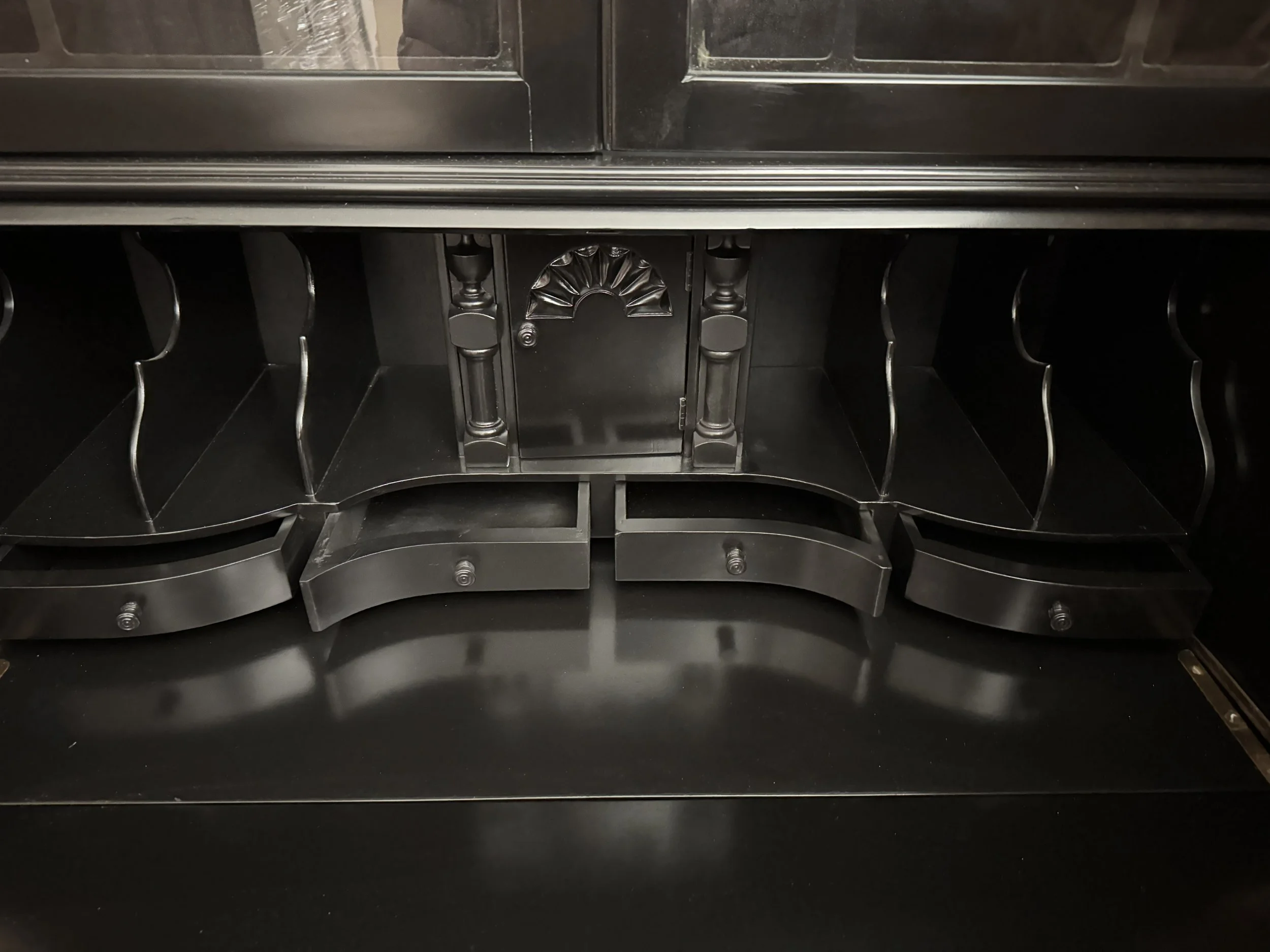 Image 4 of 9
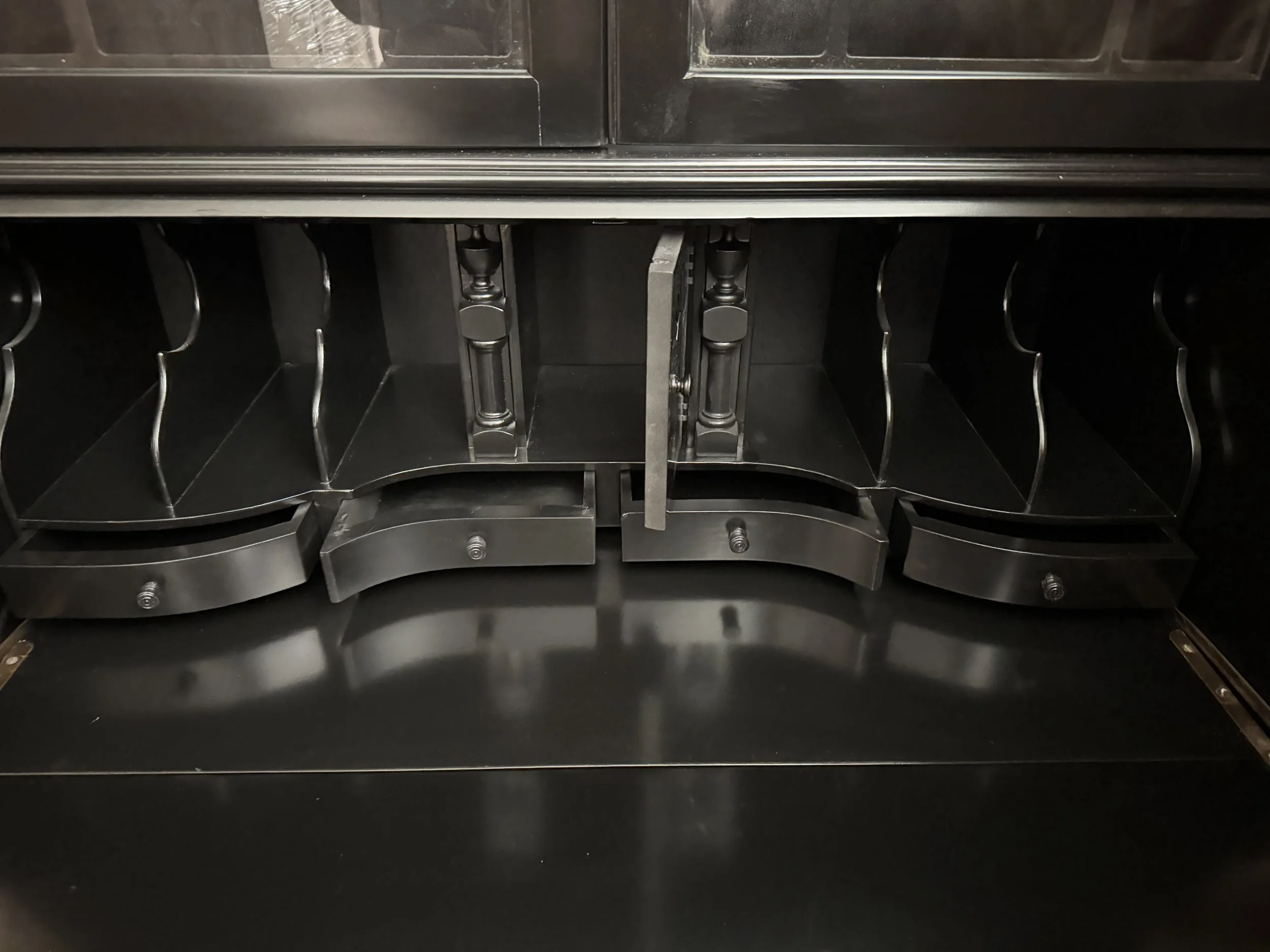 Image 5 of 9
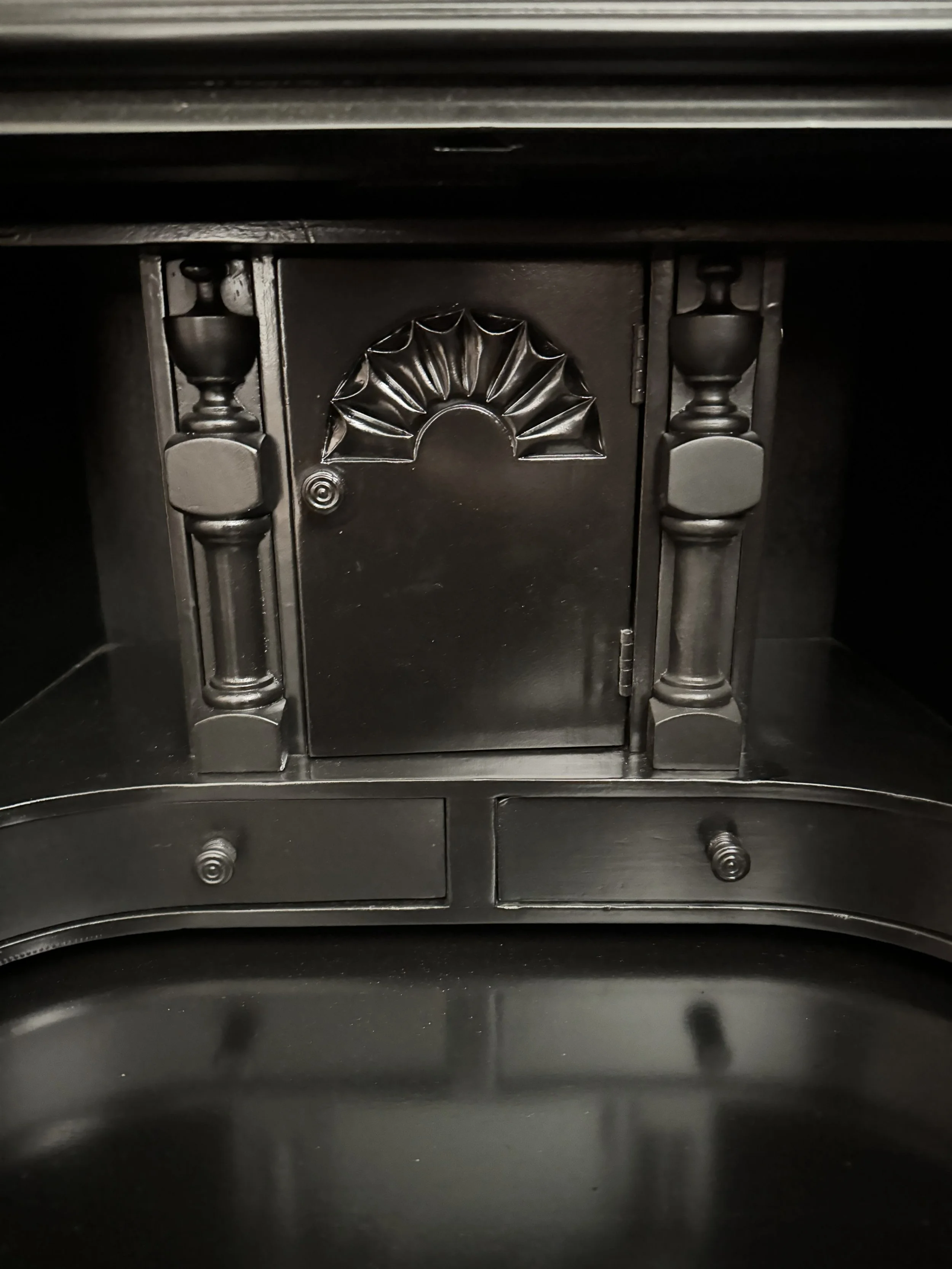 Image 6 of 9
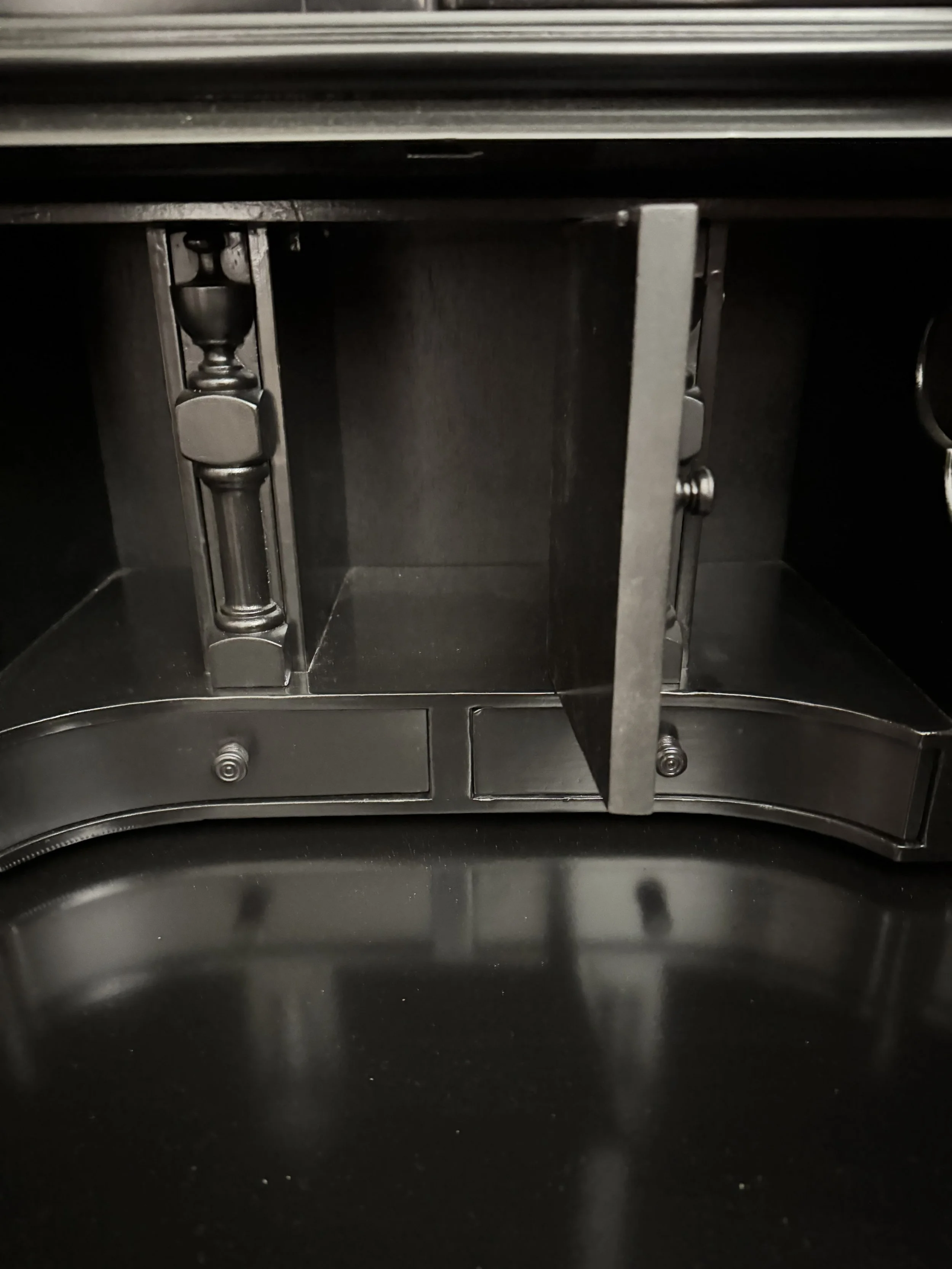 Image 7 of 9
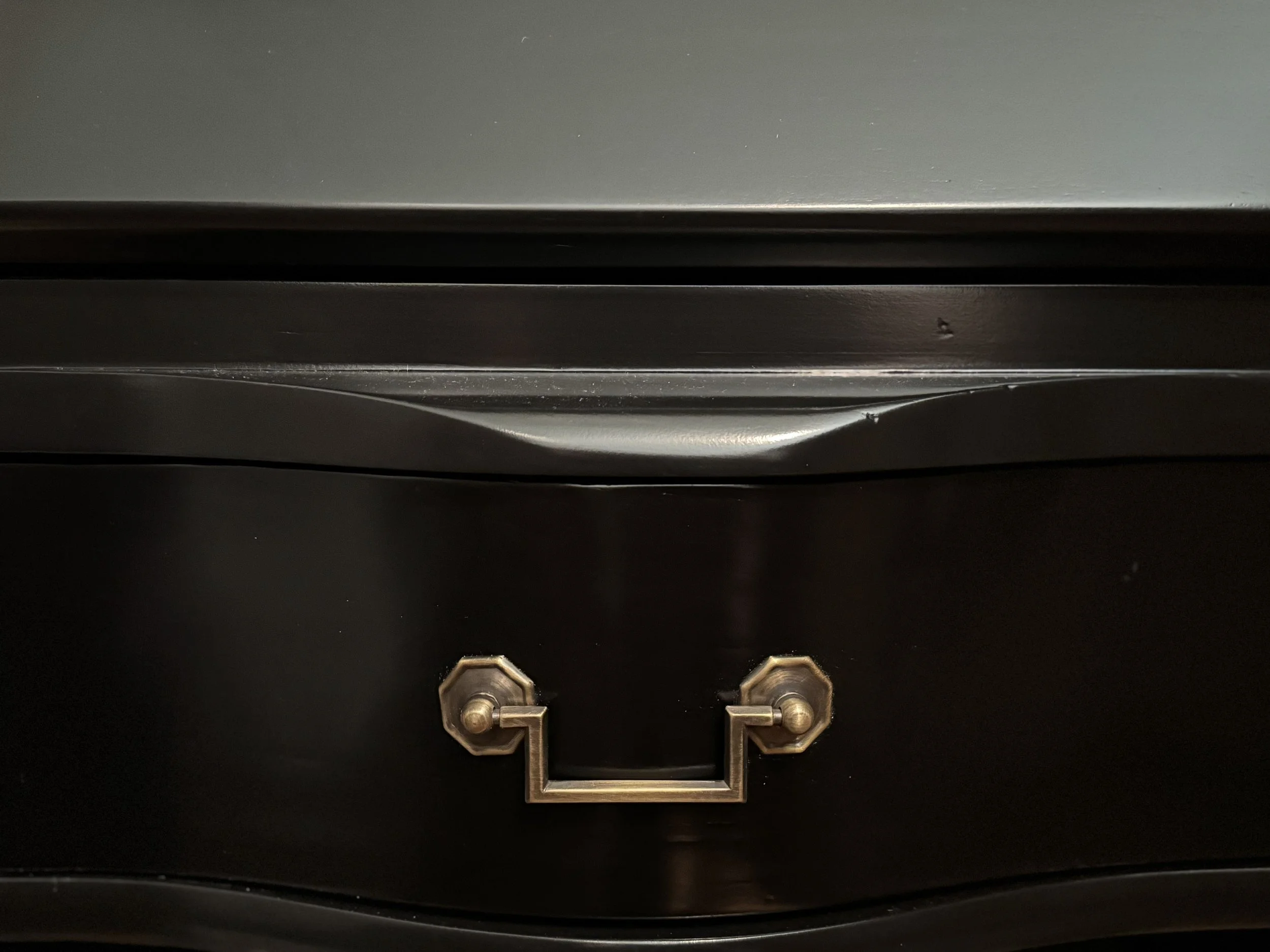 Image 8 of 9
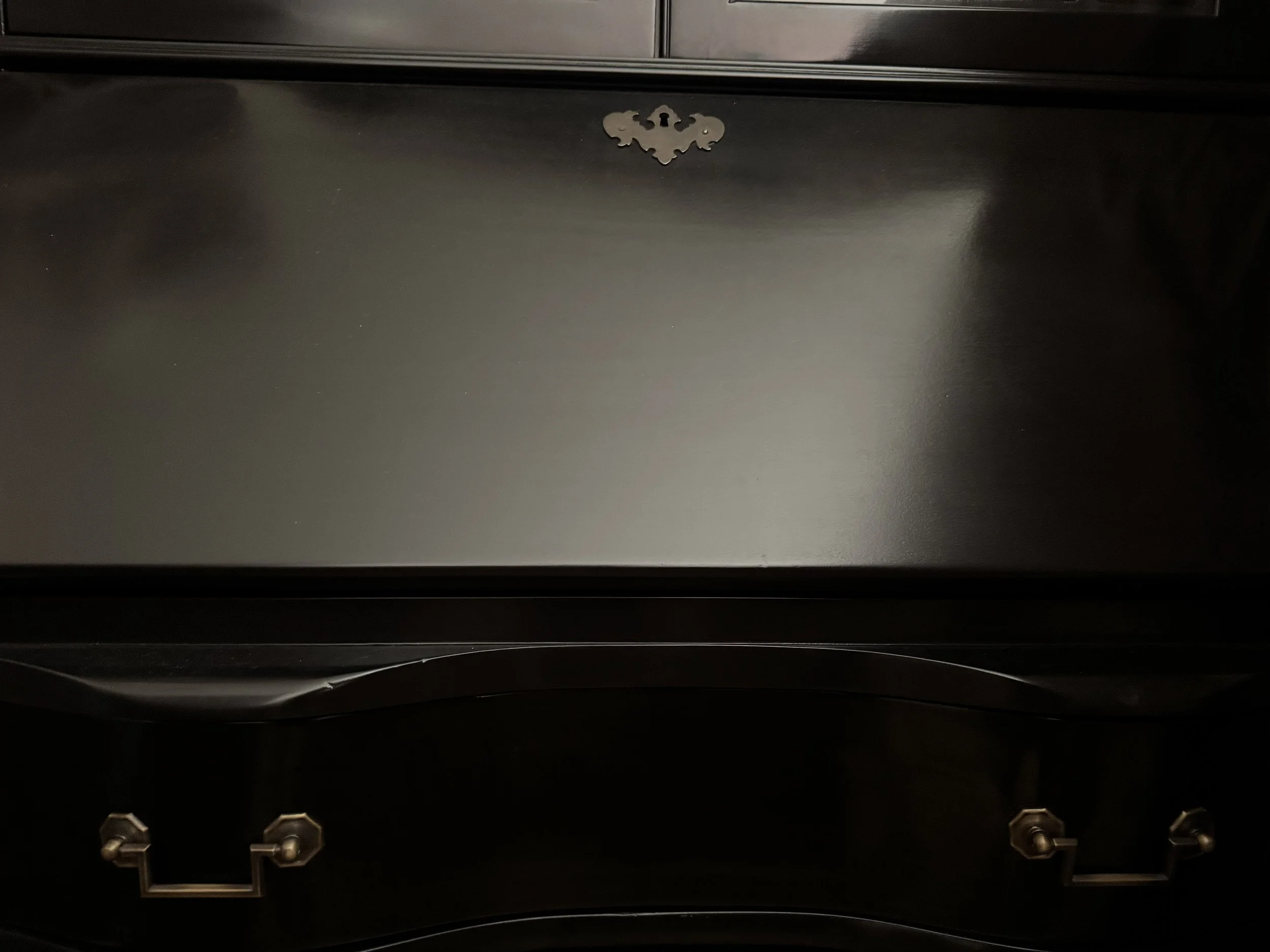 Image 9 of 9
Living With This Object
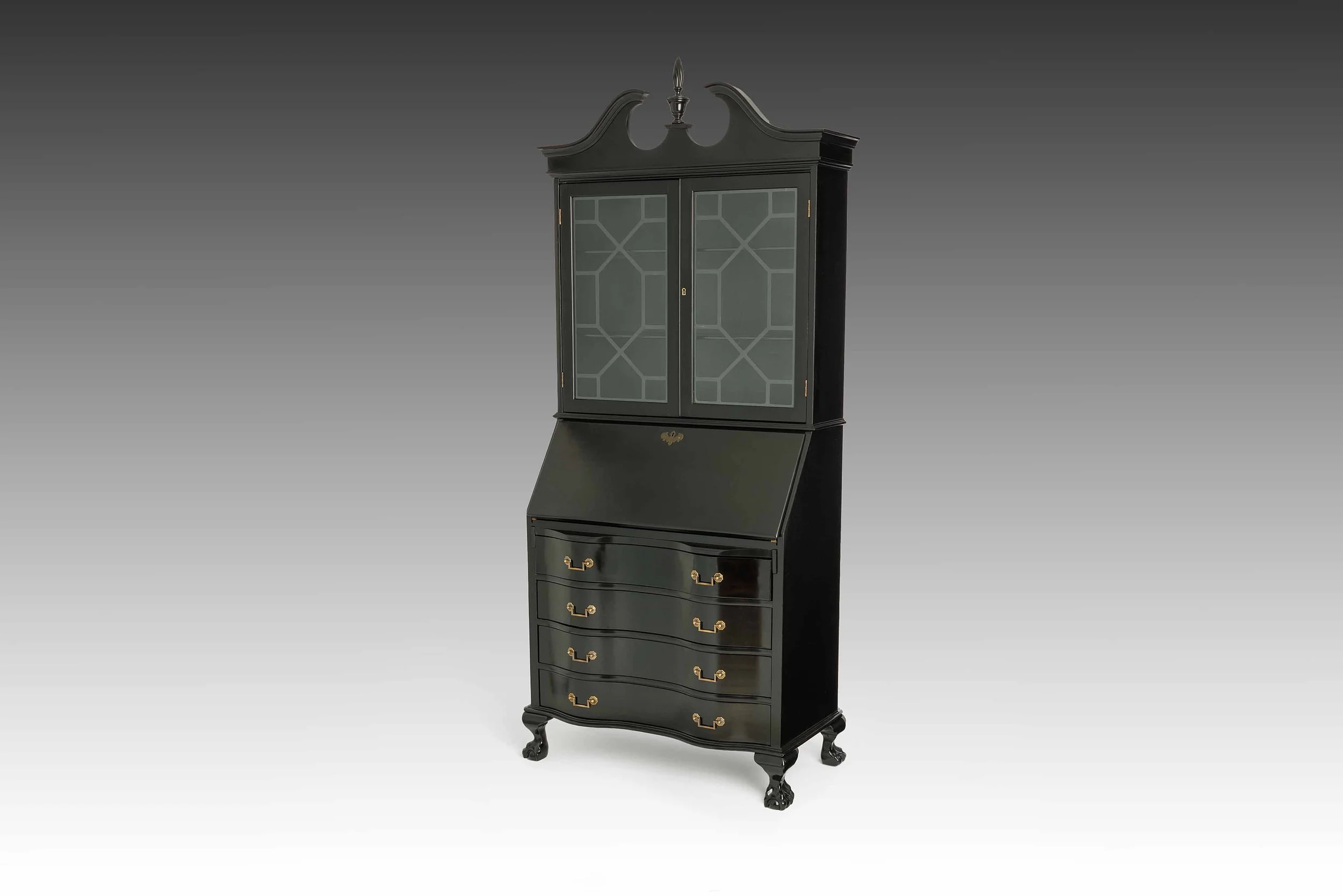
At full height the secretary reads as architecture in the room: the swan-neck pediment and urn finial carry the eye upward, the astragal-glazed doors present their contents through a drawn lattice, and the black lacquer holds the whole composition in silhouette against a wall. Open, the fall front drops to a writing surface and the fitted interior of pigeonholes, small drawers, and the central prospect door comes into view; closed, the case returns to a tall, contained column of storage on a bookcase's footprint.
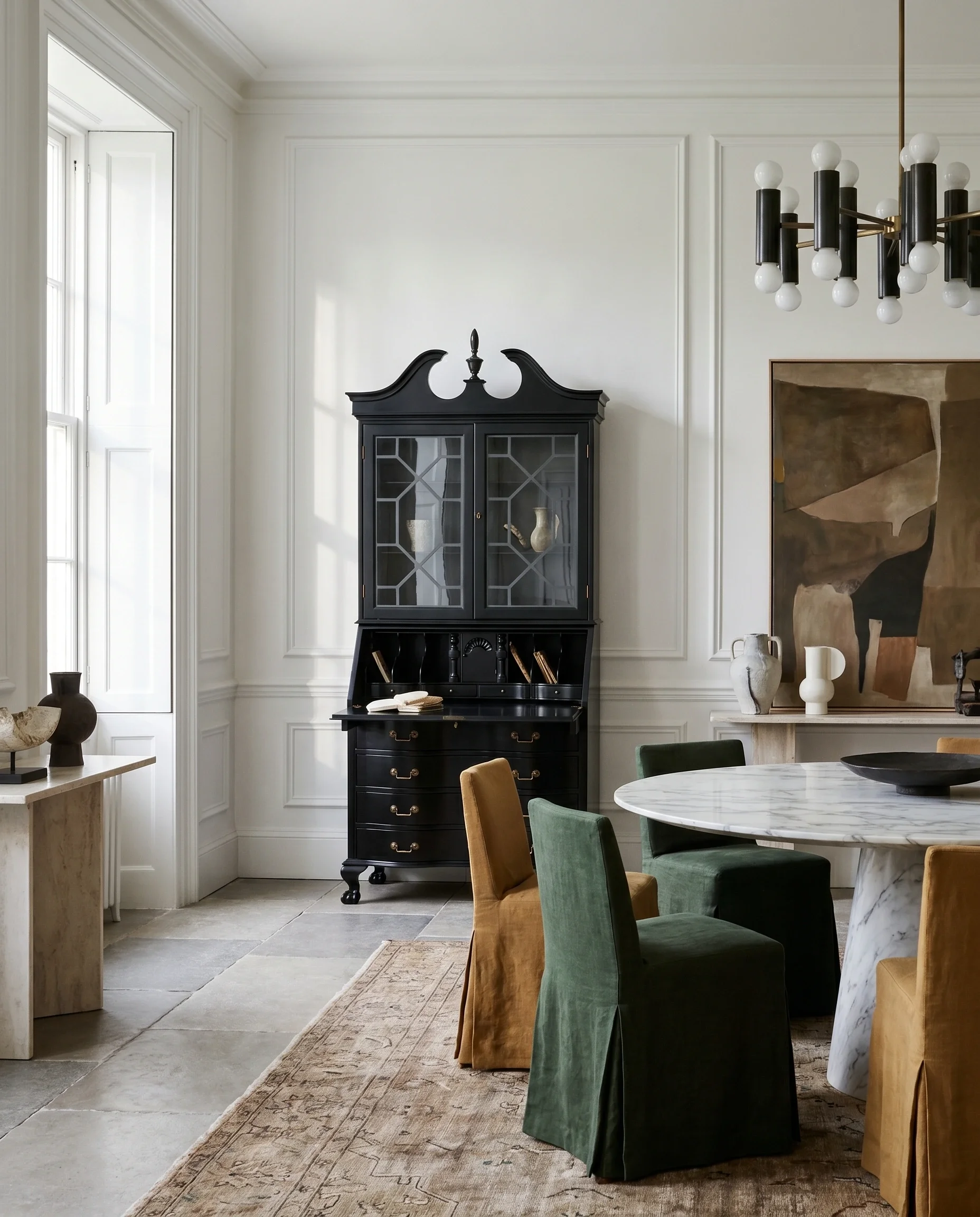
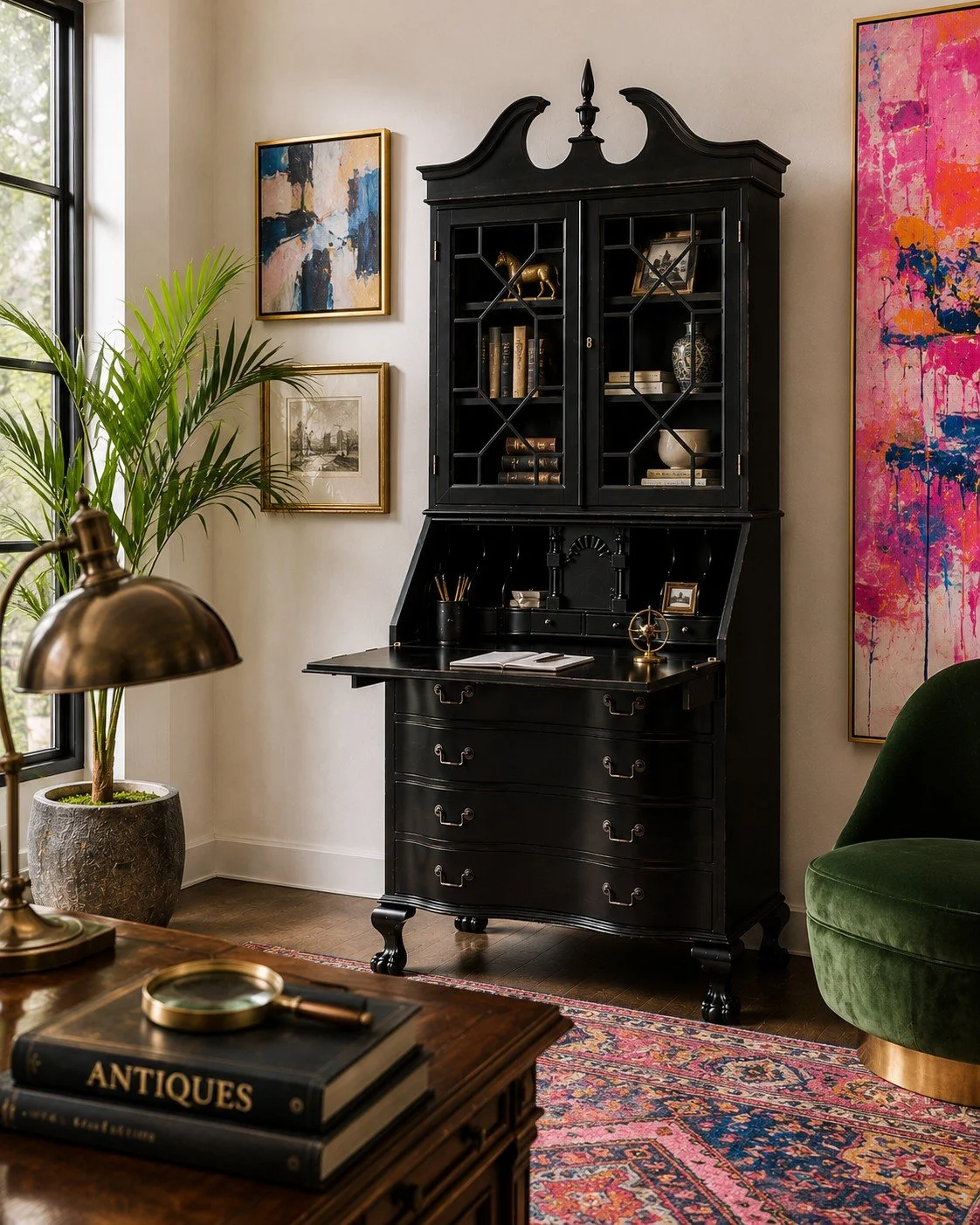
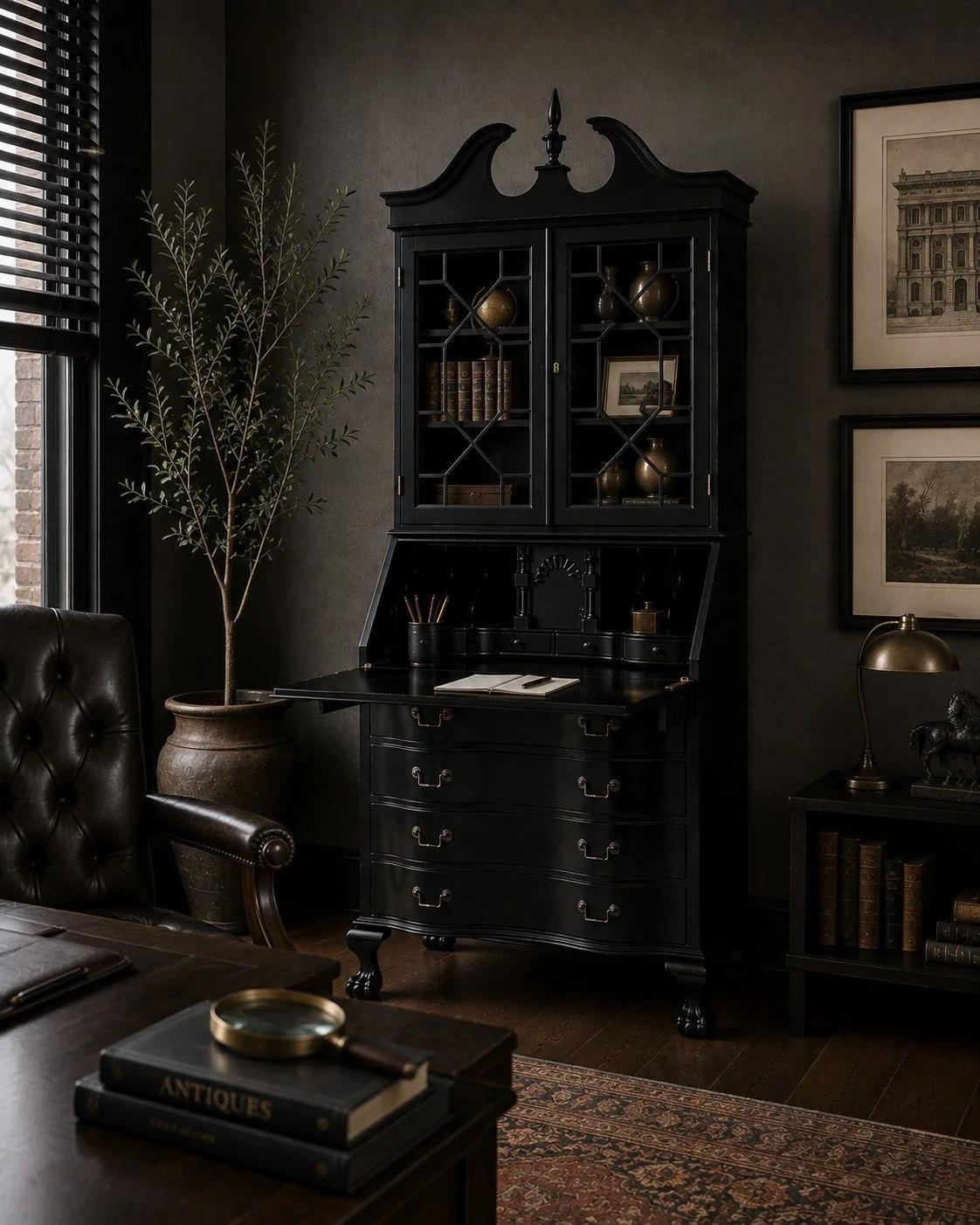
The room views below are AI-generated room visualizations, offered to suggest scale and placement across different interiors. They are rendered images, not photographs of this desk in these rooms. The furnishings shown with it, and the objects styled inside the case, are staging and are not included.
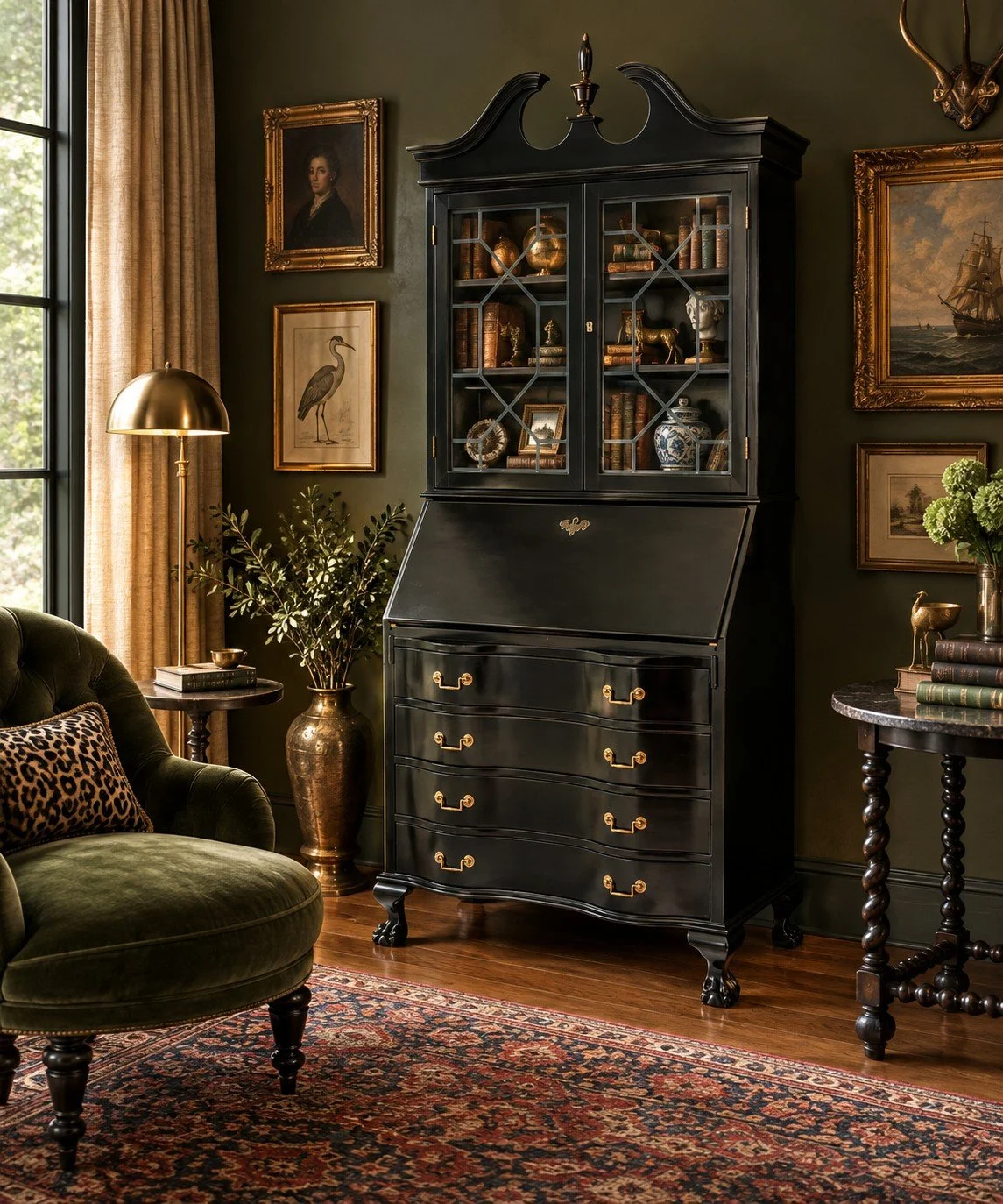
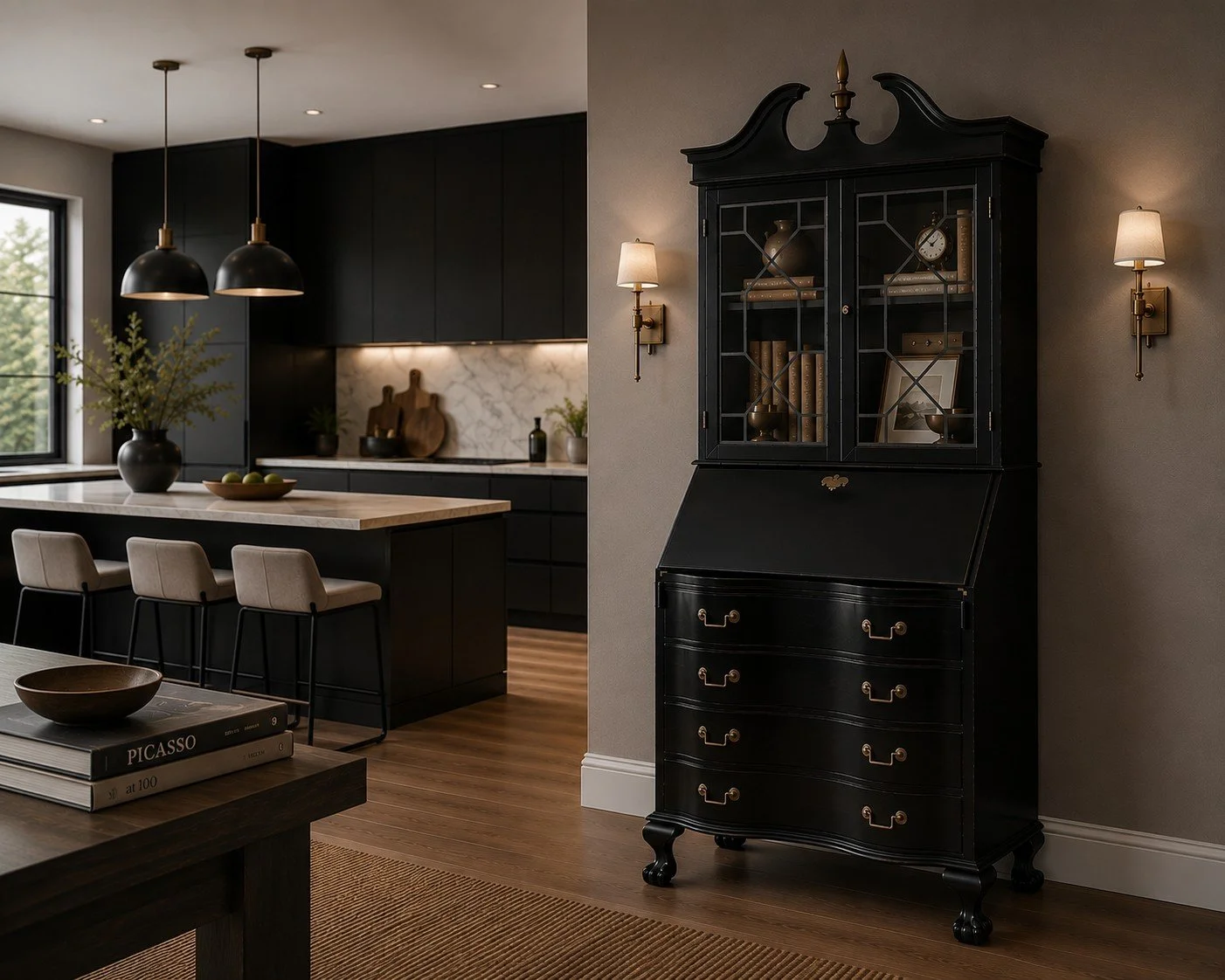
-
The secretary carries its storage upward rather than outward: a footprint of 34 by 18 inches rising to 83 inches, so it holds a full wall's worth of order on a bookcase's patch of floor. Whether it stands in a study, a library, or a private room where writing furniture belongs within the space rather than apart from it, the glazed hutch lets you keep books or objects visible but contained. The fall front closes over work in progress, so the piece stays composed in rooms that are also lived in.
-
Type: Secretary desk with hutch (slant fall front, glazed bookcase top)
Style: Chippendale Revival (Colonial Revival)
Date: Circa 1930–1950
Origin: Not established
Provenance: Most recent documented acquisition through a charity shop in Lomita, California
Material: Hardwood; brass hardware
Finish: Black lacquer, applied in restoration
Construction: Serpentine drawer fronts; astragal-glazed upper doors; fitted fall-front interior; claw-and-ball front feet
Maker & Origin: Unattributed; no mark found on in-person inspection
Condition: Restored; refinished in black lacquer, all pulls and the lock replaced; joinery and interior configuration retained
Dimensions: 34 W × 18 D × 83 H in.
-
Original: The case joinery and the fitted interior configuration behind the fall front were retained.
Replaced: The original drawer pulls were broken and were replaced on all four drawers with reproduction Chippendale rosette pulls from House of Antique Hardware, finished by hand in the maker's Antique-By-Hand process, an unsealed brass living finish that develops with handling and is best kept by dusting or a damp cloth, without polishes or cleansers, which would lift the patina. The lock was replaced with a new piece selected to match the pulls; its keyed operation was not tested and no key is recorded.
Reconstructed: No elements were reconstructed.
Repaired: No structural repairs were required, since the case called for none.
Finish Work: The piece was stripped and refinished in black lacquer, inside and out. The finish was applied in this restoration; it is a renewed surface, not a revival of the original one.
-
The upper case is what makes this secretary read as architecture rather than casework. It is crowned by a swan-neck pediment: two opposed S-curves that rise to a central turned urn-and-flame finial, the profile the Chippendale tradition borrowed from classical doorways. Below it, the two doors are glazed with astragal muntins set in a geometric lattice, so the hutch presents its contents through a drawn pattern rather than plain panes. The black lacquer holds these lines in silhouette, which is the effect the restoration was built around.
-
An in-person inspection found no maker's mark, label, or stamp, so the piece is left unattributed rather than assigned. Its date, circa 1930 to 1950, rests on style and construction rather than on a mark or documentation: the serpentine drawer fronts, the proportions, and the slant-front-secretary form are characteristic of early-to-mid-twentieth-century Chippendale Revival production. The form draws on English Chippendale design and on American Colonial Revival production, and the slant-front secretary in this taste was made in more than one country. Because this example is unmarked, its manufacture origin is not established.
-
The case is built of a hardwood whose primary species is unconfirmed: the imported decorative hardwoods used for this form converge in appearance, and the present finish covers the surface. The construction is consistent with twentieth-century cabinetwork: four long drawers of equal height with serpentine fronts over a shaped base, on claw-and-ball front feet. Behind the fall front, the writing interior is fitted in full: pigeonholes with shaped dividers, a row of small drawers, and a central prospect door carved with a fan shell, flanked by turned column document dividers. The pediment and glazed doors above are described under their own heading.
-
Secretaries of this kind belong to a form built around keeping a household's correspondence and papers. Its hinged writing flap gave a surface for letters and accounts and then closed over them, keeping personal and household business in order and out of view; the drawers below stored documents, and the glazed upper case held books. By the time this example was made, the early-to-mid twentieth-century Colonial Revival had carried that eighteenth-century form, often marketed as a Governor Winthrop secretary, into American homes as a token of inherited tradition. This example carries the marks of use and a restoration documented in full under Condition & Restoration, from a renewed surface to replaced hardware. Its most recent documented acquisition was through a charity shop in Lomita, California, before entering the Acanthus Home collection for restoration. Its maker, its exact year, the country it was made in, and the earlier hands it passed through are not established. The record ends where the evidence ends.
-
Is this an antique or a vintage secretary? Vintage. Antique means one hundred years or older, made before 1926 by today's count. This black secretary desk with hutch dates to roughly 1930 to 1950 on the evidence of its style and construction, with no maker's mark or documentation to fix the year, so it is correctly called vintage rather than antique.
What wood is the case? The primary species is unconfirmed. The imported decorative hardwoods used for this kind of secretary converge in appearance once finished, and the black lacquer now covers the surface, so the wood cannot be named with confidence. The listing therefore uses the general term, hardwood, rather than assigning a species the piece does not confirm.
Has it been restored? Yes, and the work is fully disclosed. The whole piece was stripped and refinished in black lacquer, inside and out. The drawer pulls and the lock were replaced, detailed in the next answer, and the case needed no structural work: the joinery and the fitted interior configuration behind the fall front were retained.
Why were the handles and lock replaced? The original pulls were broken, so all four drawers were fitted with reproduction Chippendale rosette pulls in a hand-applied, unsealed brass finish that ages with handling, chosen to suit the form. A new lock piece was fitted to match them; its keyed operation was not confirmed and no key is recorded.