 Image 1 of 2
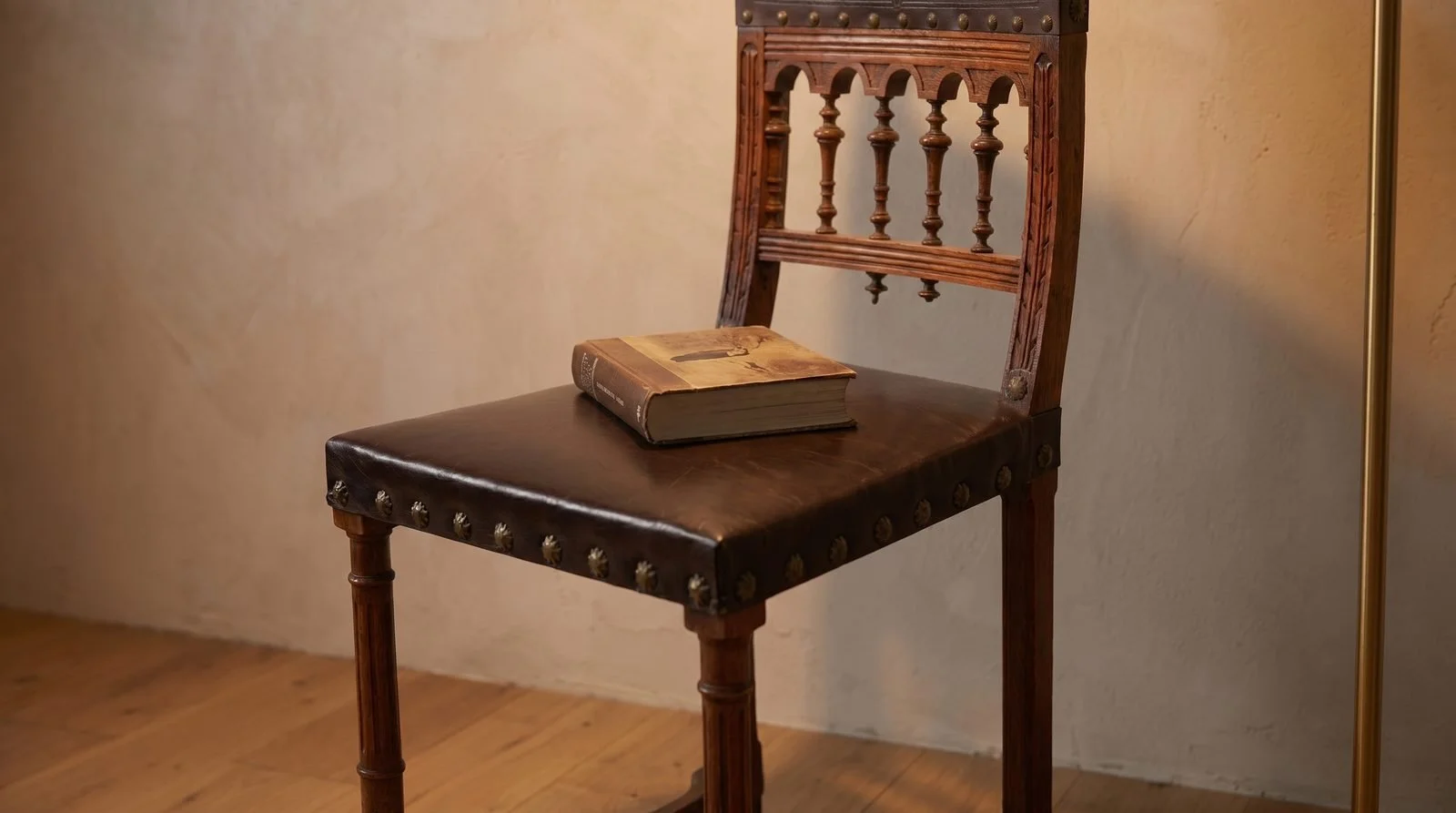 Image 2 of 2
Living With This Object
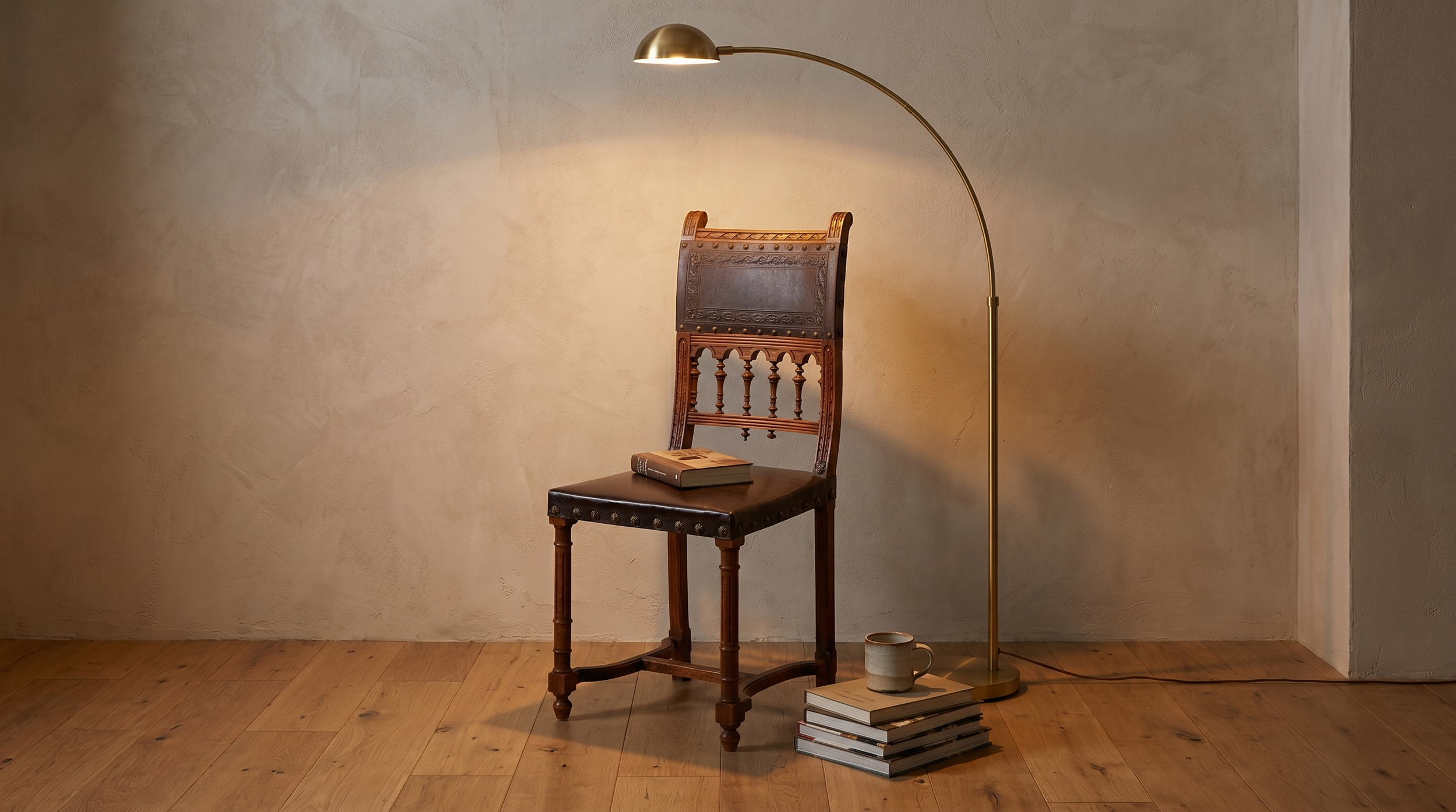
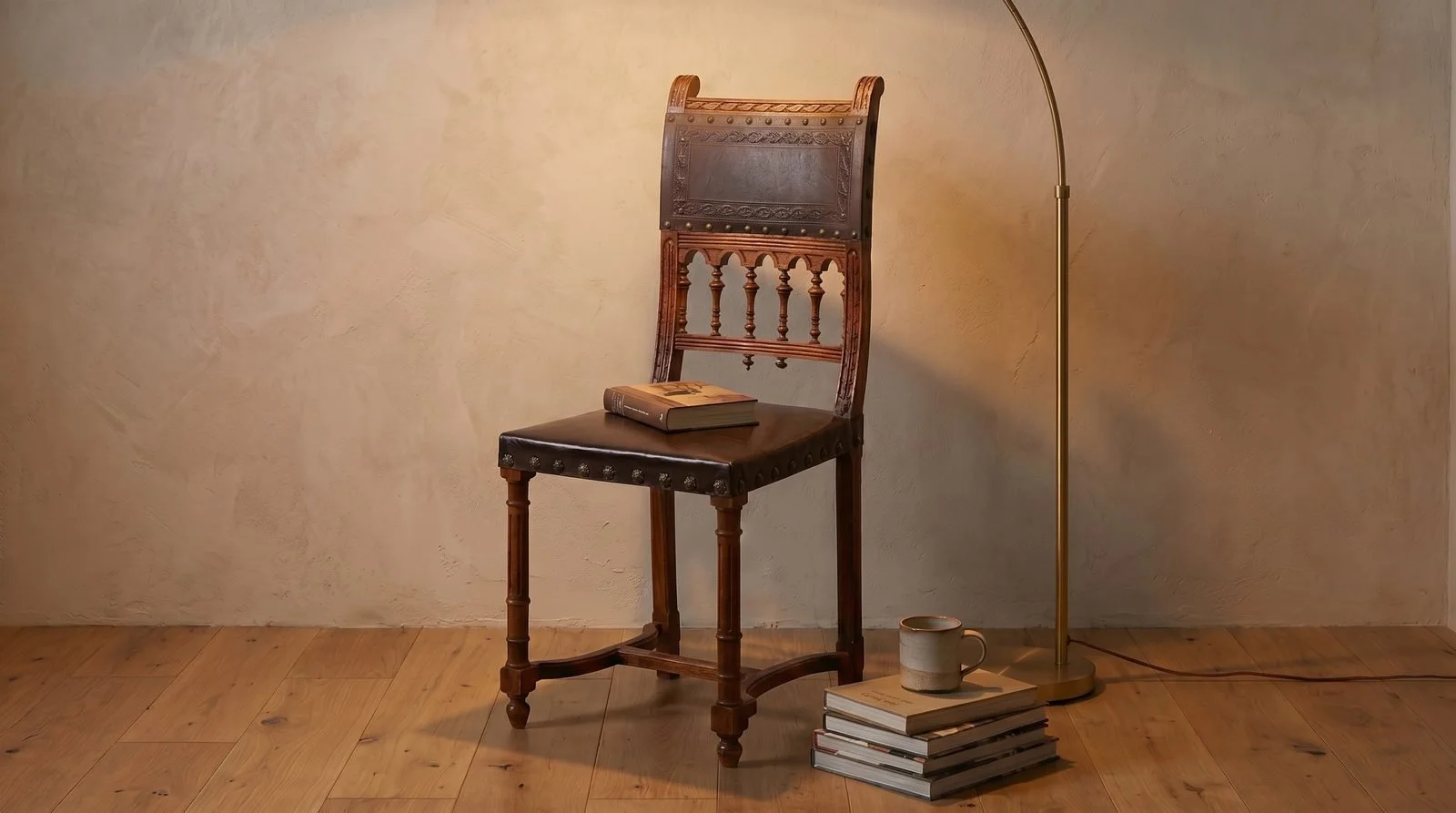
Upright and open, the chair reads as a vertical passage of pattern: the embossed leather back panel above the open gallery of turned spindles, the rope-twist crest finishing in scrolled ears, and the brass florette nailheads catching the light along the leather's borders. The frame keeps the darkened tone of its original surface, while the smooth new seat sits quiet beneath the worked back.
The room view below is an AI visualization, offered to suggest scale and placement. It is a rendered image, not a photograph of the chair in this room.
-
Set it at a writing table or alone against a wall, in a library, a reading room, or a formal passage. A single chair of this kind reads as a deliberate placement rather than a spare seat.
-
Type: Side chair; armless single chair
Style: Renaissance Revival (French Henri II)
Date: Circa 1880–1900
Origin: Not established (unmarked)
Maker: Unattributed (no maker's mark located)
Provenance: Acquired from a Rancho Palos Verdes, California family estate
Material: Hardwood frame; embossed and smooth leather; brass nailheads
Finish: Original surface, retained; cleaned and revived in restoration
Construction: Mortise-and-tenon frame; turned spindle gallery under a carved arcade; leather secured on brass nailheads
Condition: Restored; original embossed leather back panel retained; seat reupholstered; several back finials absent
Dimensions: 16⅝ W × 16 D × 37¼ H in.; seat height 17¾ in.
Upholstery: Original embossed leather back panel retained; seat recovered in new dark-brown leather during restoration
-
Original. The embossed leather back panel is original to the chair and has been retained. The original structure and proportions appear unaltered.
Replaced. The seat covering, originally a matching embossed leather that had torn across the seat, has been replaced with new smooth dark-brown leather.
Finish Work. The frame retains its original surface, cleaned and revived.
-
Below the leather back panel, an open gallery of turned spindles stands beneath a row of carved arches. The lower rail once carried a matching row of drop finials hung under the arcade; several of these pendants are now absent, a few remaining. The loss is left uncorrected.
-
The chair carries no maker's mark and is unattributed, and the origin of this example is not established. Its form belongs to the French Henri II strain of the Renaissance Revival, the historicist taste that drew on sixteenth-century models in French interiors of the late nineteenth century. Form and construction together place it circa 1880–1900. The French Henri II designation describes the style from which the design derives, not a documented place of manufacture. Renaissance Revival furniture of this type was produced in several countries during the late nineteenth century, and this example carries no evidence that identifies where it was made.
Provenance: Acquired from a Rancho Palos Verdes, California estate sale, together with The Spindle Crest Eastlake chair, The Stratelle Spanish Colonial cabinet, and The Chamber Reliquary marble-top nightstand.
-
The frame is a warm, close-grained hardwood, its species unconfirmed. Joinery is mortise-and-tenon, with the spindles tenoned between the back rails. The crest rail carries a rope-twist band and finishes in scrolled ears, while the back stiles are fluted. The front legs are turned as fluted columns on ring-turned feet, the back legs plain and raked, and a shaped H-stretcher curves between them near the floor. The back panel is embossed leather, a foliate scrollwork border framing a pebbled centre field; the seat, recovered in new smooth leather, reads plain by contrast. Brass florette nailheads secure the leather along its borders.
-
This chair came from the same estate as The Spindle Crest Eastlake chair, The Stratelle Spanish Colonial cabinet, and The Chamber Reliquary marble-top nightstand. Together, these acquisitions document that all four objects were present within the same Rancho Palos Verdes, California household when they were acquired by Acanthus Home. Side chairs of this kind furnished dining rooms, halls, and studies during the final decades of the nineteenth century, where an upright back and leather upholstery suited interiors influenced by the Renaissance Revival. The journal's The Chair, the Bench, and the Spaces In Between follows one turned spindle-back chair through a family's photographs, beginning with a studio portrait taken in 1902. This example wears its service openly. The embossed leather back panel carries the gentle compression and patina of long use, while the matching embossed leather that originally covered the seat had torn before restoration. That restoration, detailed under Condition & Restoration, is its first fully documented chapter. Earlier ownership, maker, and place of manufacture remain unrecorded, and the record ends where the evidence ends.
-
Is this an antique or a vintage chair? Antique. We catalogue this antique spindle-back leather chair at circa 1880–1900, dating it by its form, embossed leather, and construction, since it carries no maker's mark or documents. That places it well past the hundred-year threshold Acanthus uses, so it is an antique rather than a vintage chair.
What are the small pieces missing from the back? Below the gallery of turned spindles, the lower back rail once carried a row of small drop finials, pendants that continued the vertical rhythm above. Several are now absent, a few remaining. The loss has been left uncorrected rather than reproduced, so the back reads honestly as the object survives, not as a restoration guess.
Has it been restored or reupholstered? Yes. The original embossed leather back panel was kept, along with its brass nailheads. The seat, originally covered in a matching embossed leather that had torn, was recovered in new smooth dark-brown leather, while the frame's original surface was cleaned and revived rather than stripped and refinished.
What wood is the frame? The frame is a warm, close-grained hardwood with a fine, fairly straight figure. Without documentation, the species is unconfirmed and we do not name it. Walnut was the usual choice in this French tradition, but that is context, not a reading of this frame.