 Image 1 of 9
 Image 2 of 9
 Image 3 of 9
 Image 4 of 9
 Image 5 of 9
 Image 6 of 9
 Image 7 of 9
 Image 8 of 9
 Image 9 of 9
Living With This Object
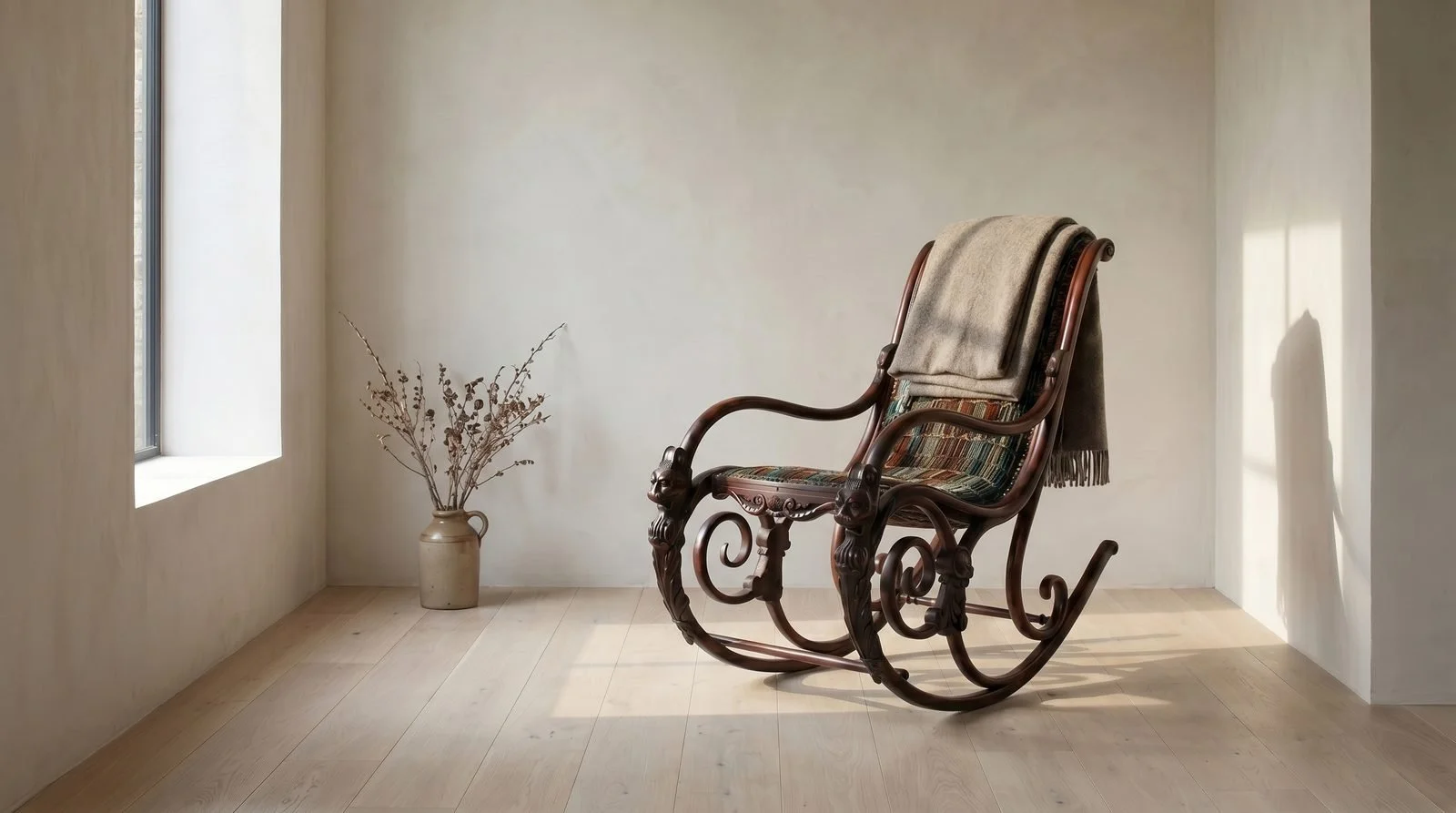
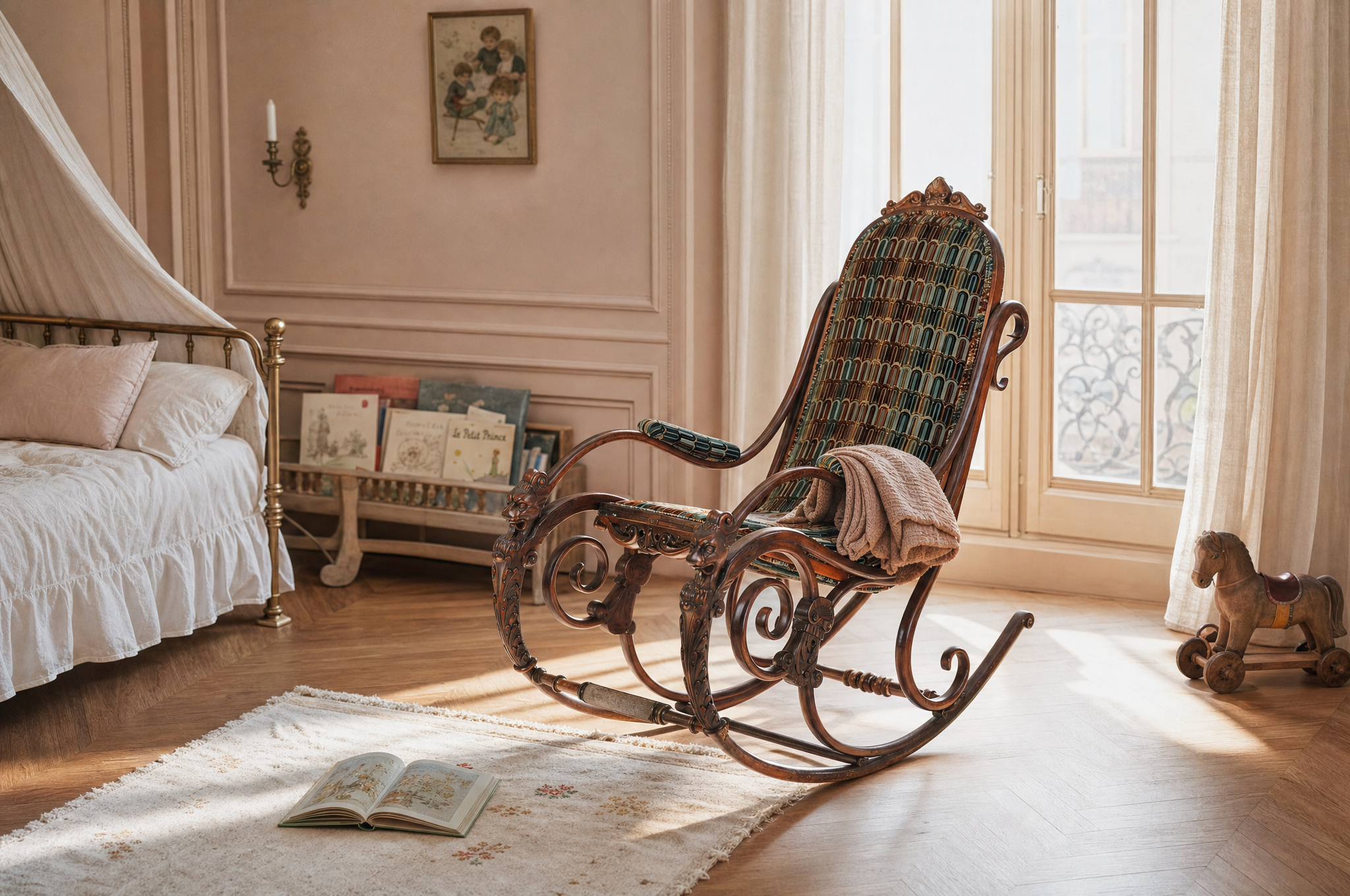
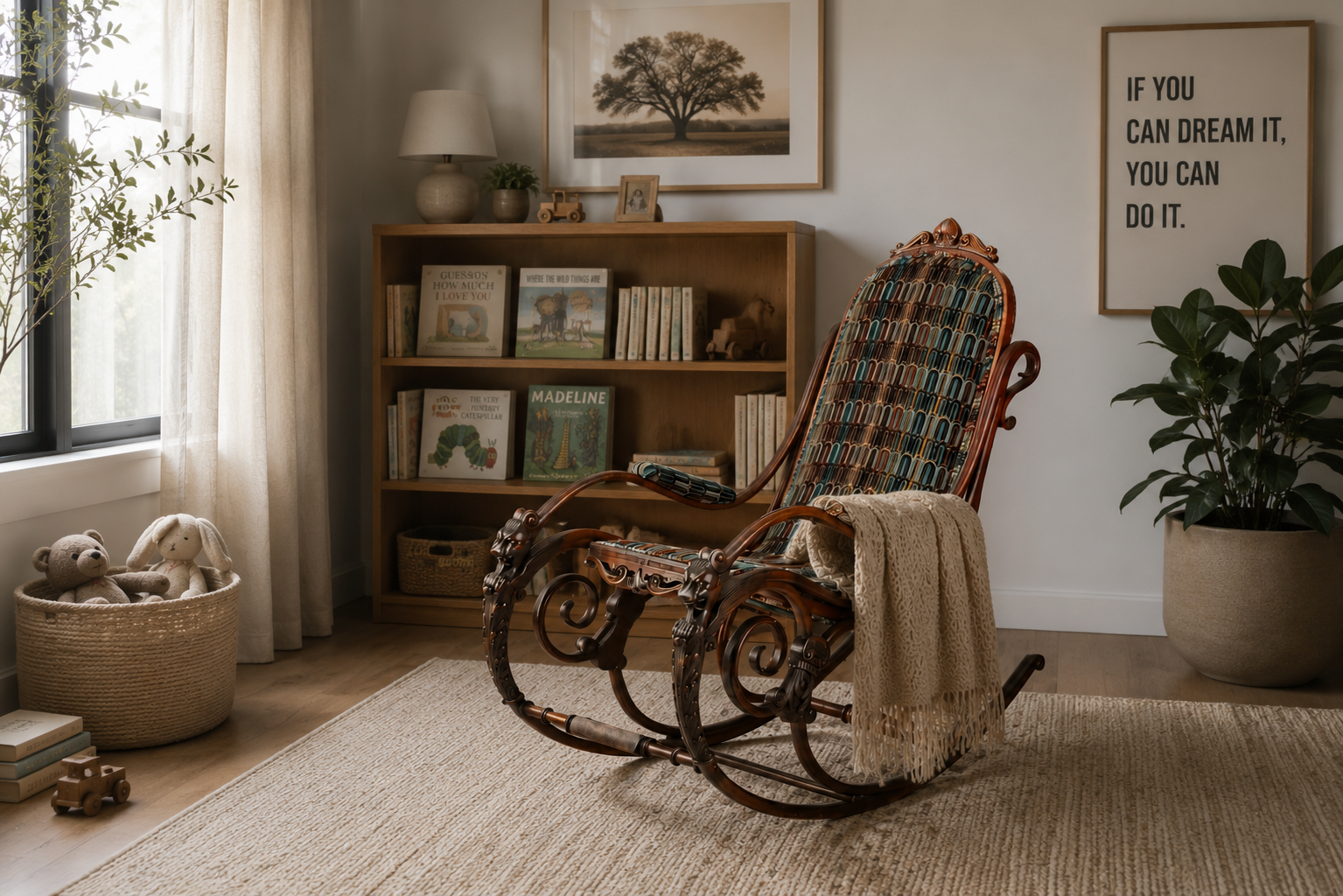
In a room the rocker reads in profile: the scrolled runners and the carved walnut frame draw its line, the bearded lion masks catch the light where the arms end, and the polychrome cut velvet introduces teal, rust, cream, and brown against the dark walnut.
The room view below is an AI visualization, offered to suggest scale and placement. It is a rendered image, not a photograph of the chair in this room.
-
Set into a corner of a study, a library, or a bedroom, the chair becomes the single seat that sets the tone of a room. Its long runners want clearance front and back, rocking freely on bare floor or a flat-woven rug, and the carved frame reads clearly in profile against a plain wall.
-
Type: Rocking chair; carved frame on scrolled runners
Style: Renaissance Revival
Date: Circa 1860–1885
Origin: Not established (unmarked)
Provenance: Most recent documented acquisition through a New York auction
Material: Walnut, solid
Finish: Original, retained; frame unrestored
Construction: Hand-carved, traditionally joined; not bentwood
Maker & Origin: Unattributed; not Thonet (confirmed against Thonet's archives)
Condition: Unrestored frame with original finish; seating reupholstered
Dimensions: 23¼ W × 46½ D × 48¼ H in.; seat height not recorded
Upholstery: Carlucci 'Time Traveller Europe' cut velvet, seating only (see The Carlucci Cut Velvet)
-
Original: The walnut frame, all carving, the turned stretchers, and the surface finish.
Replaced: The seating cover, renewed in the documented reupholstery (see The Carlucci Cut Velvet); no frame components replaced.
Reconstructed: No elements were reconstructed.
Repaired: No structural repairs are documented on the frame.
Finish Work: None. The original surface is retained, carrying the wear, fine fissures, and shifts of tone across the grain that come with use.
-
Bearded lion masks terminate the arms, carved in the round and worked into the frame rather than applied to its surface, set just where the hands come to rest. The ornament is drawn out of the wood, not laid onto it. In classical and medieval ornament the lion's head guarded a threshold; the nineteenth-century revival recovered it as a domestic motif and set it here, at the point where the body meets the chair.
-
Thonet, contacted directly, reviewed their archival catalogues and confirmed the chair was not produced in their workshop. Its hand-carved, traditionally joined construction belongs to the carved Renaissance Revival tradition rather than the bent-beech vocabulary, and the date of circa 1860 to 1885 rests on that construction. The form was produced across several European countries, and the chair itself is unmarked. Its construction is consistent with Continental European work, but neither its country of manufacture nor its maker can be established.
The chair's documented modern provenance begins with its appearance at auction in New York before entering the Acanthus Home collection.
-
Solid walnut throughout, traditionally joined. The curved members are shaped and carved rather than steam-bent, as the thickness of the stock and the depth of the cutting bear out. Shell, scroll, and acanthus carving runs through the seat apron, the stretchers, and the runners, while the turned stretchers are socketed into the shaped frame and the joints carry slotted-screw reinforcement. The unfinished secondary surfaces show oxidation consistent with age.
-
The seating is covered in a polychrome cut velvet woven in a repeating arch motif, in teal, rust, cream, and brown, chosen in the documented reupholstery rather than original to the chair. The covering is modern by design: the fabric takes the use so the original frame does not have to.
Manufacturer: Carlucci
Collection: Time Traveller Europe
Composition: 100 percent cotton ground, 100 percent viscose pile, as stated by the manufacturer
Performance: 35,000 Martindale rubs, as stated by the manufacturer
Reupholstered: Yes; the seating only
-
In nineteenth-century homes the rocking chair sat between utility and ritual, drawn up for reading, conversation, convalescence, and quiet observation, and often the most personal seat in a household, the one chair kept for a particular person. This example carries that use in its retained surface, worn and finely fissured, and in a frame left unrestored while only its seating was renewed. Its maker, its exact year, the households it passed through, and the country in which it was made are not recorded, and those chapters remain open. Its documented modern history begins with its appearance at auction in New York, from which it entered the present collection.
-
Is this an antique or a vintage rocking chair? Antique. This antique walnut rocking chair dates to circa 1860–1885, roughly 140 to 165 years old and well past the 100-year line that separates antique from vintage. The call rests on its hand-carved, traditionally joined construction and on secondary surfaces oxidized with age, an informed inference stated as circa rather than a documented year.
Is it bentwood? No. The frame is hand-carved solid walnut, traditionally joined, its depth of cutting and thickness of stock setting it apart from bent-beech seating. The curved members are shaped and cut by hand rather than formed under steam, which is why the chair is so often taken for bentwood at first glance.
Why is it not attributed to Thonet? It was once taken for bentwood, so the question was put to the source. Contacted directly, Thonet reviewed their archival catalogues and confirmed the chair was not made in their workshop. Its hand-carved, jointed walnut construction belongs to the carved revival tradition, not the bent-beech methods Thonet was known for.
Is the velvet vintage or original to the chair? No. The seating was reupholstered in Carlucci's Time Traveller Europe, a current, documented cut velvet in a repeating arch motif, rated 35,000 Martindale rubs by its maker. The covering is modern by intent: the fabric takes the wear of use so the unrestored frame and its original finish do not have to.
What does Lioncourt mean? Lioncourt is Acanthus Home's name for this piece, not a maker, a place, or a historical owner. It comes from the chair's defining carving, the bearded lion masks at the ends of the arms. Each piece in the collection carries a house name of this kind, given when the object enters the record.