 Image 1 of 7
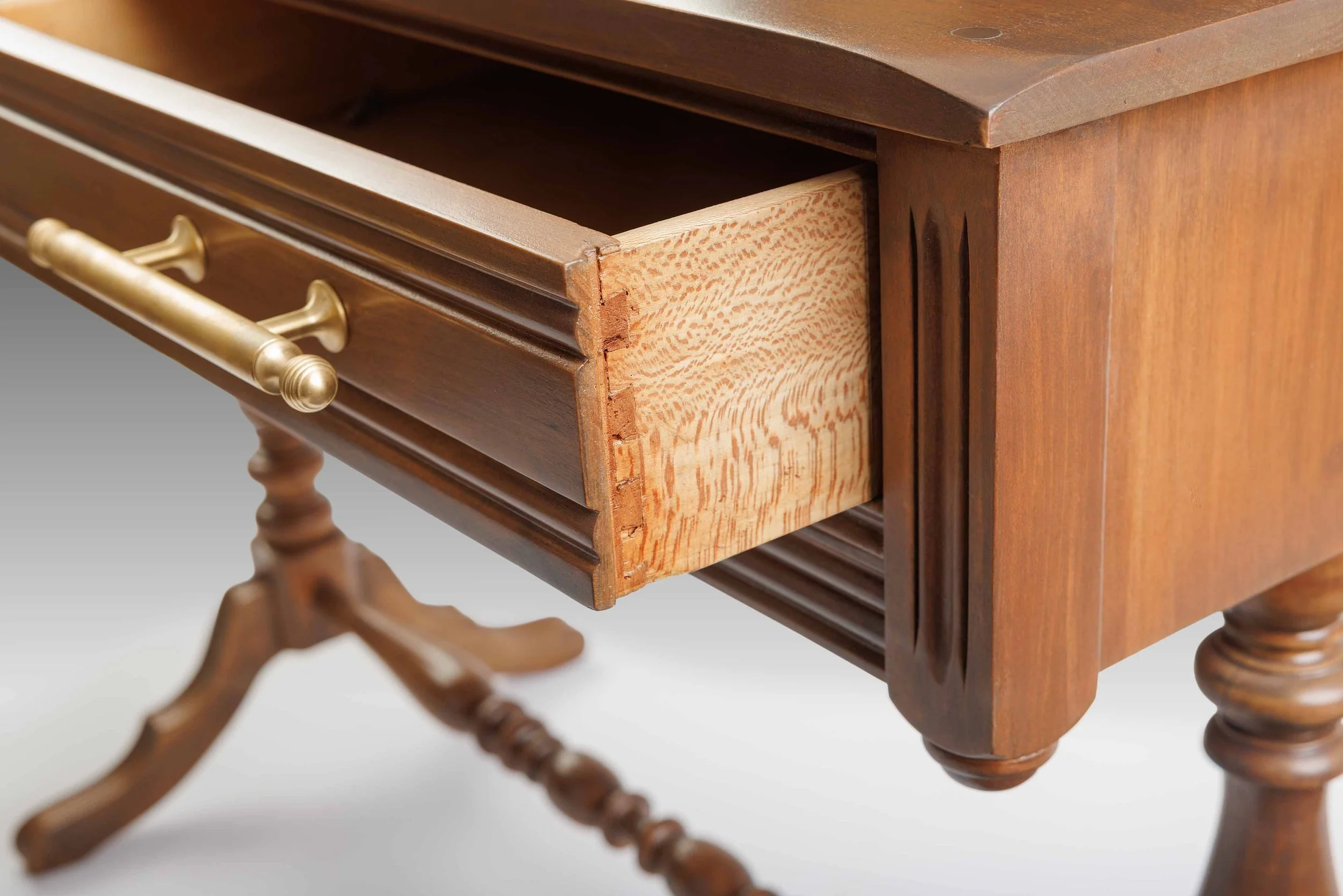 Image 2 of 7
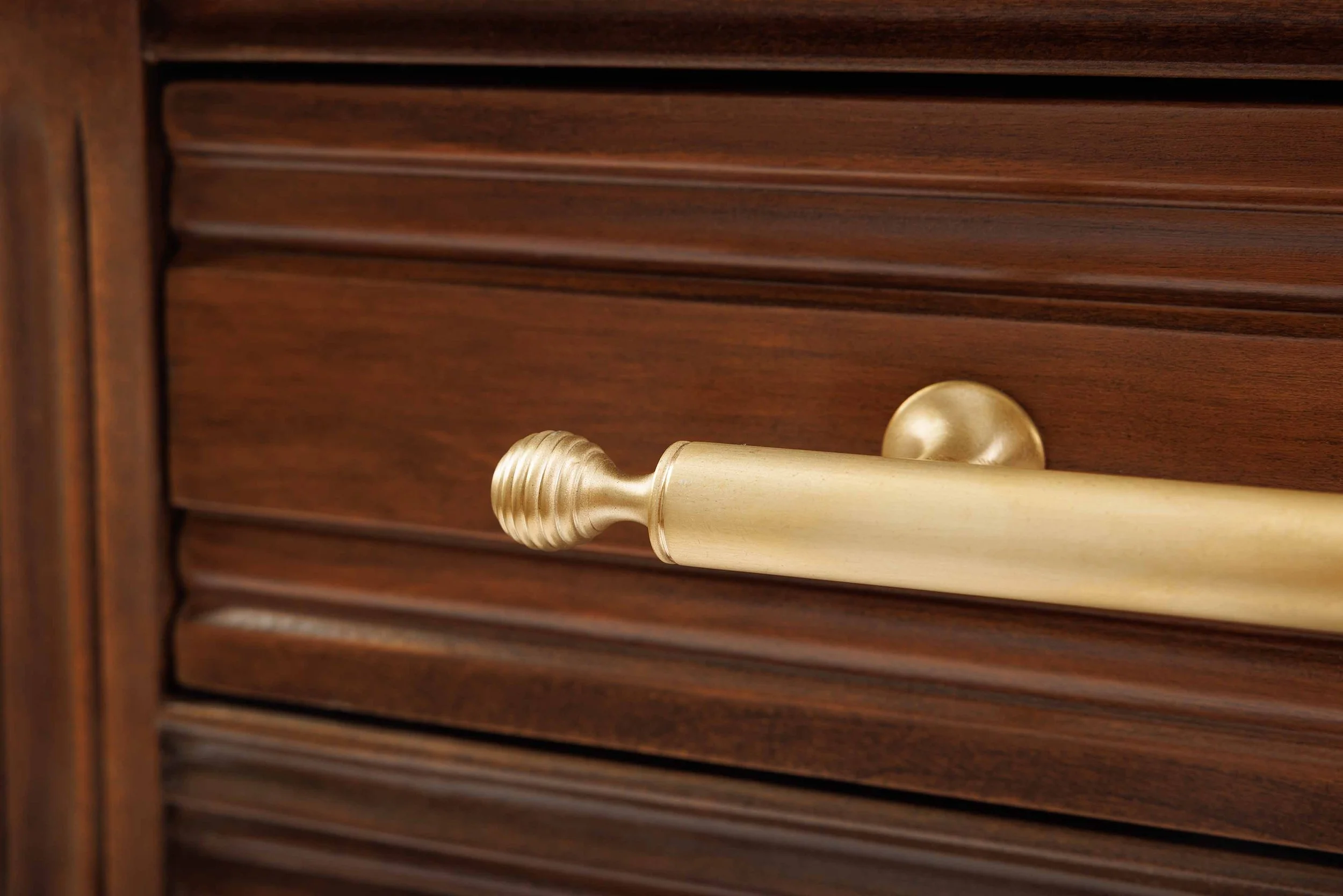 Image 3 of 7
 Image 4 of 7
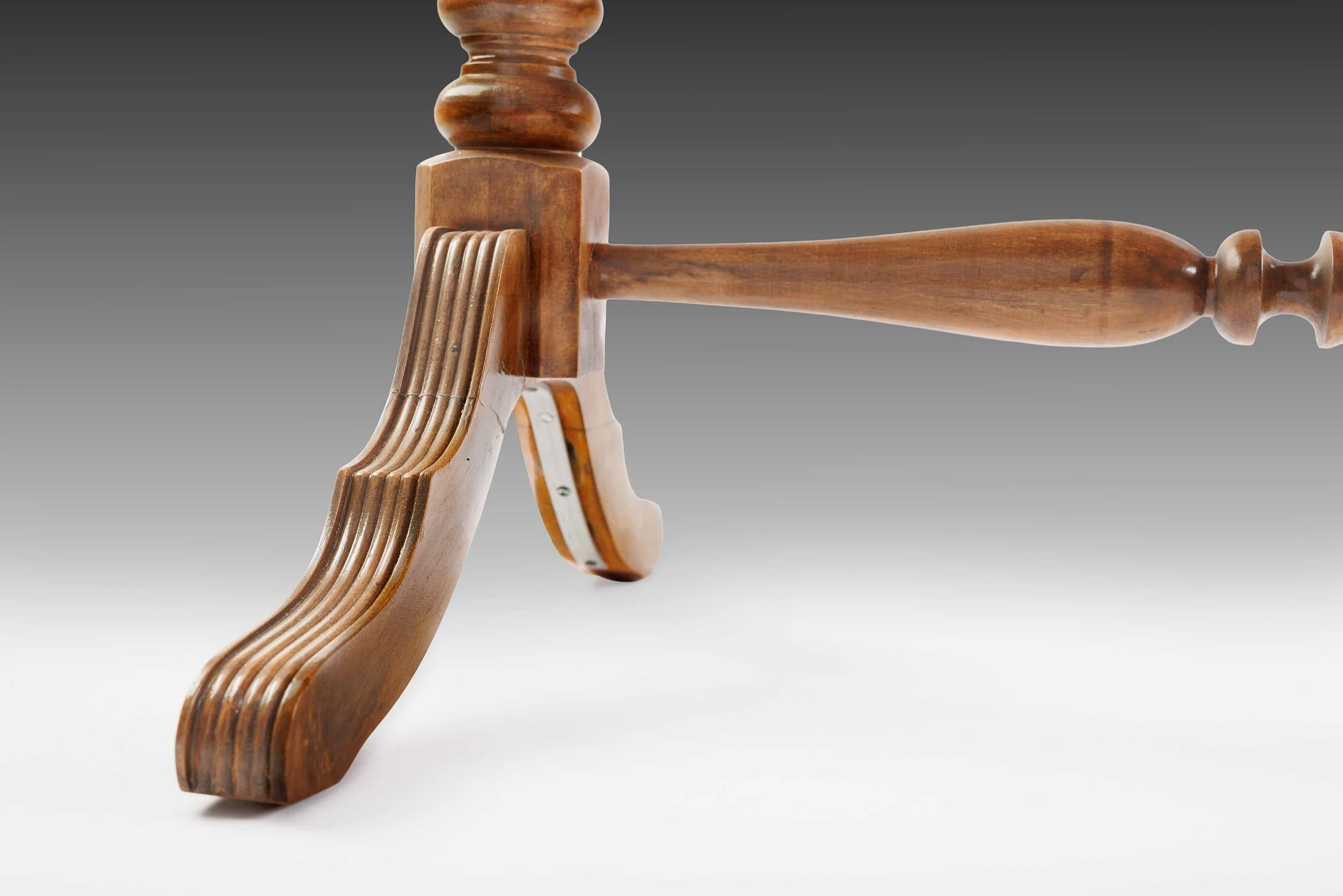 Image 5 of 7
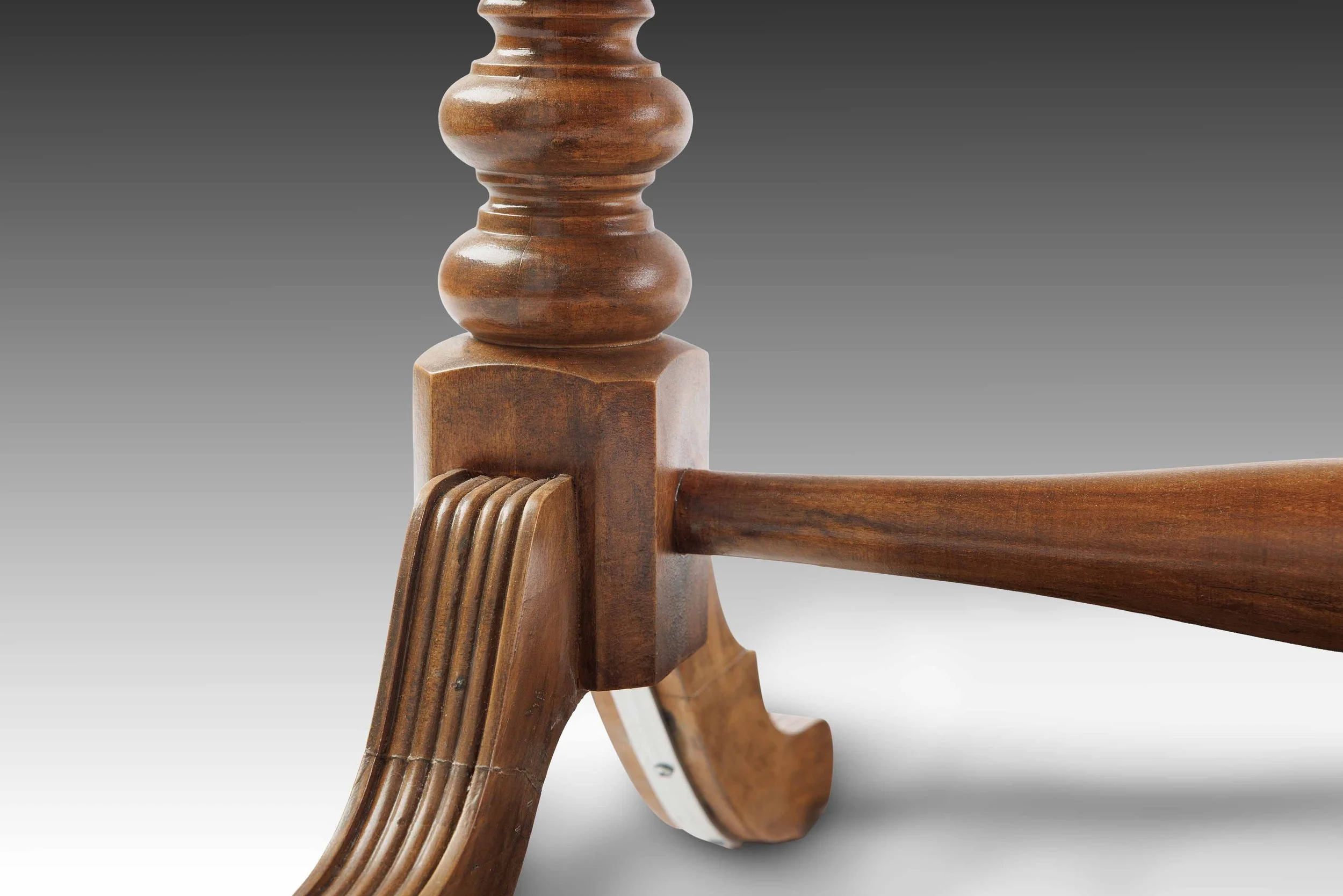 Image 6 of 7
 Image 7 of 7
Living With This Object
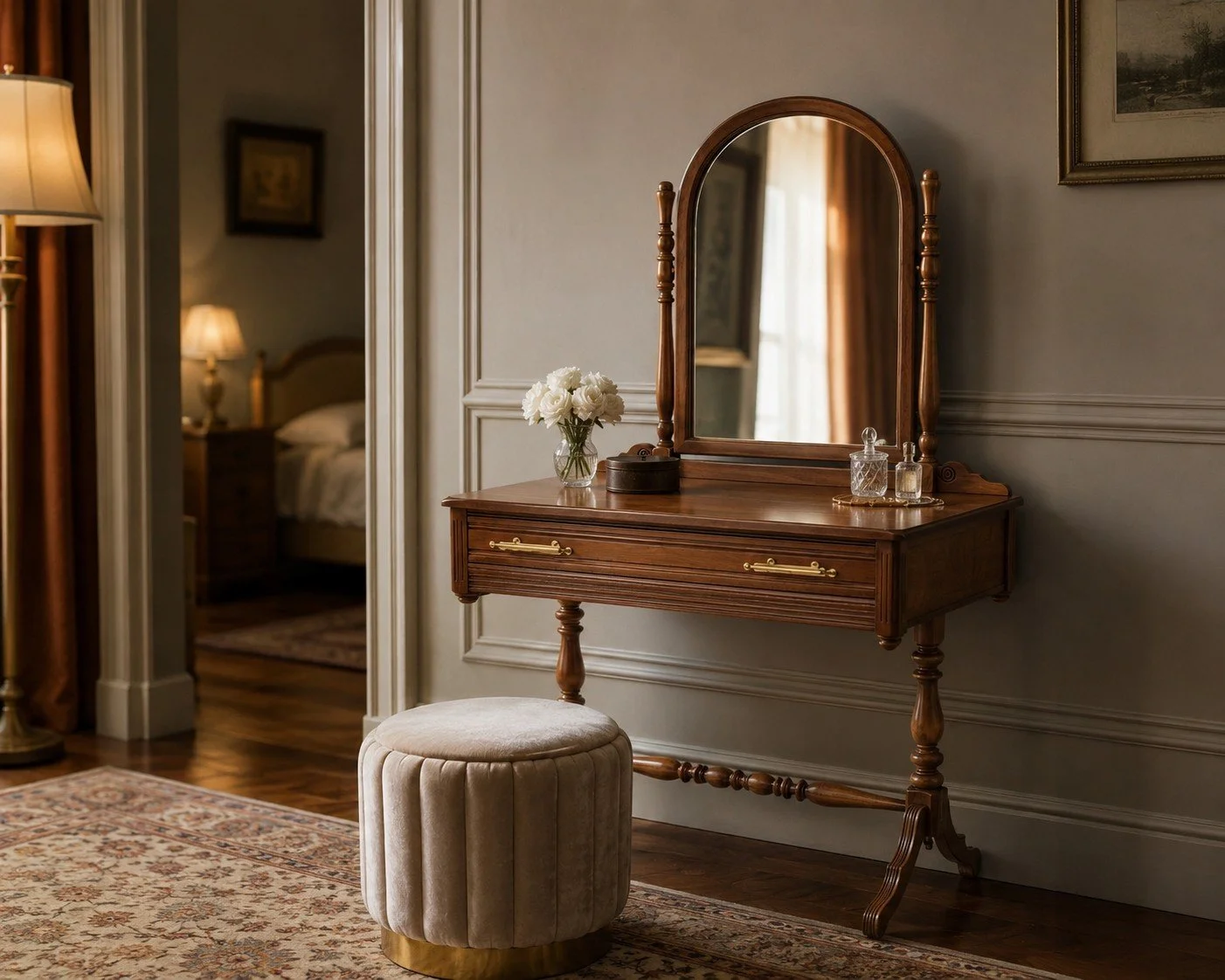
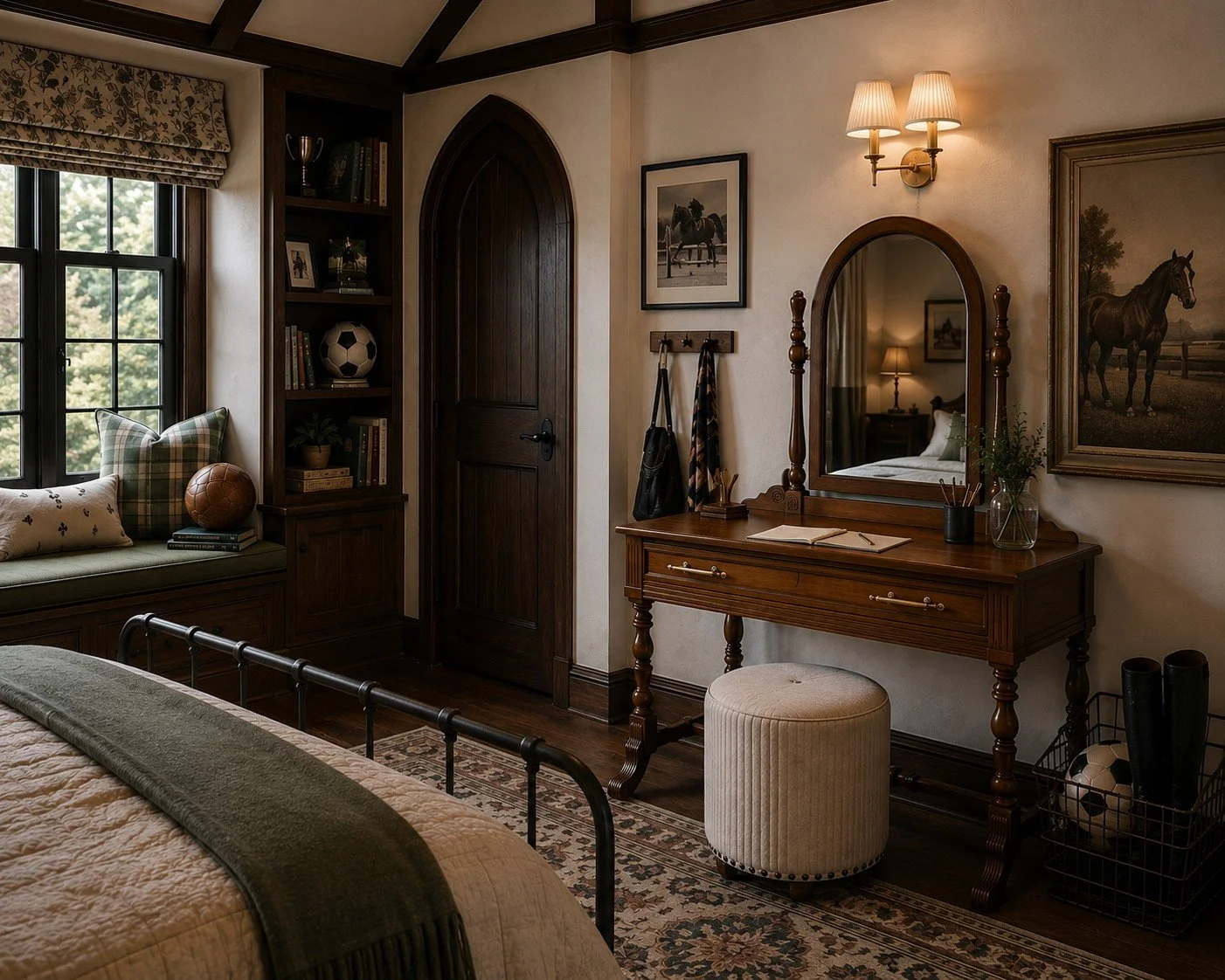
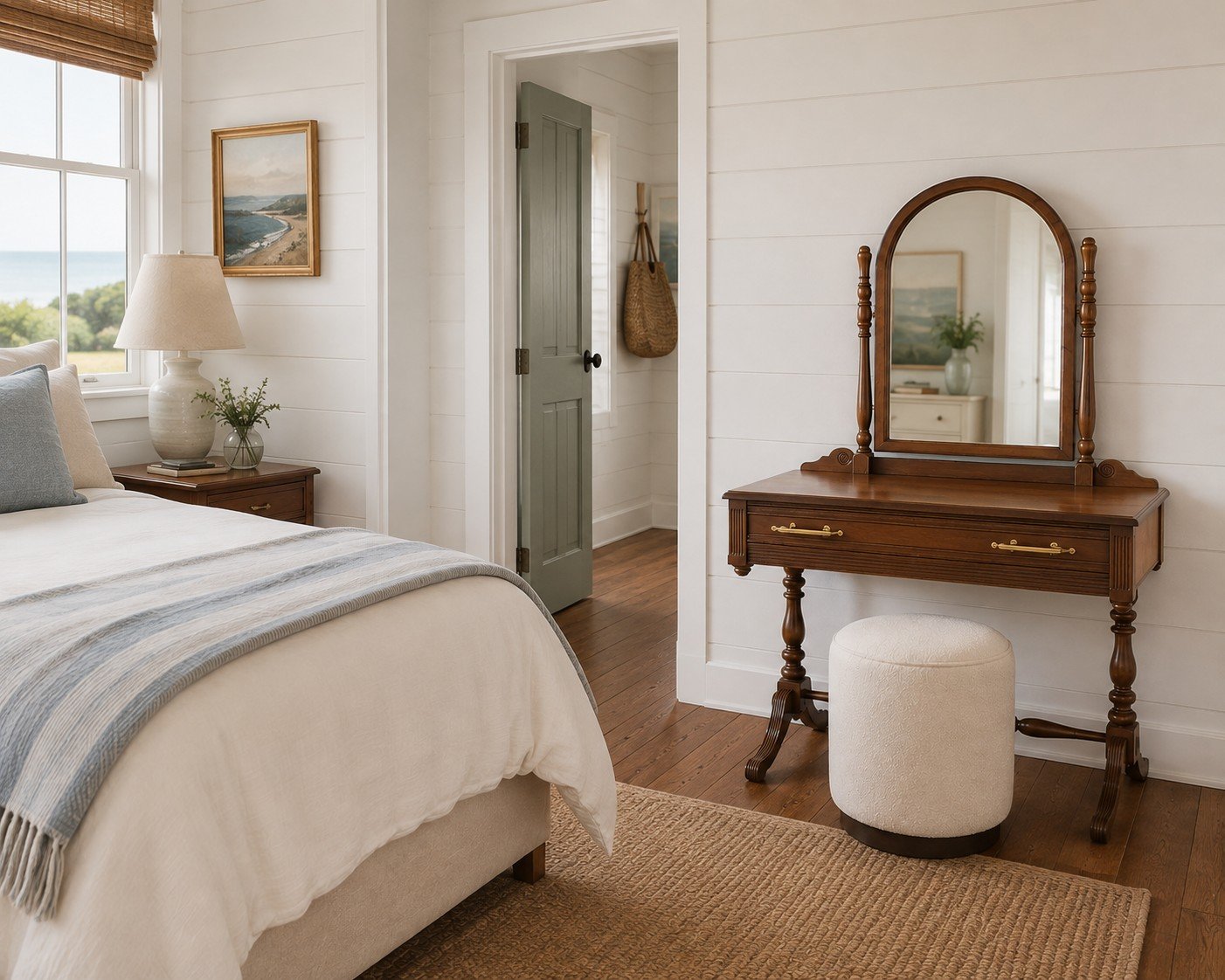
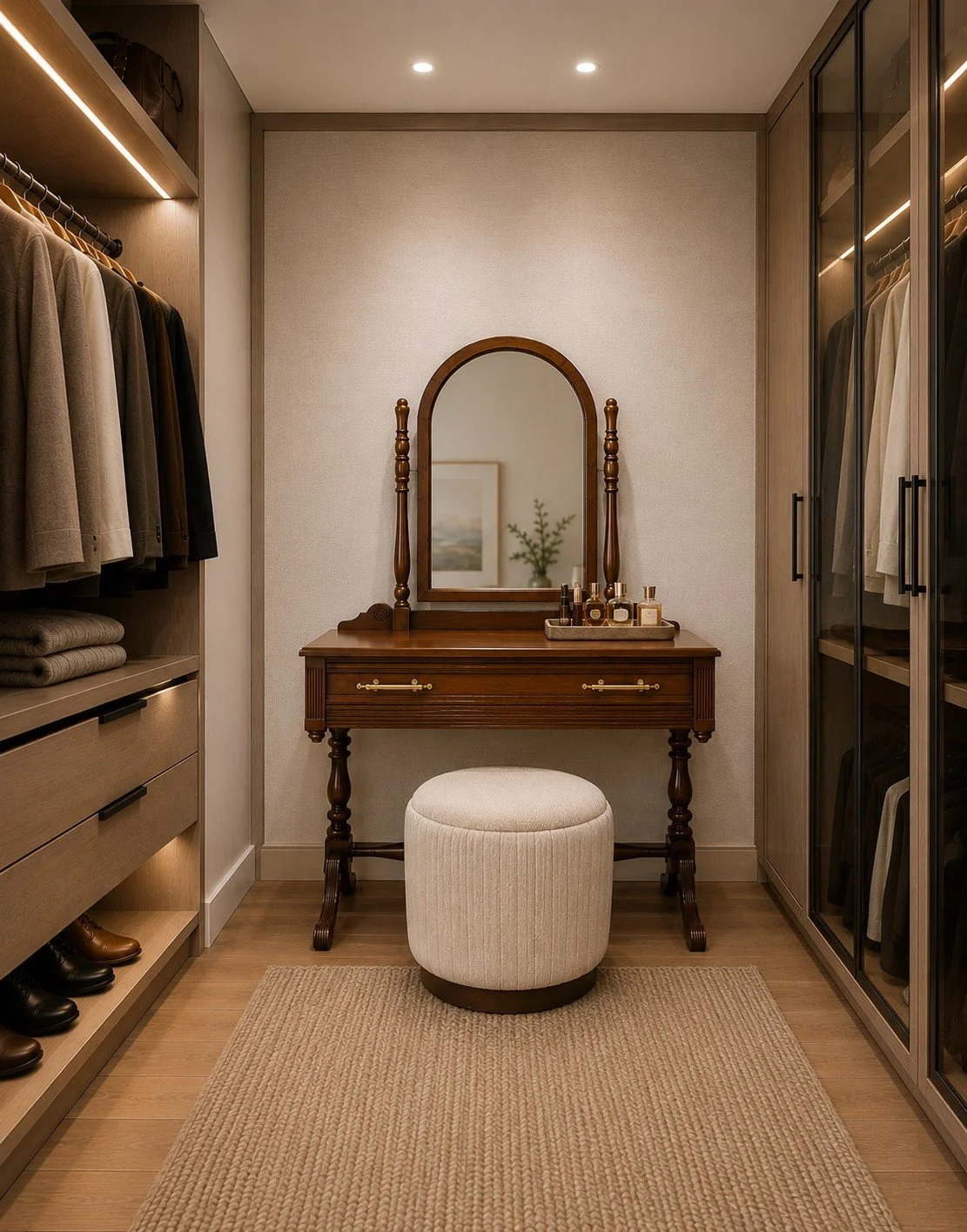
The following images are AI-generated visualizations intended to illustrate scale, proportion, and possible interior settings. They are conceptual, not photographs of the object in an existing room, and they preserve the documented proportions, finish, hardware, repairs, mirror, and construction of the piece.
-
The swing mirror tilts comfortably to a seated user. At 42 inches wide and under 19 inches deep, the footprint settles easily into a bedroom, dressing area, or quiet corner without dominating the room. Paired with a low bench or stool, it serves equally well as a dressing table, writing surface, or place for the small personal objects that gradually make a room feel lived in.
-
Type: Dressing table / vanity with swing mirror
Style: Colonial Revival, in the Federal taste
Date: Circa 1935–1950
Origin: United States
Material: Solid wood; figured secondary hardwood drawer lining; solid brass hardware.
Finish: Applied in restoration (walnut tone).
Construction: Turned-column base, turned stretcher, reeded splayed legs; machined rabbet drawer; plywood mirror back.
Maker & Origin: Table maker unidentified (model “No. 180”); mirror plate by Falconer Plate Glass Corporation
Condition: Refinished; one leg repaired and reinforced; drawer pulls replaced (full detail below).
Dimensions: 42 W × 18¾ D × 62 H in.
Upholstery: Not applicable
-
Original: The solid-wood base, turned columns, turned stretcher, reeded splayed legs, carved rosettes, factory stencil, and the swing mirror with its Falconer Durever plate.
Replaced: The drawer pulls, now solid brass Merrick pulls by Armac Martin in place of the originals; and the mirror's swivel fittings, the original pivot pins exchanged for screws so the mirror holds its angle more firmly.
Reconstructed: None.
Repaired: One leg, found with a structural failure, repaired and reinforced with discreet support brackets beneath the feet and metal mending plates at the leg bases, visible only from below.
Finish Work: Refinished overall in a walnut tone; the present surface is applied in restoration, not an untouched original finish.
-
The arched plate retains a Falconer Durever copper-back backing and carries a stamp bearing the patent date April 23, 1934. The plate appears original to the piece.
The Falconer Plate Glass Corporation of Falconer, New York, registered the Durever trademark in 1931 and used it for decades, so the stamped date should not be understood as the day this plate was manufactured.
The copper backing was intended to slow the deterioration that often affects silvered mirrors over time. Its survival speaks to the effectiveness of that approach.
-
No acquisition record accompanies the piece, and the table maker is not identified; the only factory mark is a stenciled model number, which names the model line but not its maker. The Falconer stamp dates and attributes the mirror plate alone, not the table, since a component mark carries only its own component.
Origin is identified as the United States based on its Colonial Revival design, factory construction, and the American mirror plate; it is not established by a documented maker's record.
-
The piece is solid wood. A factory stencil identifies the finish as "Cherry," while the present surface reads as a walnut tone. Because the underlying wood species has not been confirmed by inspection, both observations are recorded without attempting to reconcile them.
The drawer is lined in a figured secondary hardwood with distinctive grain variation. The mirror back is constructed of plywood. The base consists of turned columns joined by a turned stretcher and supported by reeded splayed legs. The drawer is a machined rabbet construction rather than dovetailed, consistent with factory manufacture.
-
The documented record begins with its acquisition by Acanthus Home through a nonprofit charity shop in Lomita, California. By then, the vanity showed the effects of long use, including a structural failure in one leg. Its subsequent restoration forms the first fully documented chapter in the object's known history. From that point forward, the object's history can be traced through its restoration and documentation at Acanthus Home.
Earlier chapters remain undocumented. The maker's name, the precise date of manufacture, and the homes in which it once stood are unknown. Rather than fill those gaps with speculation, they remain part of the object's unfinished record.
The record ends where the evidence ends.
-
Is this antique or vintage? It is best described as a vintage Colonial Revival vanity, circa 1935–1950, rather than an antique. The mirror carries a 1934 patent-date stamp and the construction is consistent with factory production of the period. It is dated on the available evidence.
What does the date on the mirror mean? The stamp records the copper-back patent date carried by the plate, April 23, 1934, not the day this mirror was manufactured. Falconer used the mark for decades, so the plate dates from 1934 or later.
What wood is it? The piece retains a factory stencil naming a cherry wood, while the present finish reads as a walnut tone. The stencil is kept as part of the object's history; the species has not been confirmed by inspection.
Has it been restored? Yes. It has been refinished, one leg has been repaired and quietly reinforced beneath the feet, the original drawer pulls have been replaced, and the mirror's swivel pins were exchanged for screws so it holds its angle. These interventions are visible in the detail photographs and disclosed in full.
Why were the drawer pulls replaced? The original knobs were small and awkward to grip, so during the same restoration that reinforced the leg, they were replaced with solid brass Merrick pulls by Armac Martin, whose lines echo the fluting of the drawer and the carved scrolls above. The drawer opens most easily using both pulls. The original knobs are retained and convey with the piece.