 Image 1 of 8
 Image 2 of 8
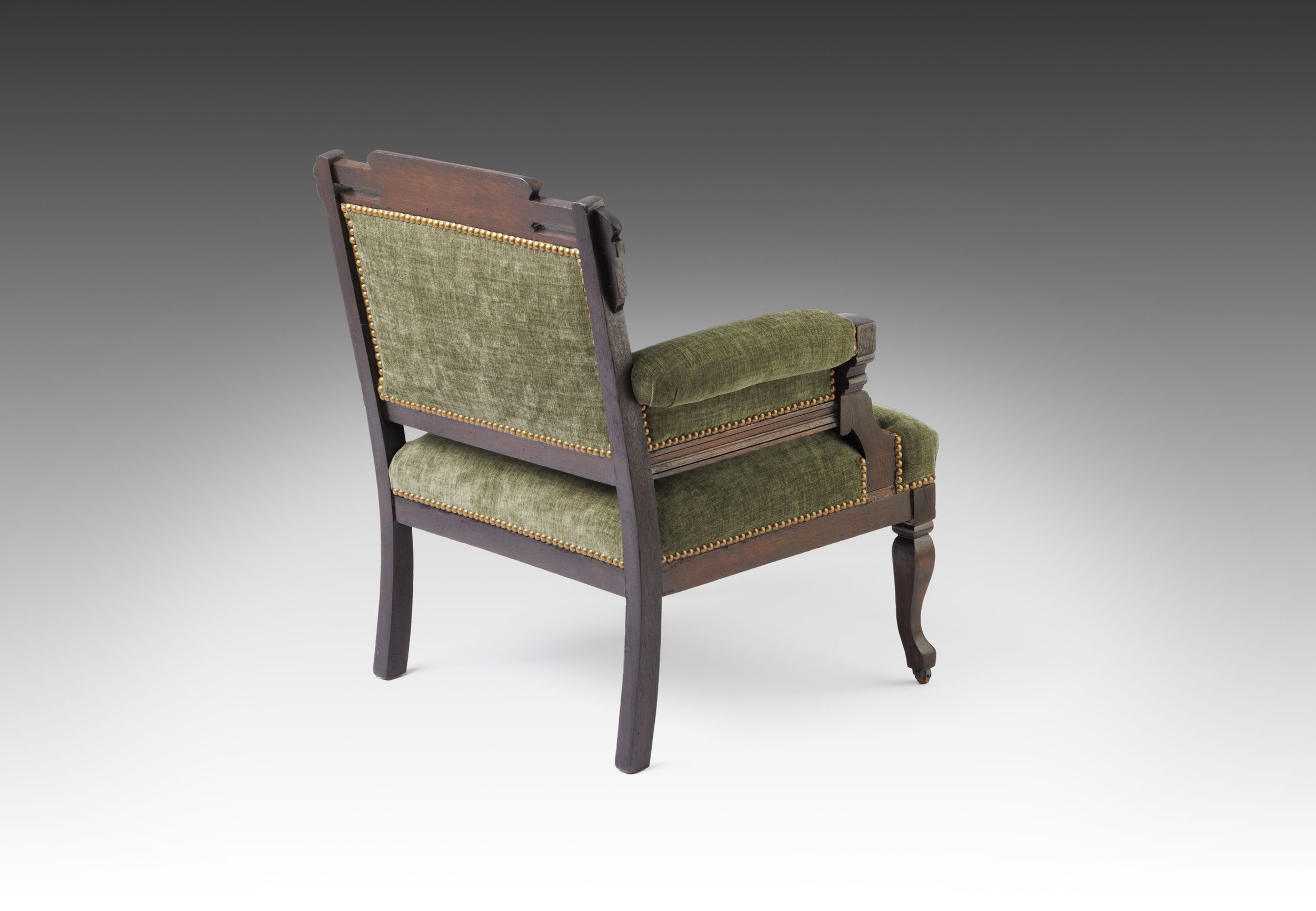 Image 3 of 8
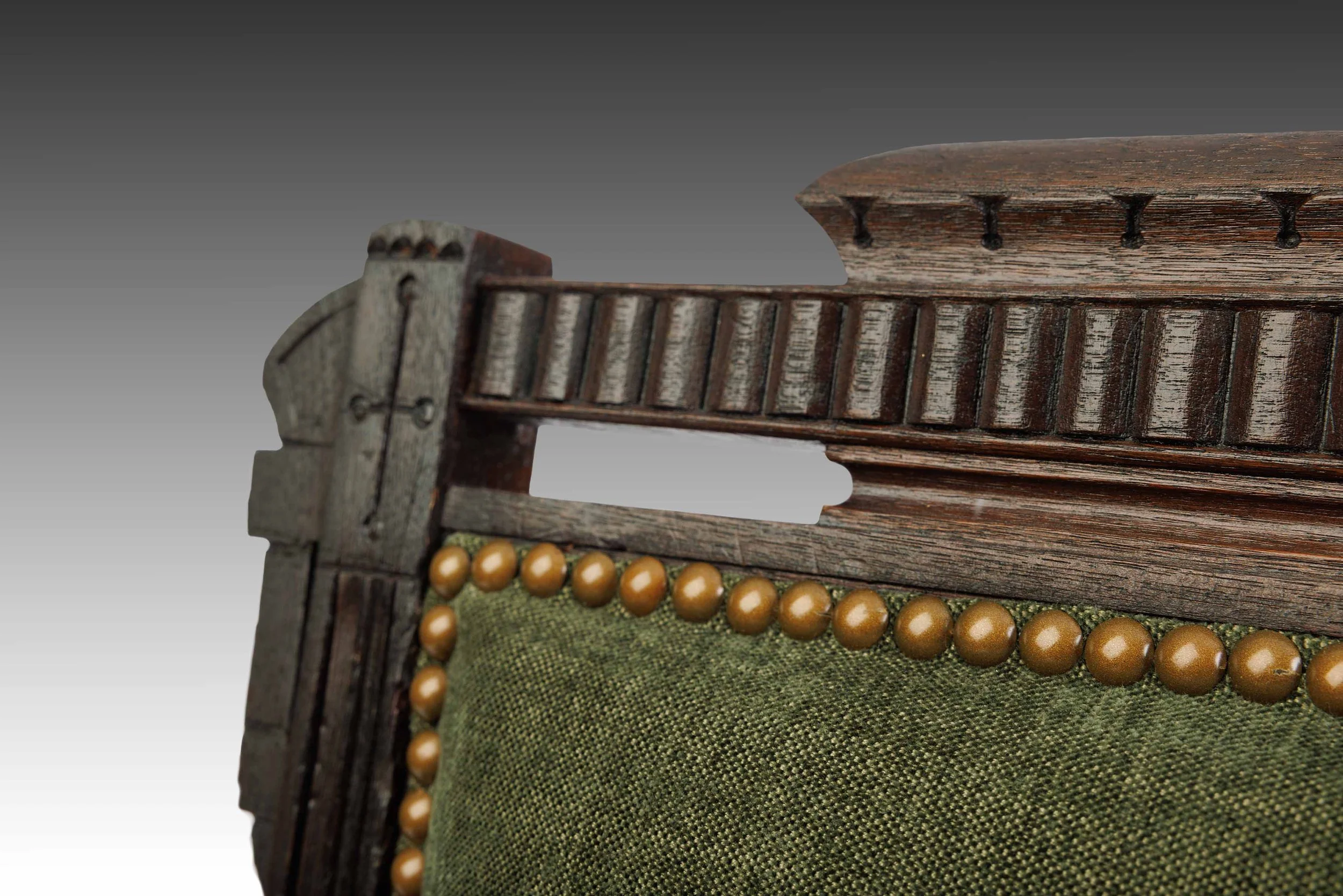 Image 4 of 8
 Image 5 of 8
 Image 6 of 8
 Image 7 of 8
 Image 8 of 8
Living With This Object
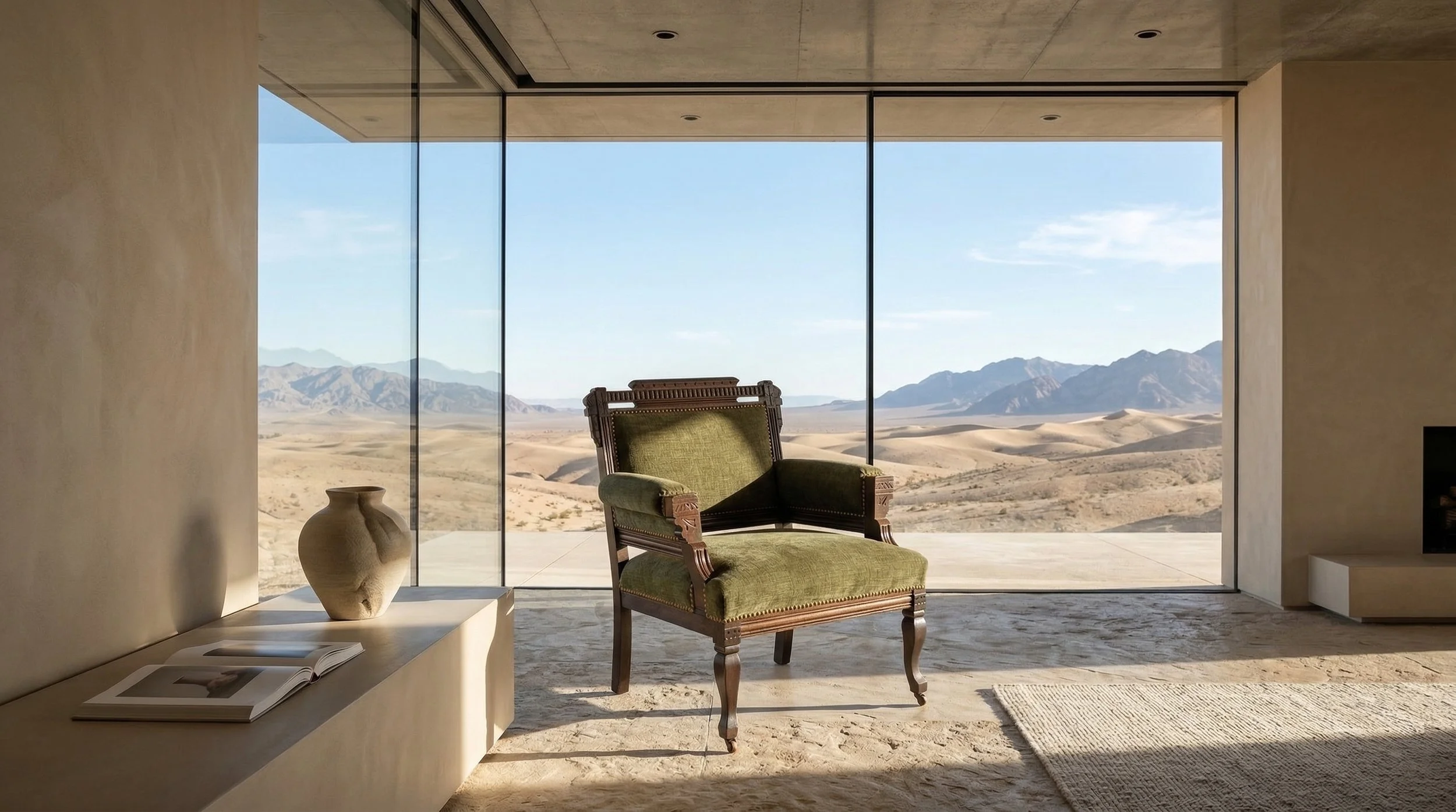
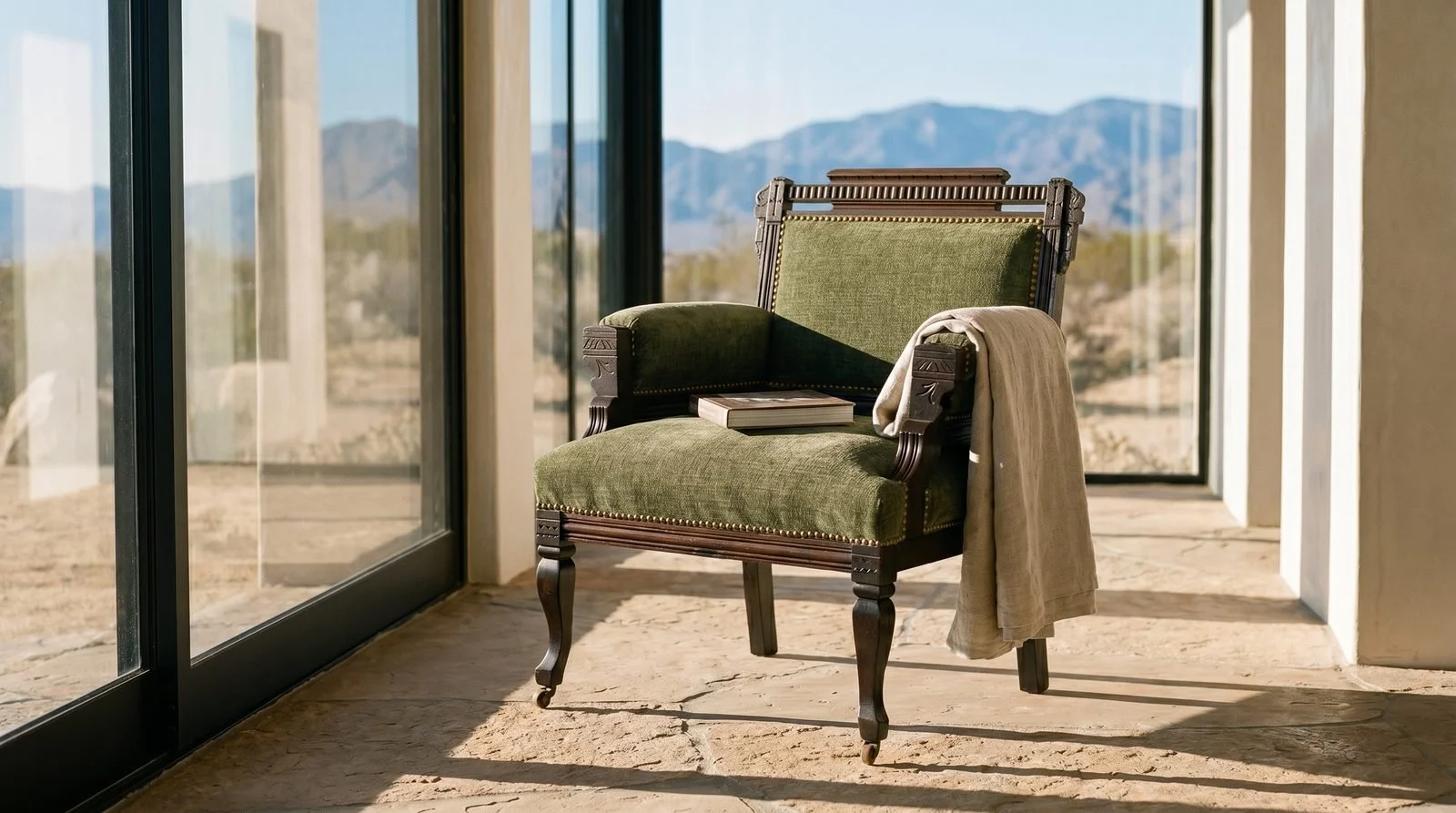
In a room, the chair's restrained proportions allow the carved frame to carry the visual weight. The dark wood outlines the green upholstery in crisp panels, while the incised crest rail forms the strongest horizontal line, giving the piece presence without overwhelming the surrounding furnishings.
The room view below is an AI visualization, offered to suggest scale and placement. It is a rendered image, not a photograph of the chair in this room.
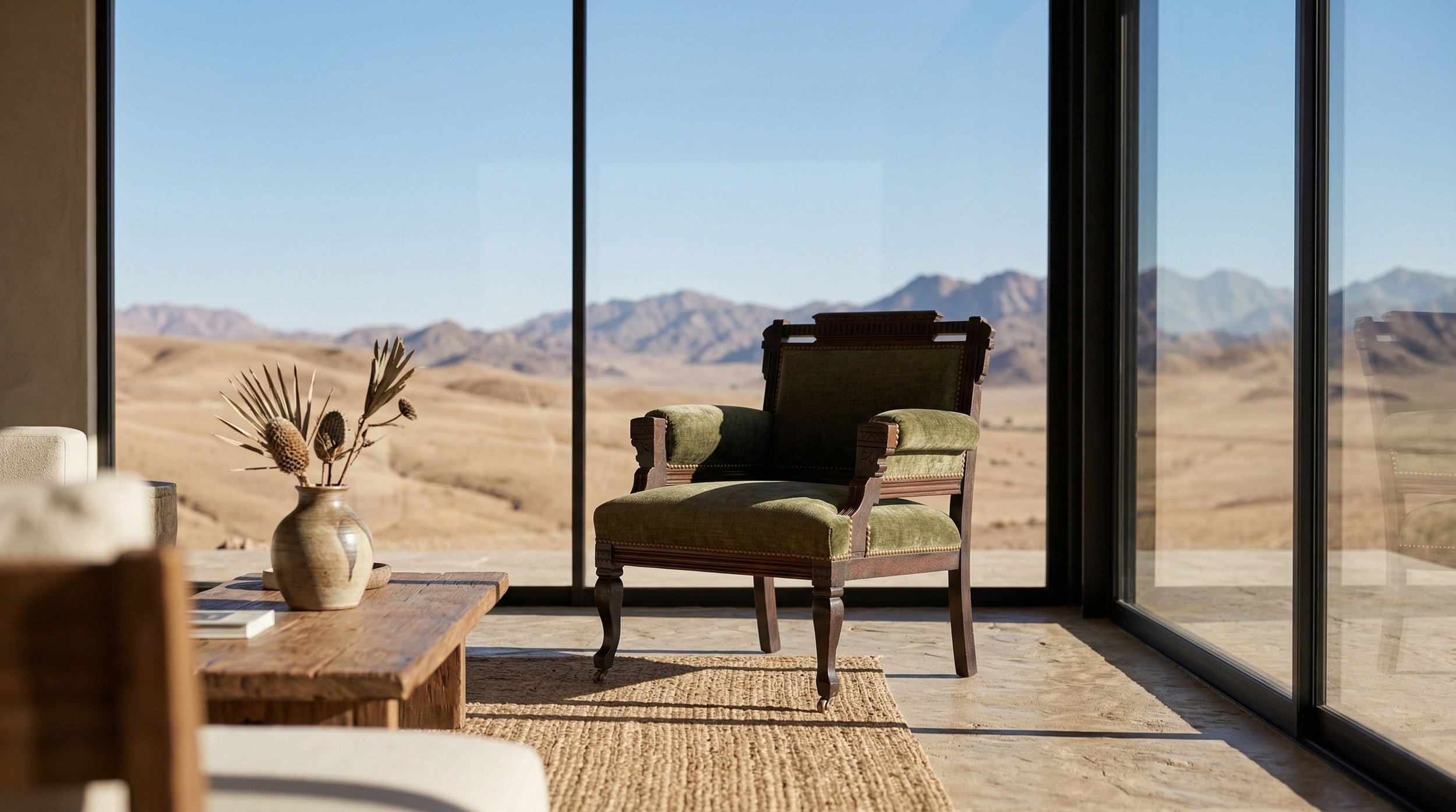
-
Compact in scale, the chair is intended for upright seating rather than deep lounging. Its proportions allow it to stand alone or accompany other period seating, while the front casters permit easy repositioning.
-
Type: Armchair (on casters)
Style: Eastlake
Date: Circa 1880–1895
Origin: Not established (unmarked; American Eastlake form, see Maker & Origin)
Provenance: Most recent documented acquisition from a private residence in Brentwood
Material: Hardwood frame (species unconfirmed); brass nailhead trim; casters
Finish: Refinished (applied, not original)
Construction: Carved exposed frame; upholstered back, seat, and arms
Maker & Origin: Unattributed; no mark located
Condition: Restored; refinished, seat support rebuilt, reupholstered
Dimensions: 26⅞ W × 21⅞ D × 31 H in.; seat height 17 in.
Upholstery: Green linen blend; reupholstered; composition undocumented (see Green Linen Blend)
-
Original: The frame and its joinery were retained.
Replaced: Seat, back, and arm upholstery replaced in a green linen-blend textile; the brass nailhead trim follows the new upholstery.
Reconstructed: The original seat had sagged and lost its support. During reupholstery the upholsterer rebuilt the seat's internal support, which is now firm and sound.
Repaired: No structural frame repair was required beyond the seat.
Finish Work: The exposed wood of the frame was refinished; the present surface is applied and not original.
Other: The front legs retain their casters.
-
The crest is the most worked element of the frame. A molded cap sits above a band of fluted, dentil-like carving, with a pierced gallery of cut slots beneath it. Block terminals flank the rail, each incised with linear bands and a small fan motif. The arm tops and the front arm supports take up the same incised vocabulary, carrying it into carved leaf and palmette forms. Throughout, the detailing stays shallow and rectilinear, consistent with Eastlake furniture rather than applied or high-relief ornament.
-
No maker's mark or label has come to light, so the chair is offered unattributed. The form, though, is American: "Eastlake" is the United States commercial name for the reform style, and the type is a standard American parlor armchair. Where this example was made is not established, since the piece is unmarked and the broader Aesthetic and Eastlake-influenced form was also produced in Britain and continental Europe. What is known, by the family's account, is its ownership history. The chair remained with the same San Francisco family from the early twentieth century; in a later generation it passed to a granddaughter in Los Angeles County. Although she intended to restore it, the project was never undertaken, and the chair remained stored in her garage for many years until the family chose to part with it. It was subsequently acquired from the family's Brentwood home. This owner-reported provenance gives a continuous history of ownership while remaining separate from the question of manufacture.
-
The frame's exposed wood is an open-grained hardwood with a straight, plain figure; the species is not confirmed, so it is described rather than named. The joinery is consistent with mortise-and-tenon construction. Turned front legs terminate in casters, while the rear legs stay plain and splayed. The back panel, padded seat, and arms are upholstered in the green linen-blend textile, a matte woven cloth with a soft, slubbed texture that keeps the incised ornament and the brass nailhead trim visually prominent. The cloth reads as a linen blend; no manufacturer tag, sample, or invoice accompanies it, so its composition and performance are left undocumented rather than estimated.
-
Green Linen Blend
This linen-blend textile presents a soft green tone with restrained luster and a matte woven surface. Its subtle texture complements the carved frame, allowing the incised ornament and brass nailhead trim to remain visually prominent.
Design Style: Solid, textured
Fabric Type: Linen blend
Composition: Undocumented
Performance: Undocumented
Reupholstered: Yes
-
The Eastlake armchair belongs to the reform in household taste of the 1870s and 1880s, when Charles Eastlake's writing turned fashionable taste toward honest construction and shallow incised ornament; the American parlor or library armchair of this kind furnished the formal sitting rooms of middle- and upper-middle-class households. This example has lived through a century of such use and more than one refurbishing, the work itself documented under Condition & Restoration. Who owned it and the rooms it furnished are unrecorded, and its documented history begins only in the twentieth century. The most recent acquisition is owner-reported: Acanthus acquired the chair from a previous owner who had begun and then abandoned a reupholstery, after which it had been stored in a garage for some years; this account is first-hand and not documented by paper. The record ends where the evidence ends.
-
Is this an antique or a vintage chair? Antique. This antique Eastlake armchair dates to circa 1880–1895 on its style and construction, well past the 100-year line that separates antique from vintage. Because the date rests on form rather than a dated mark, it is given as a range, and the owner's reported provenance, reaching back to the early twentieth century, places the chair well before the 1926 line.
What wood is it? The exposed wood of the frame is an open-grained hardwood, but the species has not been confirmed, so it is described rather than named. The present surface is a refinish applied during restoration, so color is not a reliable guide.
Has it been restored, and is the upholstery new? Yes. The original seat had sagged and lost its support, so the upholsterer rebuilt its internal structure, and the seat, back, and arms were reupholstered in a green linen-blend textile finished with brass nailhead trim. The frame was refinished; its original joinery was retained throughout the work.
What is Eastlake style? Eastlake is a reform style of the 1870s and 1880s, identified by rectilinear forms, exposed wood, and shallow, geometric incised carving rather than applied or high-relief ornament. On this chair it shows most clearly in the carved crest rail, described in full in its own section above.
Where has it been? The chair remained in the same San Francisco family from the early twentieth century; in a later generation it passed to a granddaughter in Los Angeles County. Although she intended to restore it, the project was never undertaken, and it remained stored until the family chose to part with it. It was acquired from the family's Brentwood home. This ownership history is owner-reported rather than independently documented, and the chair itself is unmarked, so its place of manufacture cannot be stated with certainty.