 Image 1 of 6
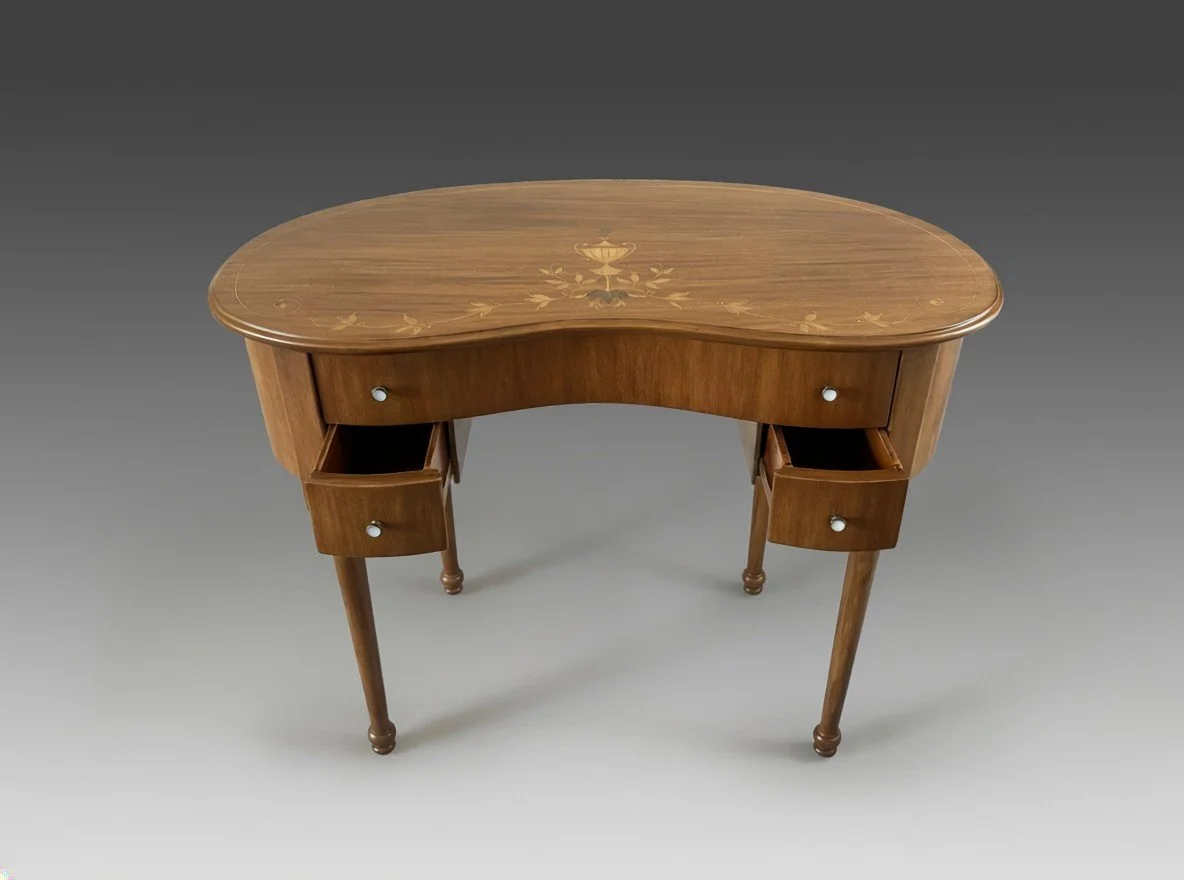 Image 2 of 6
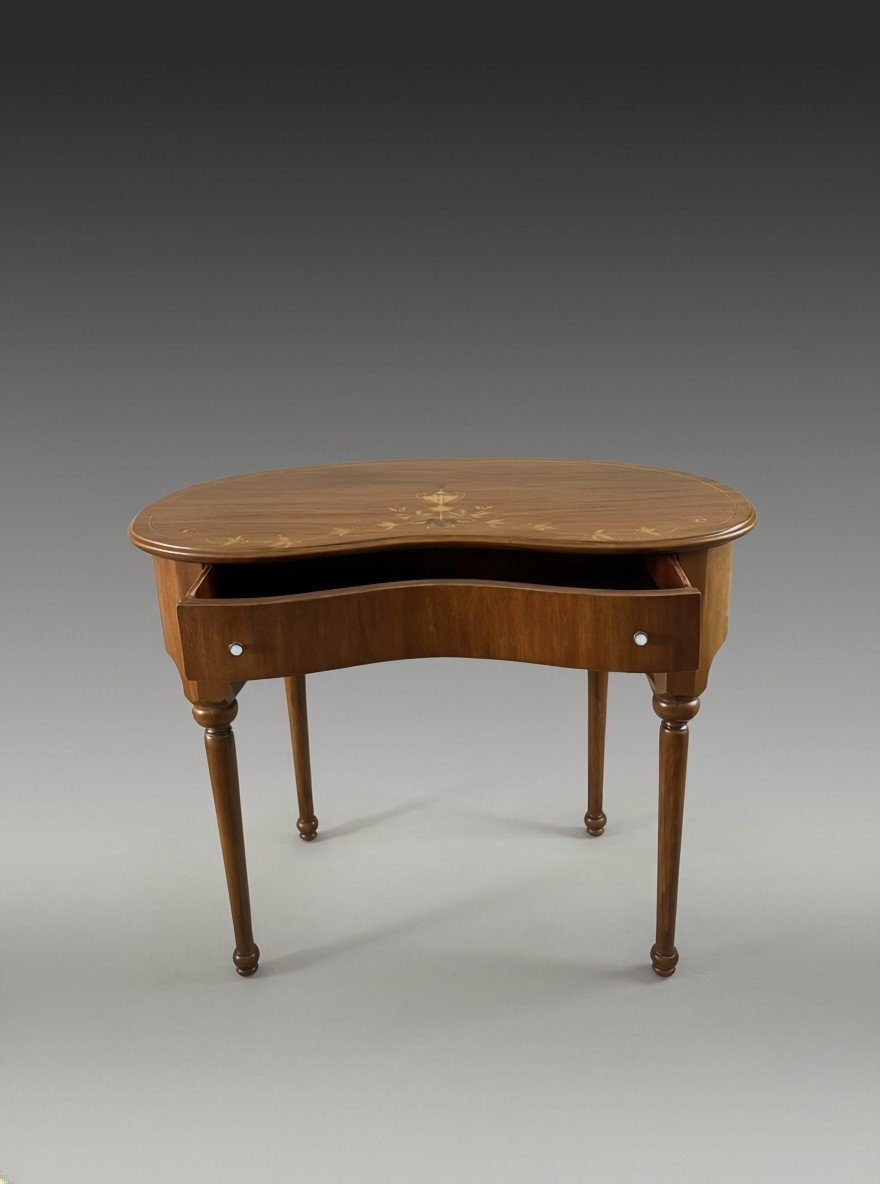 Image 3 of 6
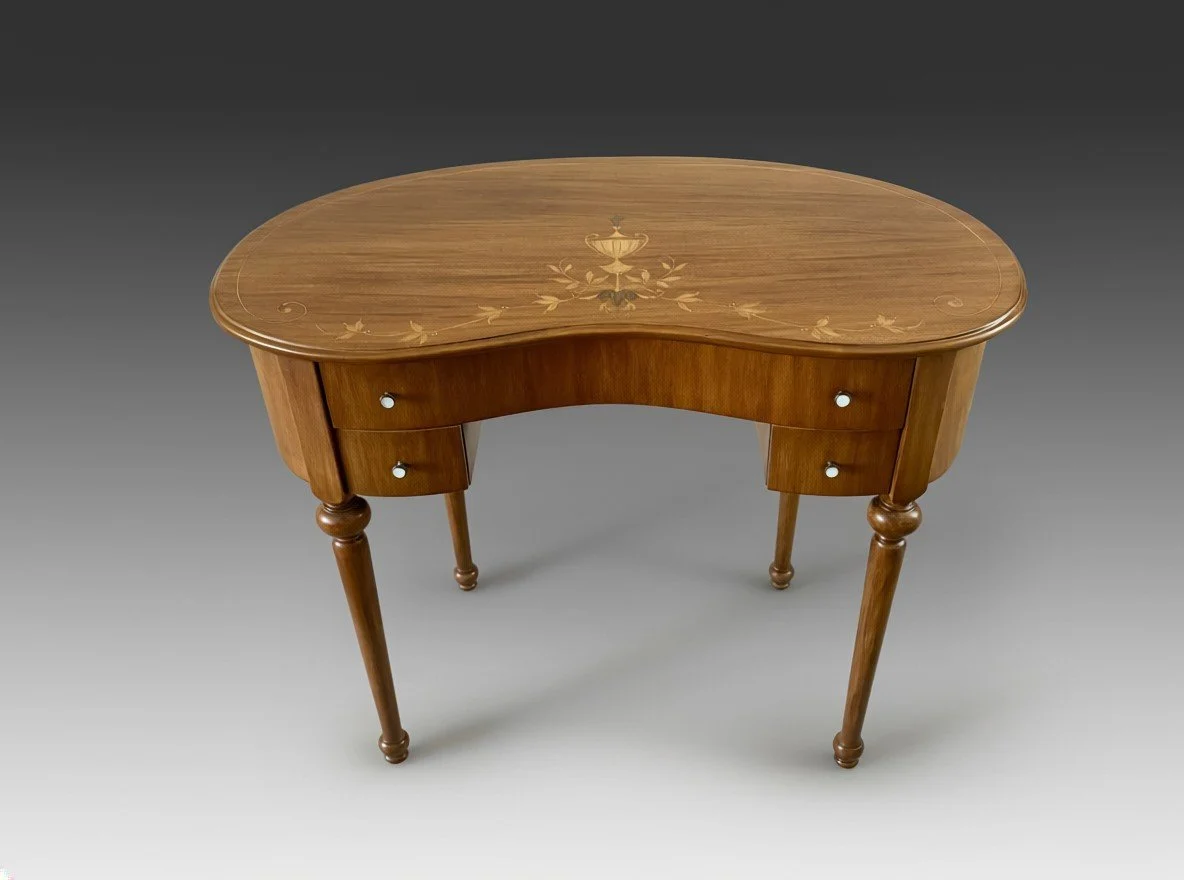 Image 4 of 6
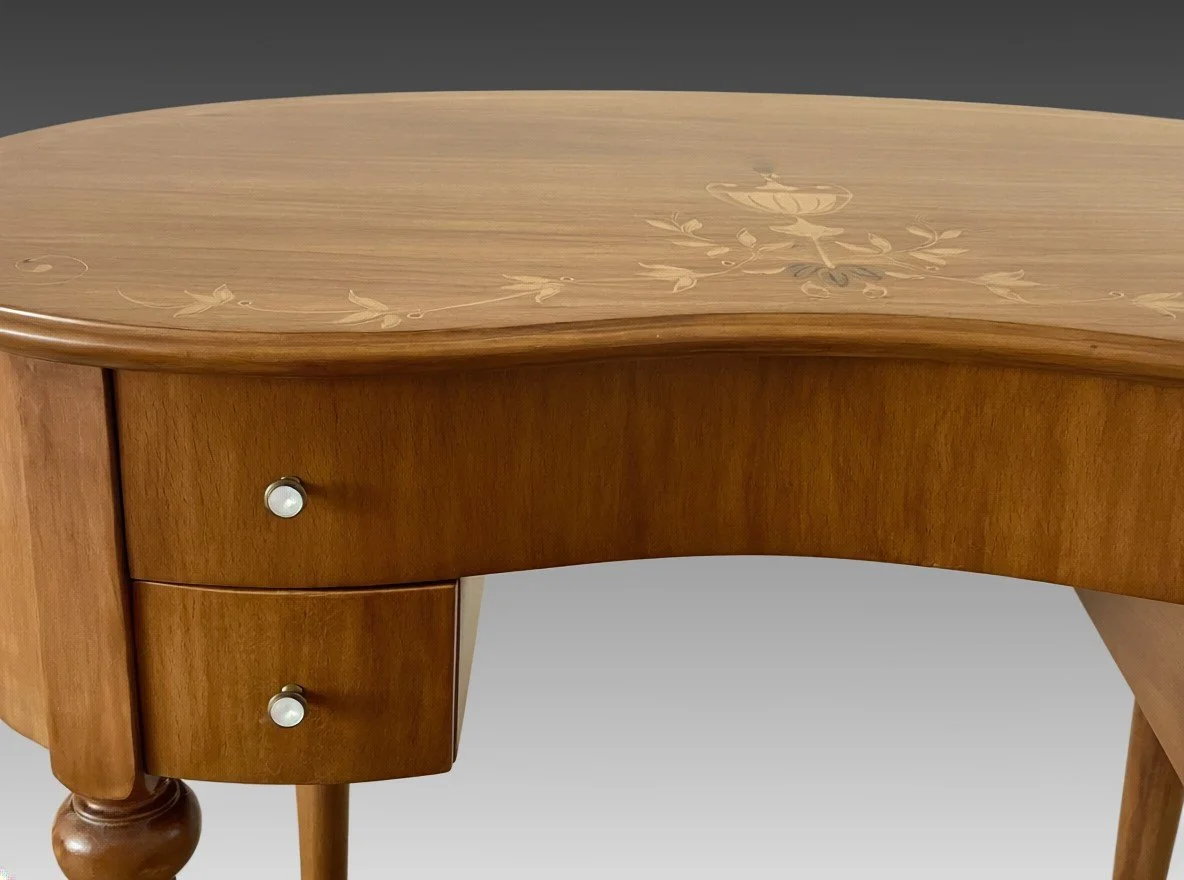 Image 5 of 6
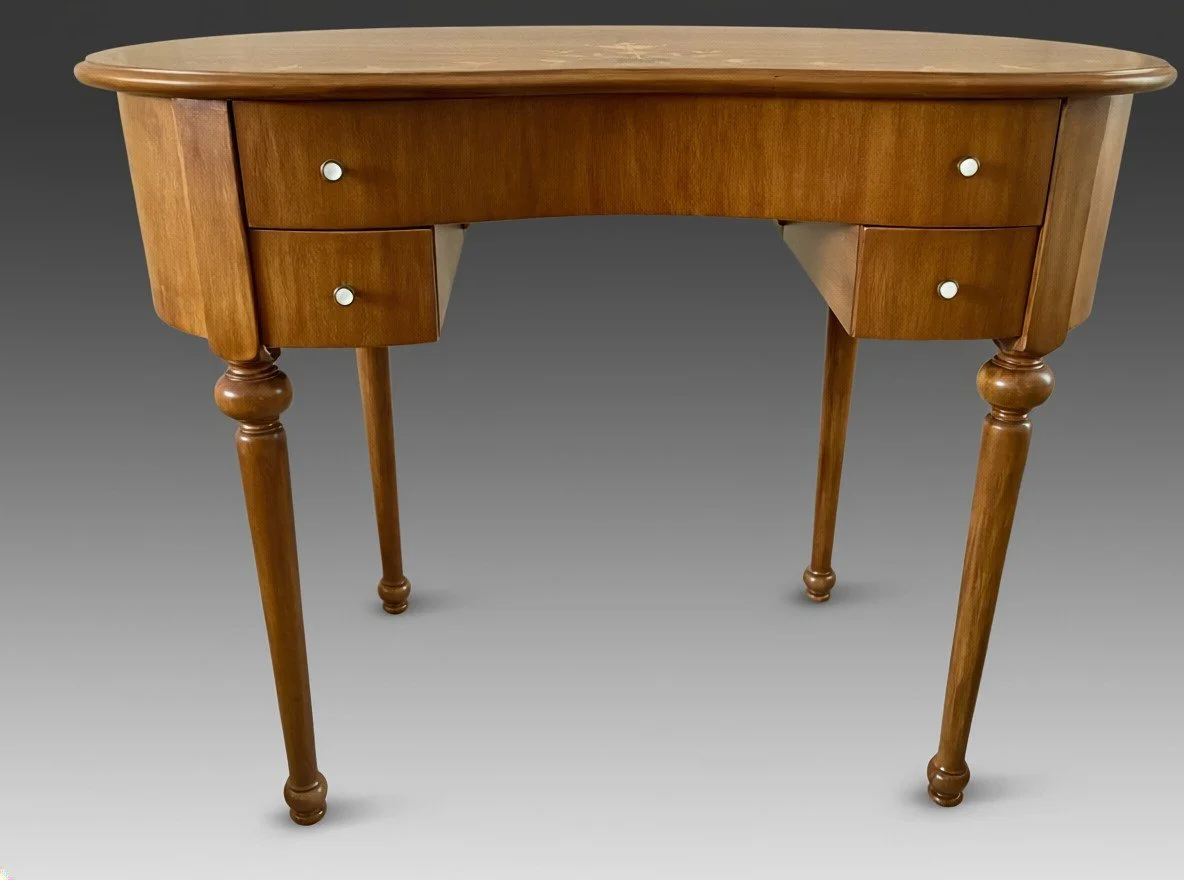 Image 6 of 6
Living With This Object
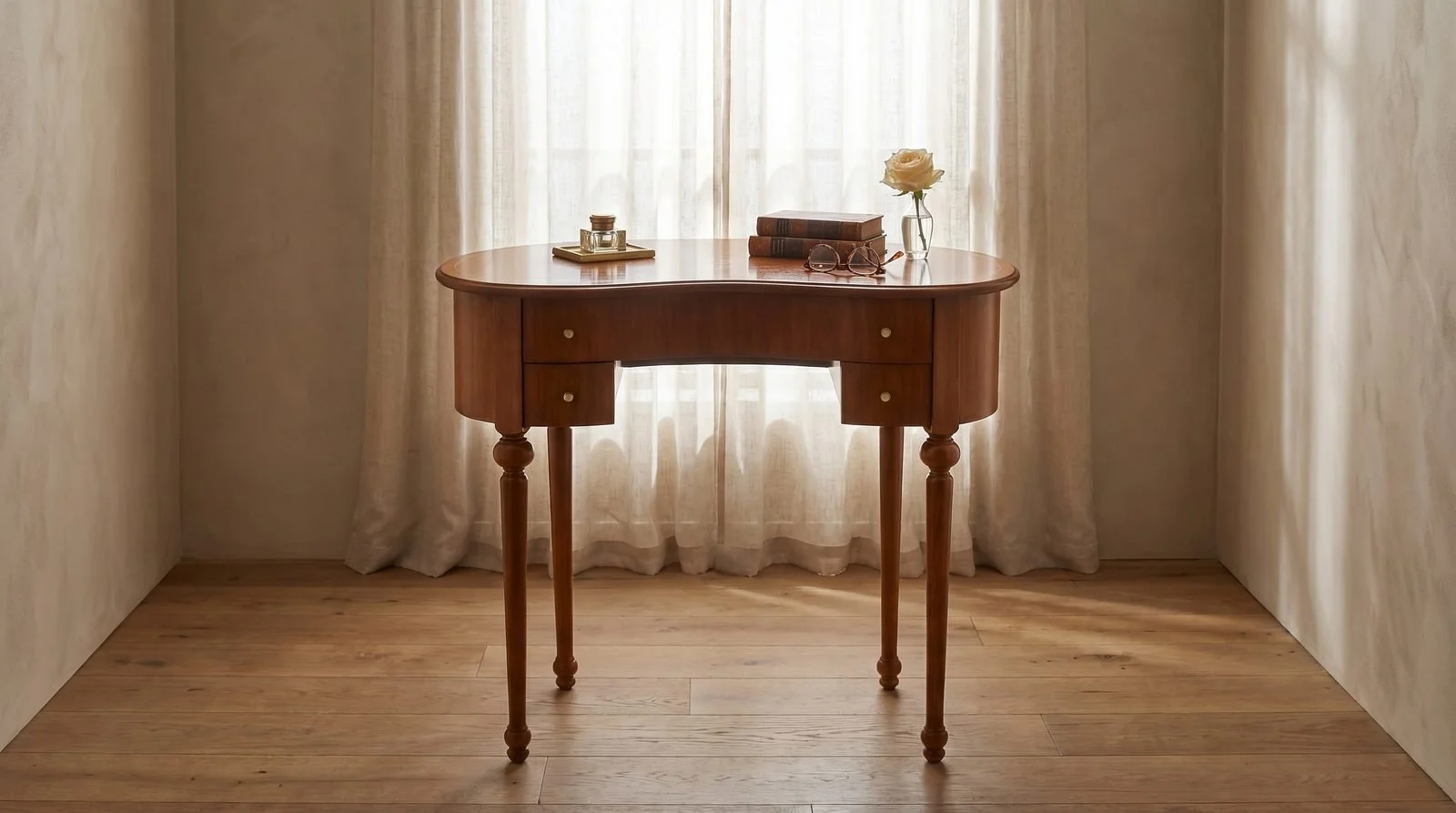
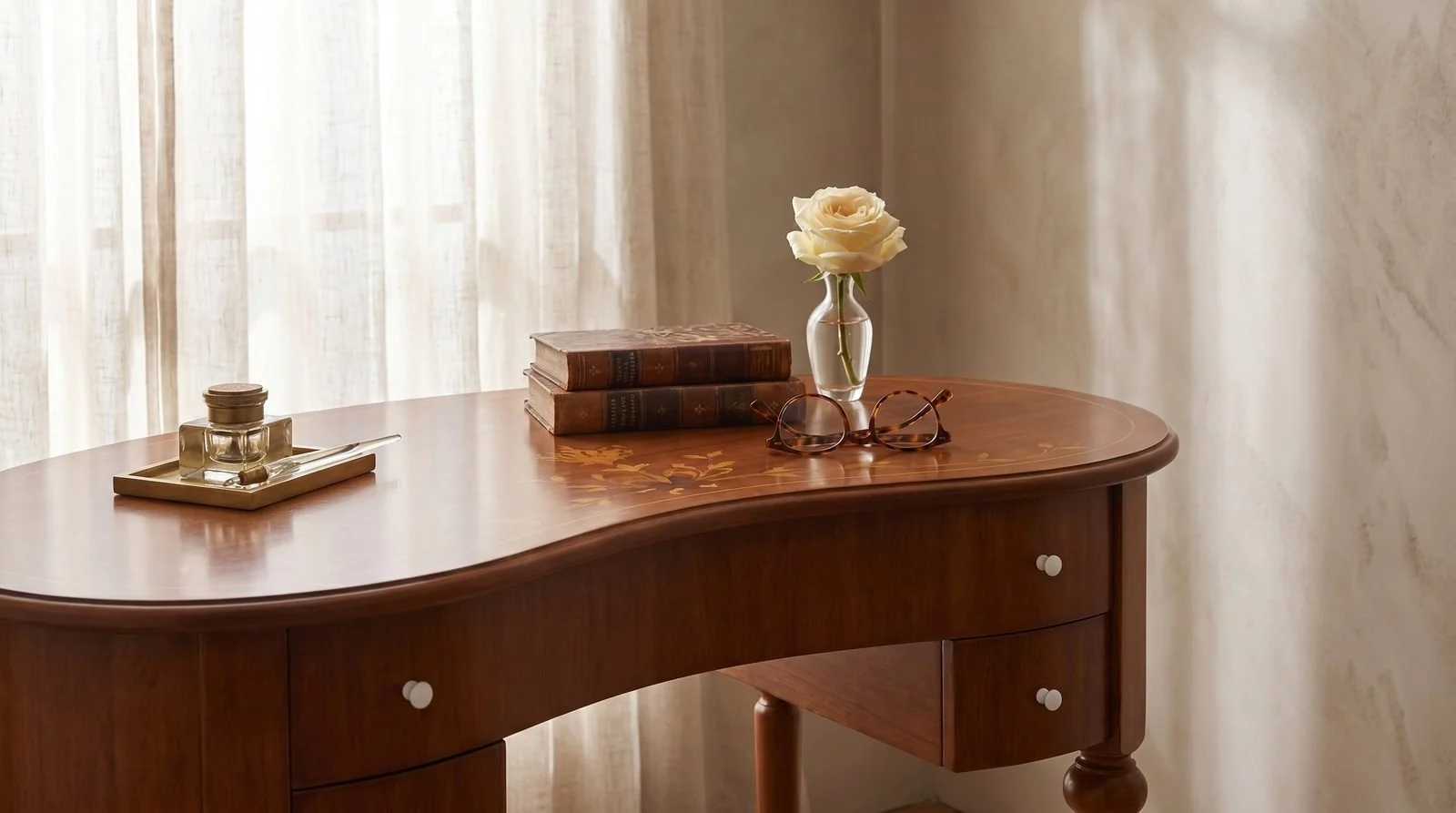
In use, the desk keeps a compact, low profile: the kidney top curves back toward the sitter, so a chair draws in close, and the three shallow apron drawers keep pens, paper, and small things within reach. The marquetry sits flush at the center of the writing surface, where it reads at a glance without catching a hand, and the slender turned legs keep the piece light against a wall or in a window bay.
The room view below is an AI visualizations, offered to suggest scale and placement. It is a rendered image, not a photograph of the desk in this room.
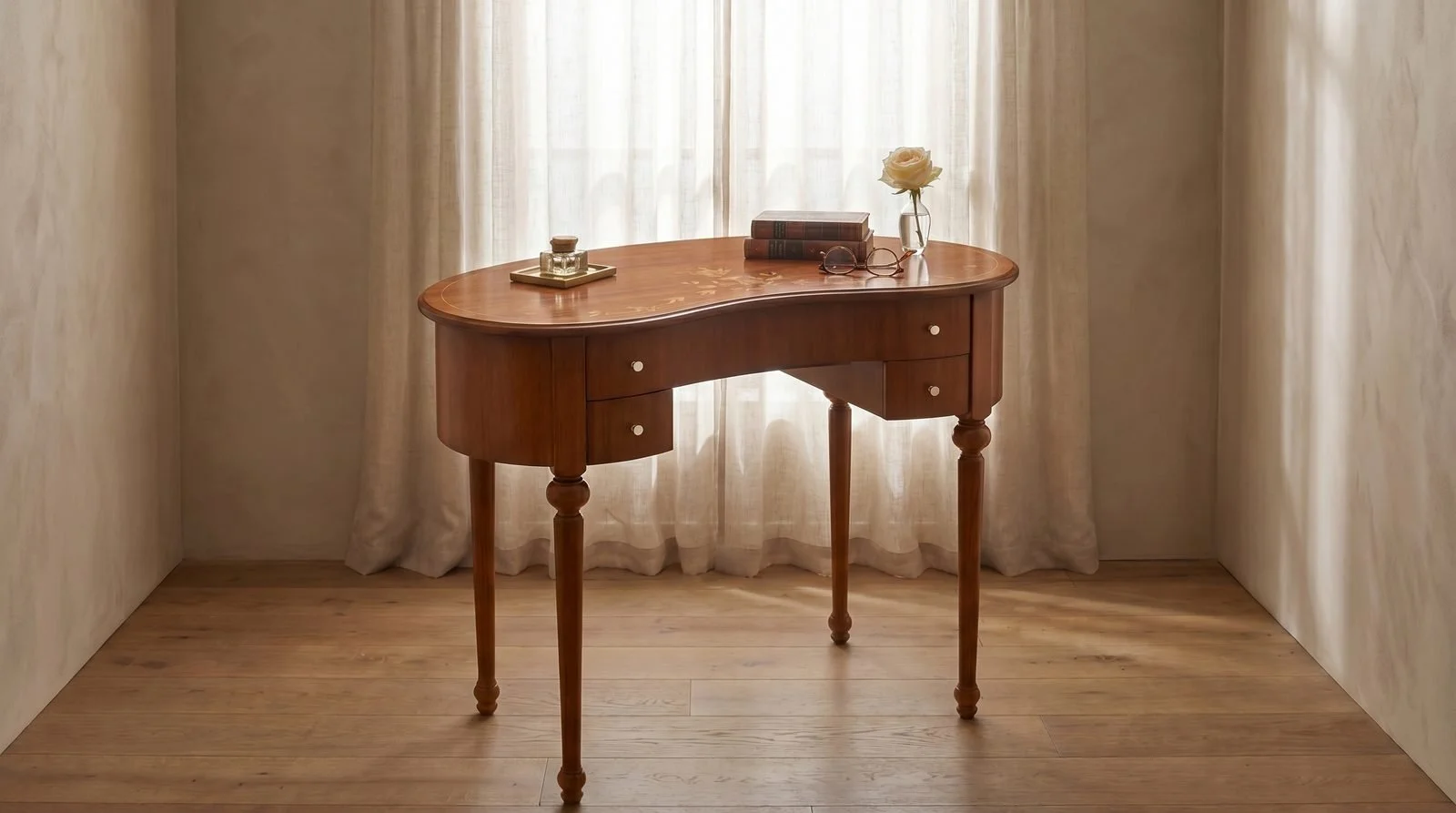
-
Whether it settles in a bedroom, a study, or a corner of a sitting room, the desk offers a compact writing surface that stays in daily use. Its curve draws a chair in close, and the modest footprint lets it rest along a wall, in a window bay, or beside a bed. For a writing place that closes its work away at the end of the day, the collection holds the slant-front Caligra Noir.
-
Type: Writing desk, kidney-shaped plan
Style: Neoclassical Revival, drawing on Sheraton-era forms
Date: Circa 1940–1960
Origin: Not established
Provenance: Most recent documented acquisition through a Torrance consignment gallery
Material: Hardwood
Finish: Applied in restoration
Construction: Curved case on four turned legs; three drawers in the apron
Maker & Origin: Unattributed; no mark located
Condition: Refinished and sound; light handling wear
Dimensions: 35 ½ W × 17 ⅛ D × 30 ⅛ H in.
-
Original: The case, inlaid top, three drawers, turned legs, and pale disc knobs are all retained as found. The inlaid top is intact, with no losses noted.
Replaced: Nothing was replaced in the documented work.
Reconstructed: No elements were reconstructed.
Repaired: The three drawers were adjusted so that all of them run consistently.
Finish Work: The surface was stripped and renewed; the wood was re-stained and sealed. As found, the top carried a dark ring and a yellowed older surface, removed in refinishing. The finish is applied in restoration; the original surface was not retained.
-
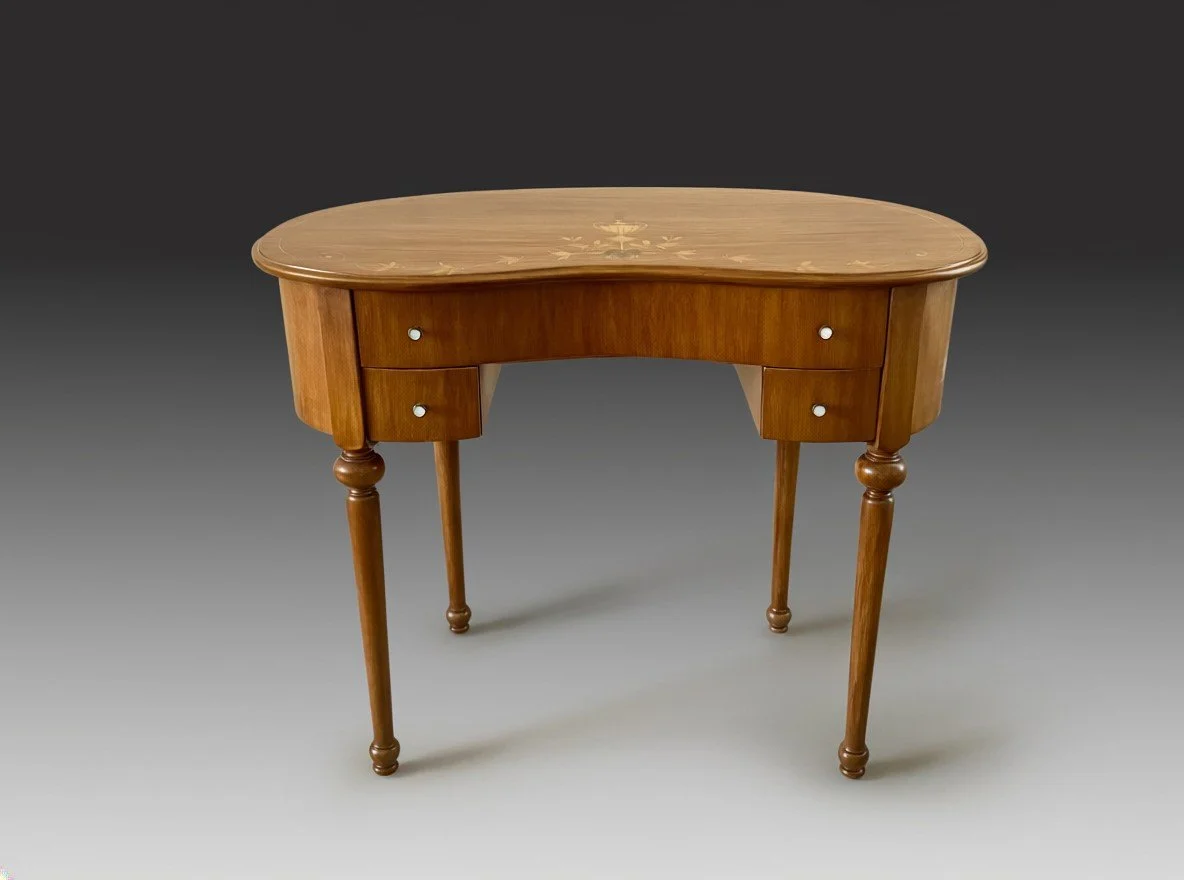
At the center of the top, a marquetry composition gathers around a neoclassical urn, with foliate sprays and trailing vine borders worked in pale wood and darker stained accents, the whole framed by a single line-inlay border that closes in scroll terminals at the curved ends. Small pale inlaid points punctuate the foliage. The work is set flush into the surface, so it reads clearly across the top.
-
No maker's mark, label, or stamp is present, so the desk is left unattributed rather than assigned. The kidney form was produced in more than one country during these mid-century years, and with no mark to fix its origin, no single country is named.
-
The primary wood displays a straight, ribbon-striped grain consistent with the mahogany family, though the exact species has not been identified. From the curved case, four slender turned legs taper to small turned feet. Three drawers are fitted into the apron: one wide drawer following the concave front, and a smaller drawer in each pedestal. Their fronts are plain, dressed with small pale disc knobs.
-
Desks of this kind, the table rognon or haricot, took their curved plan so the writing surface would wrap toward the person seated; they were sized for bedrooms, boudoirs, and private sitting rooms rather than formal offices, furniture for personal correspondence and study kept close at hand. What that correspondence could carry is the subject of The Bench Was Empty, the journal's reading of a love letter written in 1919. This example has lived that life and has since had a chapter of care. Its maker, exact year, and earlier ownership remain unrecorded. Its documented record begins with its acquisition through a consignment store in Torrance, California, before entering the Acanthus Home collection. Beyond that point, the record ends where the evidence ends.
-
Is this desk antique or vintage? Vintage. Its form and construction place this kidney-shaped writing desk circa 1940 to 1960, which leaves it well under the hundred-year threshold that separates vintage from antique, so the age is stated as it is rather than rounded up. No mark or document fixes the exact year, so the date is given as a close approximation.
Has it been restored? Yes. The surface was stripped and refinished: the wood was re-stained and sealed to remove a dark ring and a yellowed older finish that the top carried as found. The three drawers were adjusted so that all of them run consistently. The inlaid top needed no work and is intact.
What wood is it? It is a hardwood whose straight, ribbon-striped grain is consistent with the mahogany family, although the exact species has not been identified. The same wood carries through the top, apron, and legs, so the color and grain stay consistent across the piece.
How should the desk be cared for? The refinished surface takes normal household use. Wipe it with a soft, dry cloth, keep it out of direct sun and away from heat and damp, and set mats under anything wet or hot. The inlaid top needs no treatment beyond the care given the surrounding surface.