A Victorian slipper chair situated within the 19th-century tradition of parlor seating developed in Britain and continental Europe. This form emerged as domestic interiors shifted toward intimacy, conversation, and controlled proximity. Low-backed and wheeled, the slipper chair was designed for placement near the body rather than at a distance, functioning within rooms intended for reception, dressing, and observation rather than formal display.
The chair presents a grounded, sculptural silhouette with a continuous upholstered back flowing into a generous seat. Its proportions remain deliberately low, emphasizing lateral spread over height. The carved wooden frame articulates the perimeter without dominance, allowing the form to read as contained and self-supporting. Casters remain integrated at each leg, reinforcing the object’s original relationship to movement within the room. The surface reads as cohesive rather than segmented.
The chair has been structurally stabilized, refinished in a deepened black tone, and fully reupholstered. The original frame has been retained. Upholstery has been replaced in its entirety.
The Emerald Noir may now occupy contemporary interiors that favor restraint and spatial intention. It functions comfortably within bedrooms, libraries, and dressing rooms, or as a singular presence within a composed seating arrangement. The chair operates through proximity rather than scale.
Shipping Estimate
A Victorian slipper chair situated within the 19th-century tradition of parlor seating developed in Britain and continental Europe. This form emerged as domestic interiors shifted toward intimacy, conversation, and controlled proximity. Low-backed and wheeled, the slipper chair was designed for placement near the body rather than at a distance, functioning within rooms intended for reception, dressing, and observation rather than formal display.
The chair presents a grounded, sculptural silhouette with a continuous upholstered back flowing into a generous seat. Its proportions remain deliberately low, emphasizing lateral spread over height. The carved wooden frame articulates the perimeter without dominance, allowing the form to read as contained and self-supporting. Casters remain integrated at each leg, reinforcing the object’s original relationship to movement within the room. The surface reads as cohesive rather than segmented.
The chair has been structurally stabilized, refinished in a deepened black tone, and fully reupholstered. The original frame has been retained. Upholstery has been replaced in its entirety.
The Emerald Noir may now occupy contemporary interiors that favor restraint and spatial intention. It functions comfortably within bedrooms, libraries, and dressing rooms, or as a singular presence within a composed seating arrangement. The chair operates through proximity rather than scale.
Shipping Estimate
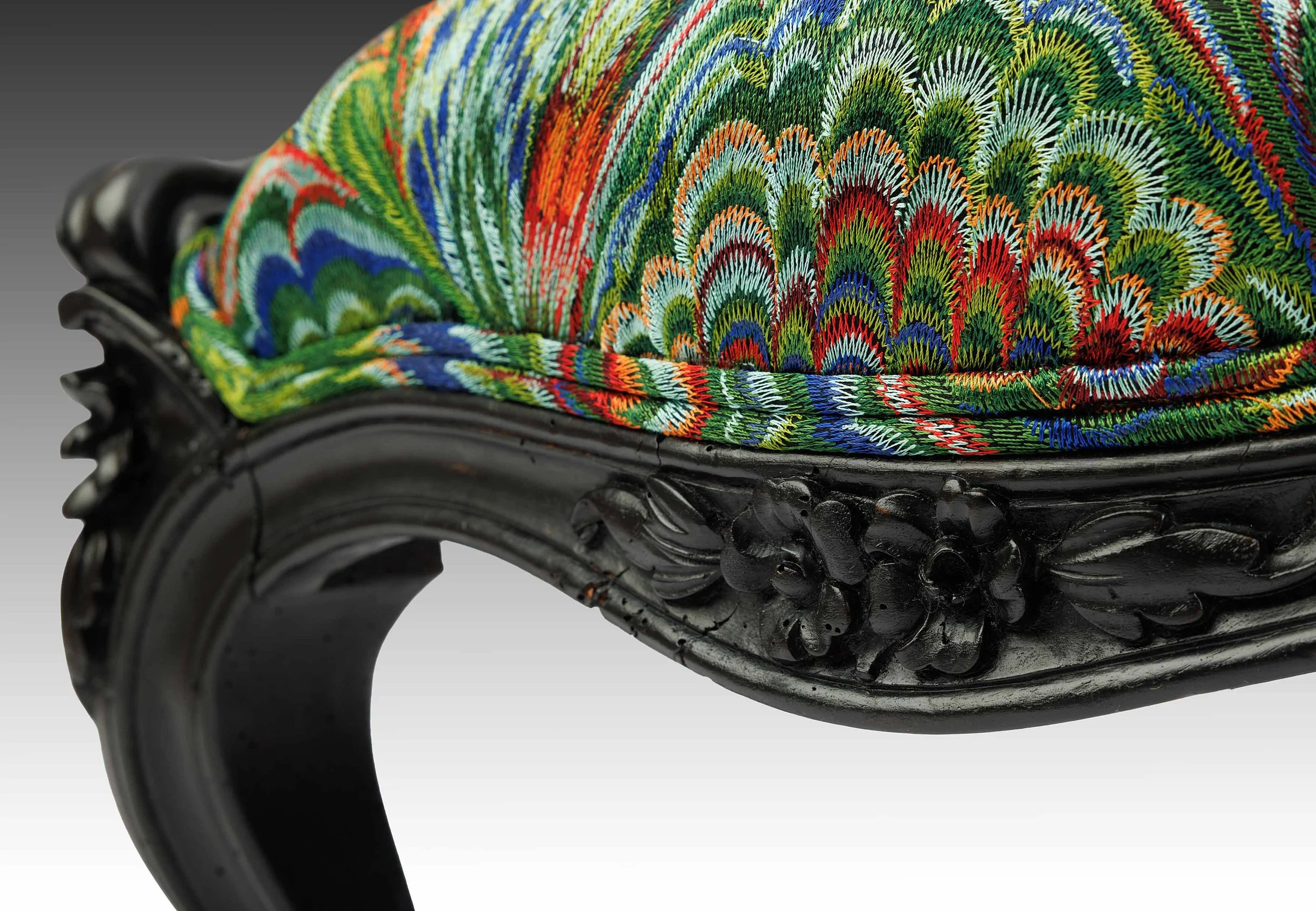 Image 1 of 8
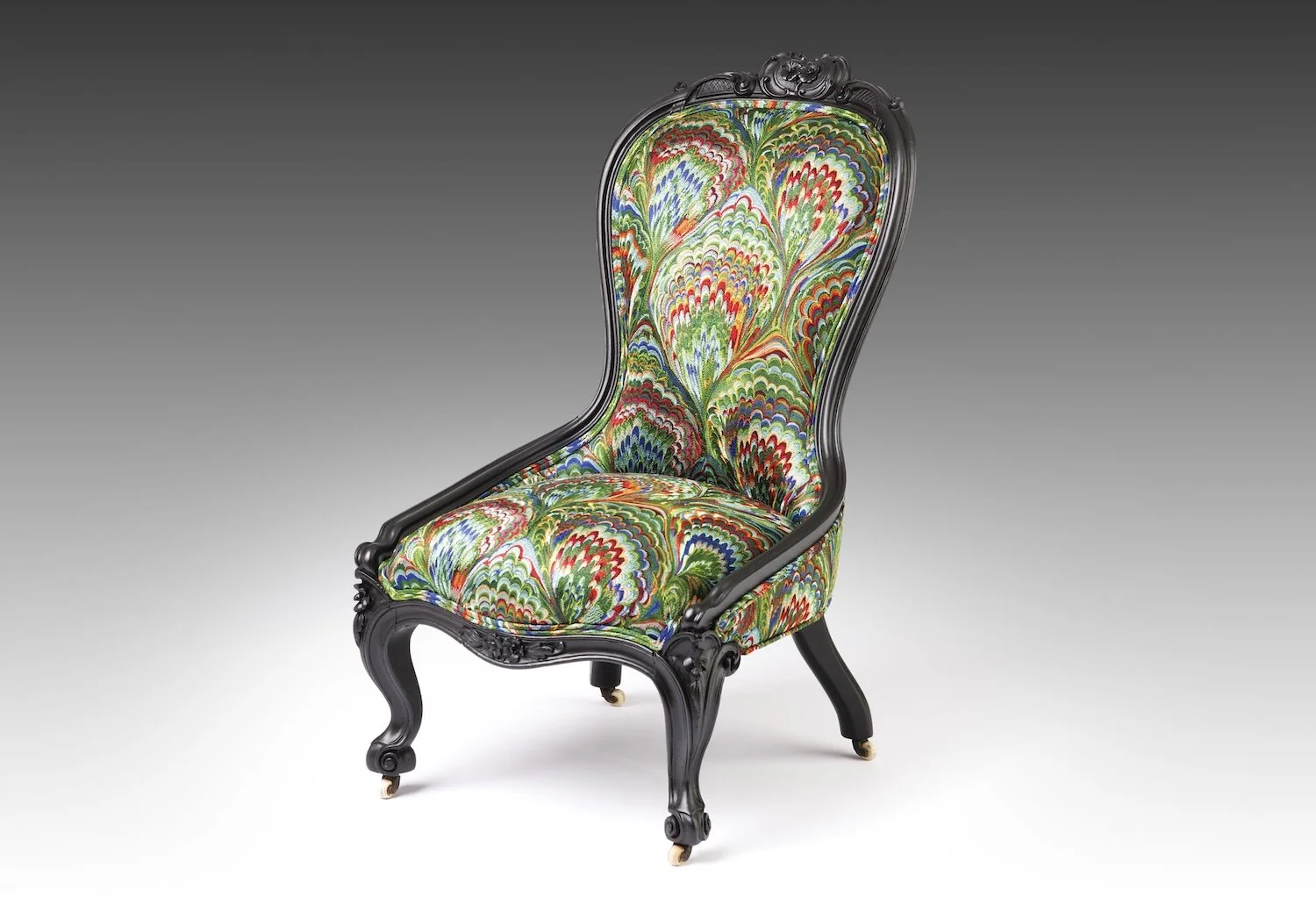 Image 2 of 8
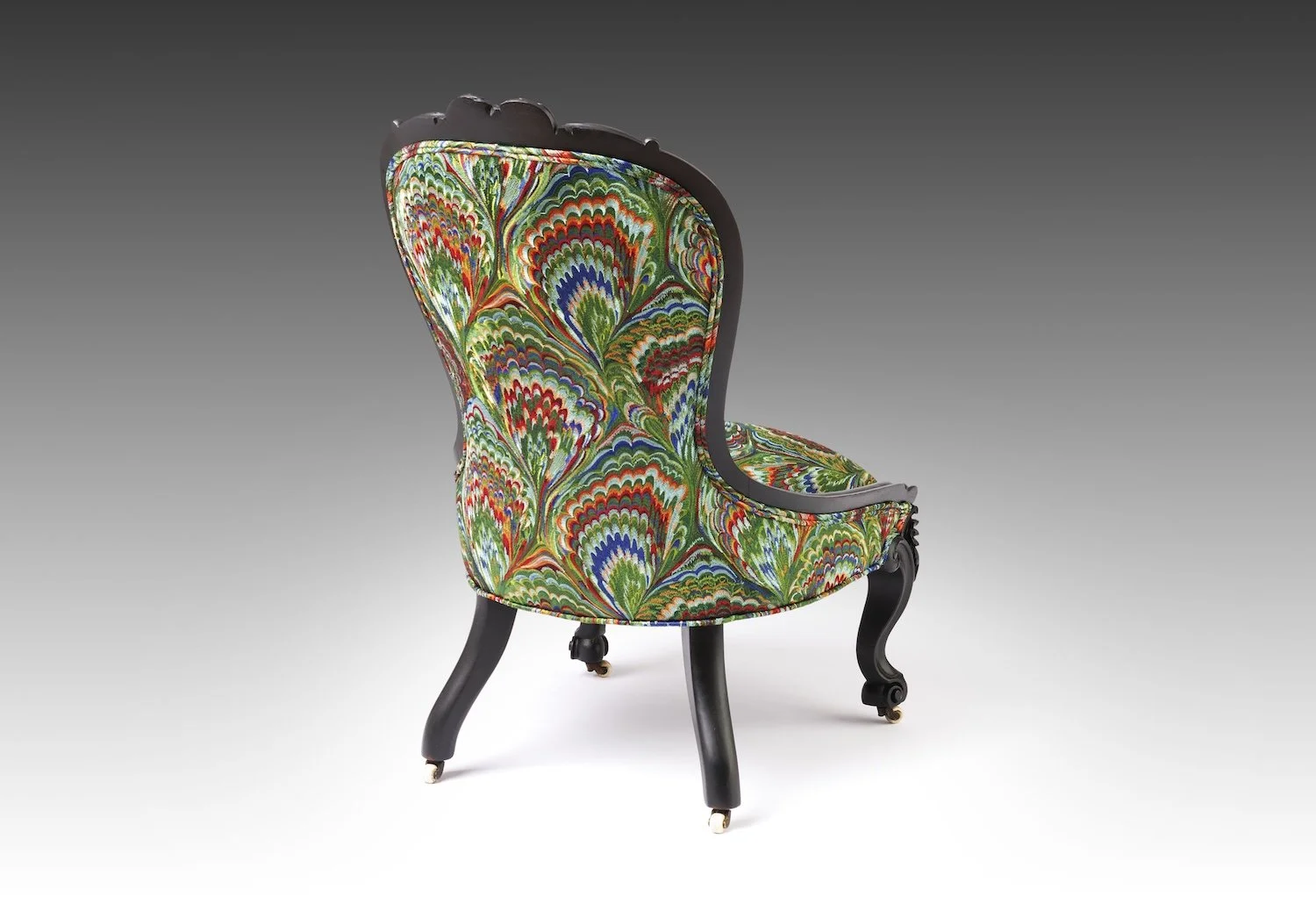 Image 3 of 8
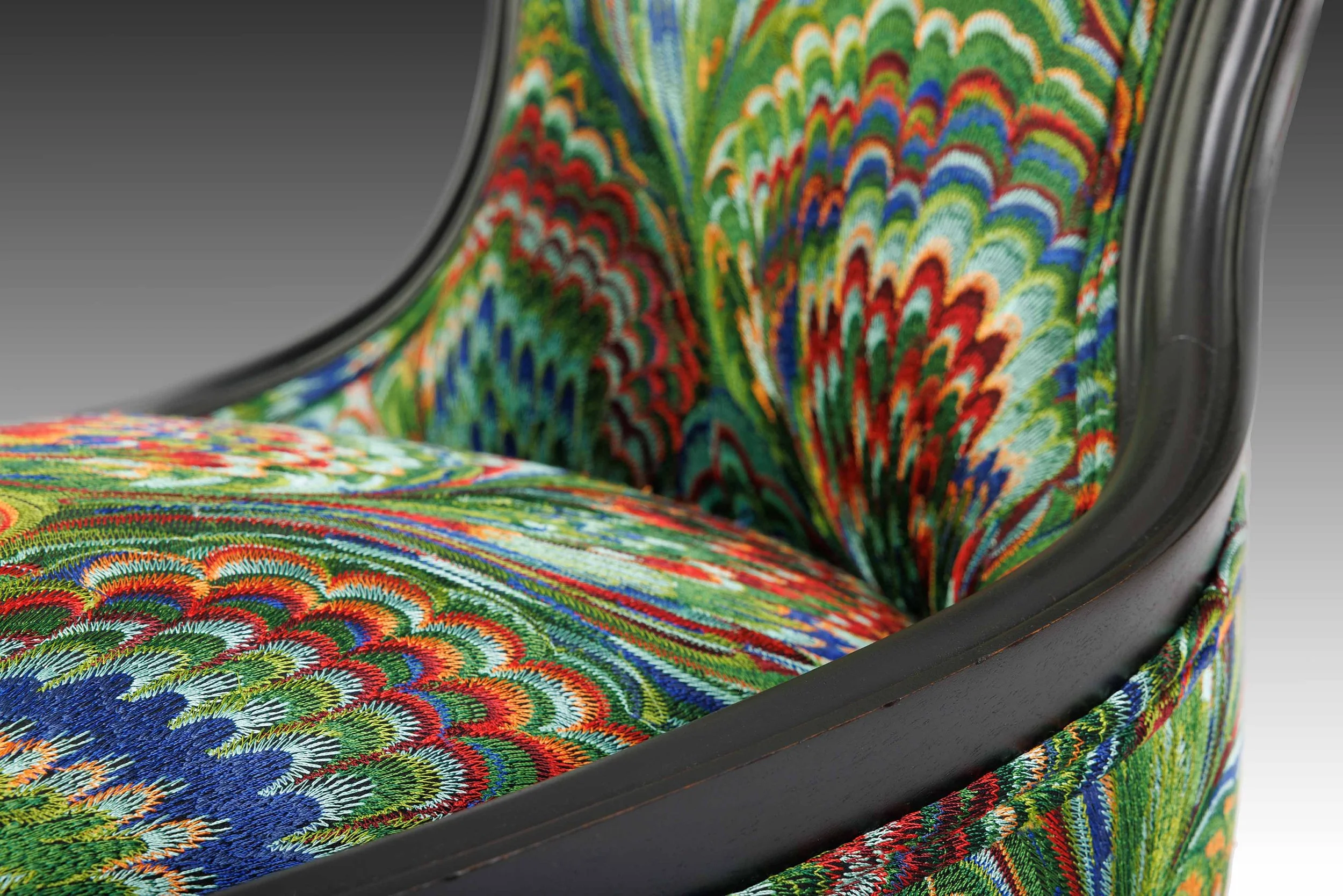 Image 4 of 8
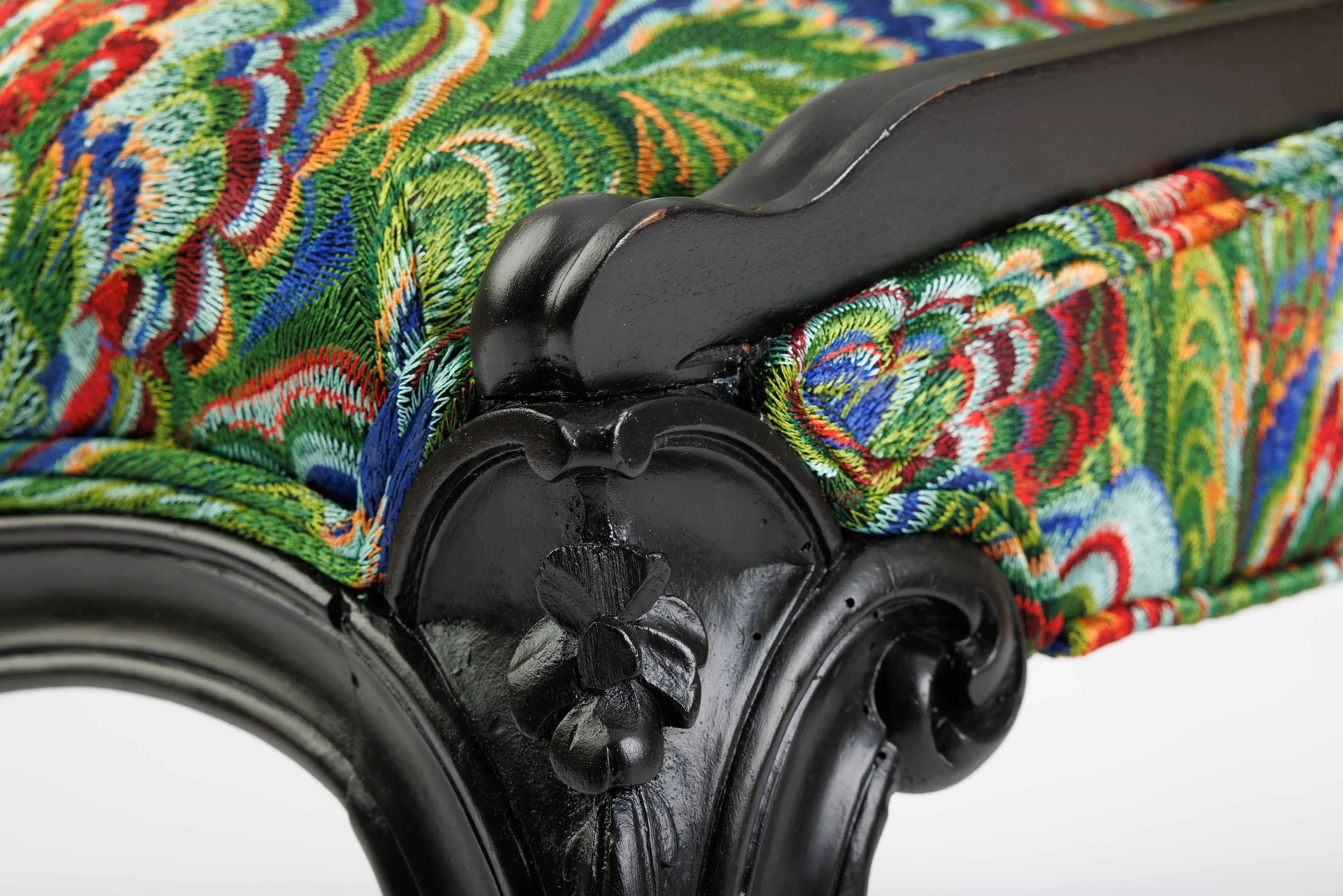 Image 5 of 8
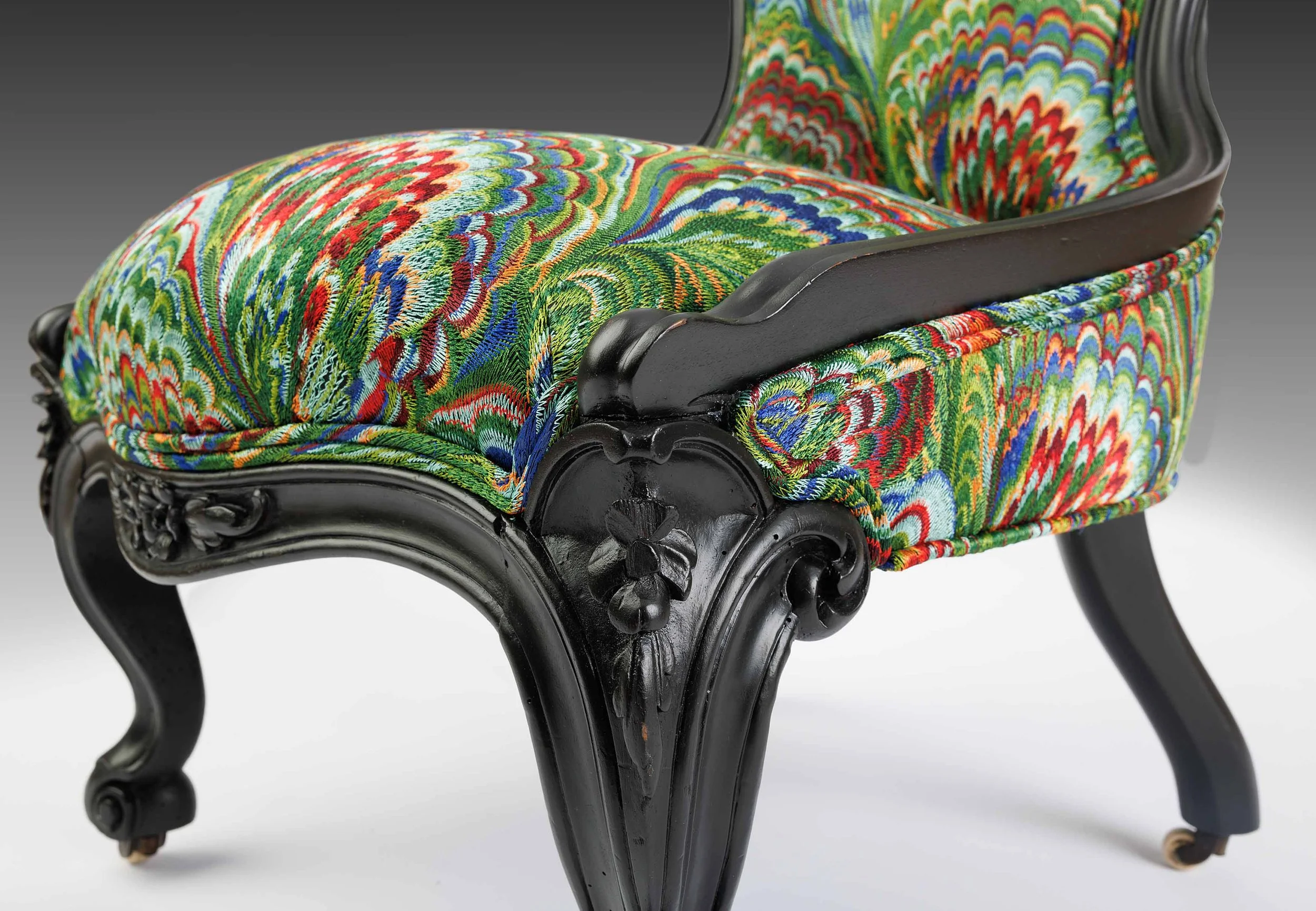 Image 6 of 8
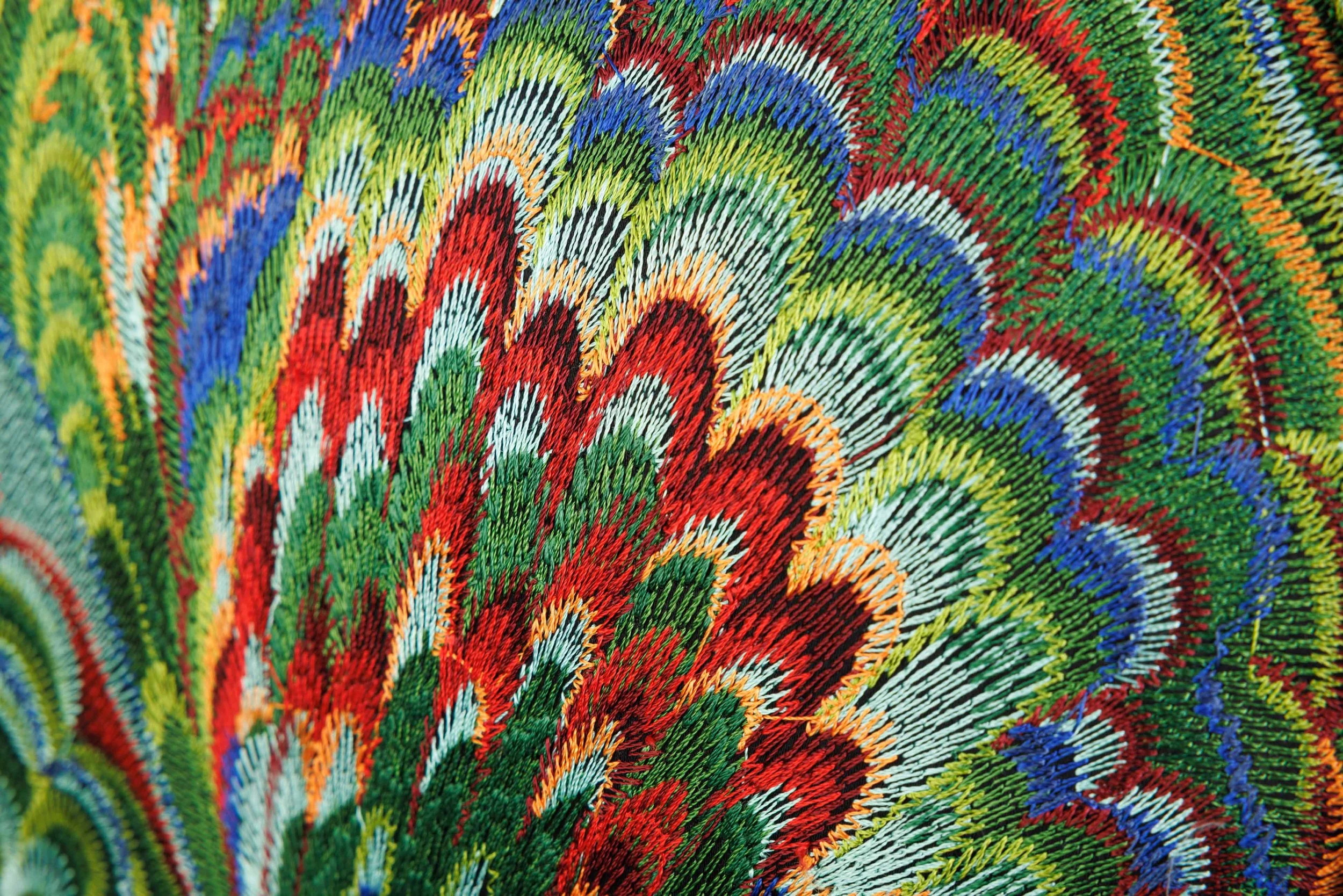 Image 7 of 8
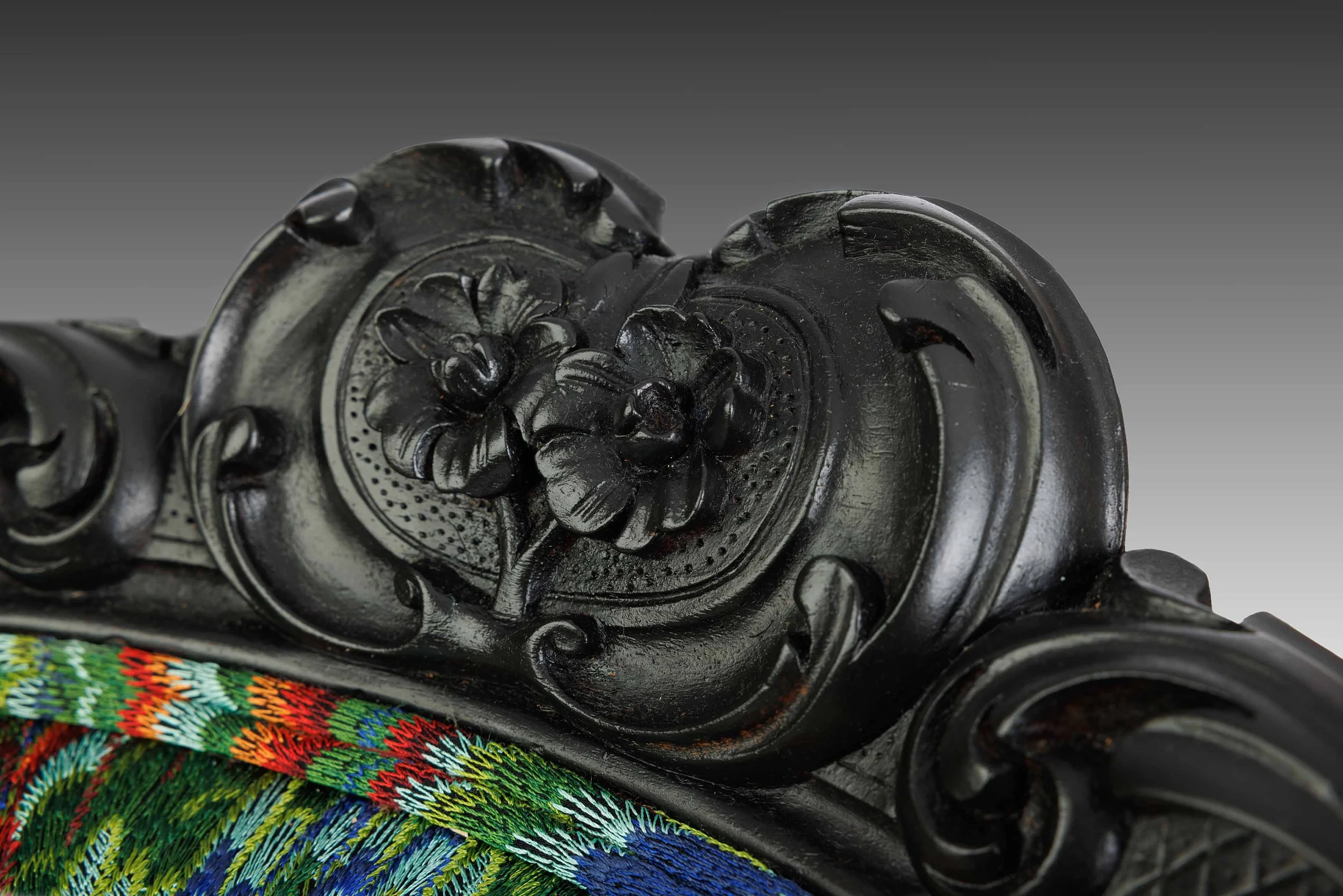 Image 8 of 8