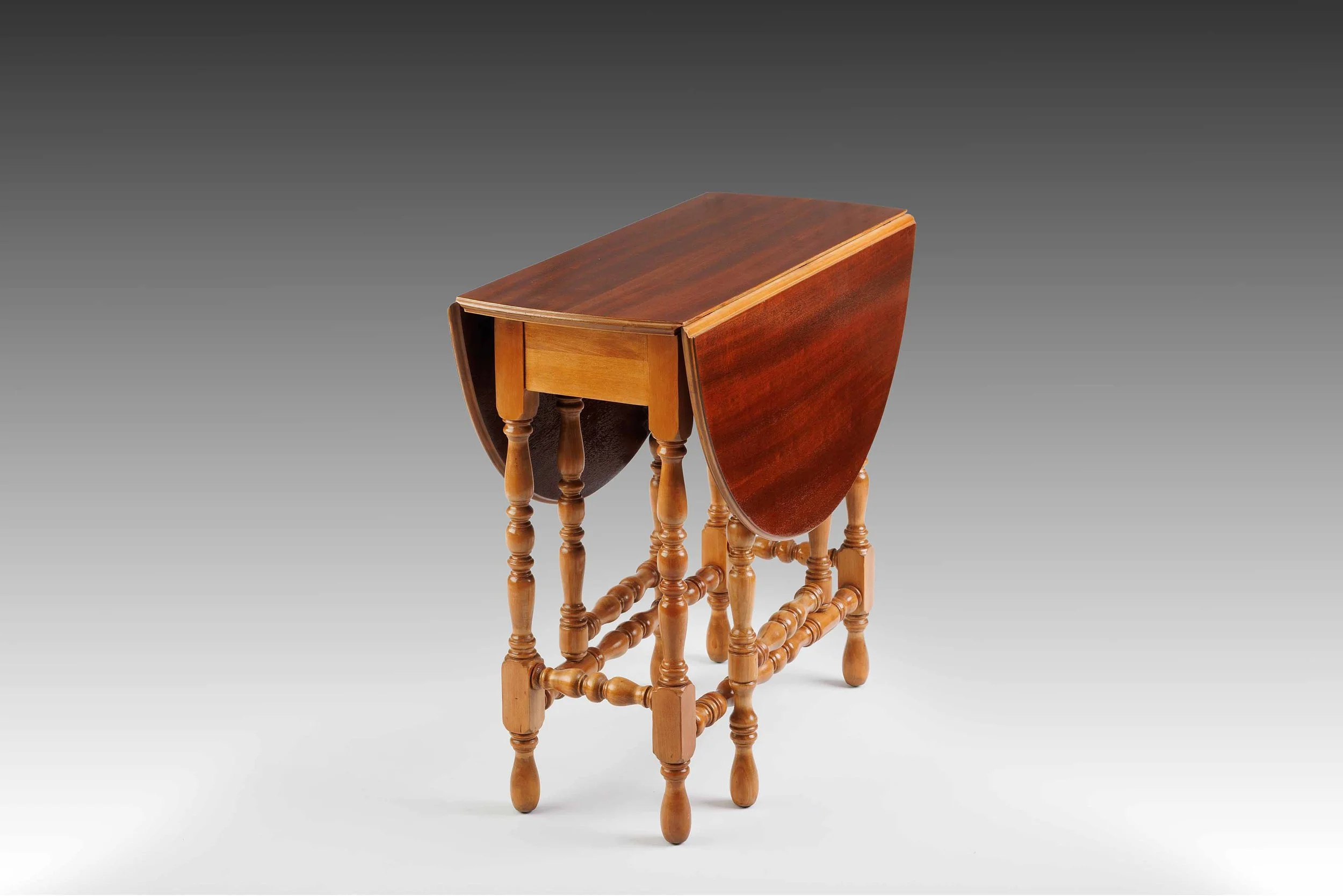
 Image 1 of 2
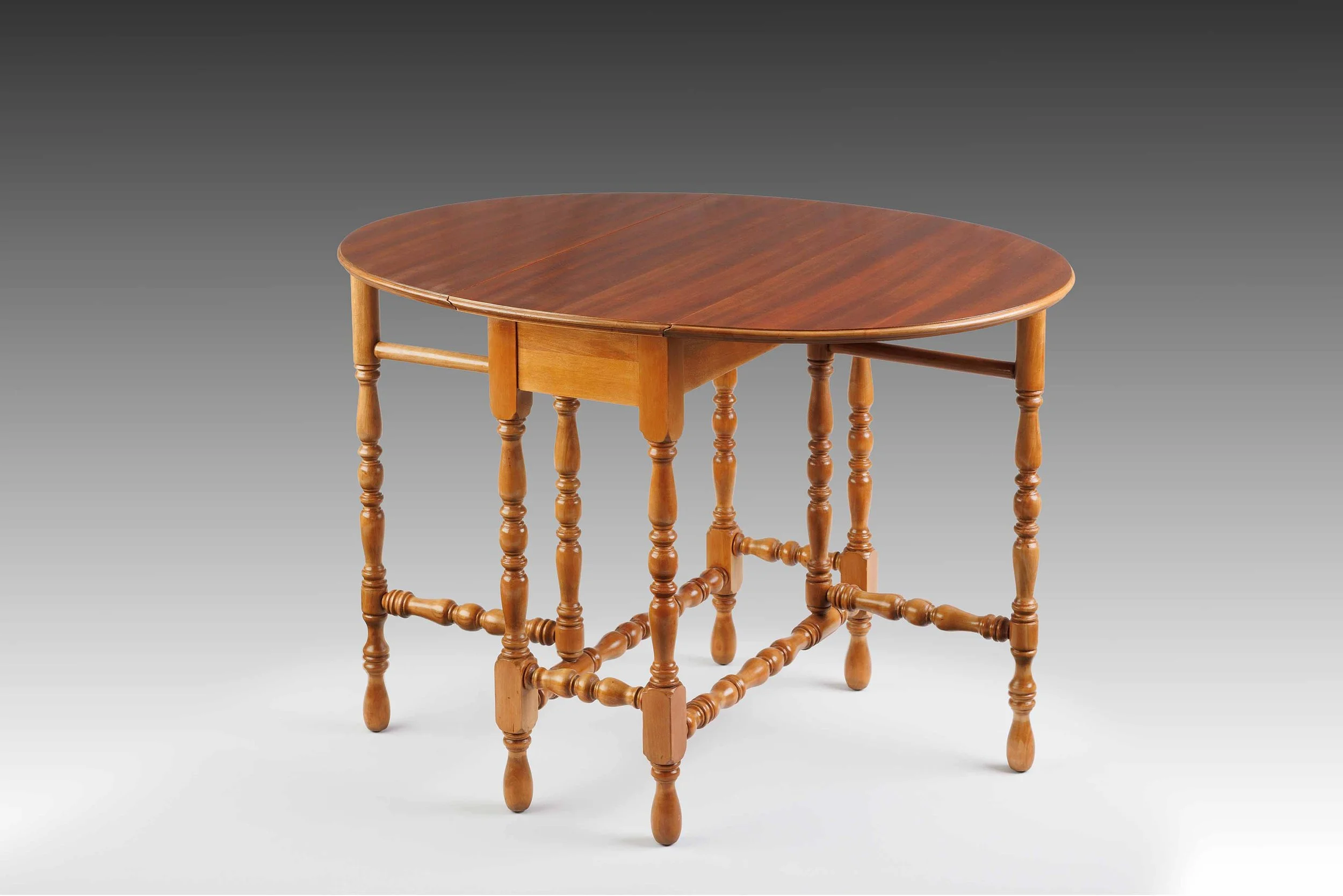 Image 2 of 2
Living With This Object
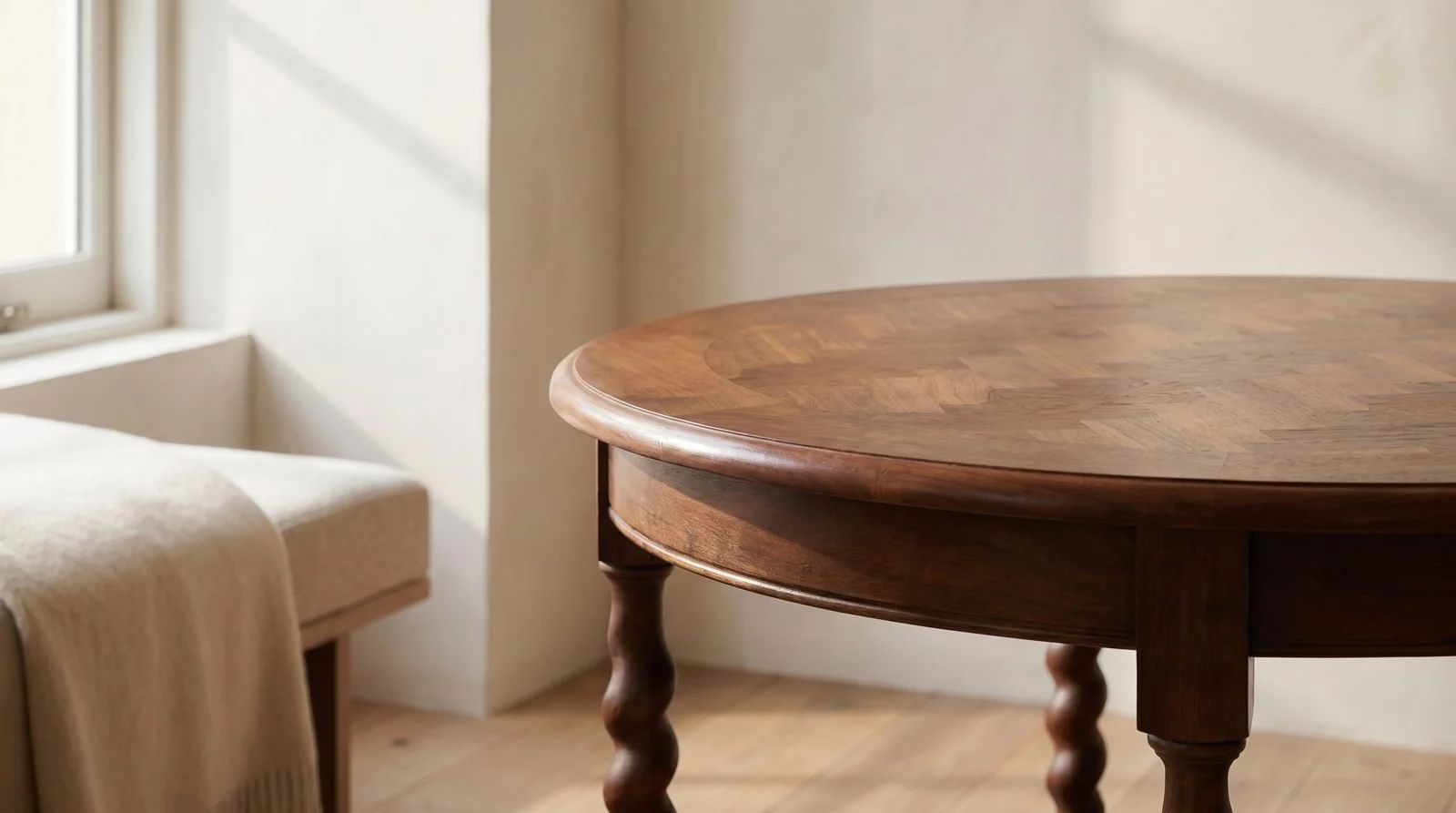
In a room, the table is defined by the contrast between its reddish oval top and its pale turned base, each left its natural color rather than brought together under stain. Folded, it occupies little more space than a console; opened, it becomes a dining or lamp table, the repeating baluster-and-ring turnings lending the piece an architectural rhythm in either form.
The room views below are AI visualizations, offered to suggest scale and placement. They are rendered images, not photographs of the table in these rooms.
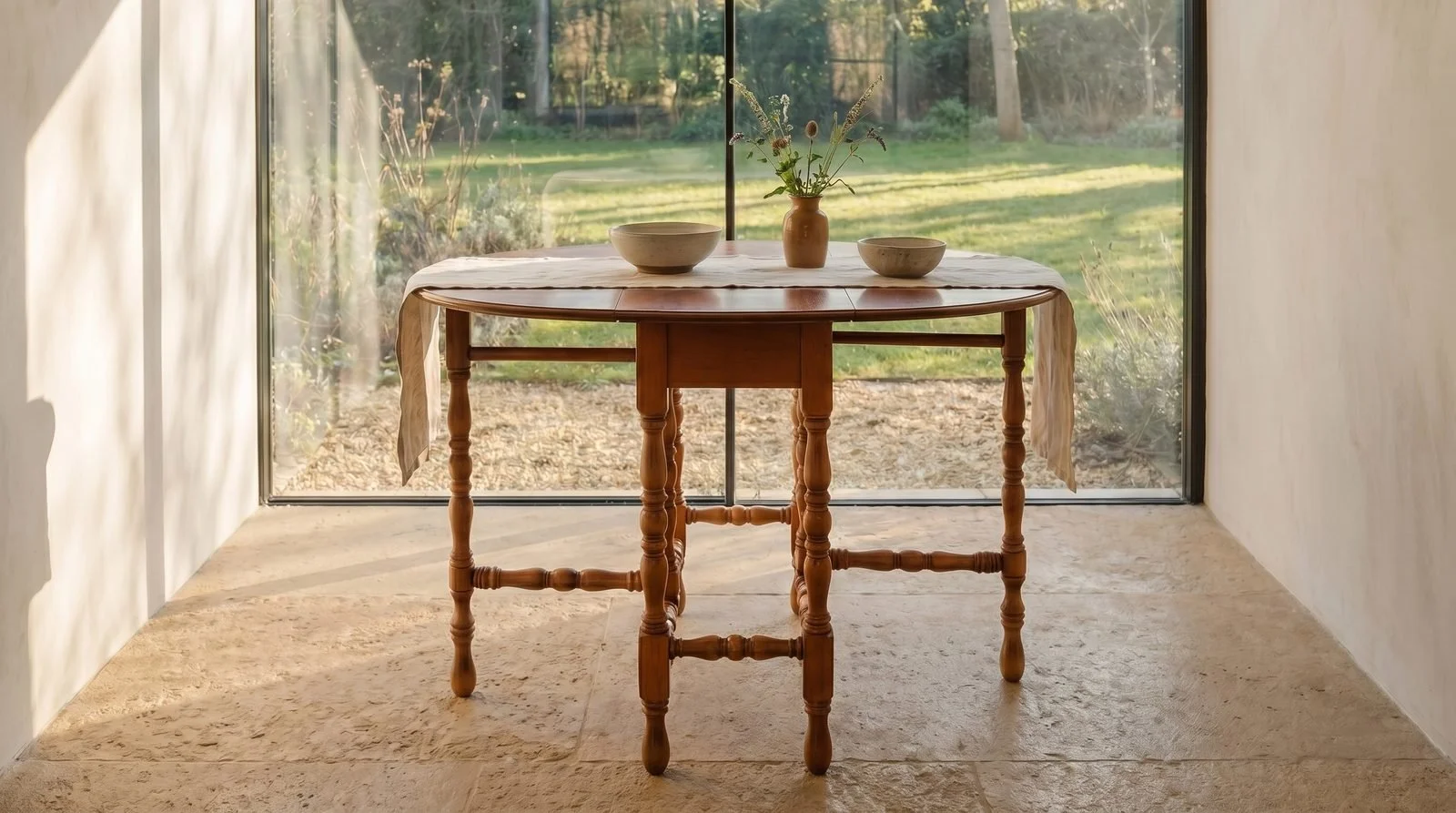
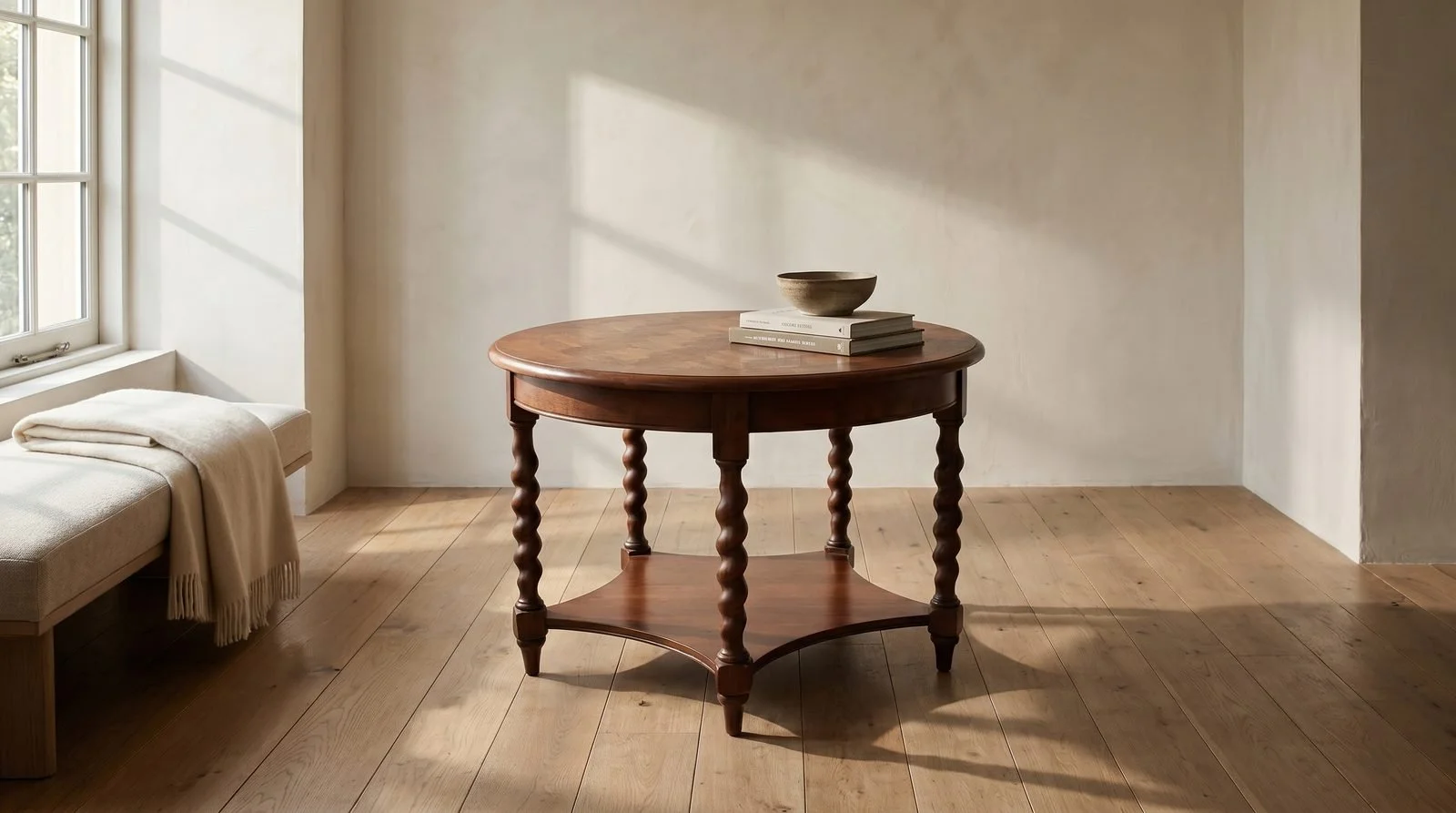
-
Closed, it settles against a wall, in an entry, or behind a settee, where a deeper table would not fit. Raised, it seats two, and the apron drawer keeps small things close at hand.
-
Type: Gateleg drop-leaf table; oval top on hinged leaves
Style: William and Mary Revival
Date: Circa 1920–1935
Origin: Grand Rapids, Michigan, USA
Provenance: Acquired from a private residence in Palos Verdes Estates, California; remained with the same family for decades
Material: Hardwood (reddish top, pale base)
Finish: Applied in restoration (clear sealer, no stain)
Construction: Turned legs and stretchers; paired gates; single apron drawer
Maker & Origin: Imperial Furniture Company, Grand Rapids (label inside drawer)
Condition: Refinished; earlier top marks resolved
Dimensions: 31¾ W × 14¼ D × 28¾ H in.; extends to 41¾ in. across, raised
-
Original: All elements appear original to the table, with no replacements identified.
Replaced: Nothing was replaced in the documented work.
Reconstructed: No elements were reconstructed.
Repaired: No structural repairs are documented.
Finish Work: The top, as received, carried water rings and discoloration. It was refinished with a clear natural sealer and no stain.
-
Inside the drawer sits a printed paper label: a green crowned shield reading "Imperial / Grand Rapids / Mich." beside a gilt banner, "Made in Grand Rapids." The Imperial Furniture Company worked in Grand Rapids from 1903 to 1962, and the company was particularly known for its tables.
-
The gateleg is a seventeenth-century English form; this example is an American manufacture, documented by the printed label inside the drawer. No year is recorded: the circa 1920–1935 date is inferred from the label style and the William and Mary Revival form, and comparison with surviving Imperial Furniture Company catalogues, advertisements, or price lists could narrow the date range further. The distinction is kept deliberately: the design lineage is English, the making is Grand Rapids. Its most recently documented provenance places it in a private residence in Palos Verdes Estates, California, where it remained with the same family for decades before acquisition.
-
The top is a reddish-brown wood with a straight, lightly striped figure that reads as mahogany, though several related woods share this appearance. Below it, the base, legs, and stretchers are a paler, honey-toned hardwood, consistent with a domestic species such as birch or maple. The legs are baluster-and-ring turned and meet turned stretchers; a pair of gate legs supports each leaf, and a knob-pull drawer is fitted in the apron.
-
Gateleg tables earned their floor space, kept small and opened only when a household needed the surface; the form's early twentieth-century American revival carried it into the apartments and smaller homes for which this example was made. It remained with the same family for decades in a home in Palos Verdes Estates before entering the present collection. Used long enough for its top to bear the marks of daily life, now resolved through restoration, it carries one deliberate choice from that work: rather than color the two woods to match, the restoration left each wood its natural color, allowing the reddish top and the pale base to remain distinct. The years before it reached that household are not recorded, and the record ends where the evidence ends.
-
Is this a vintage gateleg drop-leaf table, or an antique? It is vintage. The drawer label and the form place it in the early twentieth century, circa 1920–1935. In the trade, antique status generally requires an age of at least 100 years, and nothing dates the table firmly before 1926, so it is catalogued as vintage rather than rounded up to antique.
How far does it open? Closed, it is a narrow console about fourteen inches deep, sized to sit against a wall. Raise both leaves and swing the gates out beneath them, and the top opens to an oval roughly forty-two inches across. The height stays just under twenty-nine inches throughout.
Has it been refinished? Yes. The top, as received, carried water rings and discoloration, and it was refinished with a clear natural sealer and no stain. The work reads as a clean surface rather than a recoloring: no pigment was introduced, and the color you see is the wood itself.
What wood is it? The top reads as mahogany, a reddish-brown wood with a straight, lightly striped figure, while the base, legs, and stretchers are a paler, honey-toned hardwood of the kind, birch or maple, that Grand Rapids makers favored for turned parts. The two tones are original to the woods, not applied.