 Image 1 of 4
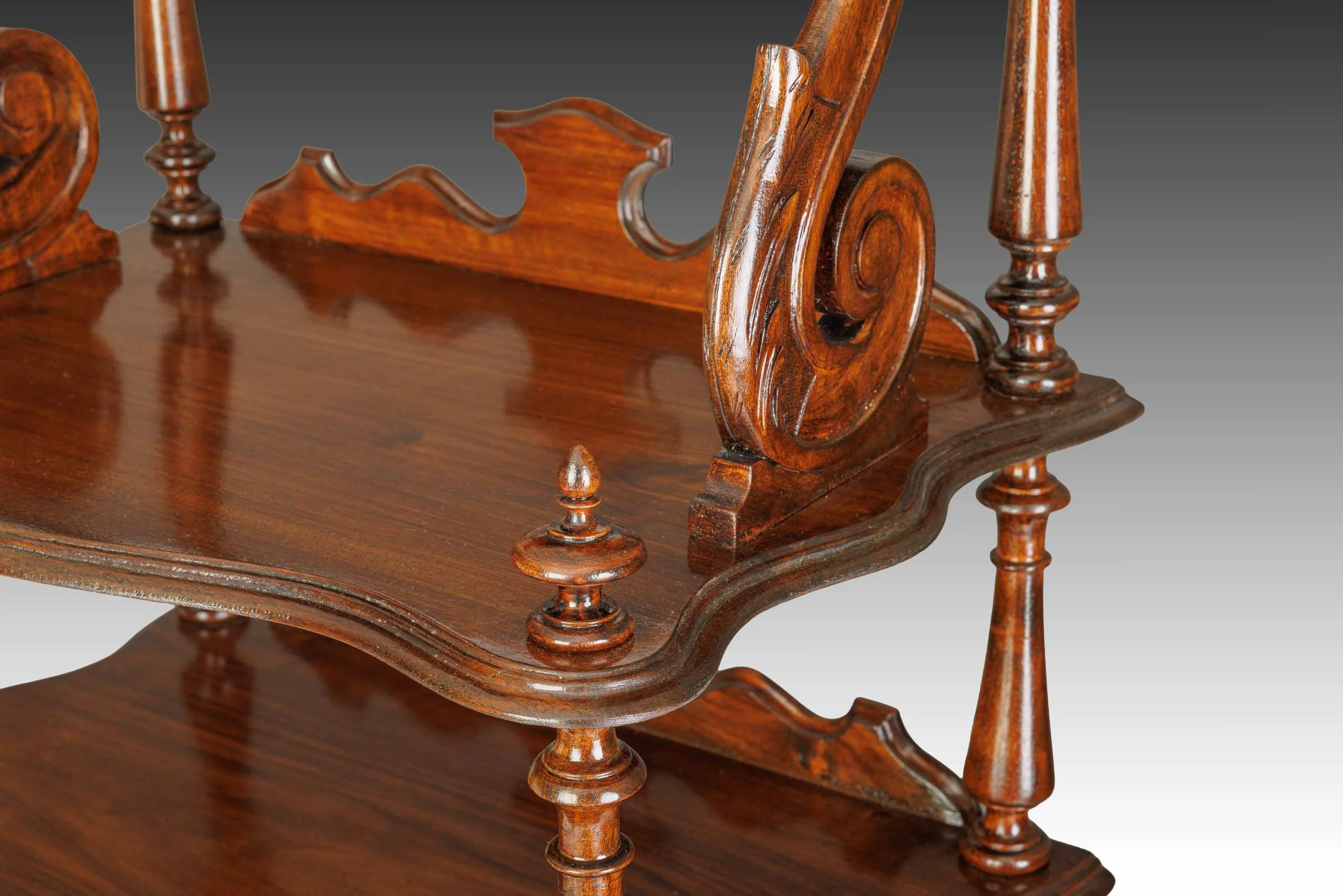 Image 2 of 4
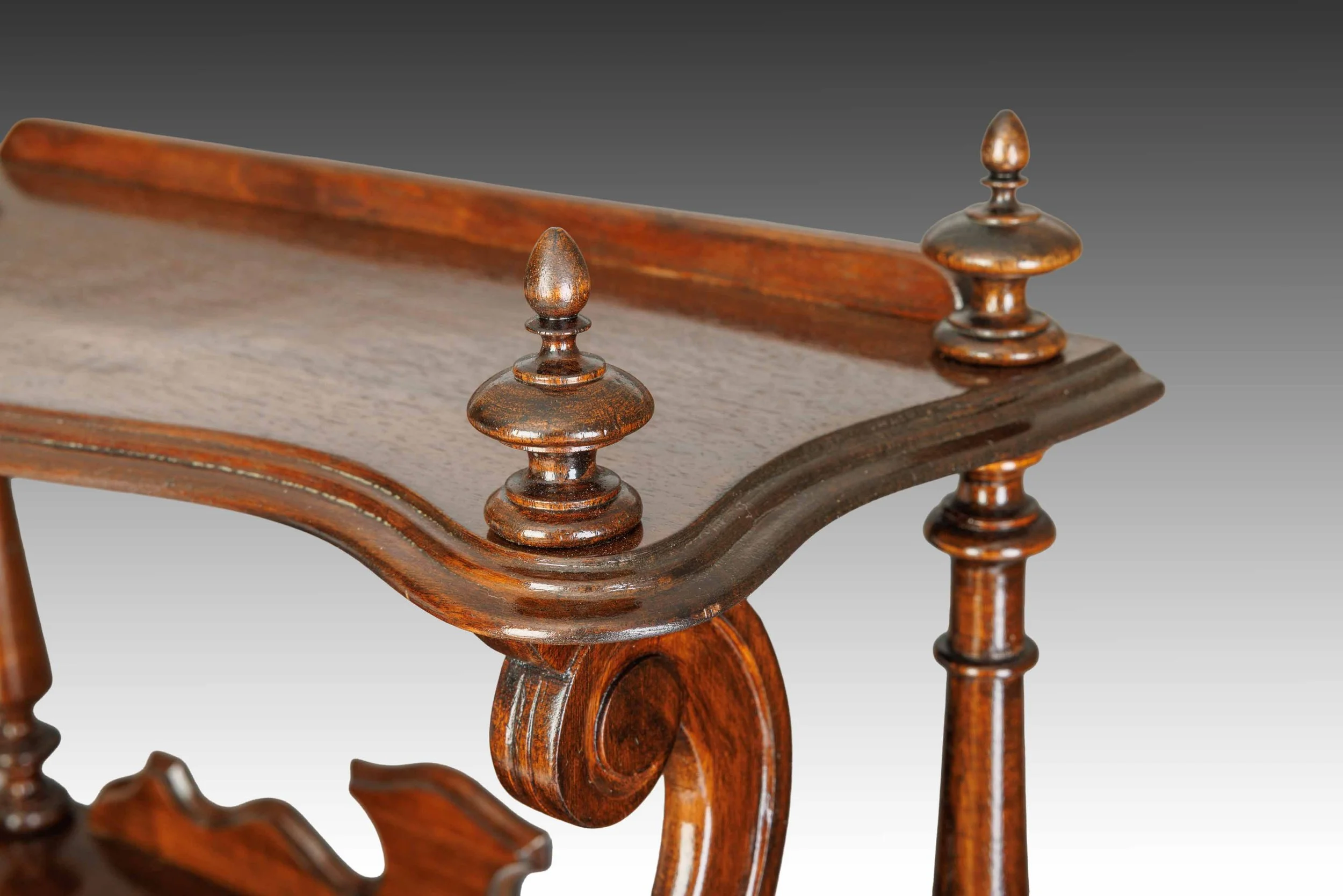 Image 3 of 4
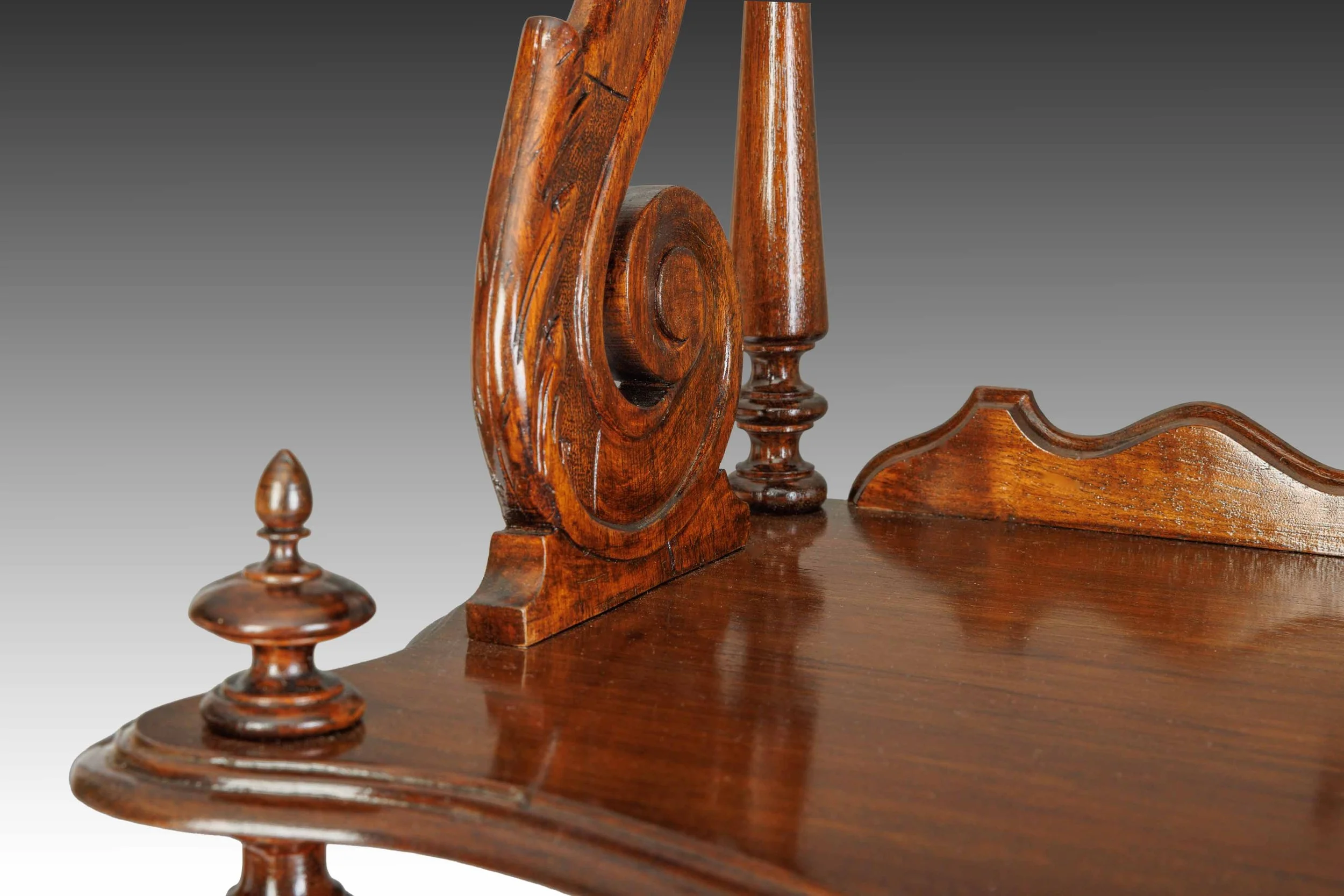 Image 4 of 4
Living With This Object
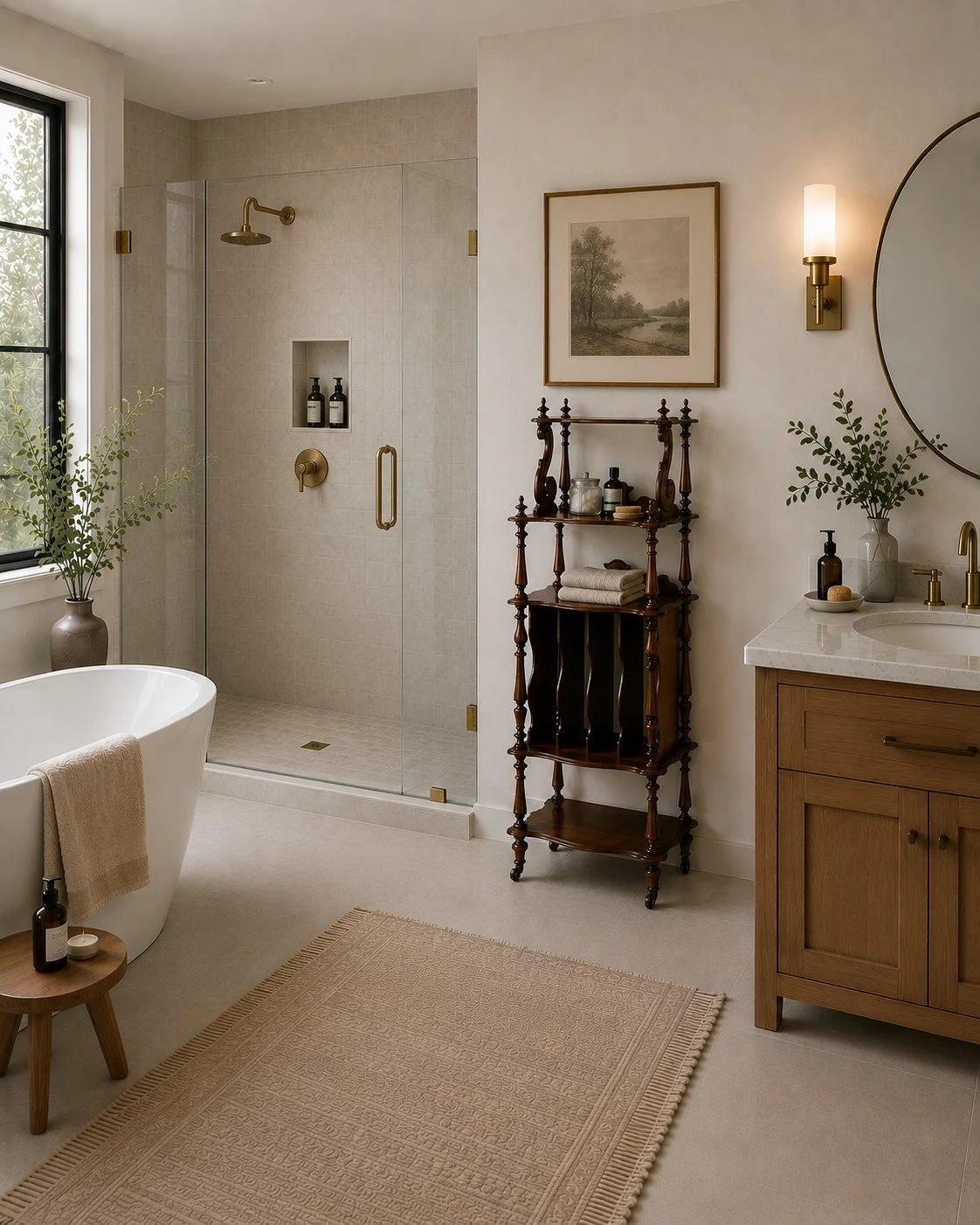
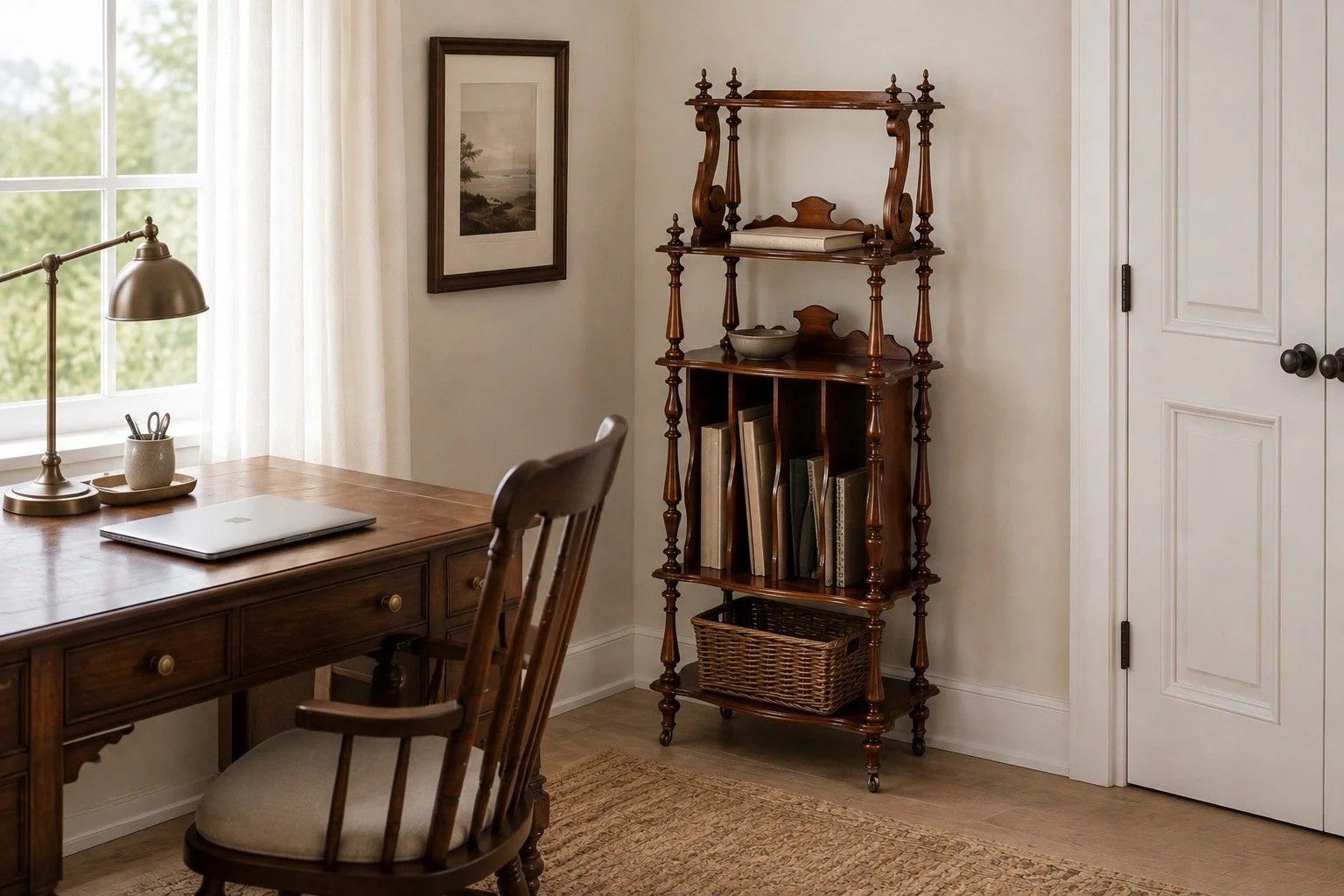
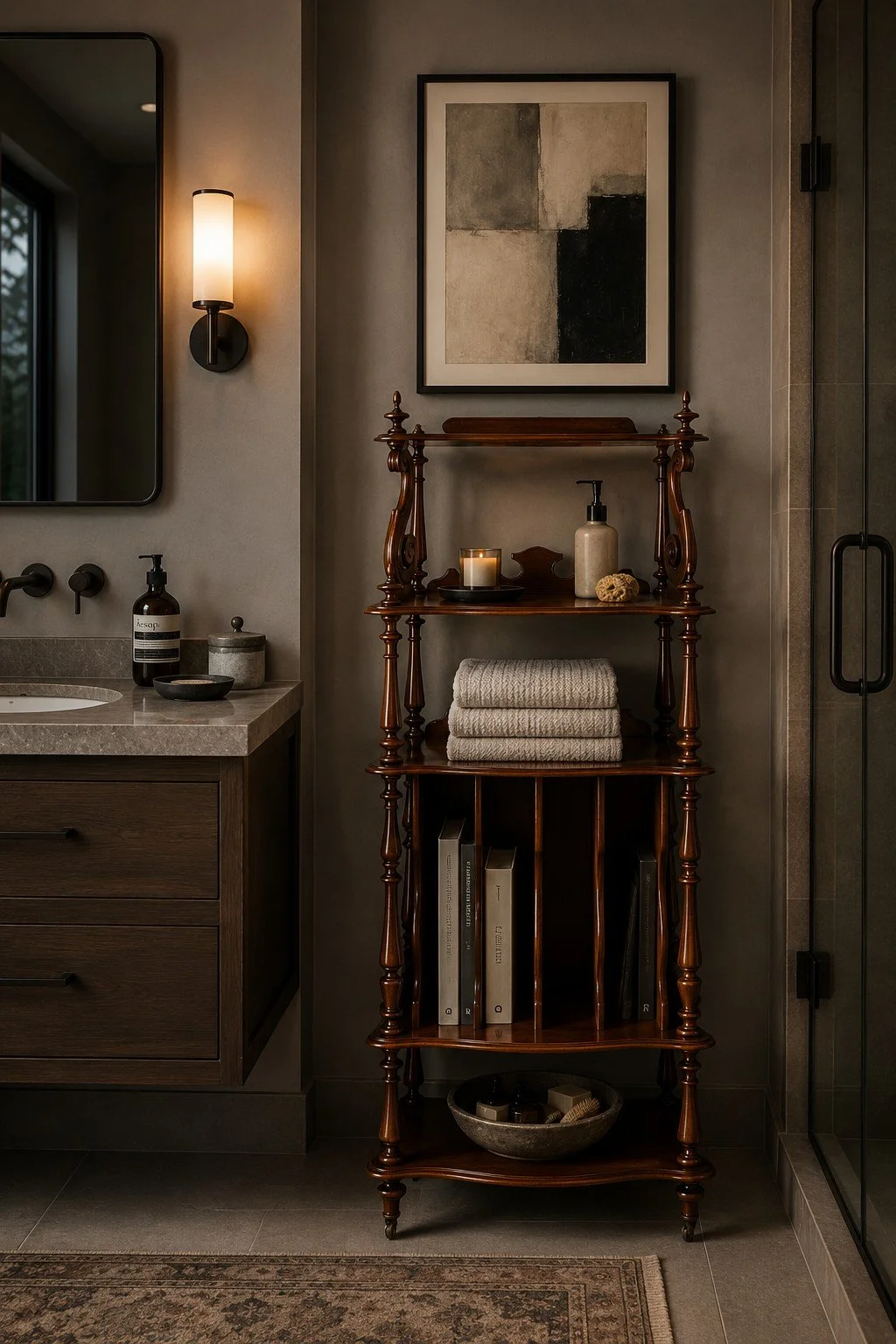
The following images are AI-generated visualizations intended to illustrate scale, proportion, and possible interior settings. They are conceptual, not photographs of the object in an existing room, and they preserve the documented proportions, finish, hardware, repairs, mirror, and construction of the piece.
-
Whether it stands in an entry hall, against a library wall, in a dressing room, or at a transition between rooms, its narrow footprint and substantial height let vertical storage hold a position the floor cannot spare. The open shelves take framed pictures, ceramics, or plants, and the divided lower section holds oversized books, portfolios, or magazines upright. The casters let it be repositioned without lifting.
-
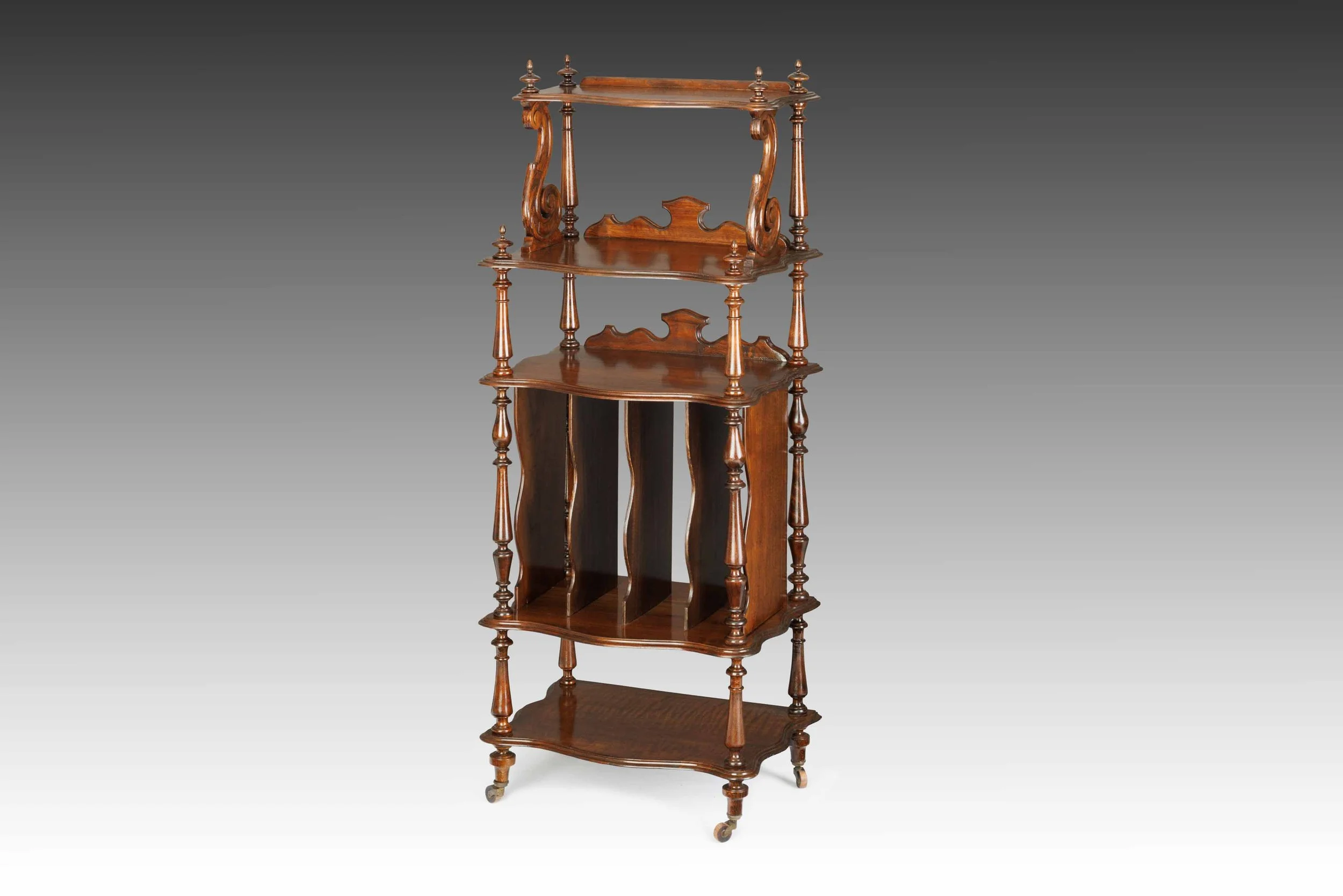
Type: Étagère (whatnot); open tiered display stand
Style: Victorian
Date: Circa 1870–1900
Origin: Not established (unmarked)
Maker: Unattributed (no mark located)
Provenance: Acquired from a multigenerational family estate, Palos Verdes Estates, California
Material: Hardwood; brass cup casters
Finish: Walnut stain applied in restoration; not an original surface
Construction: Knock-down structure; turned uprights and carved scroll brackets, shelves drawn together on threaded rods
Condition: Restored; disassembled and rebuilt for rigidity, one divider replaced, surface refinished
Dimensions: 19 W × 12½ D × 48 H in.
-
Original: The stand's structure throughout: the graduated shelves, turned baluster uprights, carved S-scroll brackets, urn finials, shaped back galleries, the threaded-rod assembly, and the surviving dividers in the lower compartment.
Replaced: Nothing was replaced in the documented work.
Reconstructed: The divided lower compartment had lost dividers; the missing dividers were remade to the surviving profile and spacing, returning the section to four slots.
Repaired: The étagère was taken apart and reassembled, with the joints and the threaded-rod structure drawn up to restore rigidity.
Finish Work: The surface was stripped and a walnut stain applied under the present finish, giving the warm tone seen now. The color is the stain's, not the wood's own.
-
The lower-middle section is fitted with shaped vertical dividers that partition it into upright slots, made to hold sheet music, folios, or periodicals on edge rather than stacked. That working detail is what sets this stand apart from a plain run of shelves. One divider was replaced in restoration; the rest are original, as detailed under Condition & Restoration.
-
No maker's mark, label, or stamp was located, so the étagère is left unattributed rather than assigned a name.
The whatnot and the étagère are the same open tiered form, produced throughout the second half of the nineteenth century by workshops in England and across continental Europe. With no mark or documentary evidence identifying the workshop, and because the form was produced in more than one country, the manufacture origin is not established. The "Victorian" designation denotes the period style, not a documented English manufacture.
The date, circa 1870–1900, rests on the style and construction rather than a mark or a dated record; it is an informed inference. The turned, carved, and serpentine work detailed under Materials & Construction is consistent with later-nineteenth-century open display furniture.
-
The frame is a close, fairly straight-grained hardwood, with light figure across the wider shelves and a pale tone beneath the warm stain it now carries. The species is not identified.
The stand is built as a knock-down structure: its graduated shelves are spaced by turned baluster uprights and drawn together by long threaded rods that run vertically through the columns. The top shelf rests on a pair of carved S-scroll brackets, with urn finials at the back corners, and the upper shelves carry shaped back galleries. The base shelf is fitted with brass cup casters.
-
Stands of this kind belonged to the Victorian habit of open display: a vertical, free-standing form that organized books, music, ornaments, and small collections by elevation and separation rather than behind doors. A folio-slotted example like this one was at home in the drawing room, the library, and above all the music room, standing within reach of the instrument it served.
This stand carries the evidence of a working life, the restoration documented under Condition & Restoration, and one verified chapter of ownership: it was acquired from a multigenerational family estate in Palos Verdes Estates, California, where, according to the estate sale, it had remained within the same family for decades before the household was dispersed. What came before that chapter is not recorded, so the maker, the precise date, the country of manufacture, and its earlier ownership remain unknown. The record ends where the evidence ends.
-
Is this an antique or a vintage piece? It is an antique Victorian étagère, not vintage. Antique means one hundred years or older, and the style and construction place the stand in the late nineteenth century, circa 1870–1900, comfortably past that mark. The age rests on stylistic evidence rather than a mark or a dated record, so it is an informed estimate.
What wood is it? The frame is a close-grained hardwood, and the warm color is a walnut stain applied in restoration rather than the wood's own tone, which is pale beneath. The species itself is not identified.
Has it been restored? Yes, and the work is fully disclosed. The stand was disassembled and rebuilt for rigidity, one divider in the lower compartment was replaced, remade to the profile and spacing of the originals, and the surface was stripped and refinished with a walnut stain. The full ledger sits under Condition & Restoration above.
Does it have known provenance? Yes. The stand was acquired from a multigenerational family estate in Palos Verdes Estates, California, where it had remained within the same family for decades before the estate was dispersed. Earlier ownership and manufacture are not documented, and no maker's mark was found.
What was the divided lower section for? The shaped vertical dividers partition the lower section into upright slots, the arrangement used for sheet music, folios, or periodicals stored on edge rather than stacked flat. It is what links this form to the Victorian music room, and it remains useful for large-format books and magazines today.