 Image 1 of 3
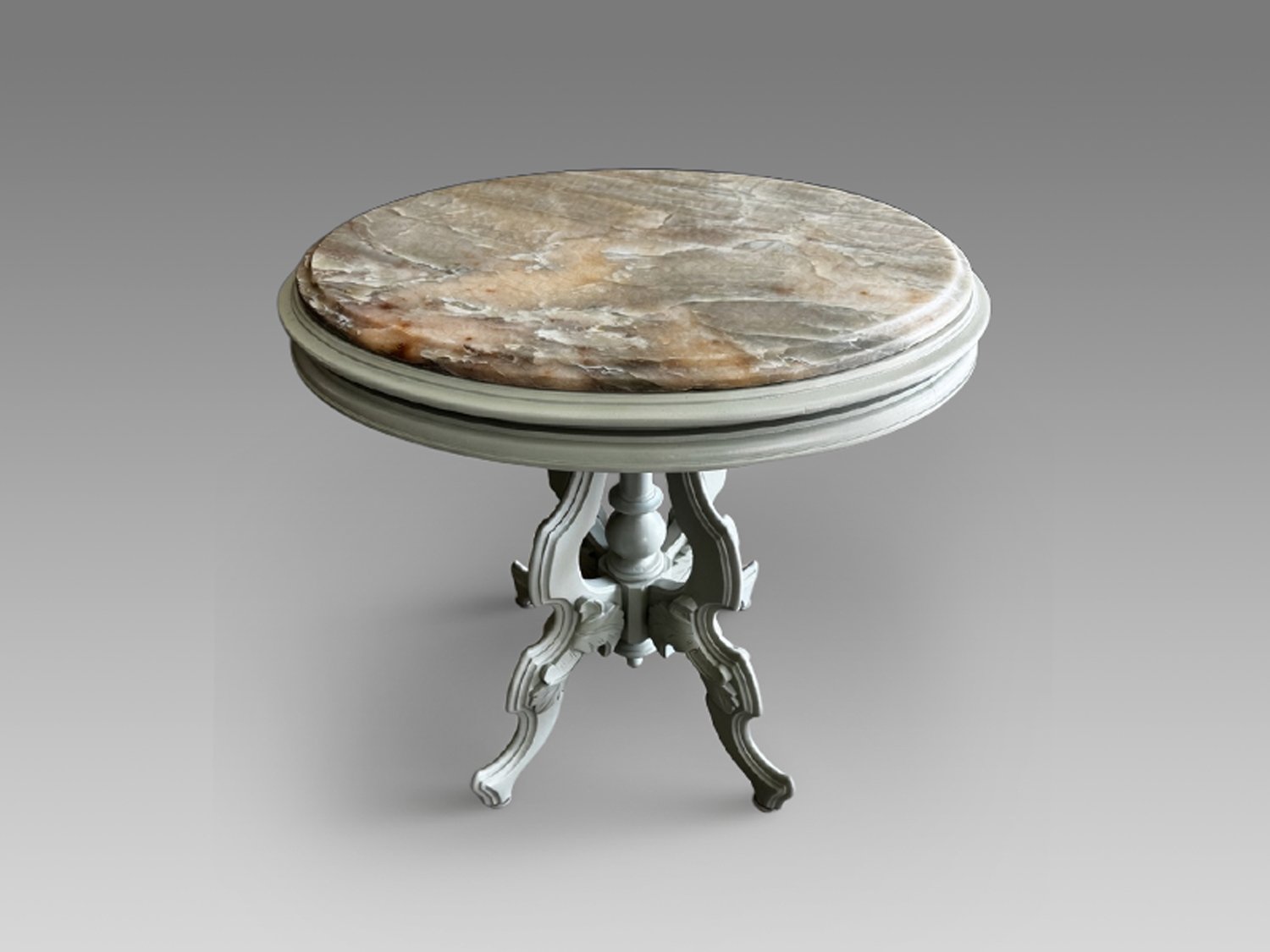 Image 2 of 3
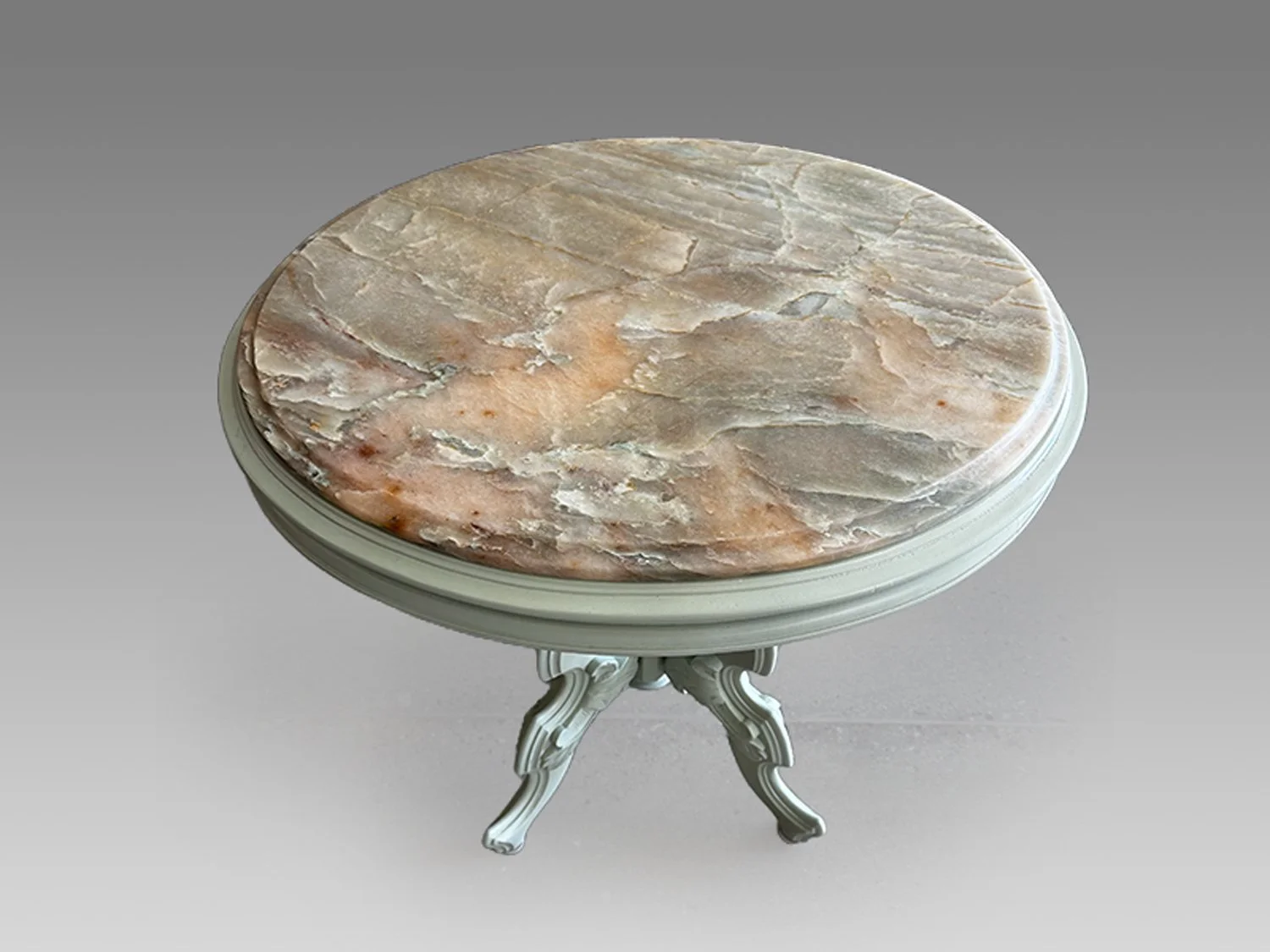 Image 3 of 3
Living With This Object
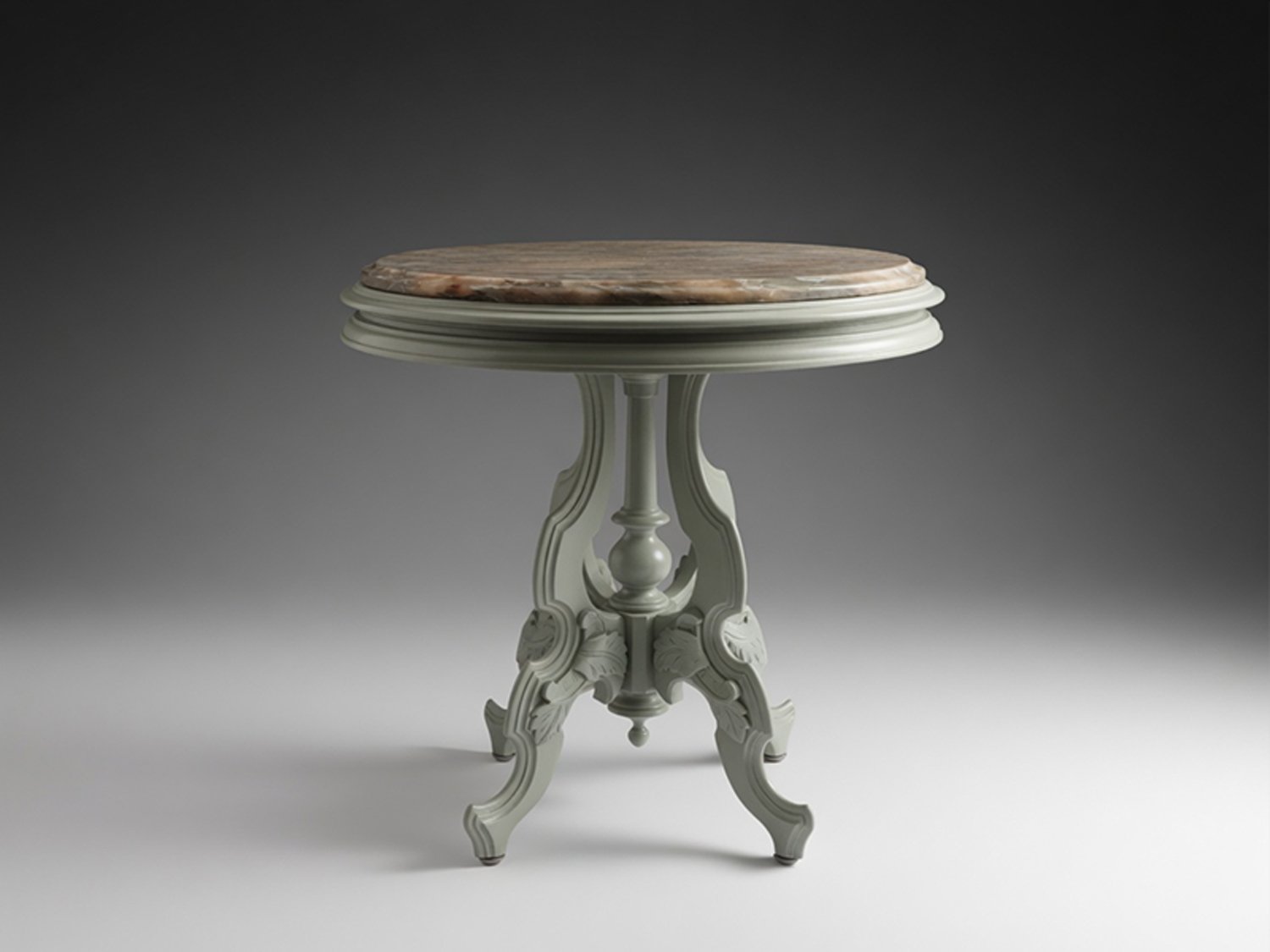
In a room, the table reads from every side: the carved quadripod base rises to a central turned column, and the sage-green paint holds the scrolling profile of the legs in relief while the amber-and-grey quartzite top draws the eye to the surface. Because the base has no back, the table sits as easily in the open, floated beside a chair, a sofa, or a bath, as it does against a wall.
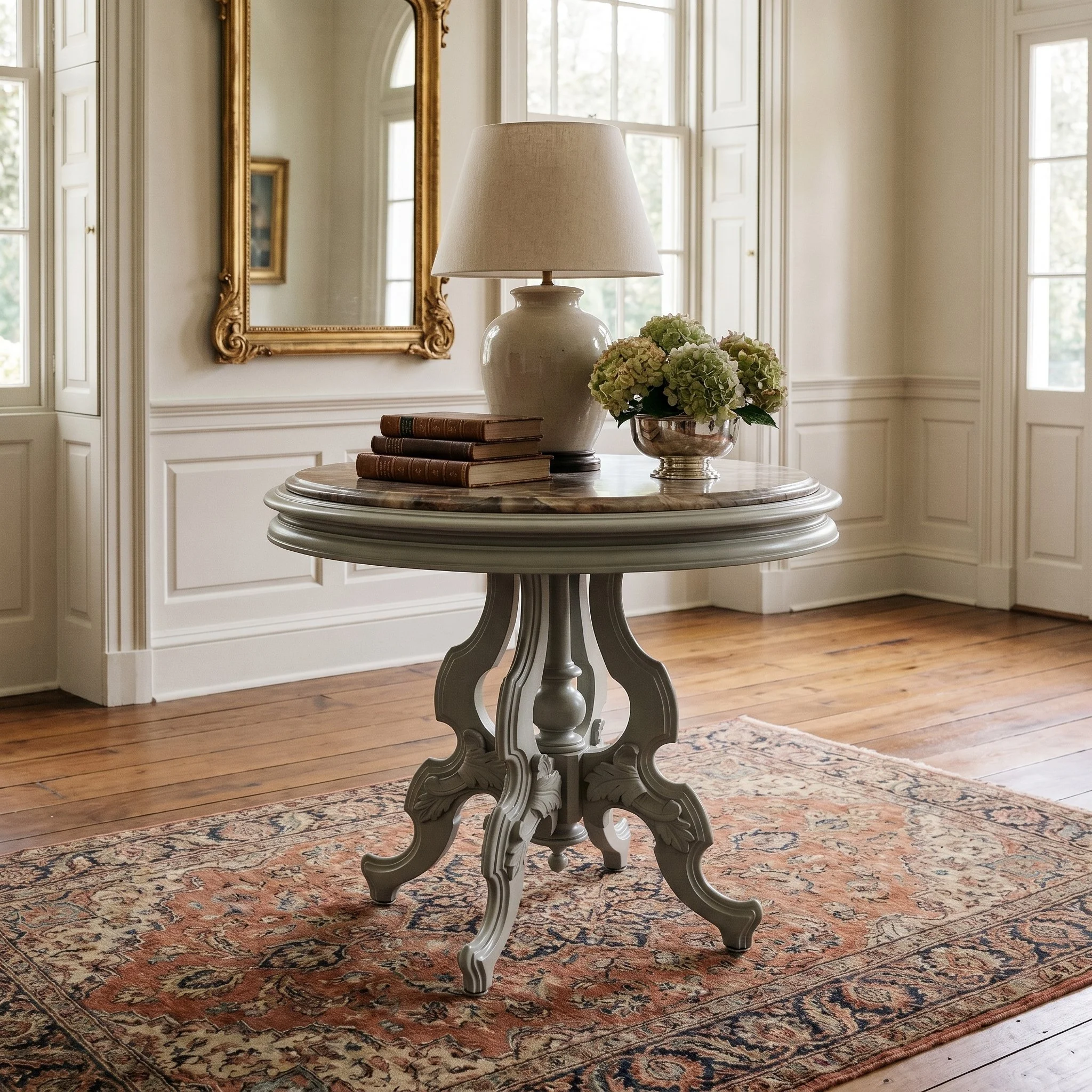
The room views below are AI visualizations, offered to suggest scale and placement. They are rendered images, not photographs of the table in these rooms.
-
Whether placed beside a reading chair or a bed, at the end of a sofa, or welcoming guests in an entry, the table offers a quiet surface where carved wood and natural stone can be appreciated together. It serves as a side or lamp table or a small pedestal, and because the carved base reads from every side, it does not need to sit against a wall.
-
Type: Side table; oval top on a pedestal base
Style: Victorian
Date: Circa 1890–1910 (estimated)
Origin: Not established
Material: Walnut base, painted; Alexandrita quartzite top
Finish: Sage green paint, applied in restoration; not the original surface
Construction: Four scrolled legs joined around a central turned column; carved foliate motifs at the junctions; molded two-tier oval rim
Maker & Origin: Unattributed; no mark located
Condition: Restored; stripped and painted sage green; carved base intact; full disclosure under Condition & Restoration
Dimensions: 28½ W × 22½ D × 27½ H in.
-
Original: The carved quadripod base and the molded oval rim are original to the piece, and the structure reads intact beneath the present finish.
Replaced: The top surface was replaced. The piece was acquired with an oval wood top that carried water staining; that top was removed and a removable Alexandrita quartzite slab was fitted in its place, resting on the molded oval rim.
Reconstructed: No elements were reconstructed.
Repaired: No structural repairs are documented.
Finish Work: The wood was stripped of its original finish and painted sage green. The present surface is an applied finish, not a revival of the original surface. The paint follows the carving without filling it, and the relief remains legible.
Other (Additions): The quartzite slab rests on top of the molded oval rim and lifts off; it is not fixed to the base. Small glides were fitted beneath the feet.
-
The base is built from four shaped legs, each cut with a scrolling profile and gathered around a central turned column that ends in a dropped pendant finial. Where the legs meet the column, foliate motifs are carved in relief. The curve of the legs plays against the vertical of the column, and the proportion is held in balance, so the base supports the top without appearing heavy.
-
No maker's mark or label was located, so the table is left unattributed rather than assigned. The carved oval-top form on a four-leg pedestal is Victorian in style, and its manufacture is estimated at circa 1890 to 1910, a span that comfortably covers both a late-Victorian piece and an early-20th-century continuation of the same form. The country of manufacture is not established.
-
The base is walnut, carved and now painted, so with the surface painted the grain is not visible on the finished piece. The top surface is a removable quartzite slab, supplied as 'Alexandrita,' resting on the molded oval rim so that it lifts off. Its surface carries natural mineral variation, moving through pale grey, warm amber, and lighter veining, and the variation is natural mineral banding within the stone, not staining or wear.
-
Tables of this kind were familiar fixtures of the late-19th-century American interior, a surface for a lamp, books, or a few displayed objects, made in quantity through the Victorian era. This example passed through that domestic use and, later, a restoration that gave it its present painted finish and stone top. Its most recent documented acquisition was through a New Hampshire auction, providing the first verifiable point in its surviving modern record. The maker, the year, the place of manufacture, and the earlier owners are not recorded, and we leave them so. The record ends where the evidence ends.
-
Is this table antique or vintage? By the estimated dating, it is antique. Even the latest end of the circa 1890 to 1910 range is more than a century past, which clears the hundred-year antique threshold without rounding. The estimate rests on the Victorian form and carving rather than a mark, so the year itself cannot be fixed.
Has the table been restored? Yes, and the work is disclosed in full. The wood was stripped of its original finish and painted sage green. The table came with an oval wood top that carried water staining; that top was replaced with a removable Alexandrita quartzite slab, which now rests on the molded oval rim and lifts off. Small glides were added beneath the feet; the carved base is otherwise intact.
What is the top made of? The top of this Victorian quartzite side table is a slab supplied as 'Alexandrita'; it lifts off the rim rather than being fixed. Its coloring is natural mineral variation within the stone, not staining or wear, making the top unique to this piece.
What wood is the base? The base is walnut. It is now painted, so the grain is not visible on the finished surface, but beneath the paint the wood is walnut, which was the usual choice for tables of this Victorian form. The finish over it is disclosed under Condition & Restoration.