 Image 1 of 4
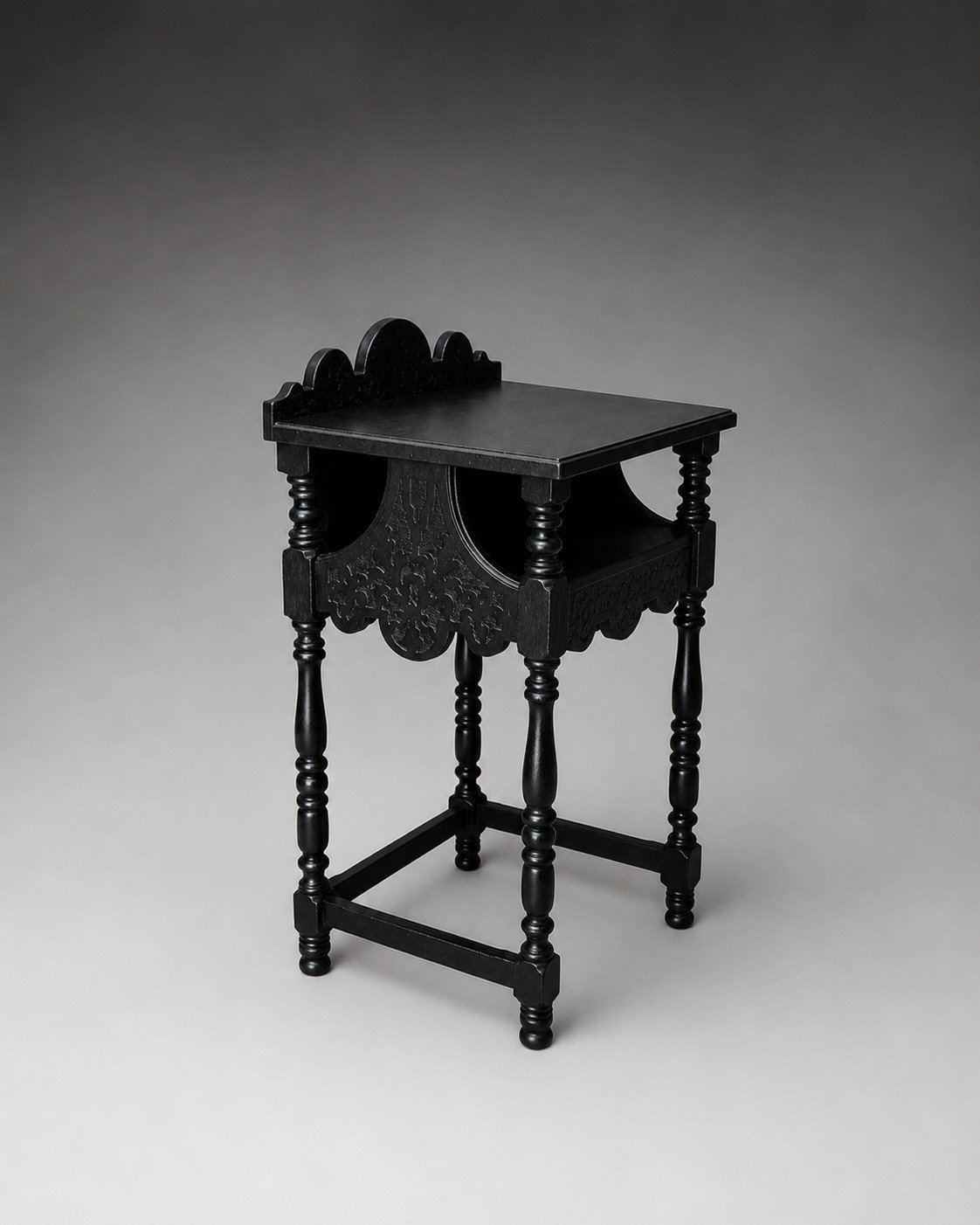 Image 2 of 4
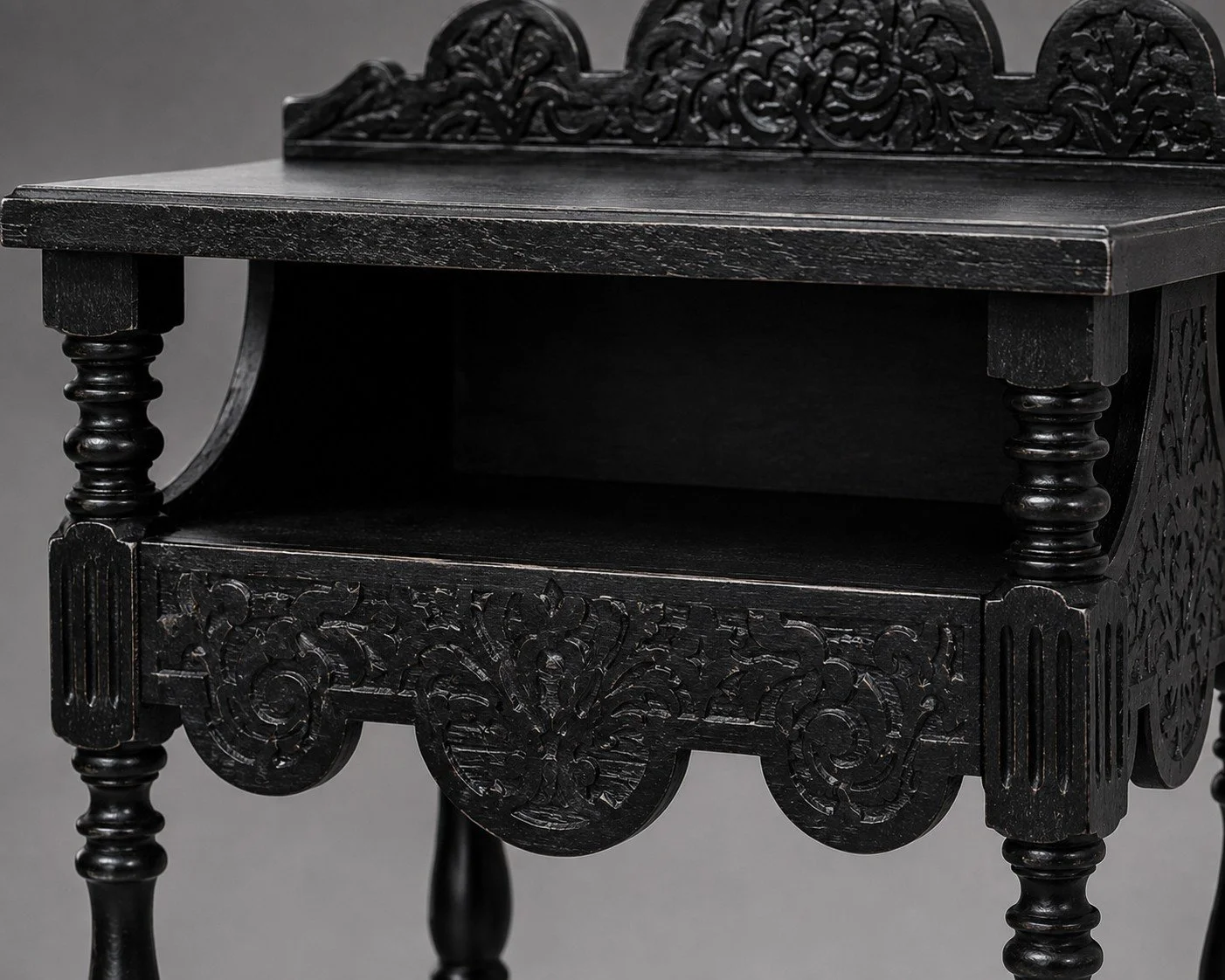 Image 3 of 4
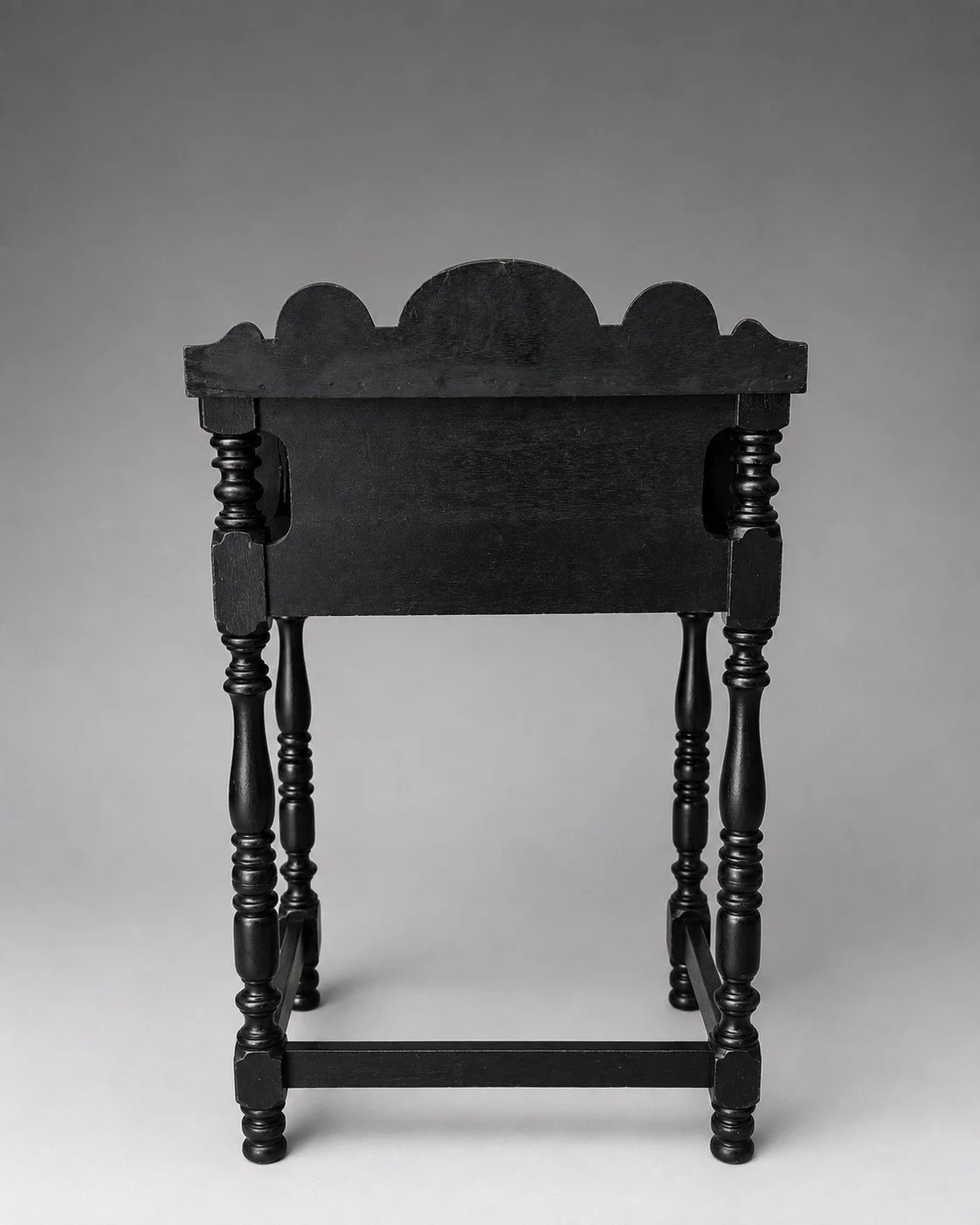 Image 4 of 4
Living With This Object
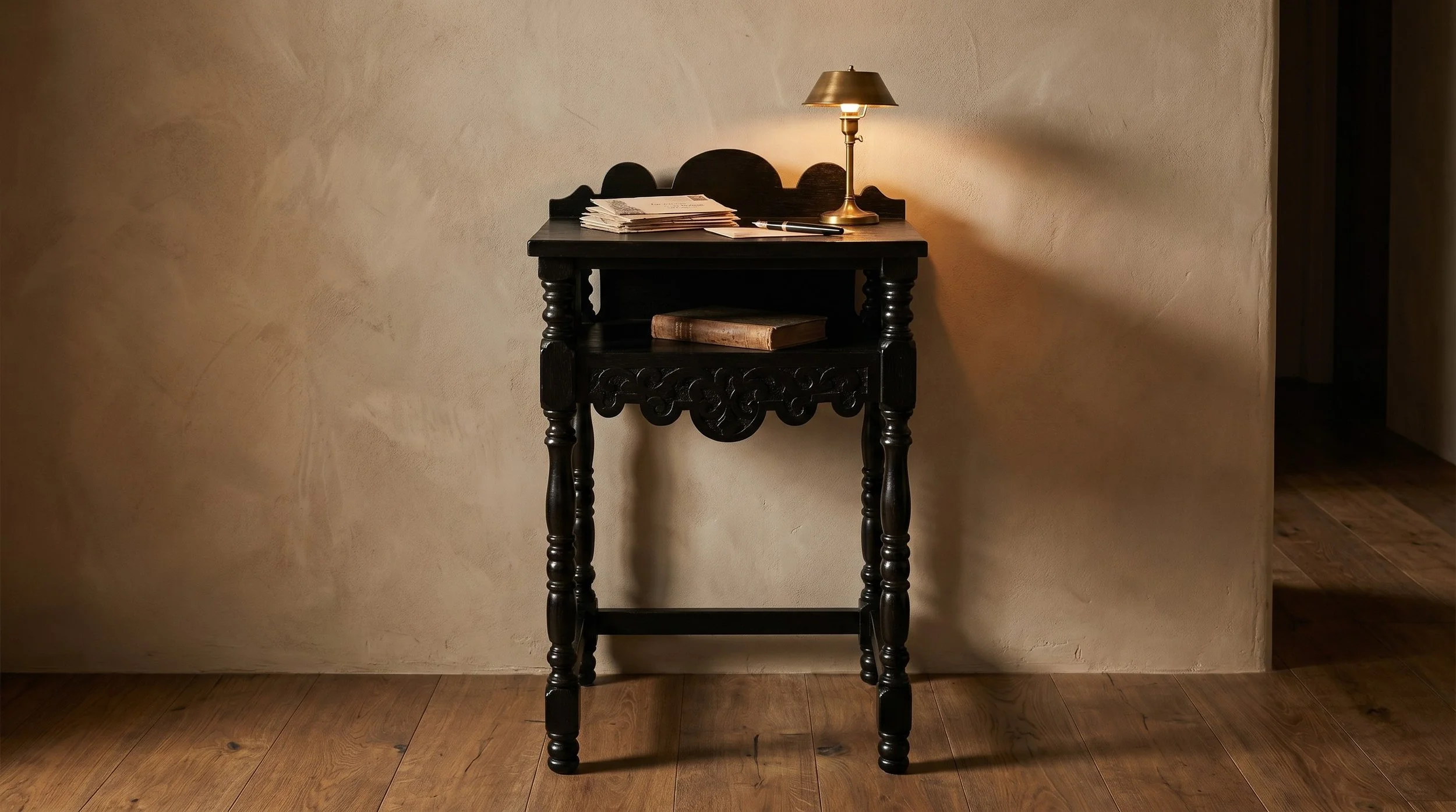
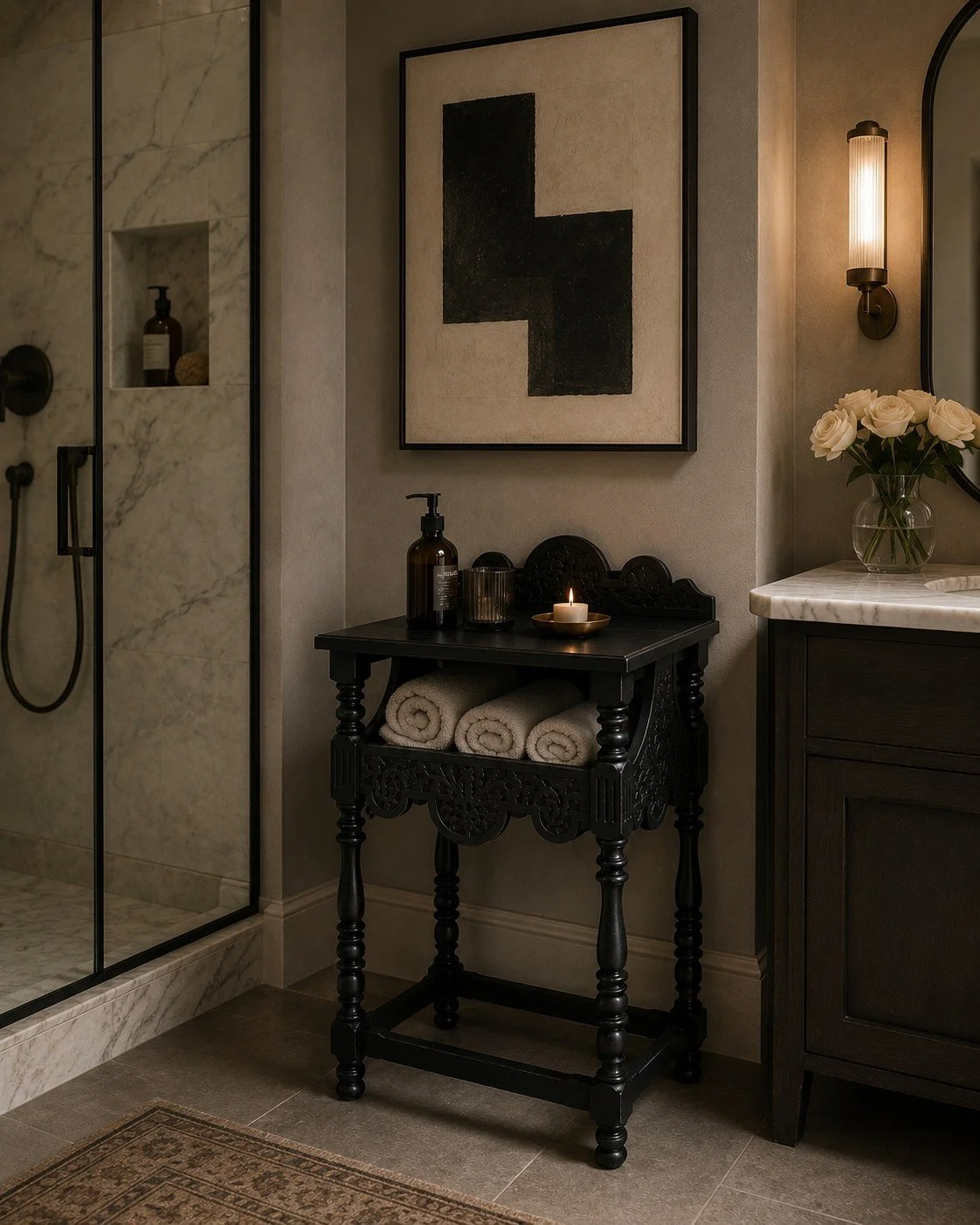
The Night Ledger against a plaster wall, a brass lamp and a stack of letters on the top and an old book on the lower shelf; conceptual, not a photograph of the object in a real room.
The visualization preserves the documented ebonized finish, scalloped crest, carved apron, ring-turned legs, box stretcher, and open shelf tier; the lamp, letters, and book are staging and do not convey with the piece.
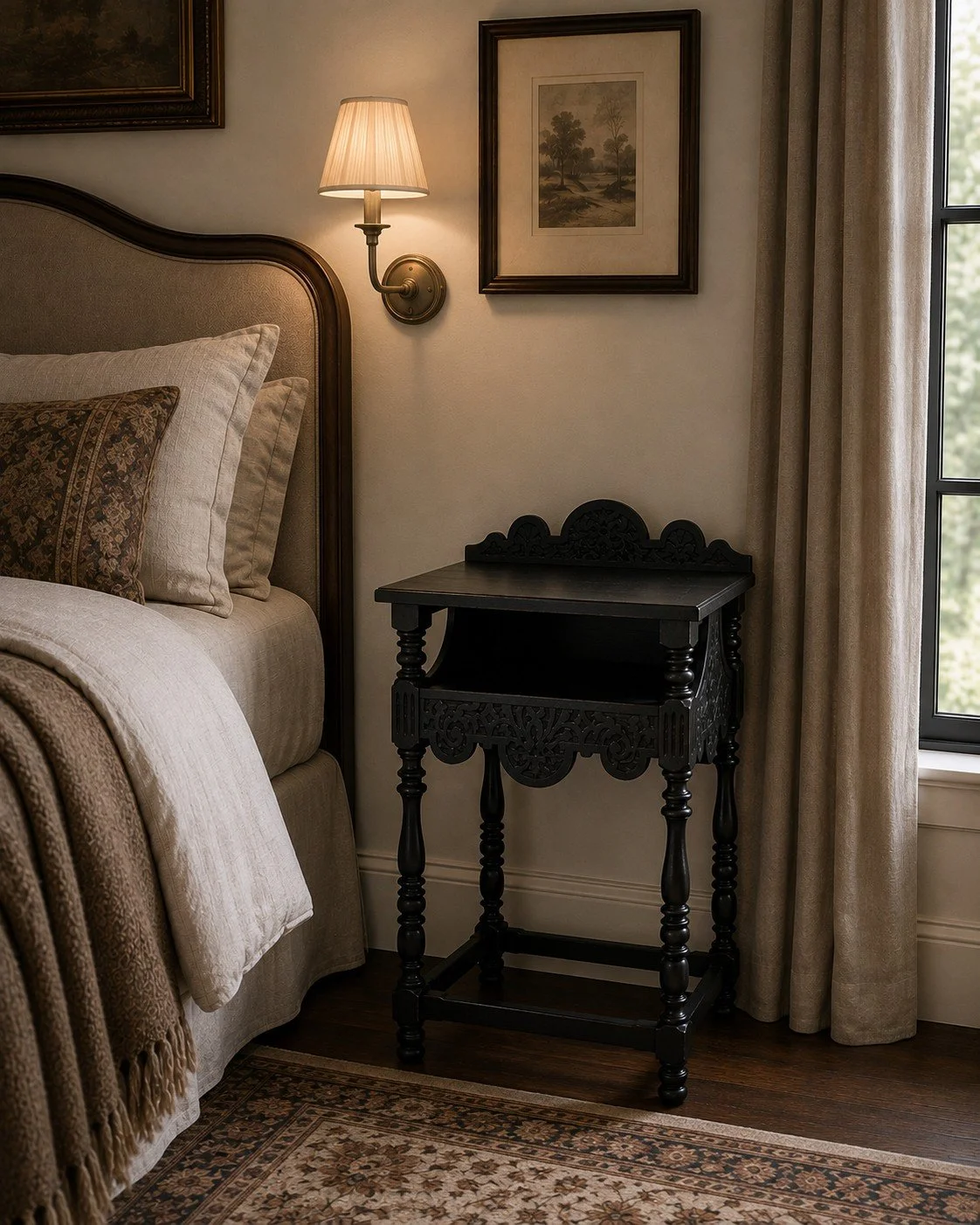
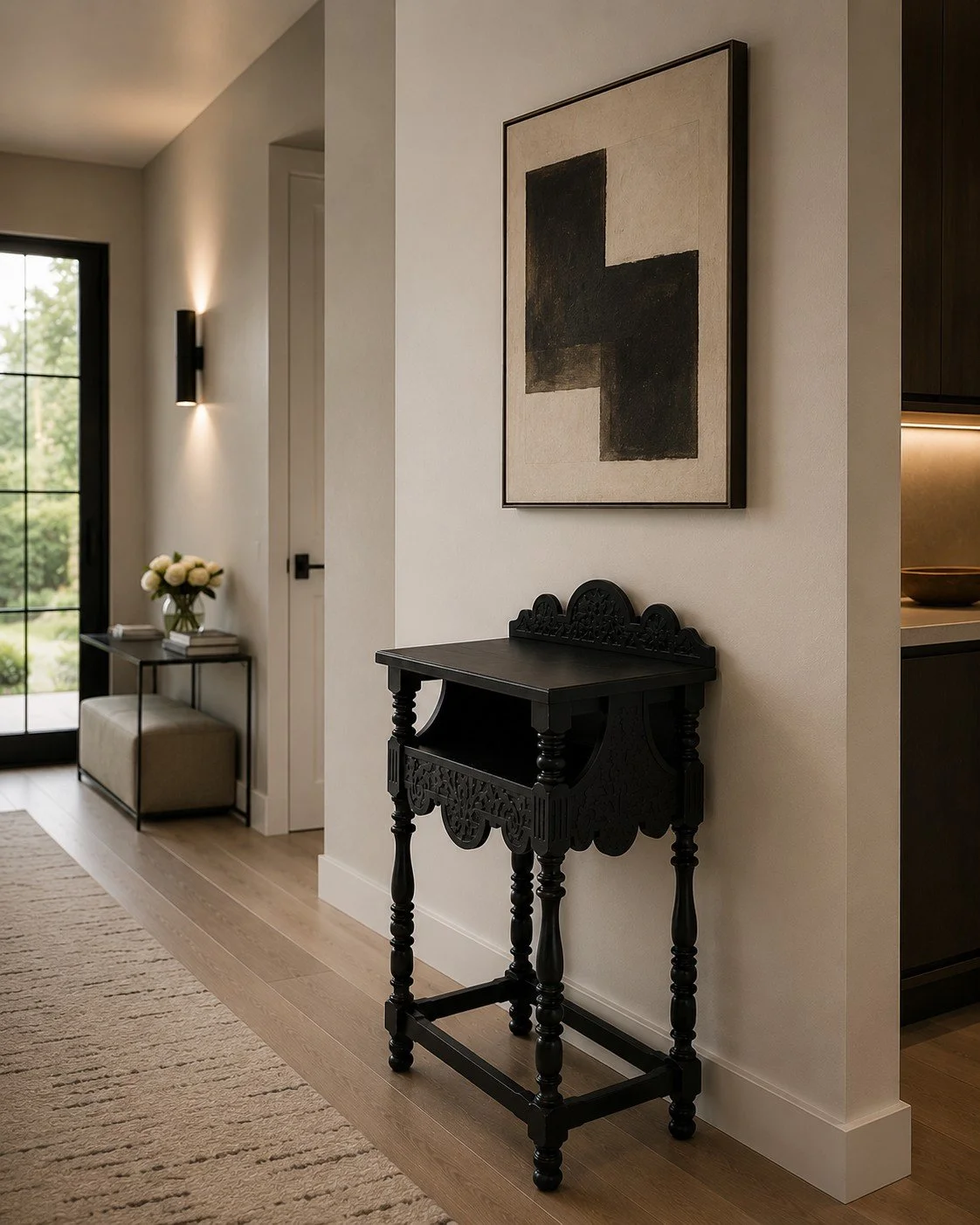
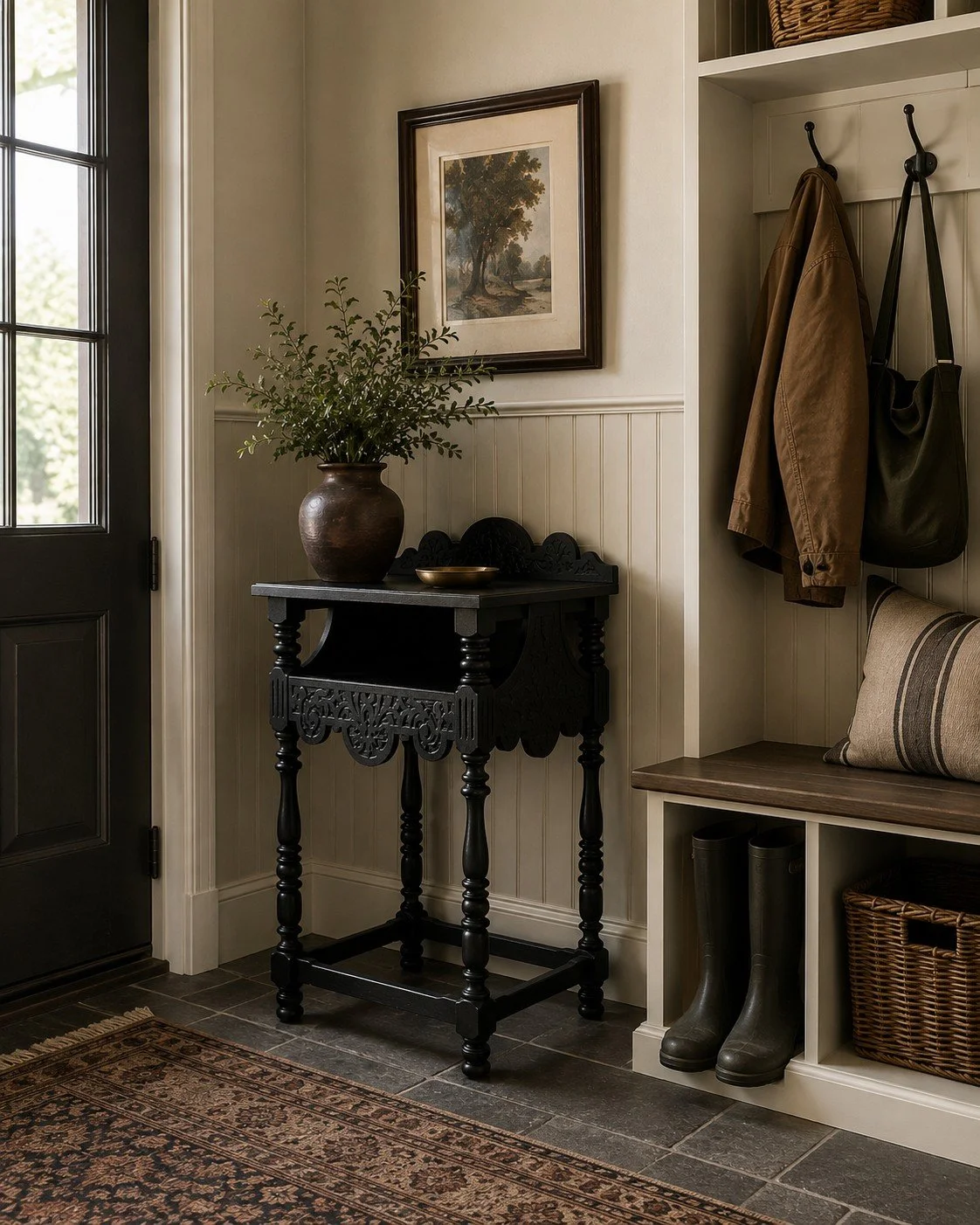
-
Made for the hall, the stand still serves there, though its footprint and height are those of a nightstand, which is why the piece earns its name. It becomes a place for the books and papers of the evening, while the top welcomes a lamp or a phone. It settles just as readily beside a reading chair or at the end of a sofa, or at the still edge of a room, where the dark surface reads as a fixed point against a pale wall or floor.
-
Type: Telephone stand, also listed as a telephone table
Style: Spanish Revival
Date: Circa 1920–1930
Provenance: Acquired at a San Bernardino County auction
Material: Solid hardwood
Finish: Ebonized (black stain); refinished
Construction: Turned legs on a box stretcher; carved and pierced apron, sides, and crest; open lower tier
Maker & Origin: Unattributed; no maker's mark
Condition: Refinished; good condition with minor surface wear
Dimensions: 20 W × 16 D × 33 H in.
-
Original: The legs, stretcher, apron, side panels, crest, and lower shelf are all original, and the structure is original throughout.
Replaced: Nothing was replaced in the documented work.
Reconstructed: No elements were reconstructed.
Repaired: No structural repairs were required or made.
Finish Work: The surface has been ebonized, refinished in a black stain that deepens the wood and brings the carving into a single, even tone.
Other: It presents in good condition, with minor surface wear consistent with age and use.
-
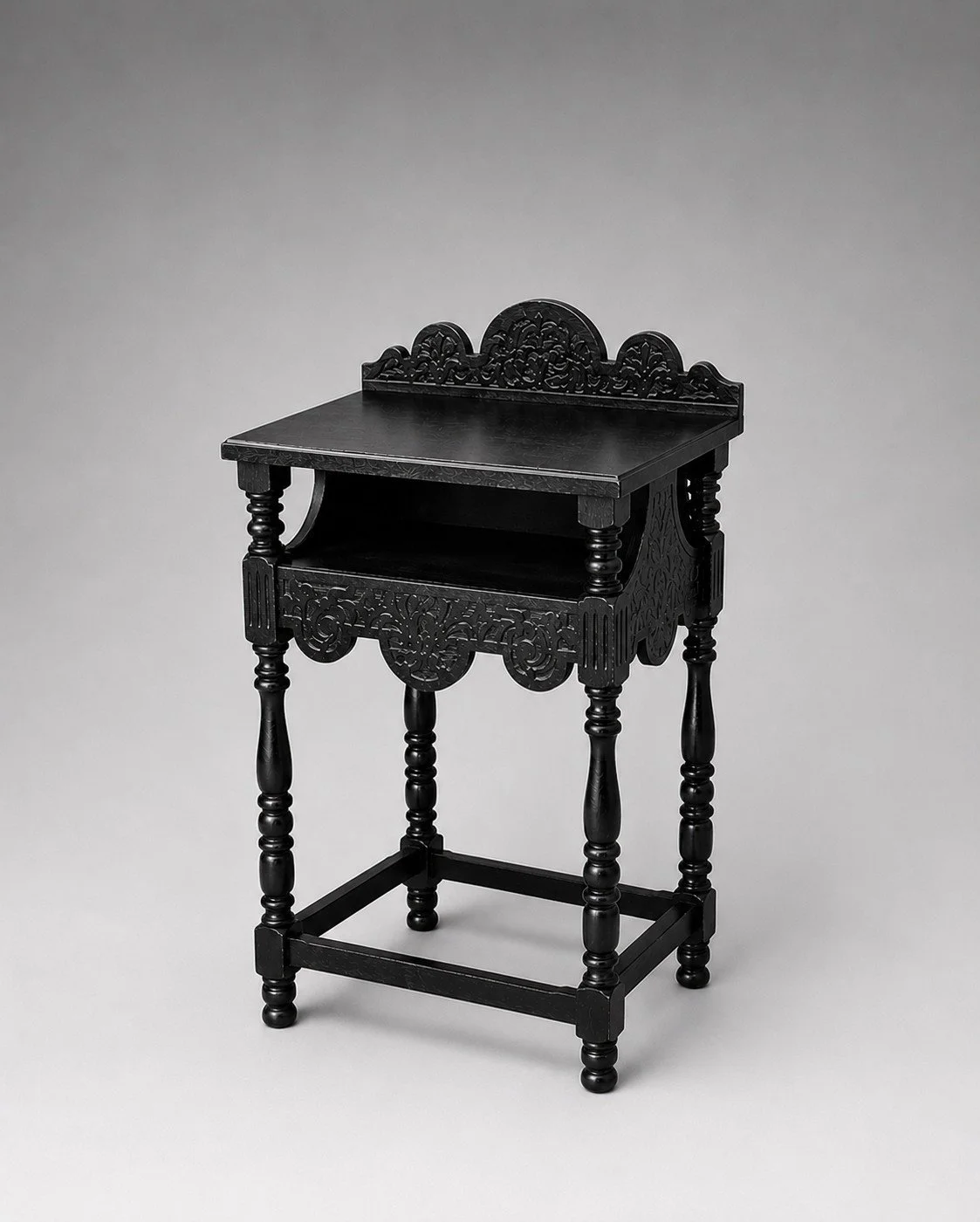
Foliate scrollwork runs across the front apron and the shaped side panels, set between fluted blocks at the tops of the legs. The lower edge of the apron is cut into a scalloped, pierced line, and the crest above the top repeats that scalloped profile around a carved central motif. The open tier sits within this carved frame.
-
Unattributed. The piece carries no maker's mark. Its style is Spanish Revival, the carved and turned vocabulary of the early twentieth century, and it dates to circa 1920–1930. It was acquired at a San Bernardino County auction. Its original manufacturer and earlier ownership remain unknown.
-
Built from solid hardwood. Four turned legs, ringed and baluster-turned, stand on small turned feet and are joined near the floor by a box stretcher. Above them, the square top rests over an open lower tier carried on a fixed shelf, while the scalloped crest, a separate shaped board, is fixed along the back edge of the top. The carved detail is described above.
-
As the telephone settled into the home in the early twentieth century, a piece of furniture grew up around it: a narrow stand for the hall or the edge of a room, a surface for the instrument above an open tier for the directory and a pad, a place where the exchanges of the household were received and recorded. This example entered the Acanthus Home collection after its acquisition at a San Bernardino County auction. It has been refinished in its later life and otherwise carries the ordinary marks of use. Its maker and earlier ownership are not recorded. The record ends where the evidence ends.
-
Is this an antique or a vintage telephone table? Vintage. It dates to circa 1920–1930, a range that straddles the hundred-year line, and nothing fixes the year of manufacture. Acanthus calls a piece antique only when the evidence carries it past that mark, so this vintage telephone table is not rounded up. The form and carving support the dating.
Has it been refinished? Yes. The surface has been ebonized, finished in a black stain that deepens the wood and settles the carving into a single, even tone. The refinish is a surface change only: the structure underneath is the original piece, and the stain settles over the grain rather than concealing it.
Can it serve as a nightstand? Yes, and the fit is honest rather than improvised: a telephone stand was built to keep an instrument, a directory, and a pad within reach, which is a nightstand's job in different dress.
What is it made of? It is built from solid hardwood. The turned legs and stretcher, and the carved apron, side panels, and crest, are all worked from the same wood, so the piece reads as one material from the floor up, its surface texture still legible across the carving and the turnings.
How do I care for the finish? Keep the surface out of prolonged direct sun, which can fade a stained tone over time, and clean it with a soft, dry or barely damp cloth. Avoid soaking the surface or using harsh cleaners, and an occasional light paste wax keeps the finish even and protected.